A Good WW2 Royal Navy/Fleet Reserve L.S.&.G.C., Highest Scoring A.A. Ship (11 'kills'), Operation Lustre, Battles of Matapan, Sirte, Crete & Operation Husky Medal Group to A.B. F. Butterworth (1600)
A Good WW2 Royal Navy/Fleet Reserve L.S.&.G.C., Highest Scoring A.A. Ship (11 'kills'), Operation Lustre, Battles of Matapan, Sirte, Crete & Operation Husky Medal Group to A.B. F. Butterworth (1600)
A Good WW2 Royal Navy/Fleet Reserve L.S.&.G.C., Highest Scoring A.A. Ship (11 'kills'), Operation Lustre, Battles of Matapan, Sirte, Crete & Operation Husky, Medal Group awarded to J.106126 A.B. F. Butterworth.
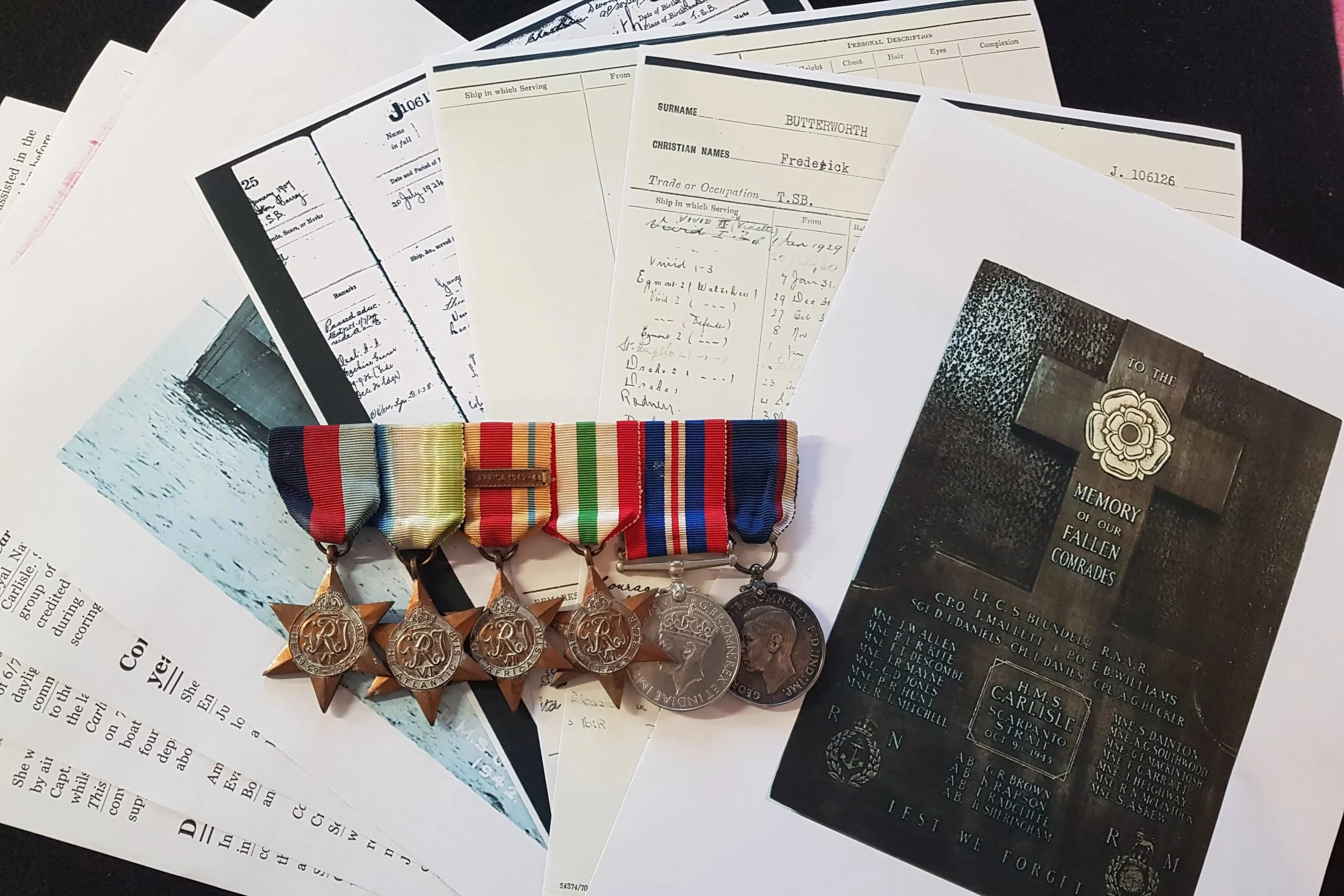
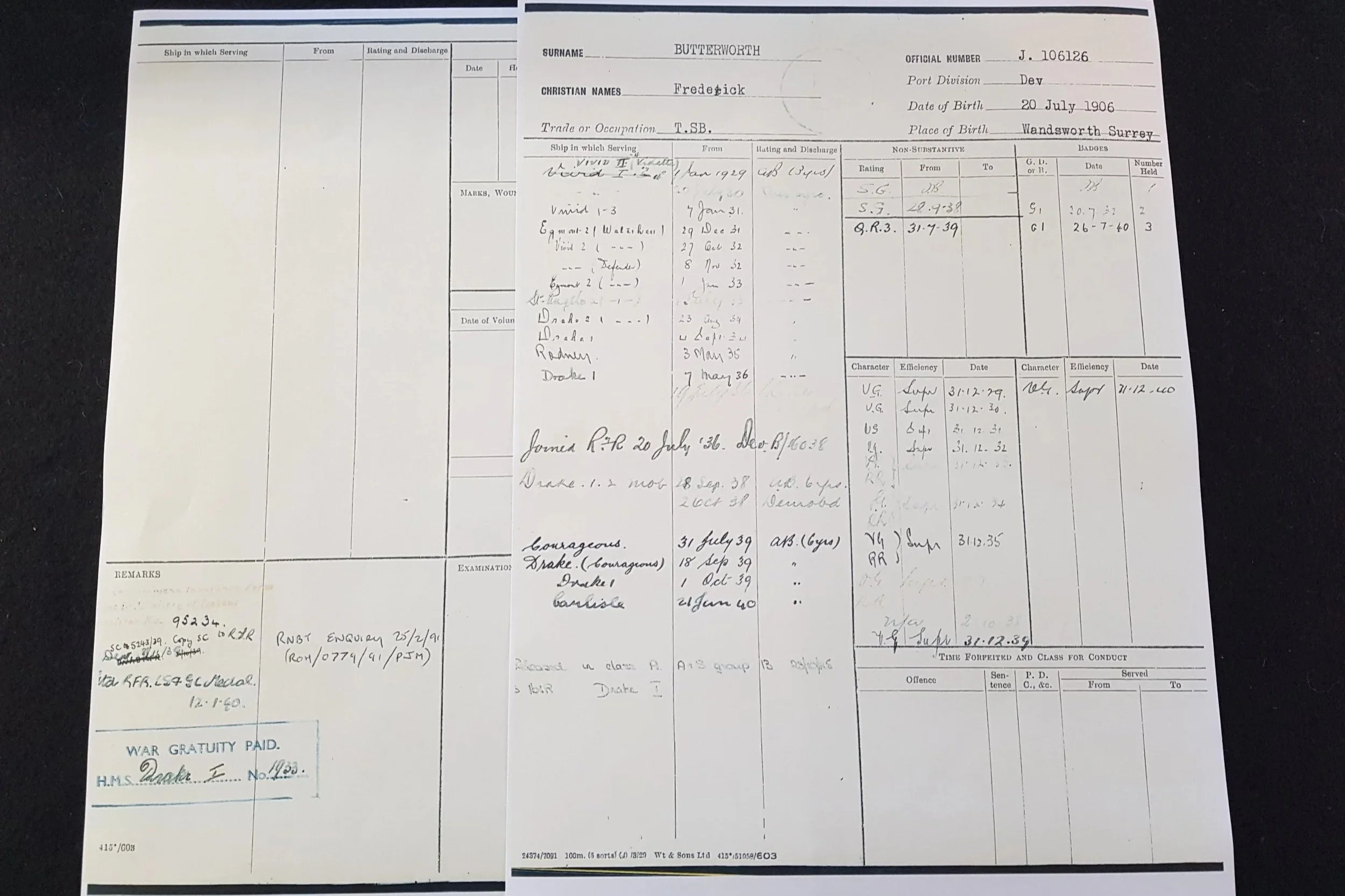
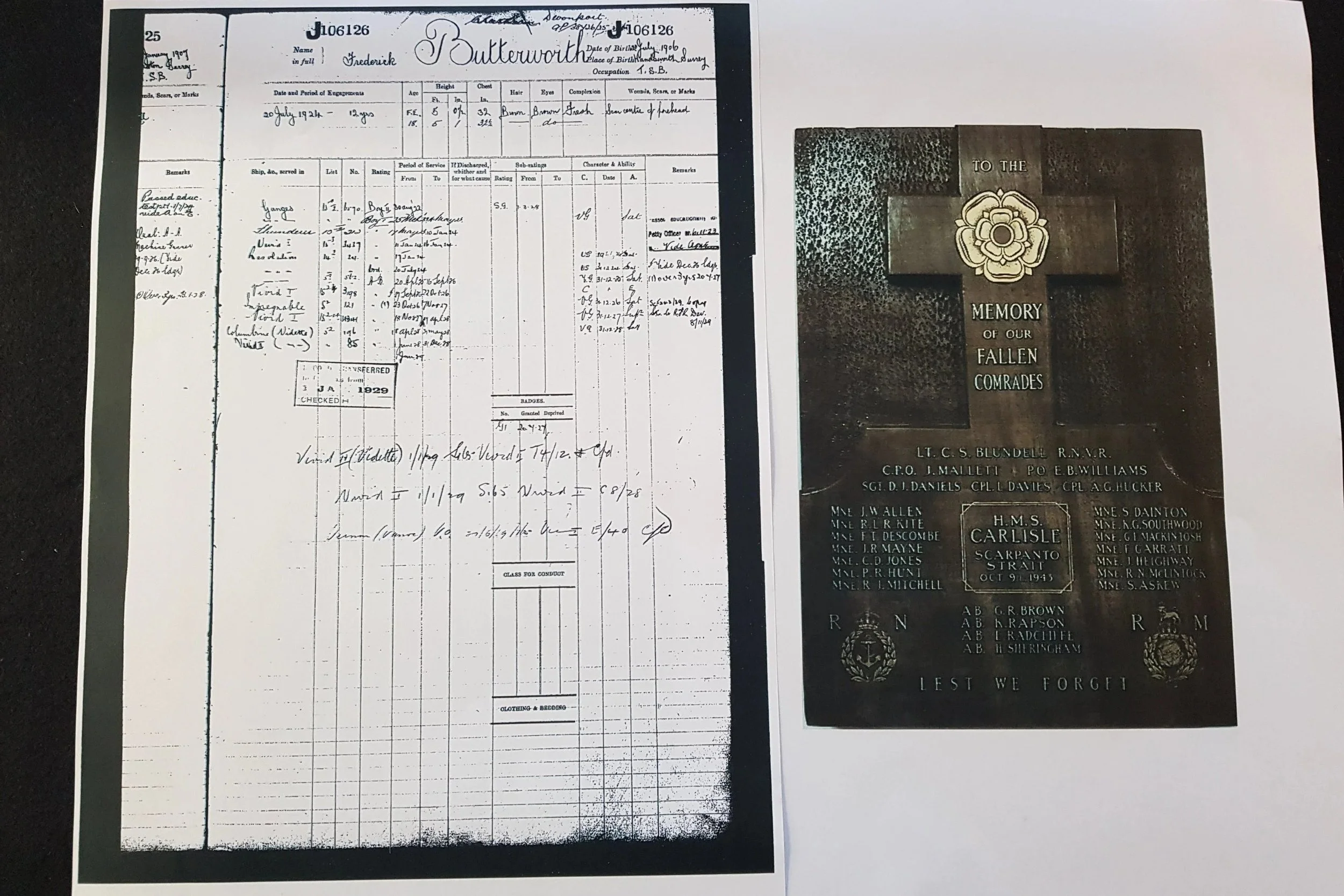
Frederick Butterworth was born on the 20th of July 1906, at Wandsworth, South West London.
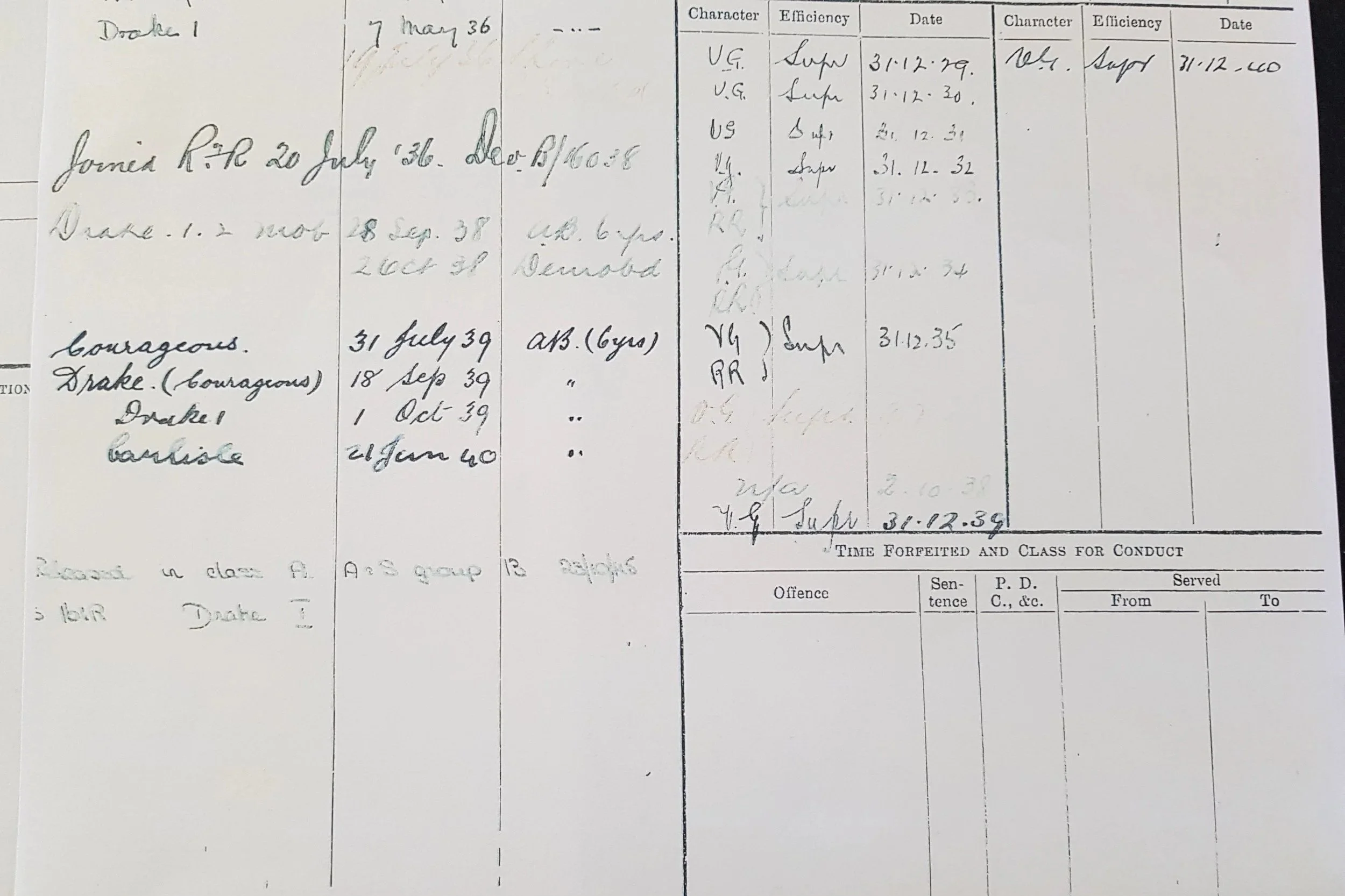
He joined the ranks of the Royal Navy on the 20th July 1924, where he served aboard a variety of ships and shorebases. During WW2, he joined the crew of the C-Class light cruiser, H.M.S. Carlisle on the 21st of January 1940, where he was to serve for the rest of the war, and the rest of Carlisles’ sailing days.
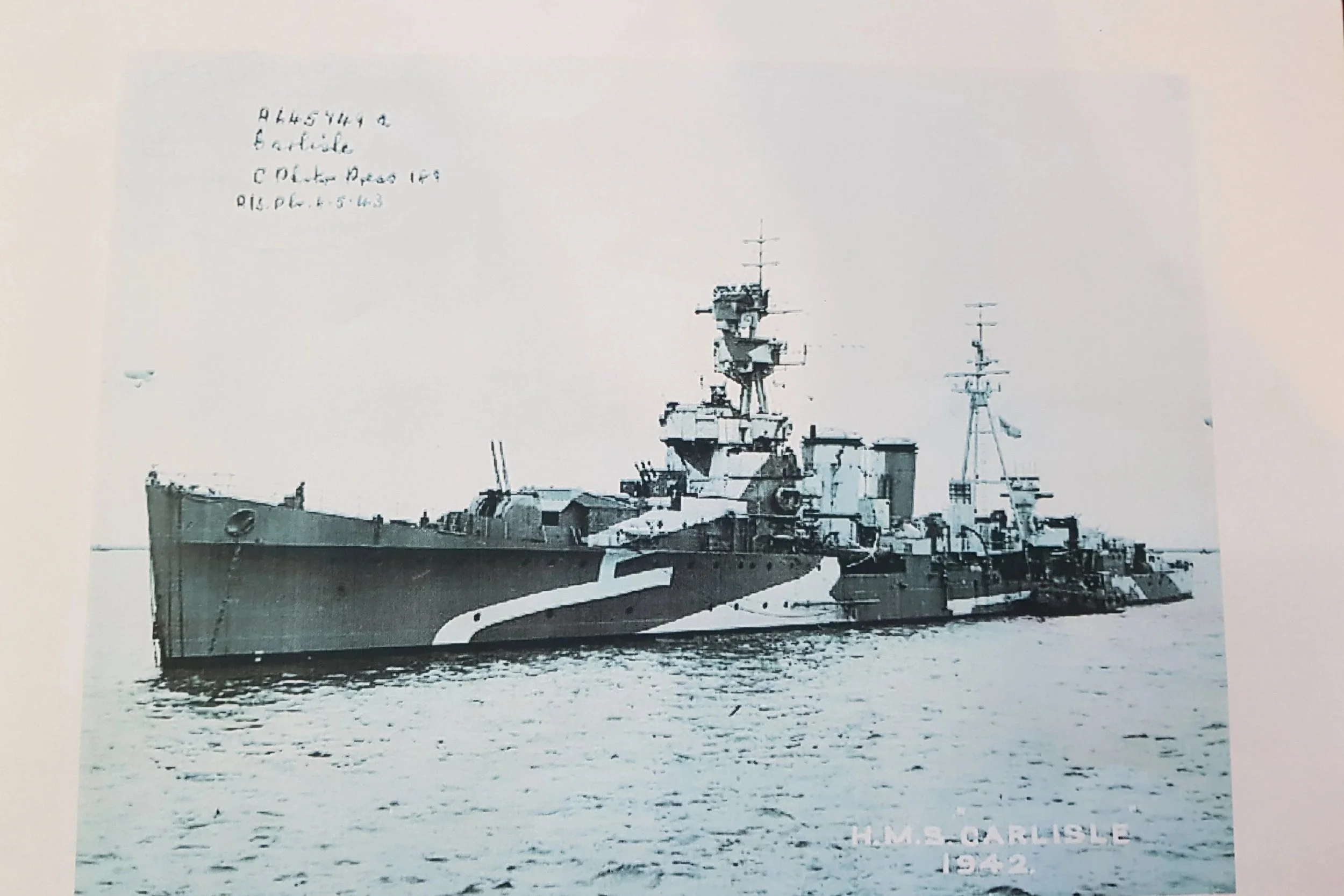
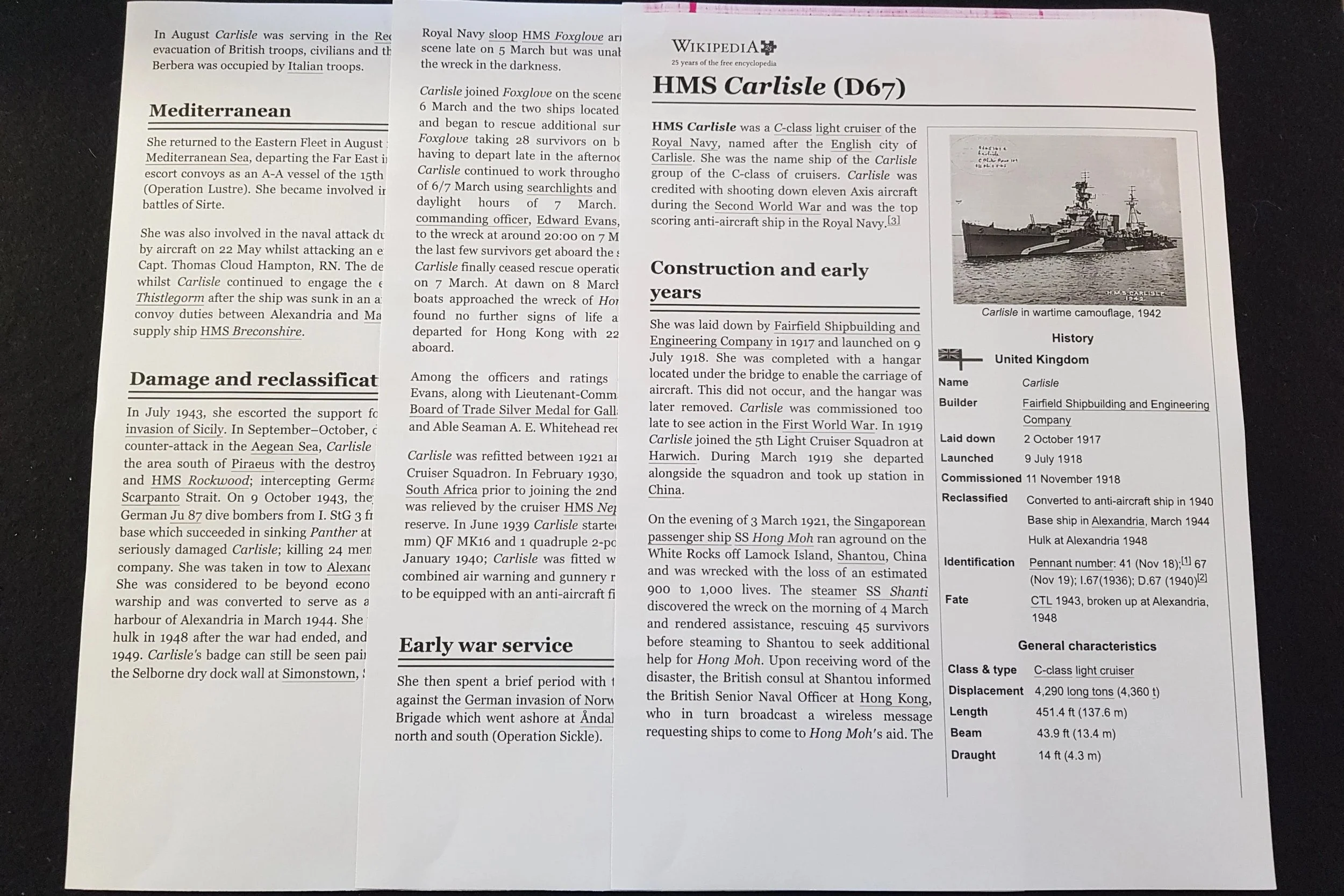
During WW2, H.M.S. Carlisle beacame the highest scoring Royal Naval anti-aircraft ship, credited with shooting down 11 Axis aircraft. In early 1940 Carlisle spent a brief period of time with the Home Fleet where she partisipated in the Allied operations against the German invasion of Norway (Operation Sickle).
She returned to the Eastern Fleet in August 1940, and like most of her sister ships, she was then assigned to the Mediterranean Sea, departing the Far East in March 1941. Once in the Mediterranean, she was used to escort convoys as an A-A vessel of the 15th Cruiser Squadron for convoys from Alexandria to Greece (Operation Lustre). She became involved in Battle of Cape Matapan, as well as the 1st and 2nd battles of Sirte.
She was also involved in the naval attack during the Battle of Crete in 1941 and was hit and damaged by aircraft on 22 May whilst attacking an enemy convoy. A direct hit killed her commanding officer, Capt. Thomas Cloud Hampton, RN. The destroyer H.M.S. Kingston went alongside to give assistance, whilst Carlisle continued to engage the enemy. She went on to rescue the survivors of the SS Thistlegorm after the ship was sunk in an air attack on 5 October 1941. By December, she returned to convoy duties between Alexandria and Malta and was sent to support the commissioned auxiliary supply ship H.M.S. Breconshire.
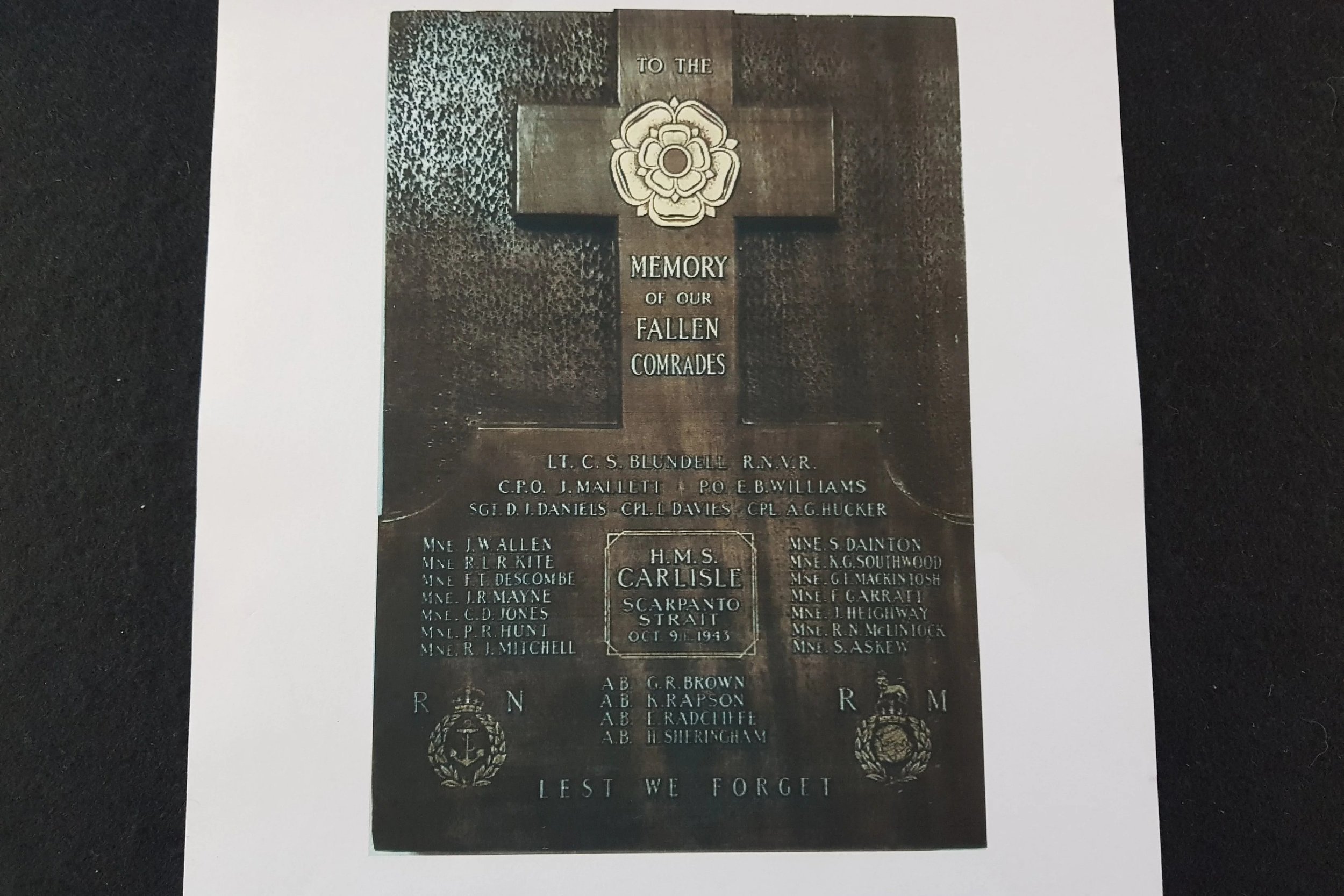
In July 1943, she escorted the support force for the Allied invasion of Sicily. In September–October, during the German counter-attack in the Aegean Sea, Carlisle made a sortie into the area south of Piraeus with the destroyers H.M.S. Panther and H.M.S. Rockwood; intercepting German convoys in the Scarpento Strait. On 9 October 1943, they were spotted by German Ju 87 Stuka dive bombers from I. StG 3 from the Megara air base which succeeded in sinking Panther at 12.05 and later on seriously damaged Carlisle; killing 24 members of the ship's company. She was taken in tow to Alexandria by Rockwood. She was considered to be beyond economical repair as a warship and was converted to serve as a base ship in the harbour of Alexandria in March 1944.
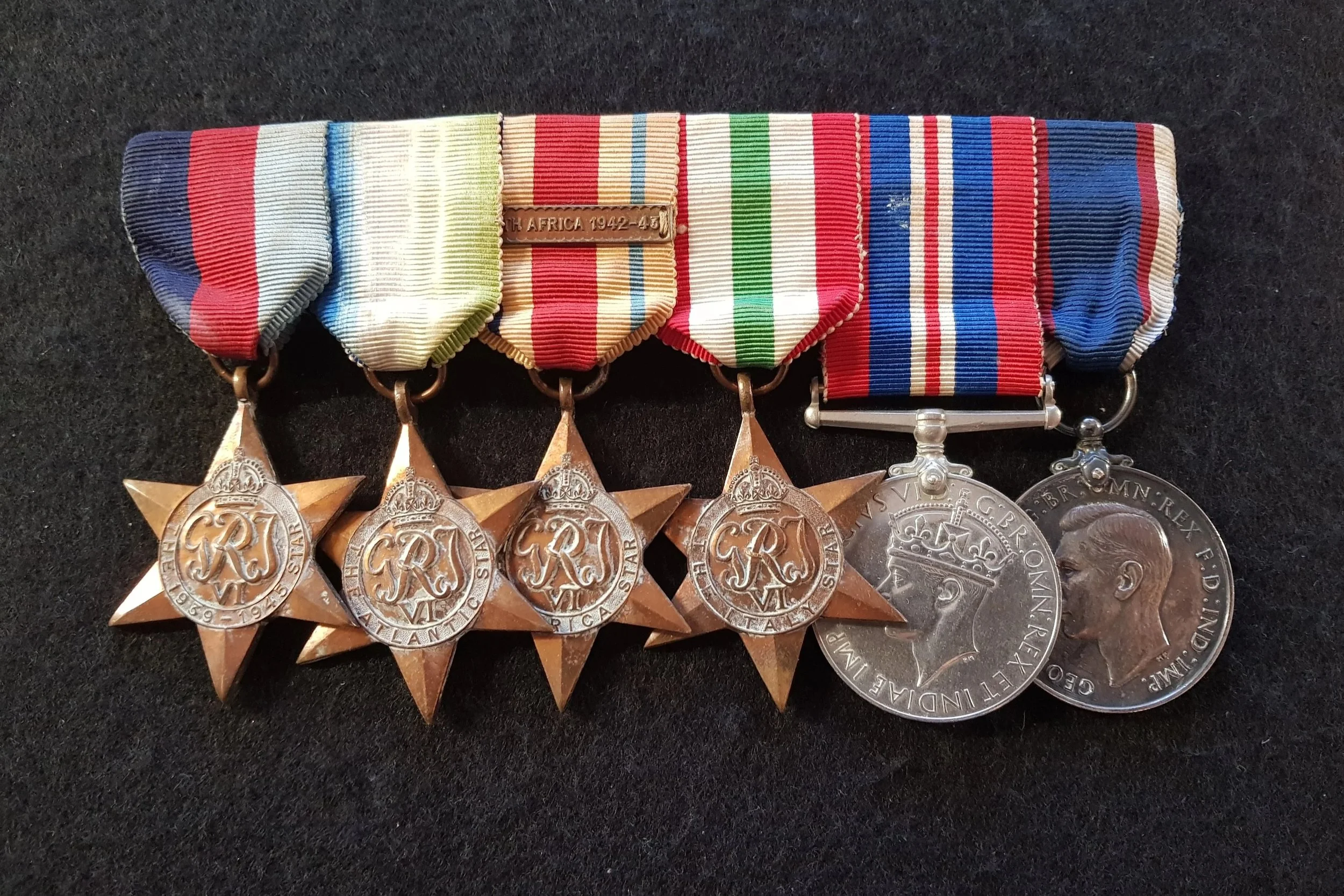
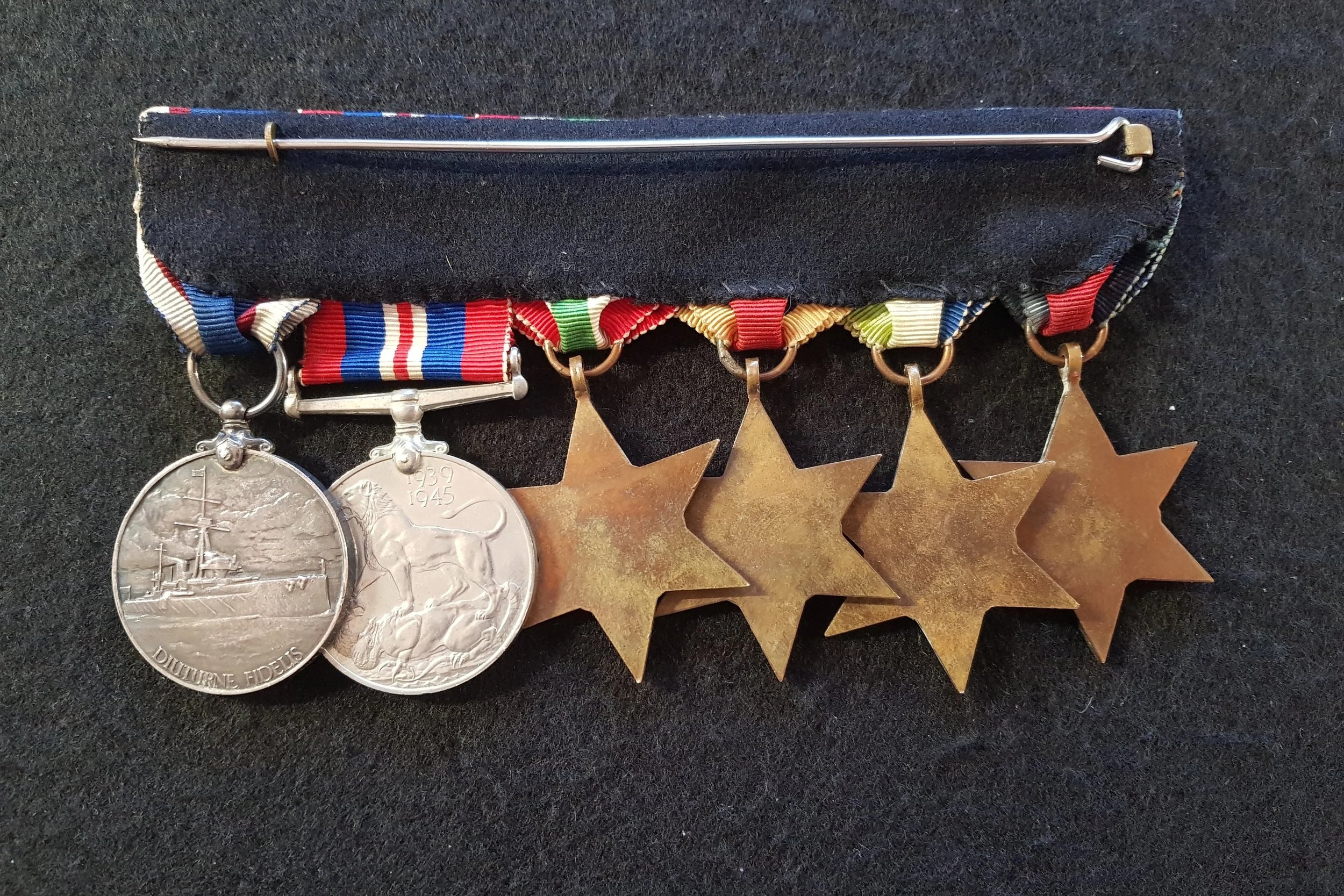
The medals are mounted as worn, sold with copied research, and are as follows –
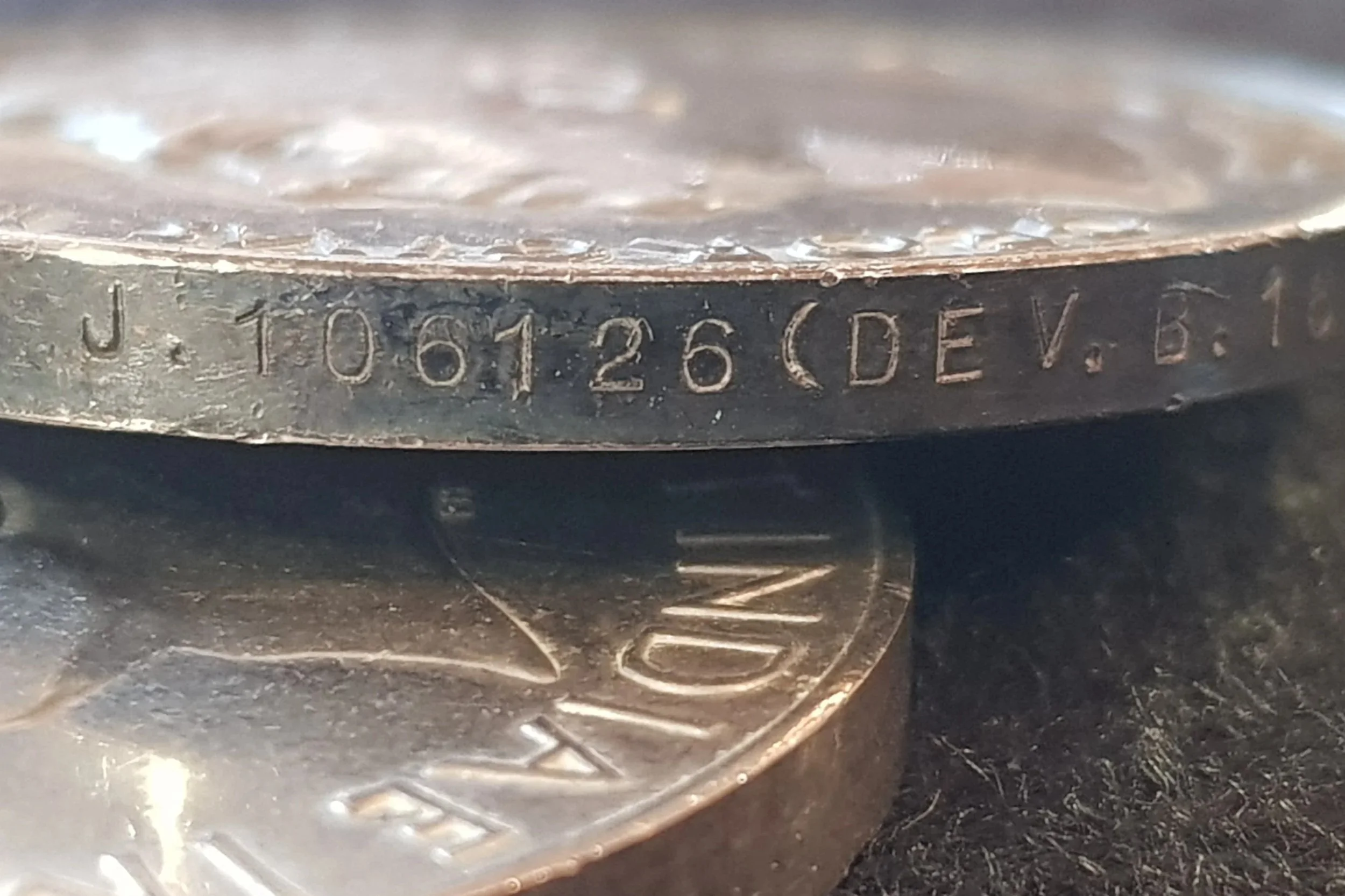
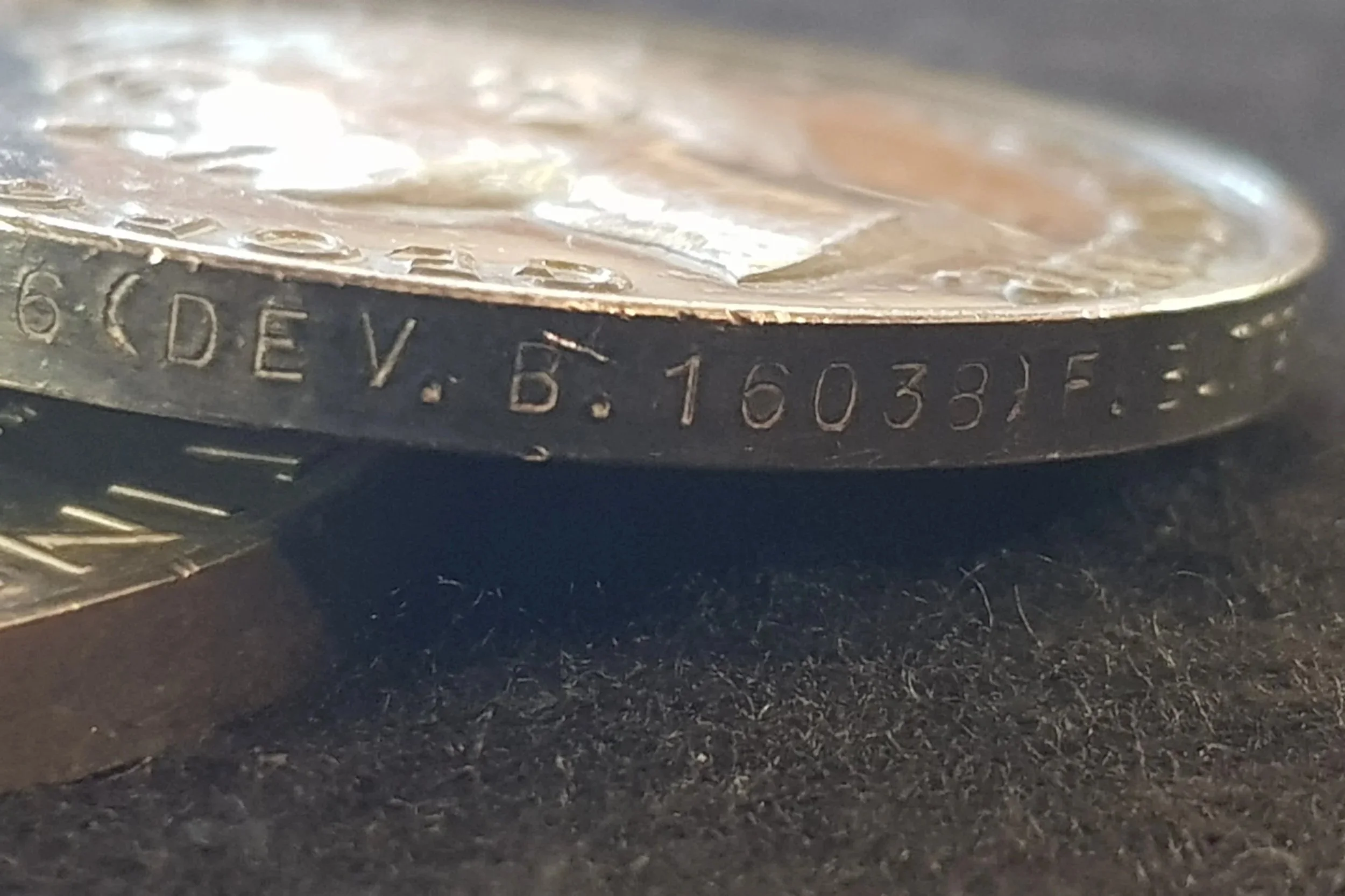
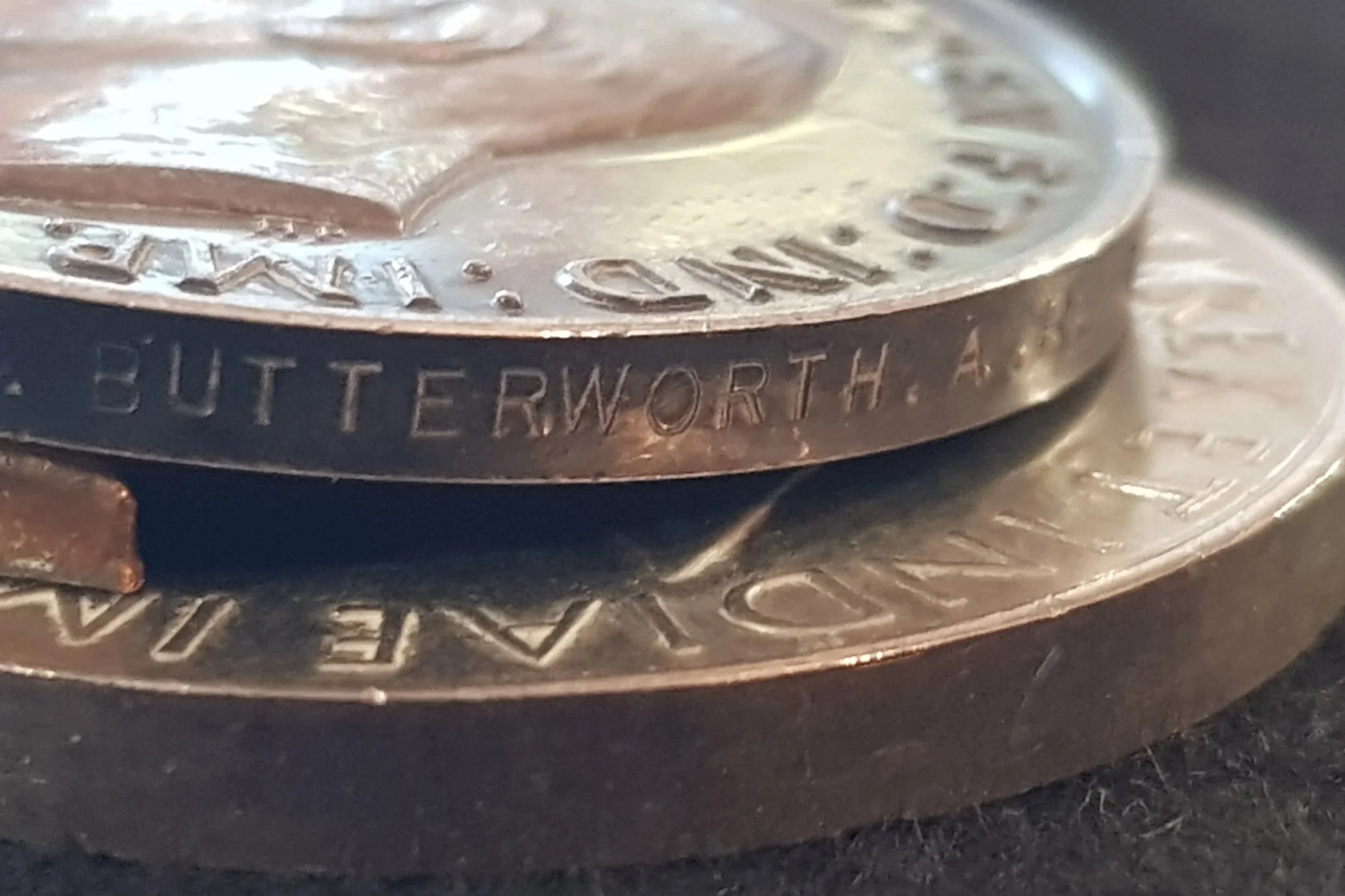
1939/45 Star; Atlantic Star; Africa Star, clasp, NORTH AFRICA 1942-43; Italy Star; 1939/45 War Medal, all unnamed as issued; G.VI Royal Fleet Reserve Long Service & Good Conduct Medal, J.106126 (DEV. B.16038) F. BUTTERWORTH. A.B. R.F.R.
Condition, Good very fine