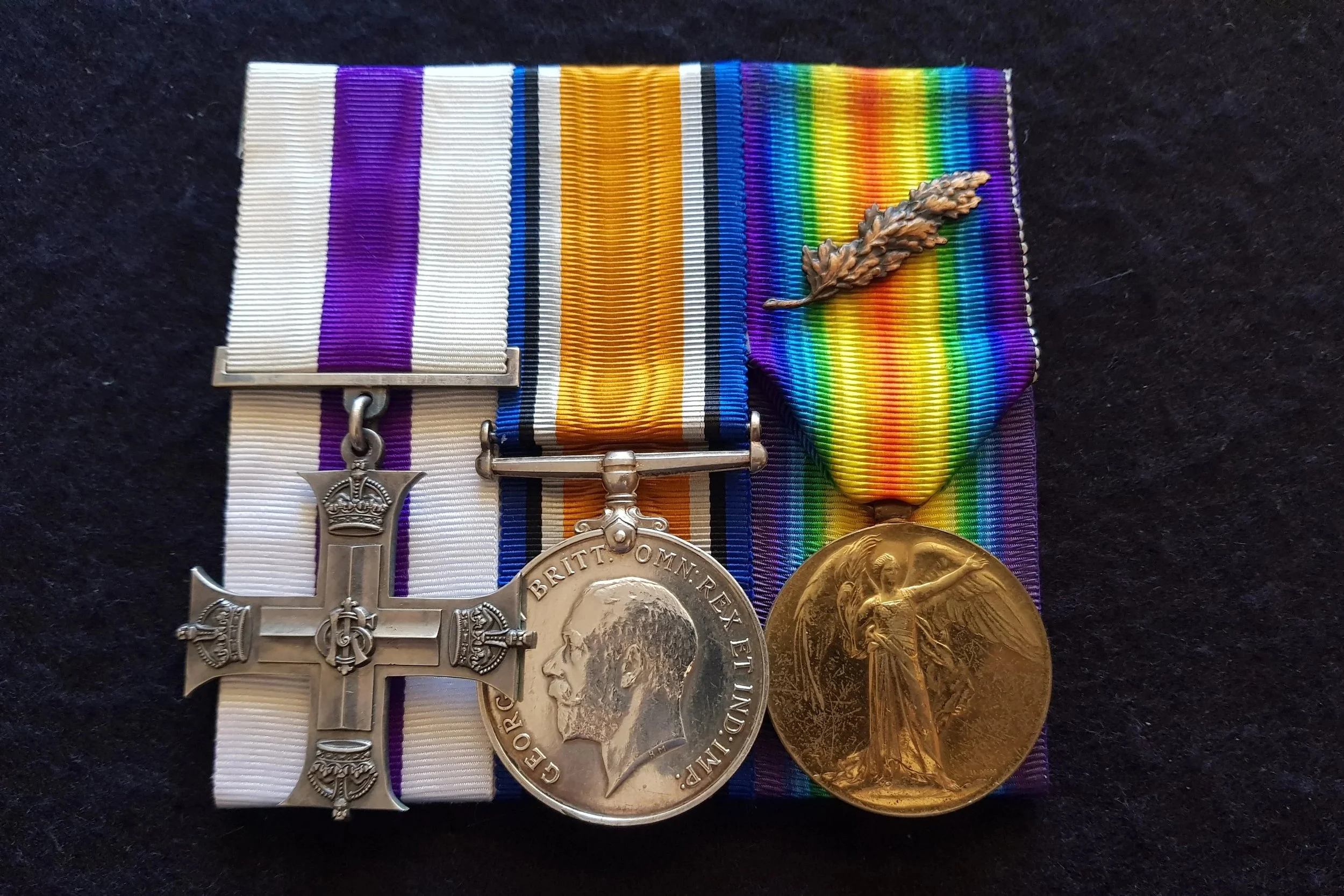
An Impressive WW1 ‘Western Front’ Officer’s Conspicuous Gallantry M.C & M.I.D. Medal Group awarded to Lieutenant Thomas Sharp Riley, 39th M.T Coy, Royal Army Service Corps (1650)
An Impressive WW1 ‘Western Front’ Officer’s Conspicuous Gallantry M.C & M.I.D. Medal Group awarded to Lieutenant Thomas Sharp Riley, 39th M.T Coy, Royal Army Service Corps (1650)
An Impressive WW1 ‘Western Front’ Officer’s Conspicuous Gallantry M.C & M.I.D. Medal Group awarded to Lieutenant Thomas Sharp Riley, 39th M.T Coy, Royal Army Service Corps
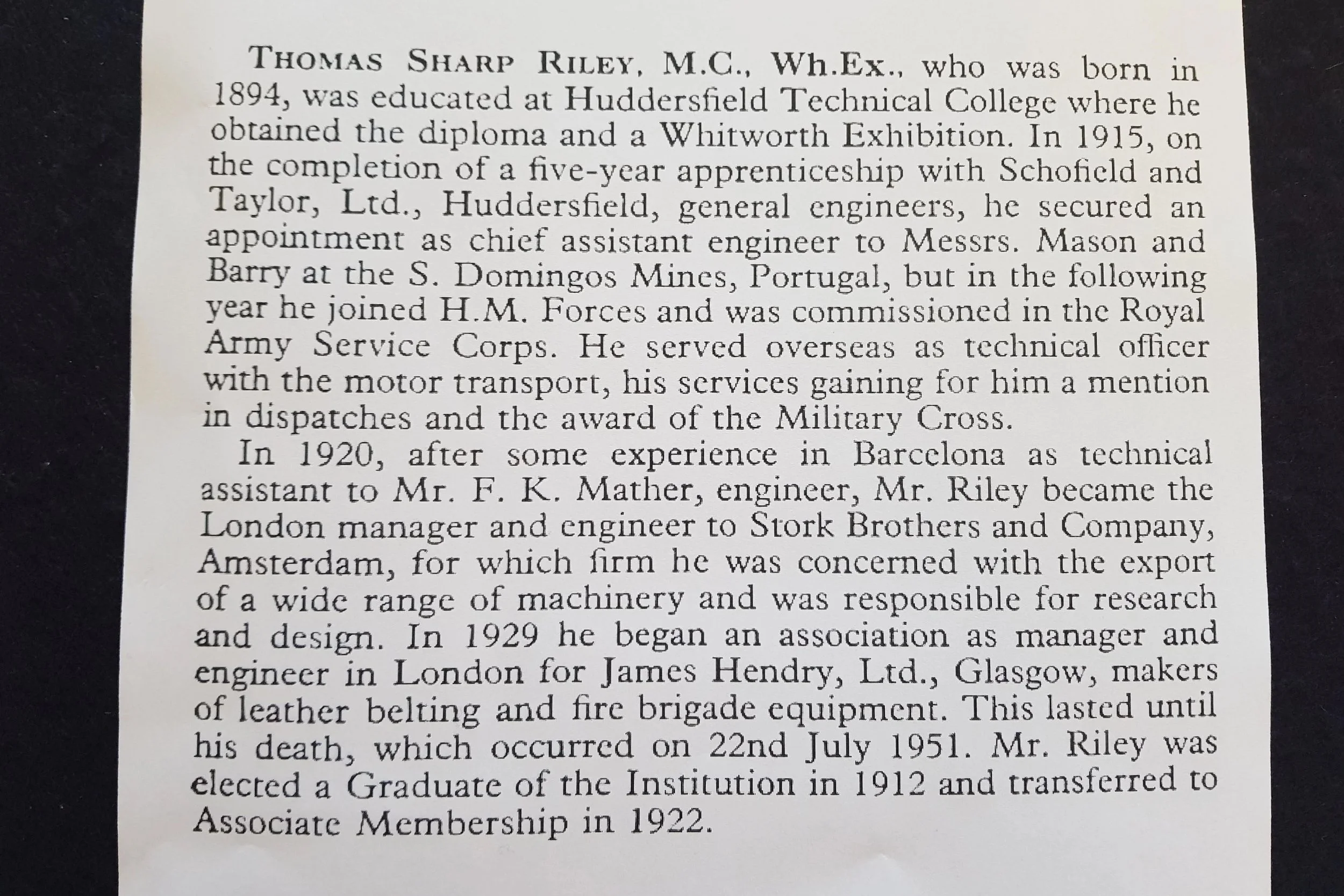
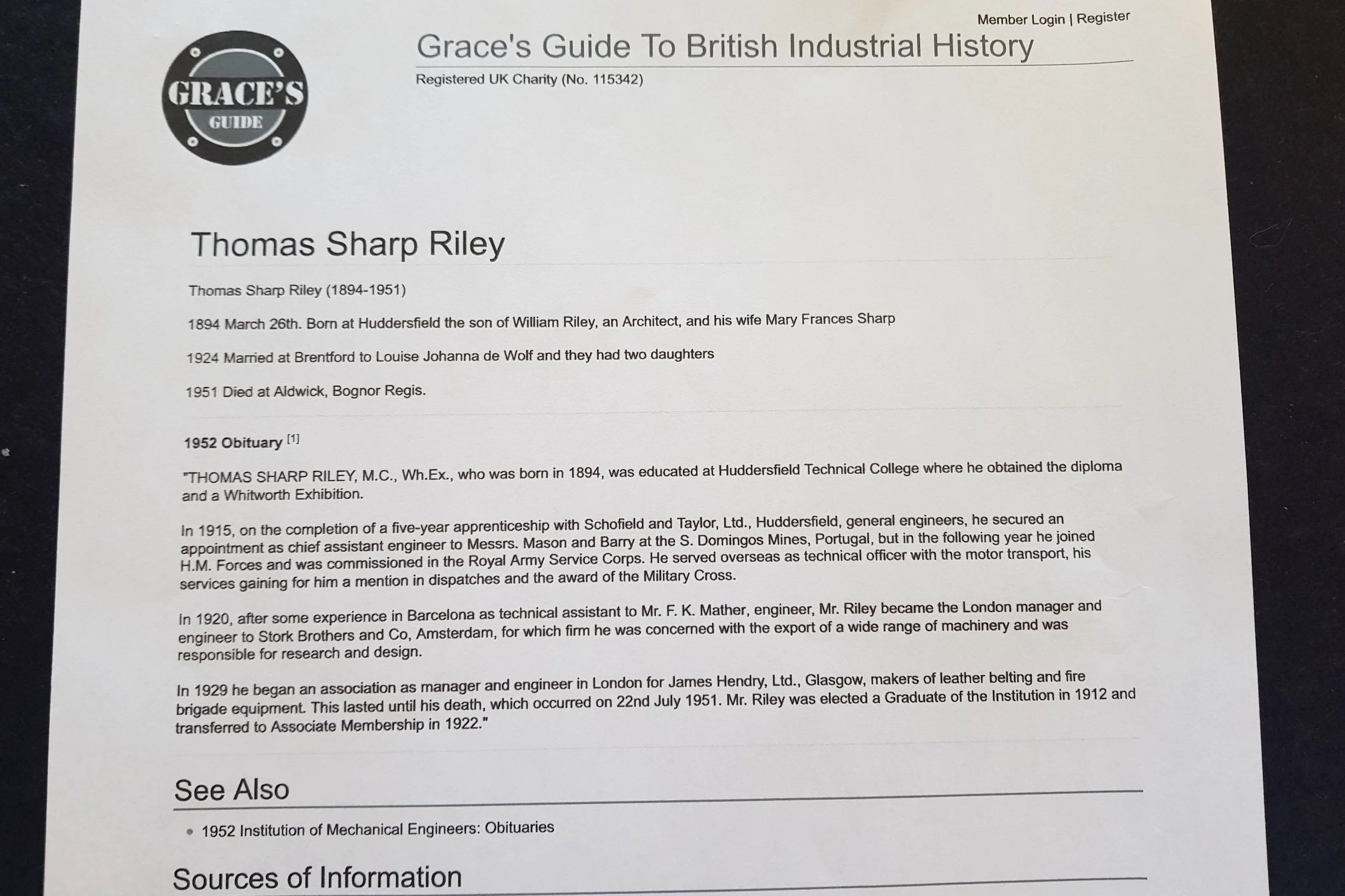
Thomas Sharp Riley was born on March 26th, 1894, at Huddersfield, West Yorkshire, the son of William Riley, an Architect, and his wife Mary Frances Sharp.
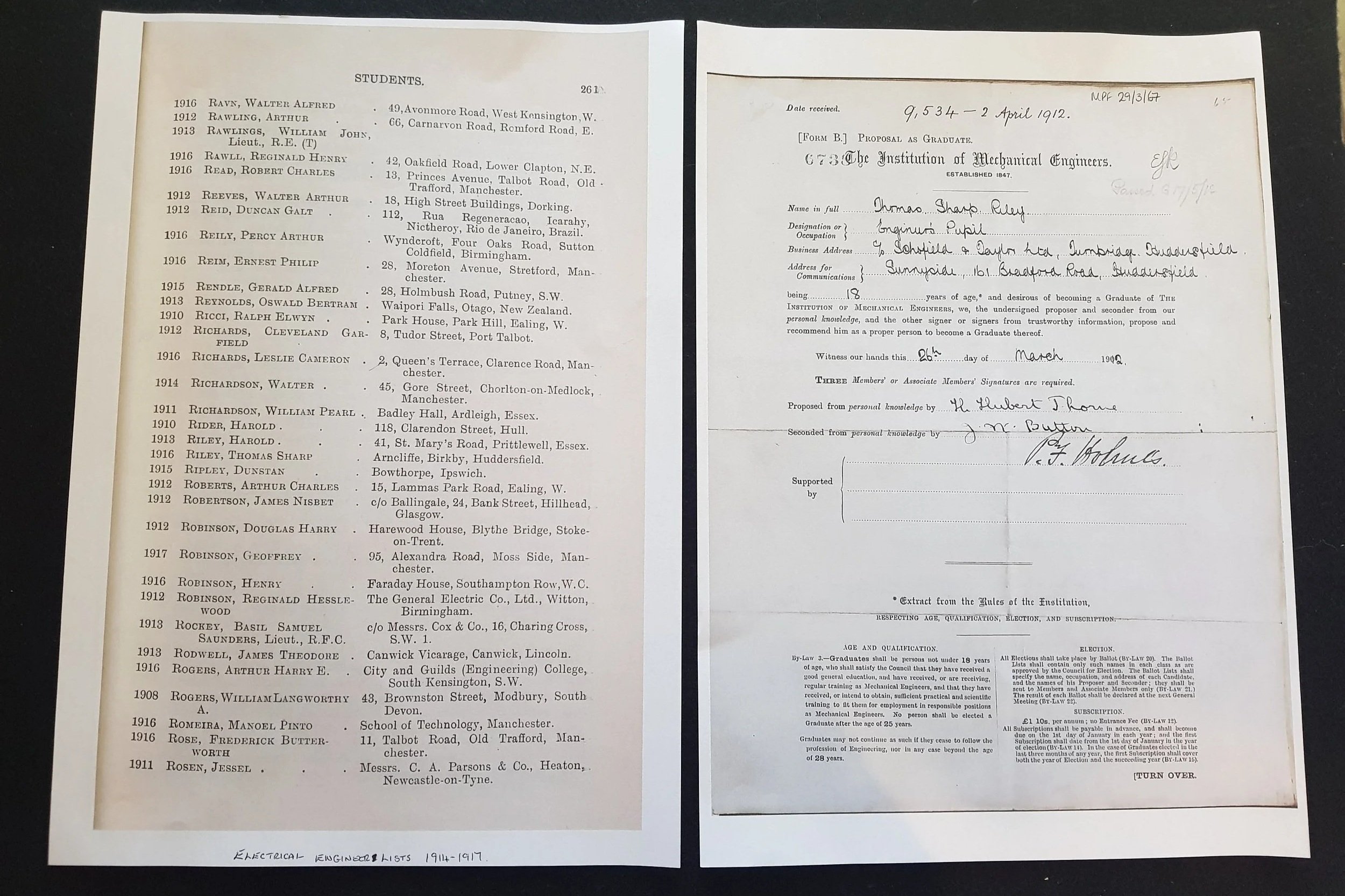
Thomas was educated at Huddersfield Technical College where he obtained a diploma and a Whitworth Exhibition.
In 1915, on the completion of a five-year apprenticeship with Schofield & Taylor Ltd, Huddersfield, general engineers, he secured an appointment as chief assistant engineer to Messrs Mason & Barry at the S. Domingos Mines, Portugal, but in the following year he joined H.M. Forces and was commissioned into the Army Service Corps, later the Royal army Service Corps.
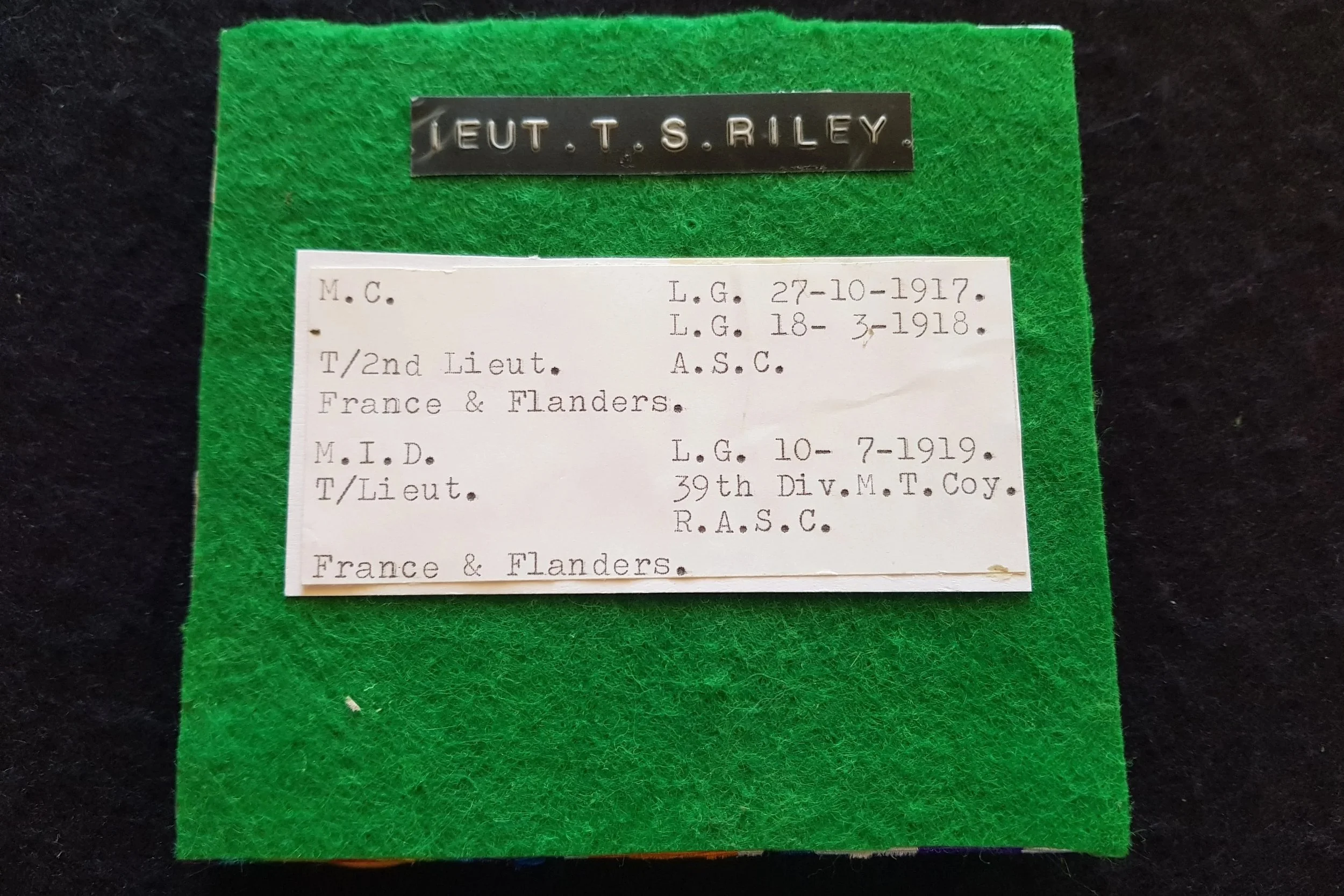
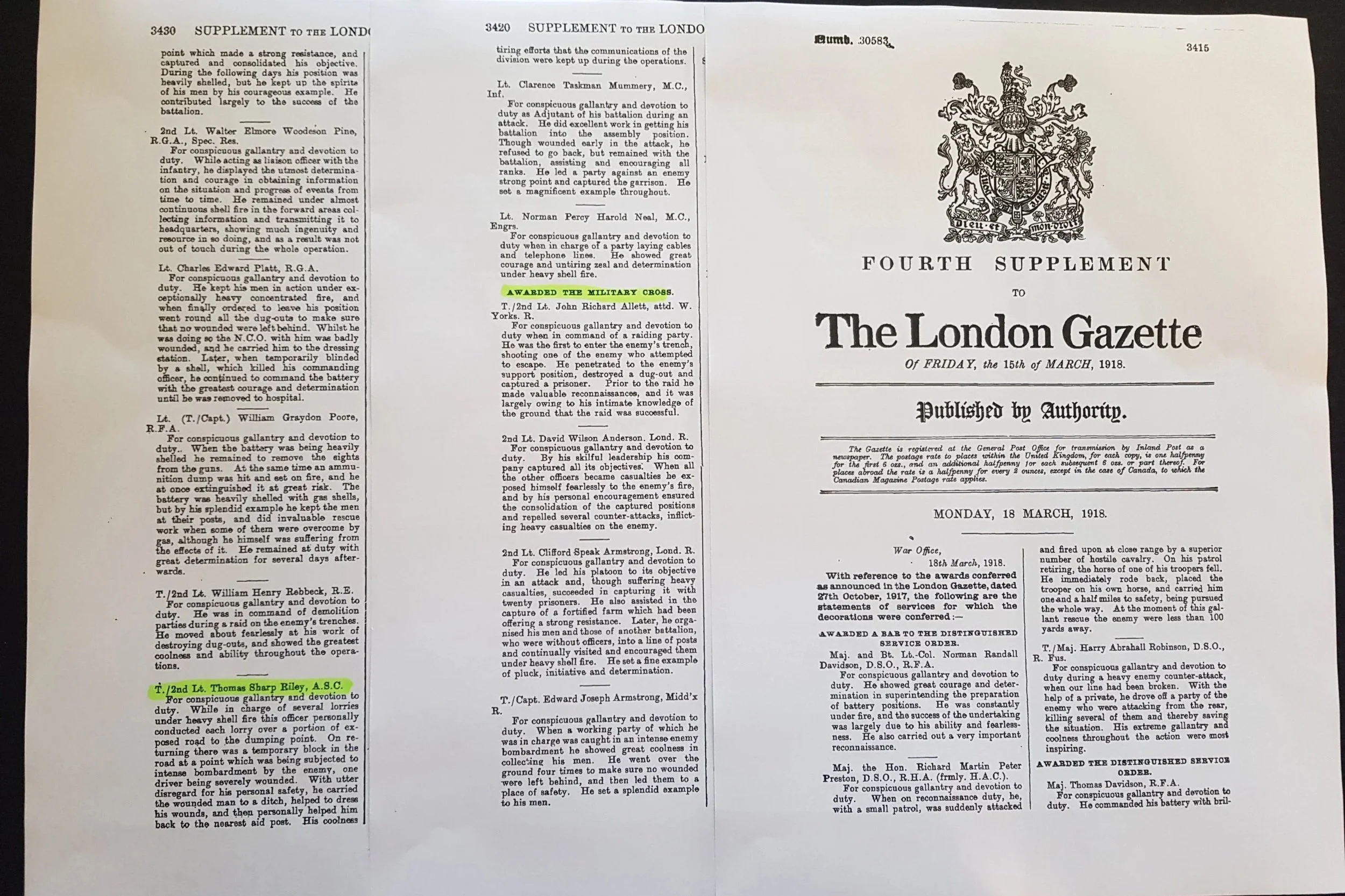
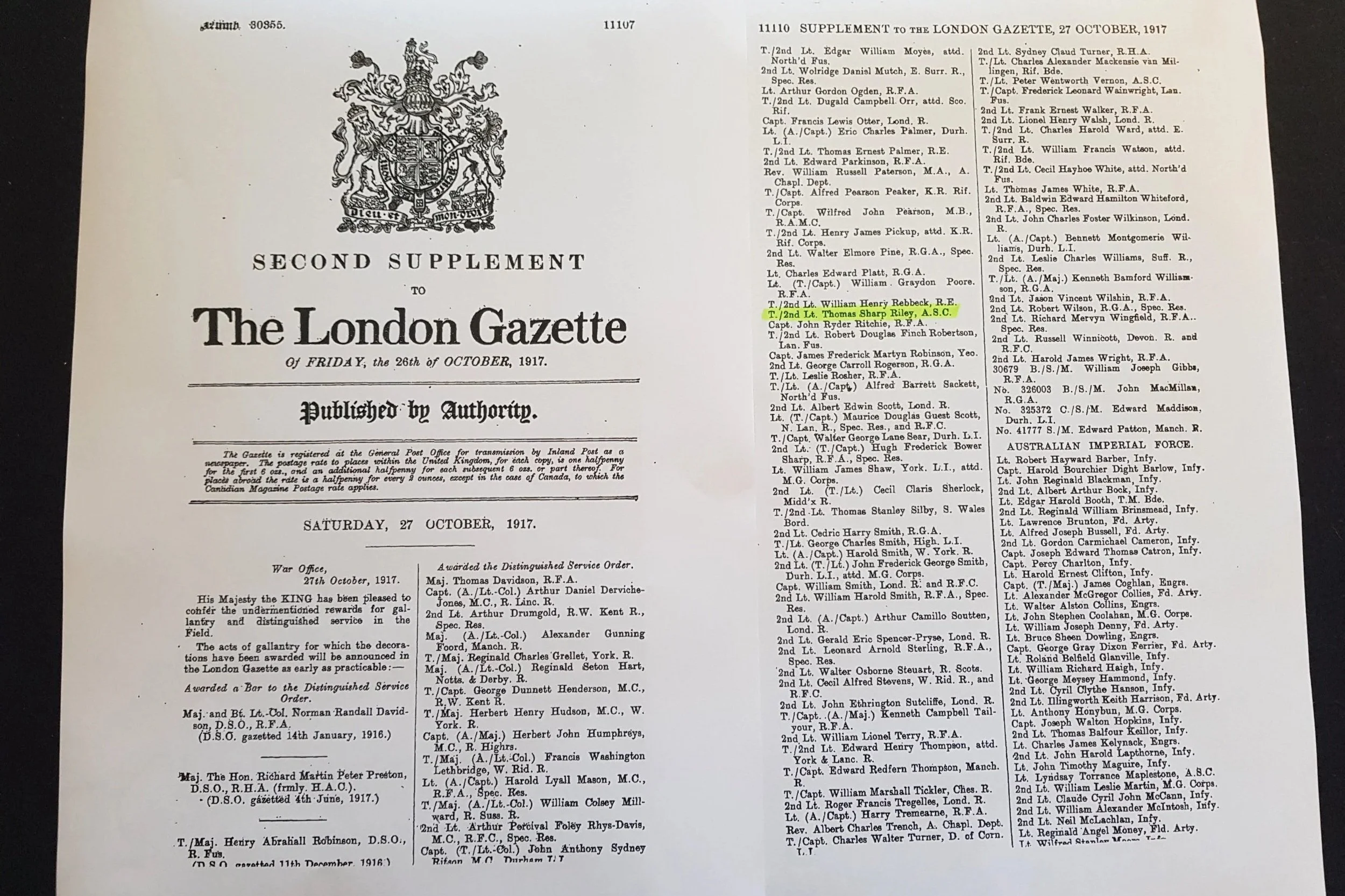
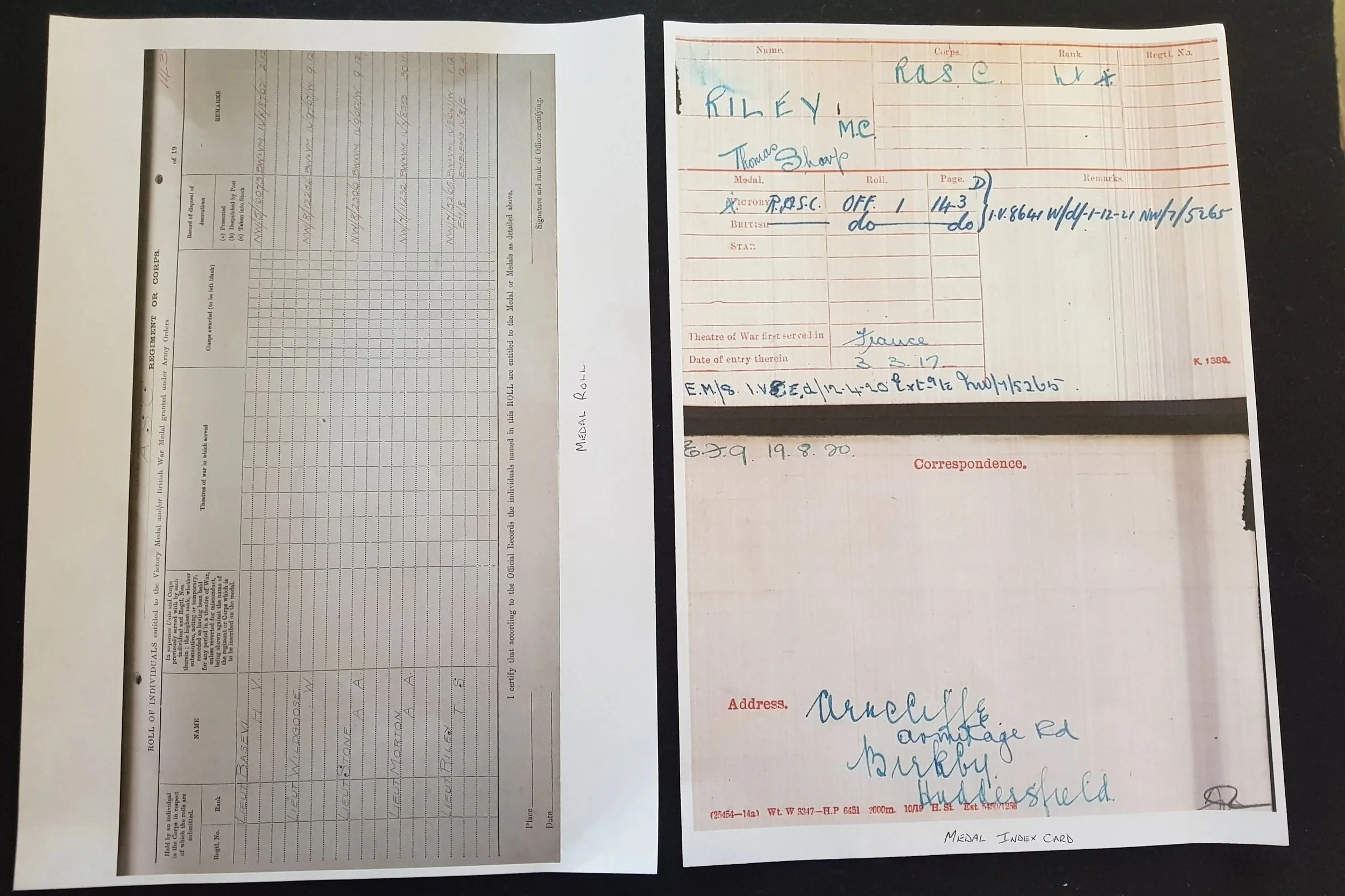
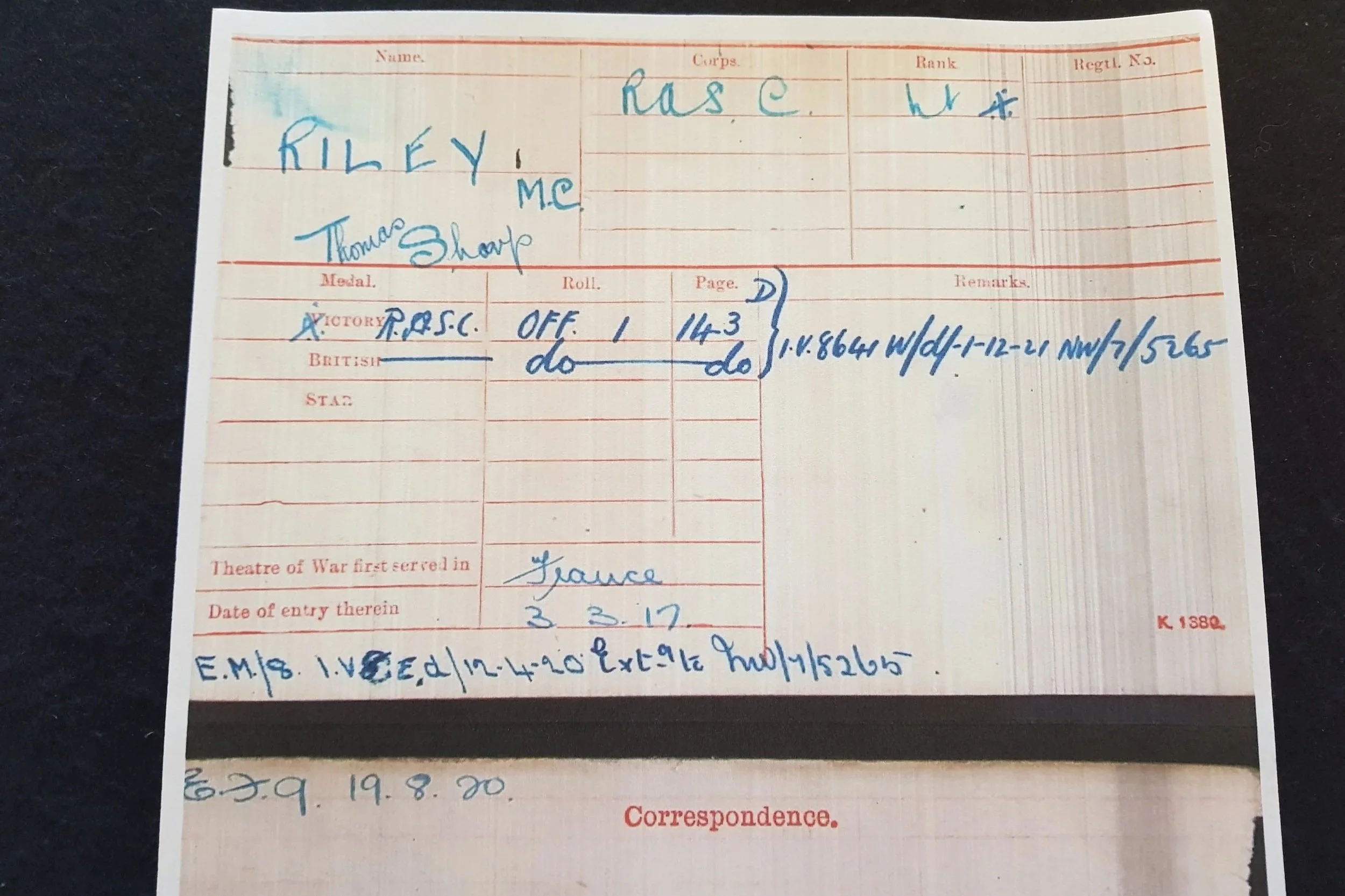
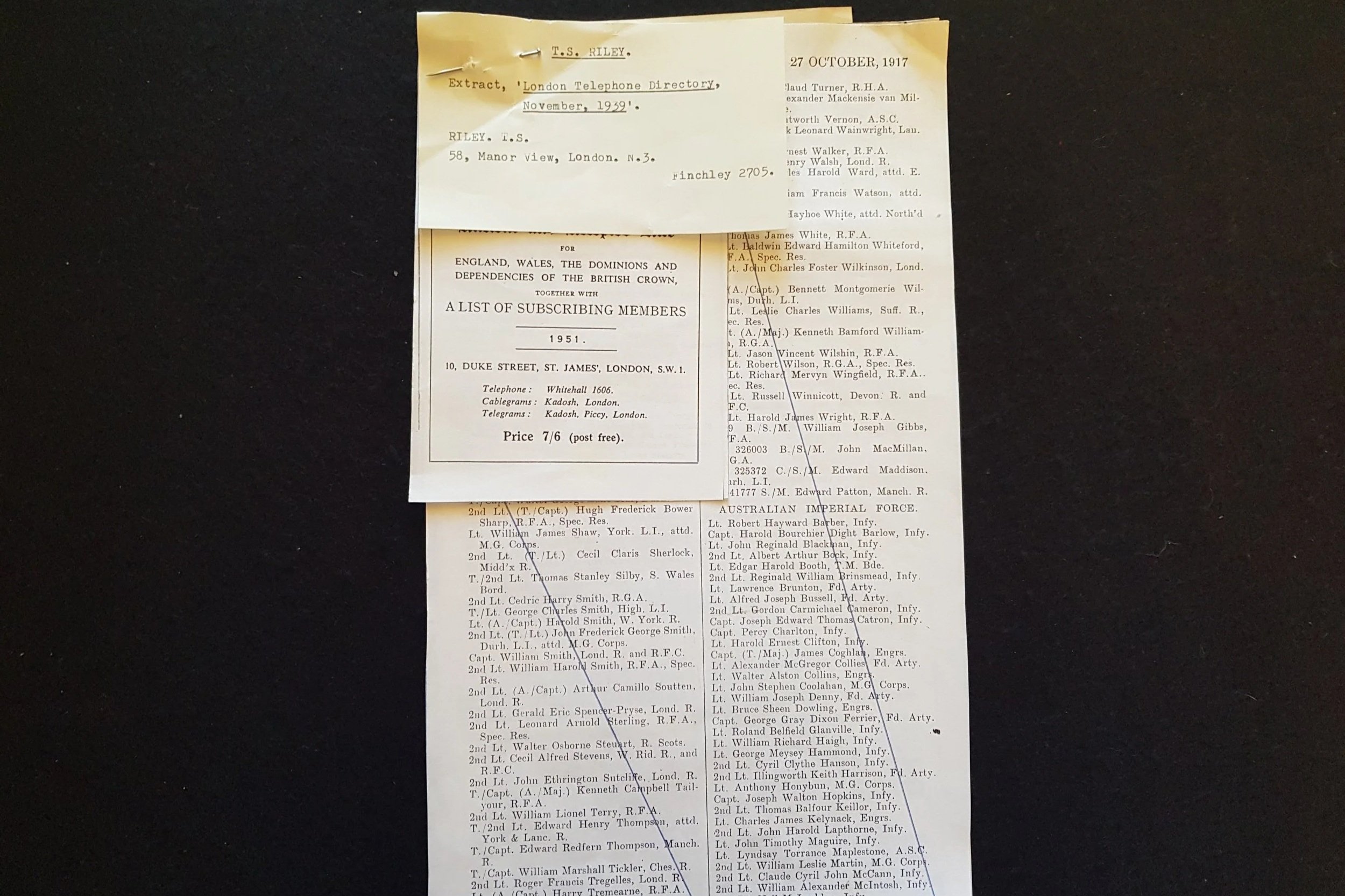
He landed in France on the 3rd March,1917, and served on the Western Front with the 39th M.Y. Coy, Army Service Corps. Thomas was mentioned in despatches ‘in recognition of gallant and distinguished service in France & Flanders’ – London Gazette 27th October 1917 refers.
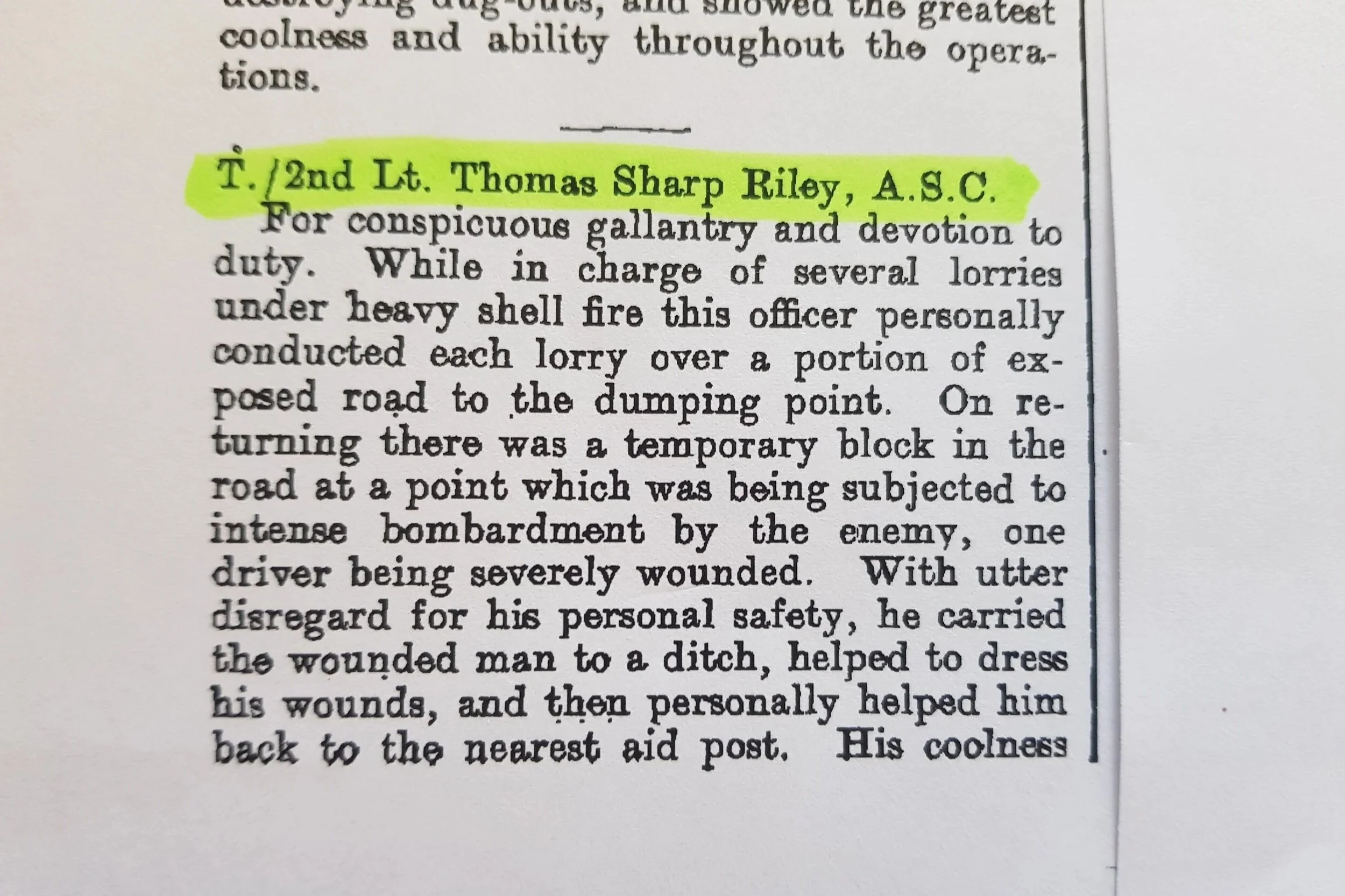
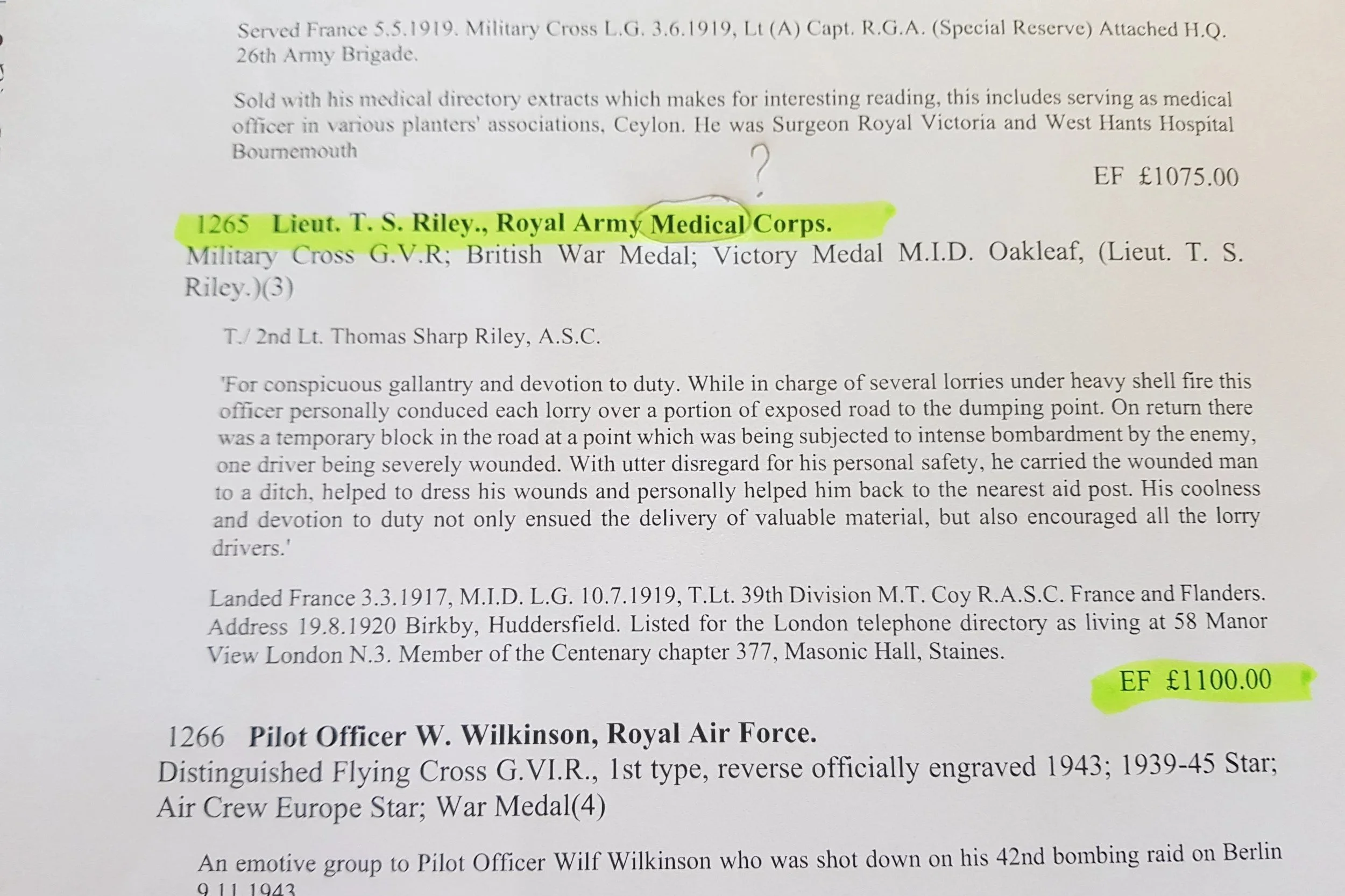
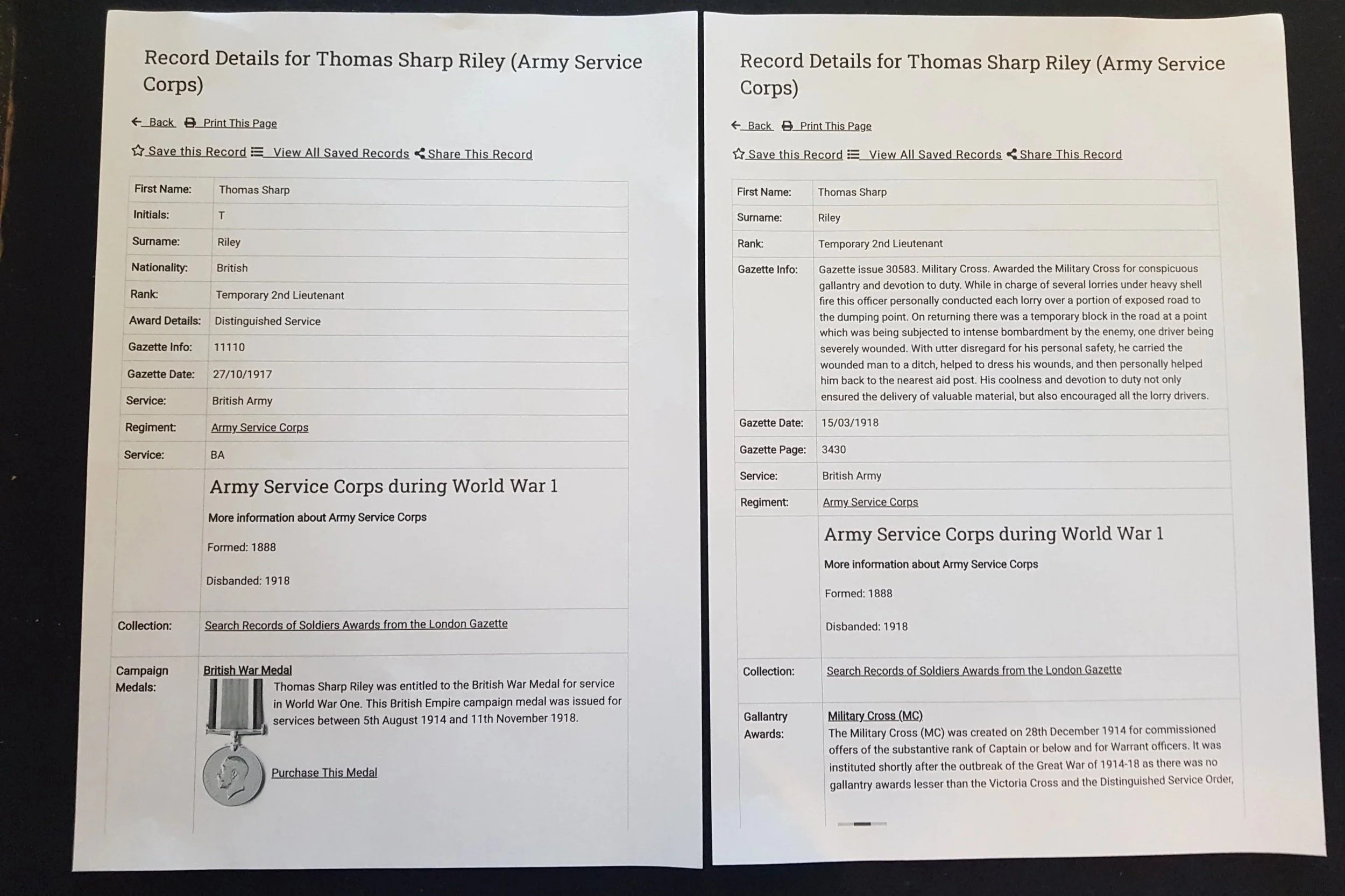
Thomas later went on to be awarded the Military Cross for conspicuous gallantry and devotion to duty as a result of helping to save the life of a severely wounded comrade whilst under heavy Germany artillery fire. The impressive citation reads as follows – ‘For conspicuous gallantry and devotion to duty. While in charge of several lorries under heavy shell fire this officer personally conducted each lorry over exposed road to the dumping point. On returning there was a temporary block in the road at a point which was being subjected to intense bombardment by the enemy, one driver being severely wounded. With utter disregard for his own personal safety, he carried the wounded man to a ditch, helped to dress his wounds, and personally helped him back to the nearest aid post. His coolness and devotion to duty not only ensured the delivery of valuable material, but also encouraged all the lorry drivers’ – London Gazette 18th March 1918 refers.
Thomas survived the war and returned to working life as a mechanical engineer. In 1920, after some experience in Barcelona as technical assistant to Mr. F.K. Mather, engineer, Mr. Riley became the London manager and engineer to Stork Brothers & Co, Amsterdam, for which firm he was concerned with the export of a wide range of machinery and was responsible for research and design.
During 1924 he married Louise Johanna de Wolf at Brentford, and they had two daughters together.
In 1929 he began an association as manager and engineer in London for James Hendry Ltd, Glasgow, makers of leather belting and fire brigade equipment.
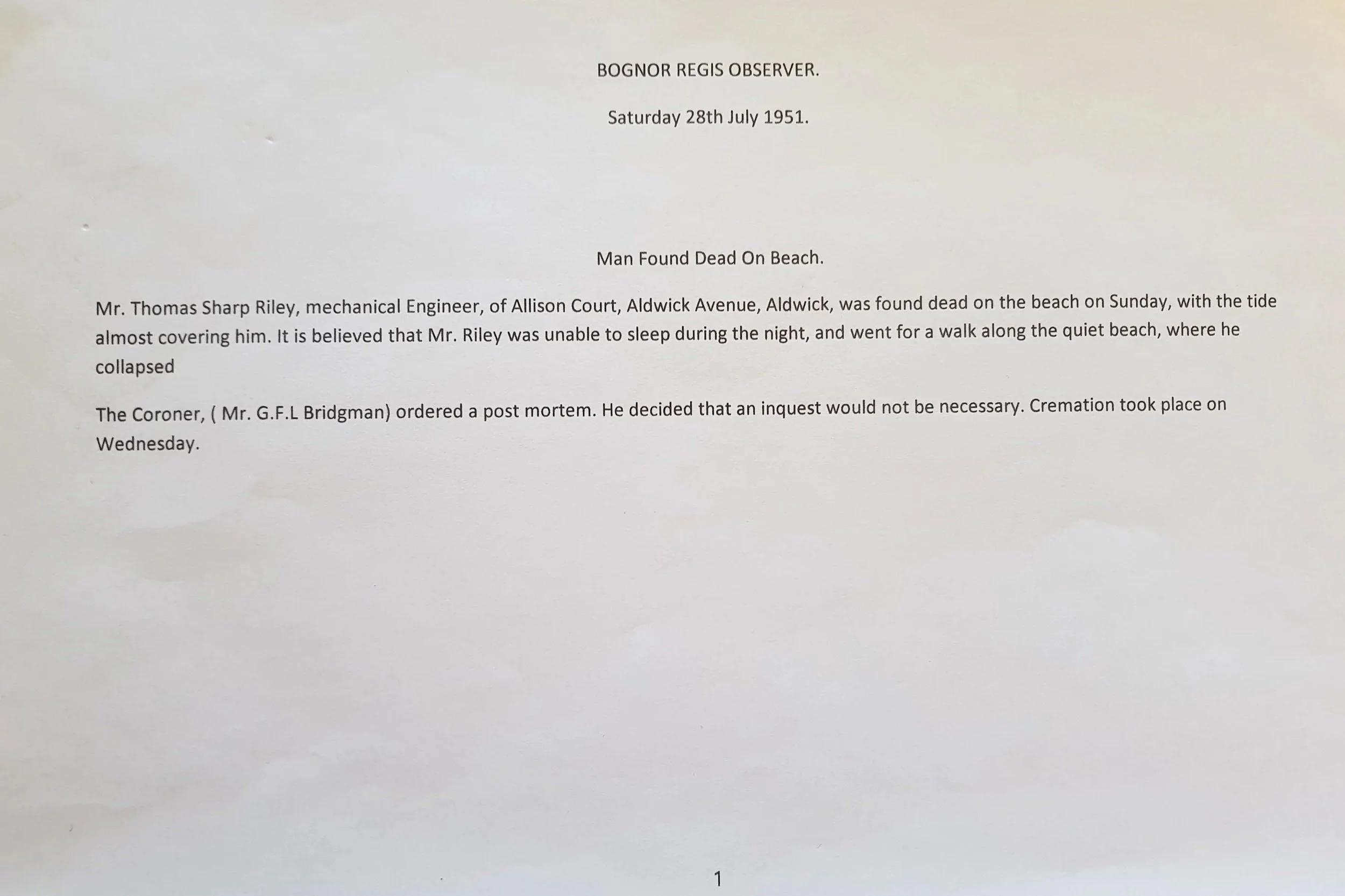
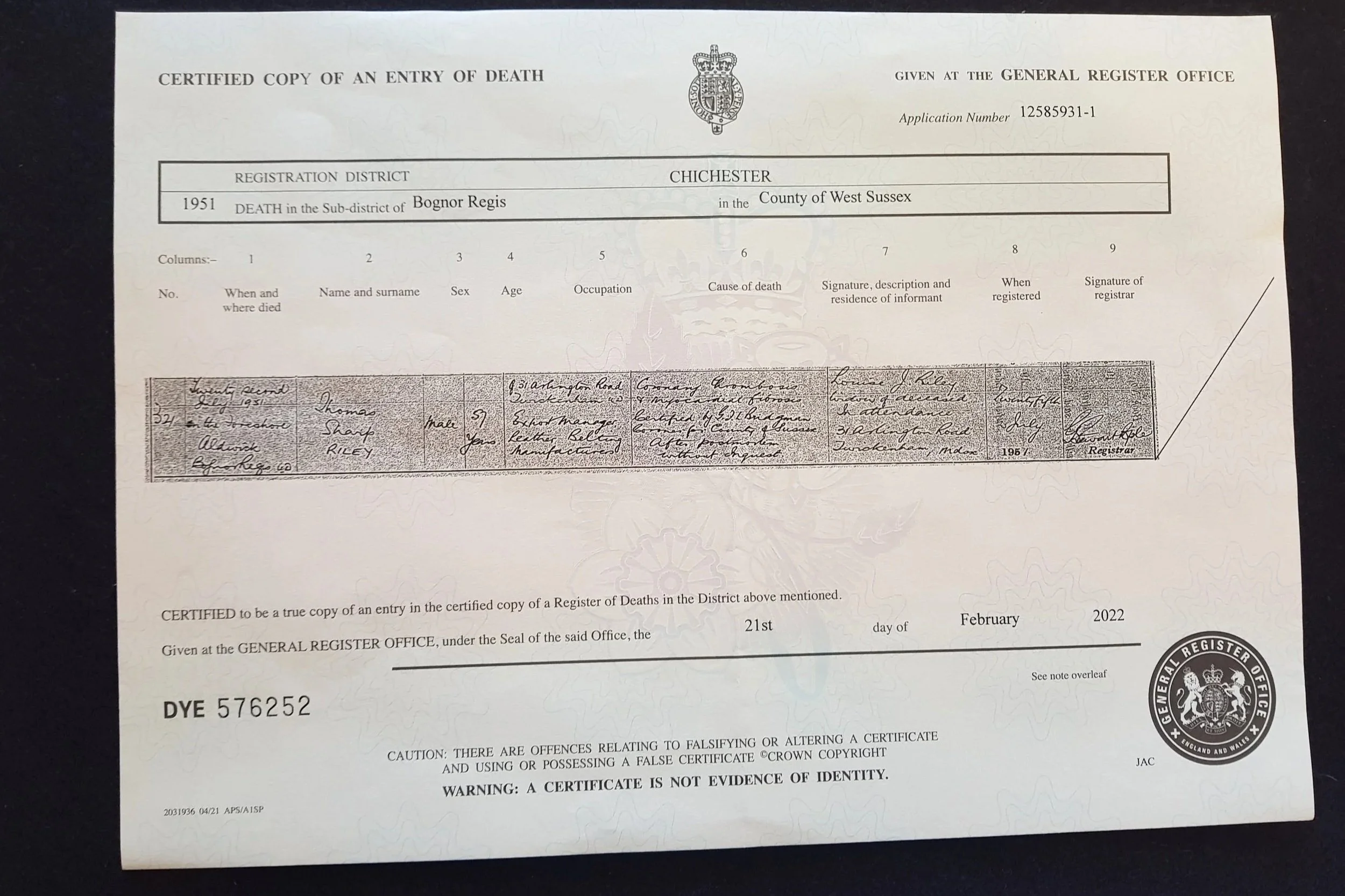
Thomas Sharp Riley was to die prematurely on Saturday 28th July 1951. His body was found on a section of beach at Bognor Regis, with the tide almost covering his body. He died from a heart attack whilst have an early morning walk due to not being able to sleep.
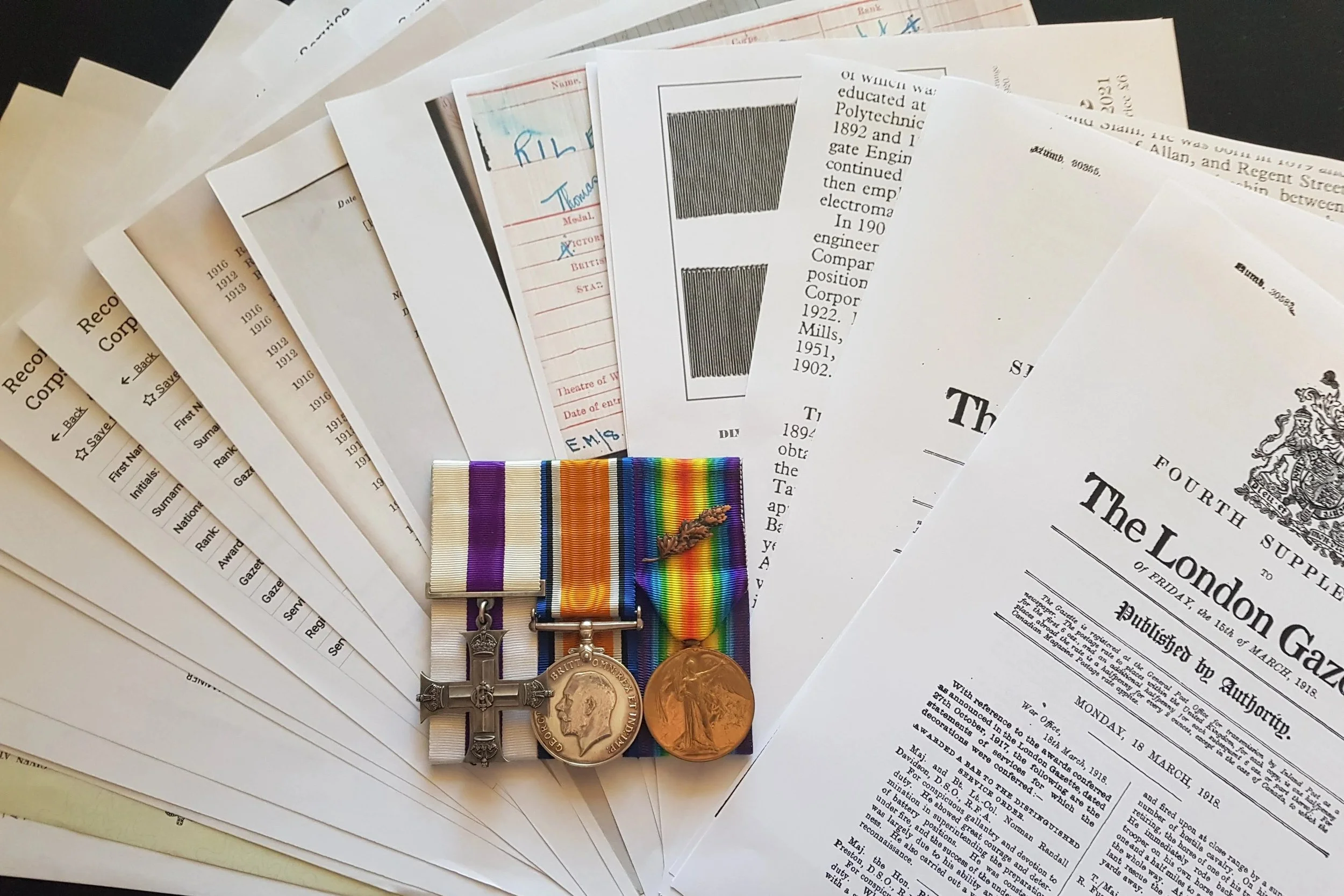
The medals are mounted for display, sold with a file of copied research, and are as follows –
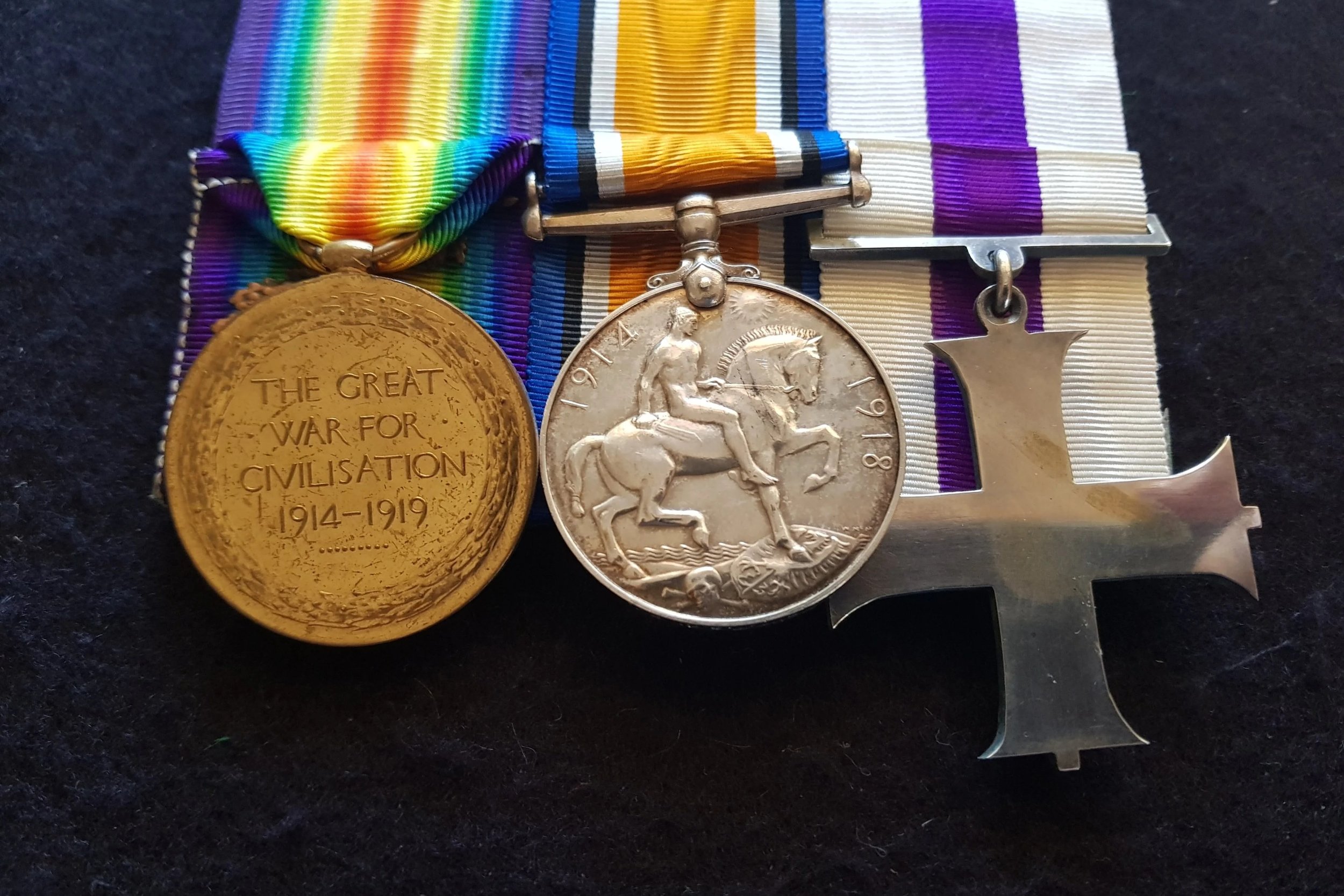
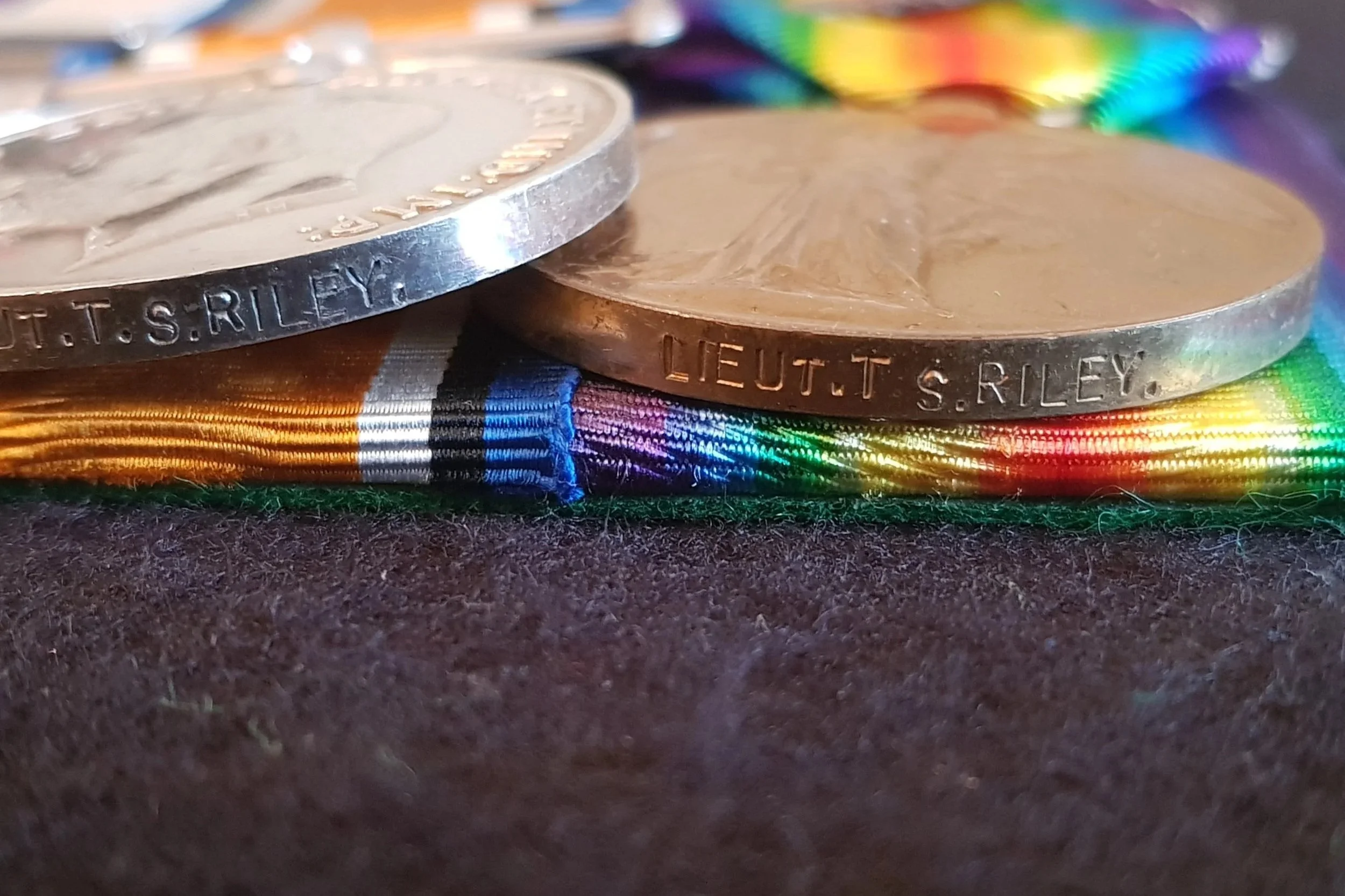
G.V.R. Military Cross, unnamed as issued; British War Medal & Victory Medal, with M.I.D. oakleaf, LIEUT. T. S. RILEY.
Condition, extremely fine – Thomas is not entitled to a 1914/15 Star
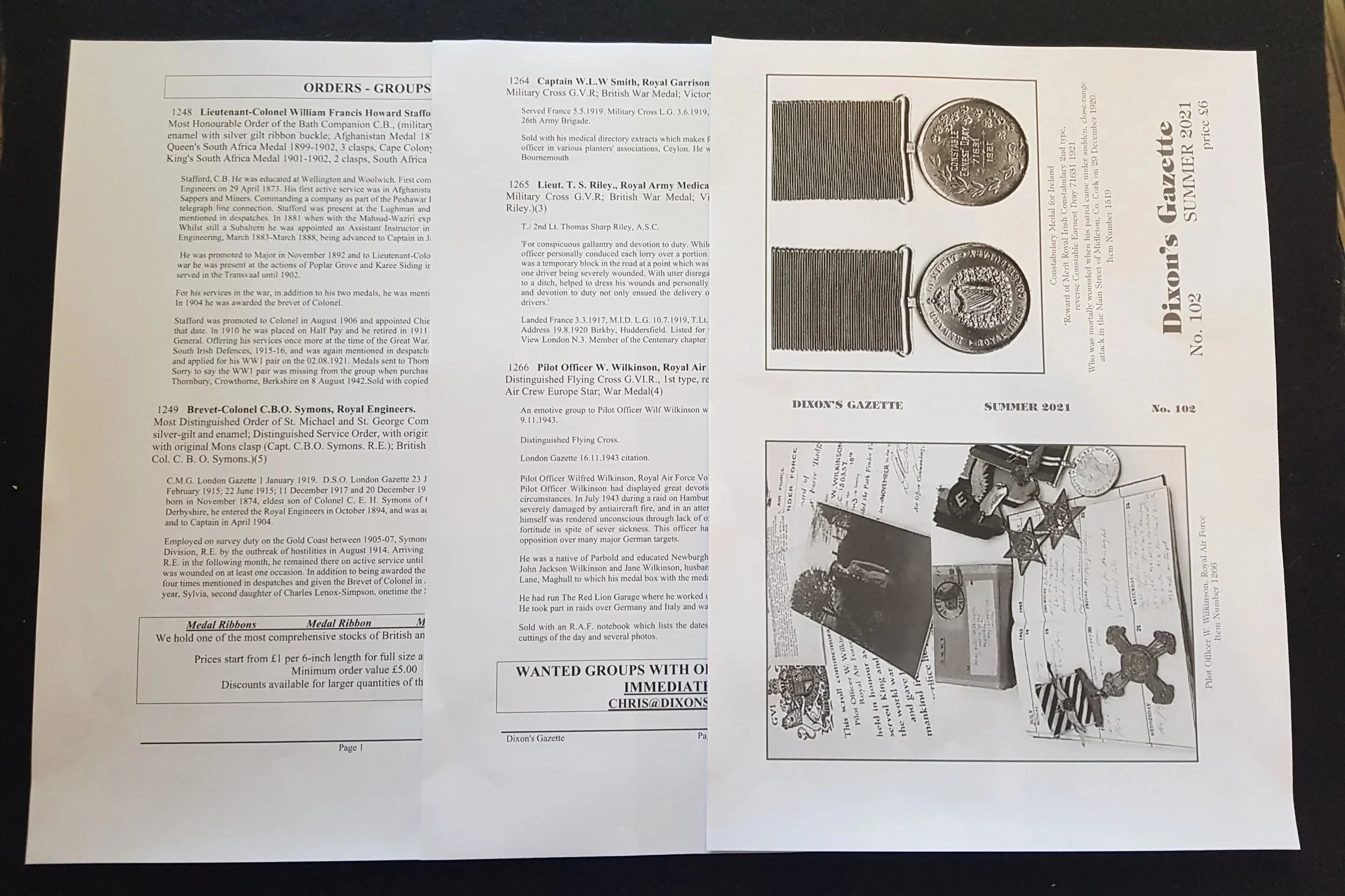
This medal group was last sold during the summer of 2021 whilst appearing in Dixon’s Gazette (medal catalogue) for £1100.00