A WW1 Royal Navy 'Q' Ships L.S.&.G.C. Medal Group to K.14296 Stoker G.H. Gardner (1606)
A WW1 Royal Navy 'Q' Ships L.S.&.G.C. Medal Group to K.14296 Stoker G.H. Gardner (1606)
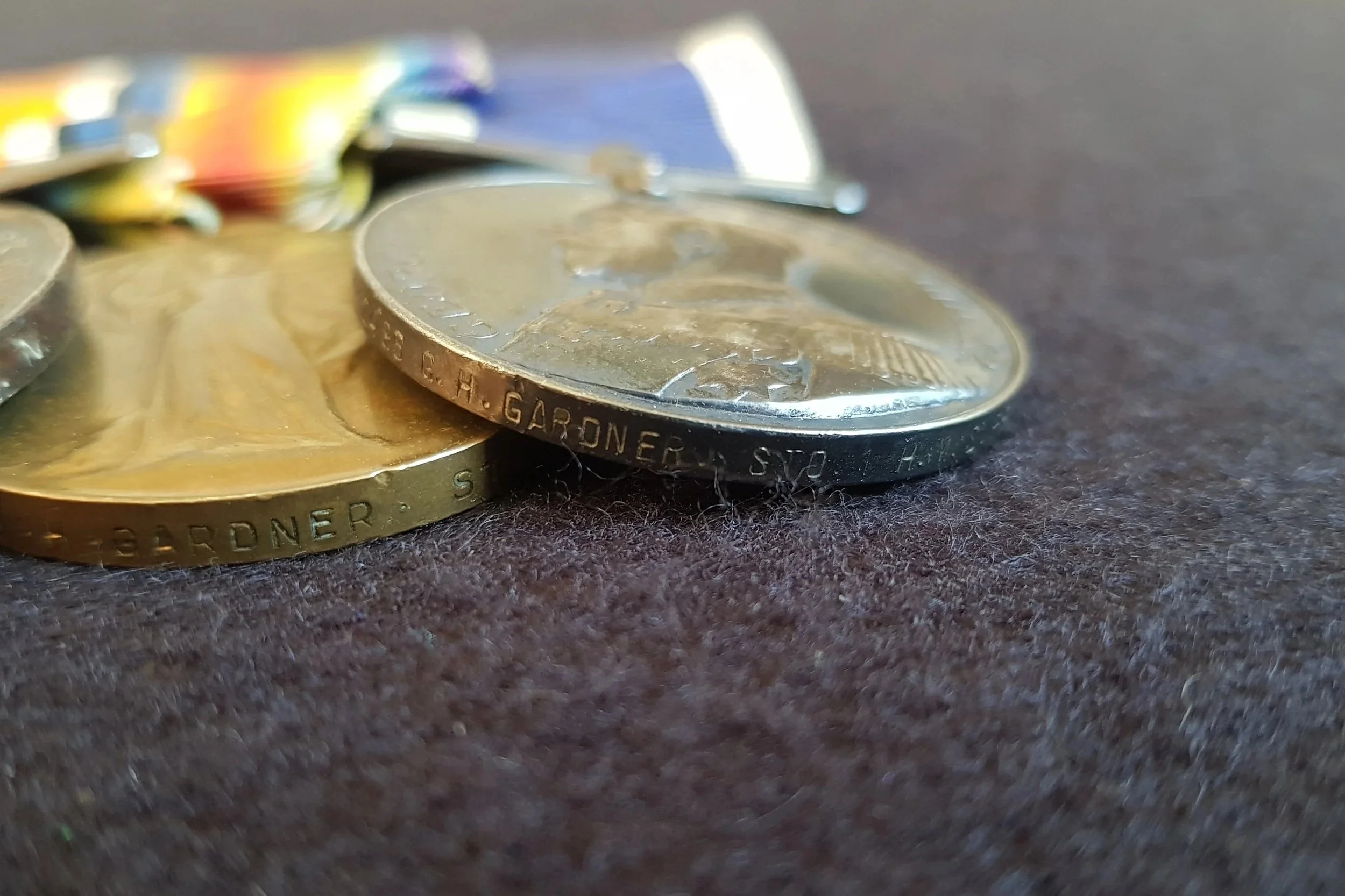
A WW1 Royal Navy 'Q' Ships L.S.&.G.C. Medal Group awarded to K.14296 Stoker G.H. Gardner.
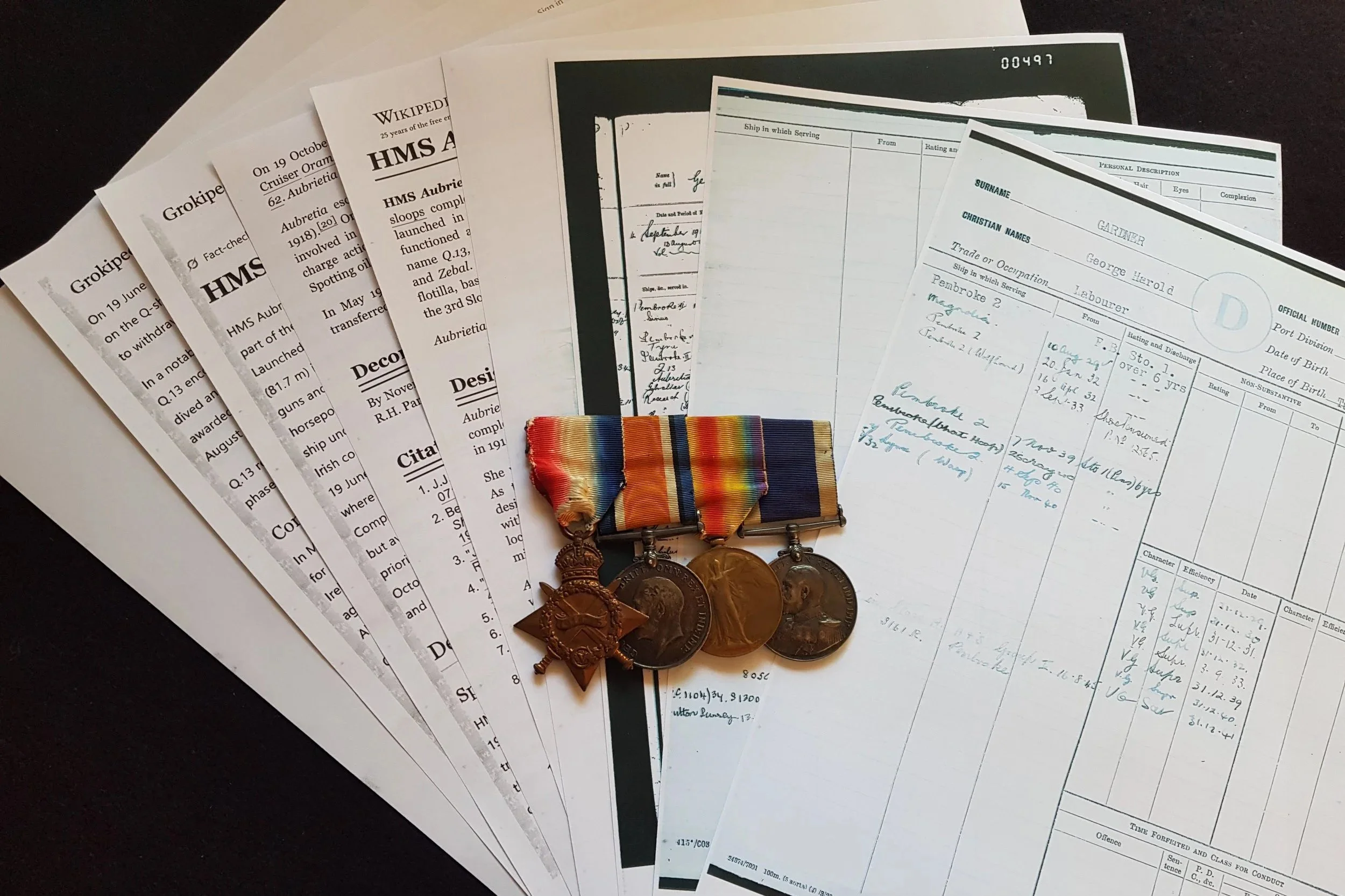
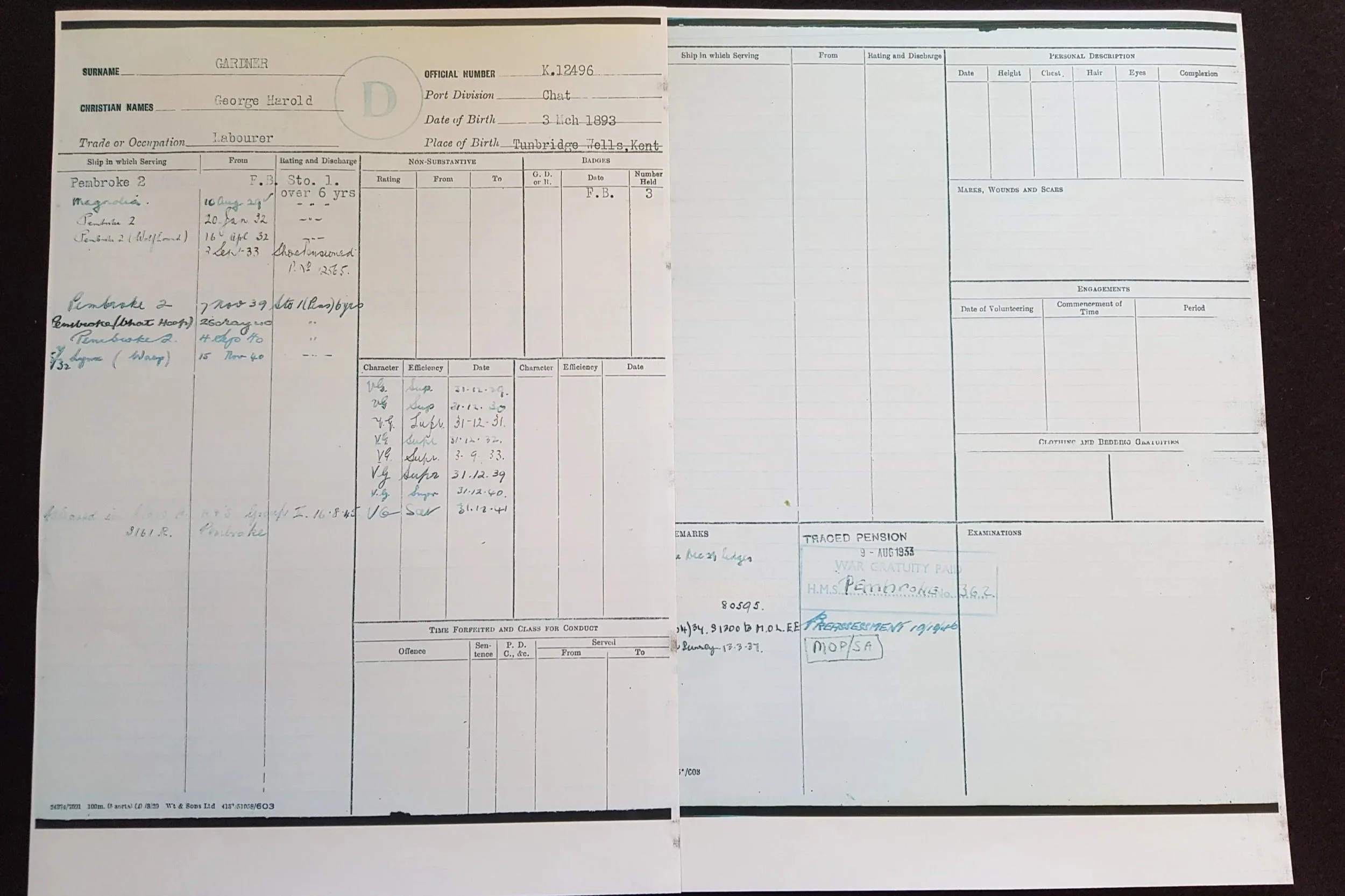
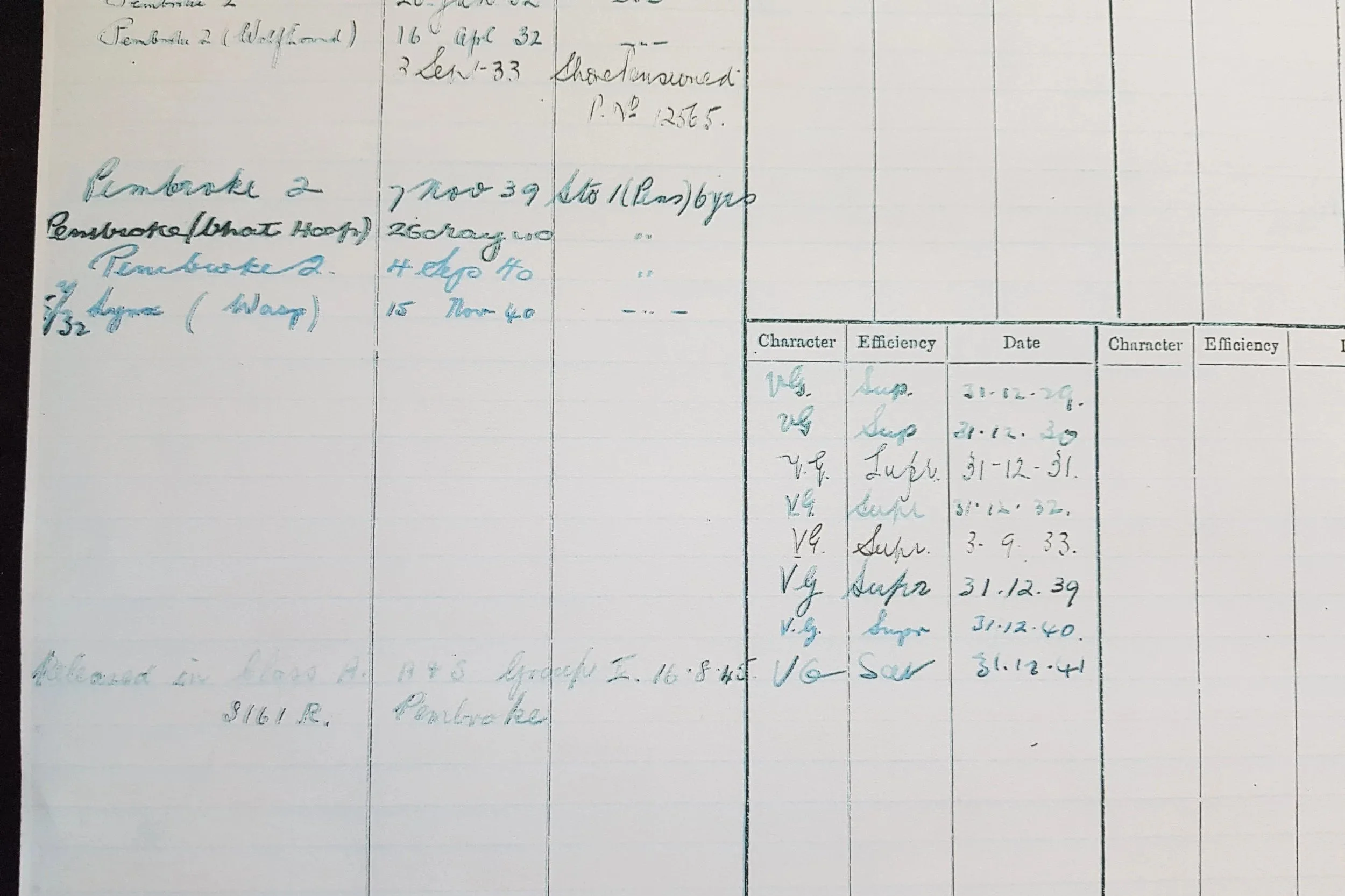
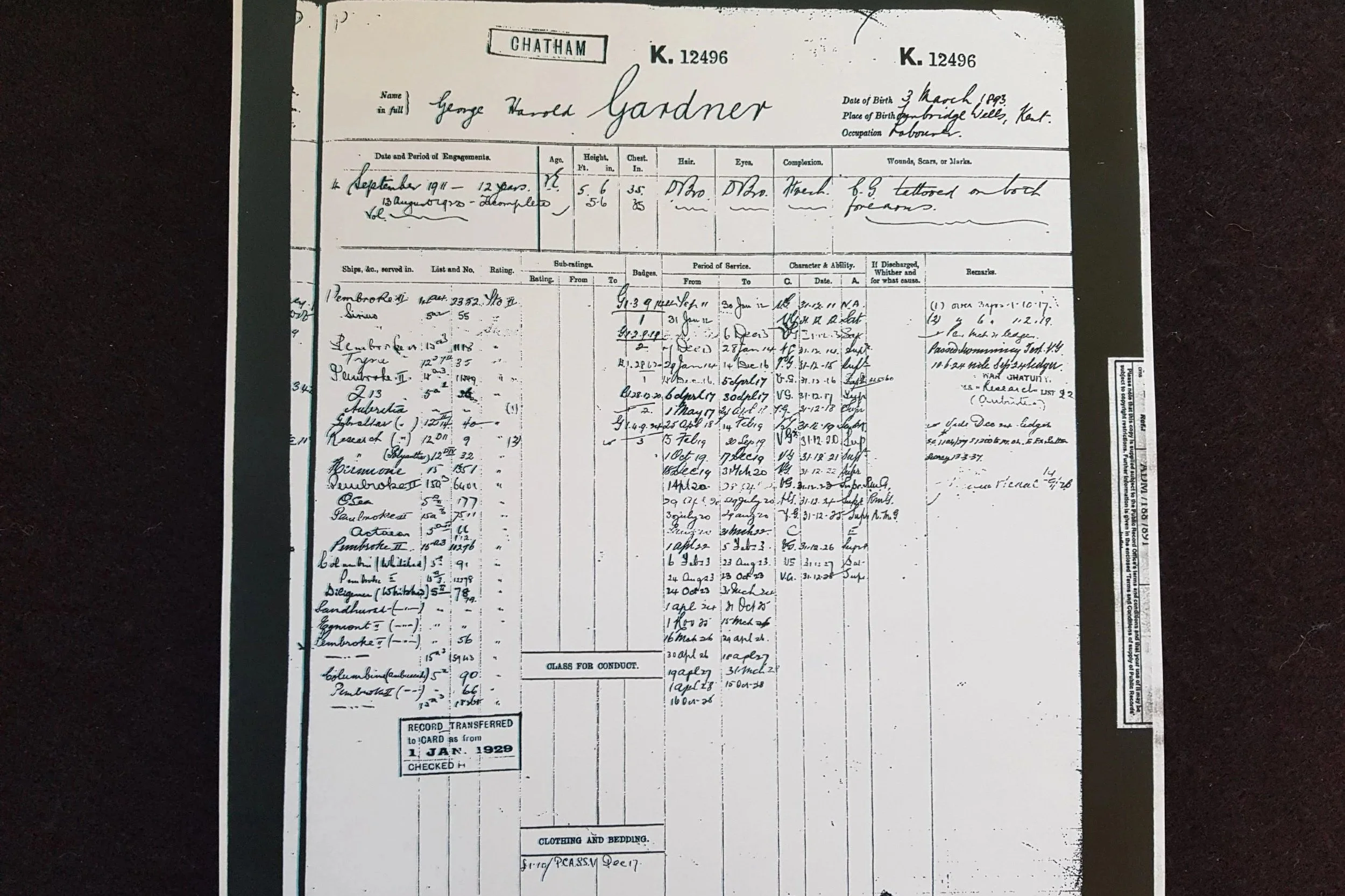
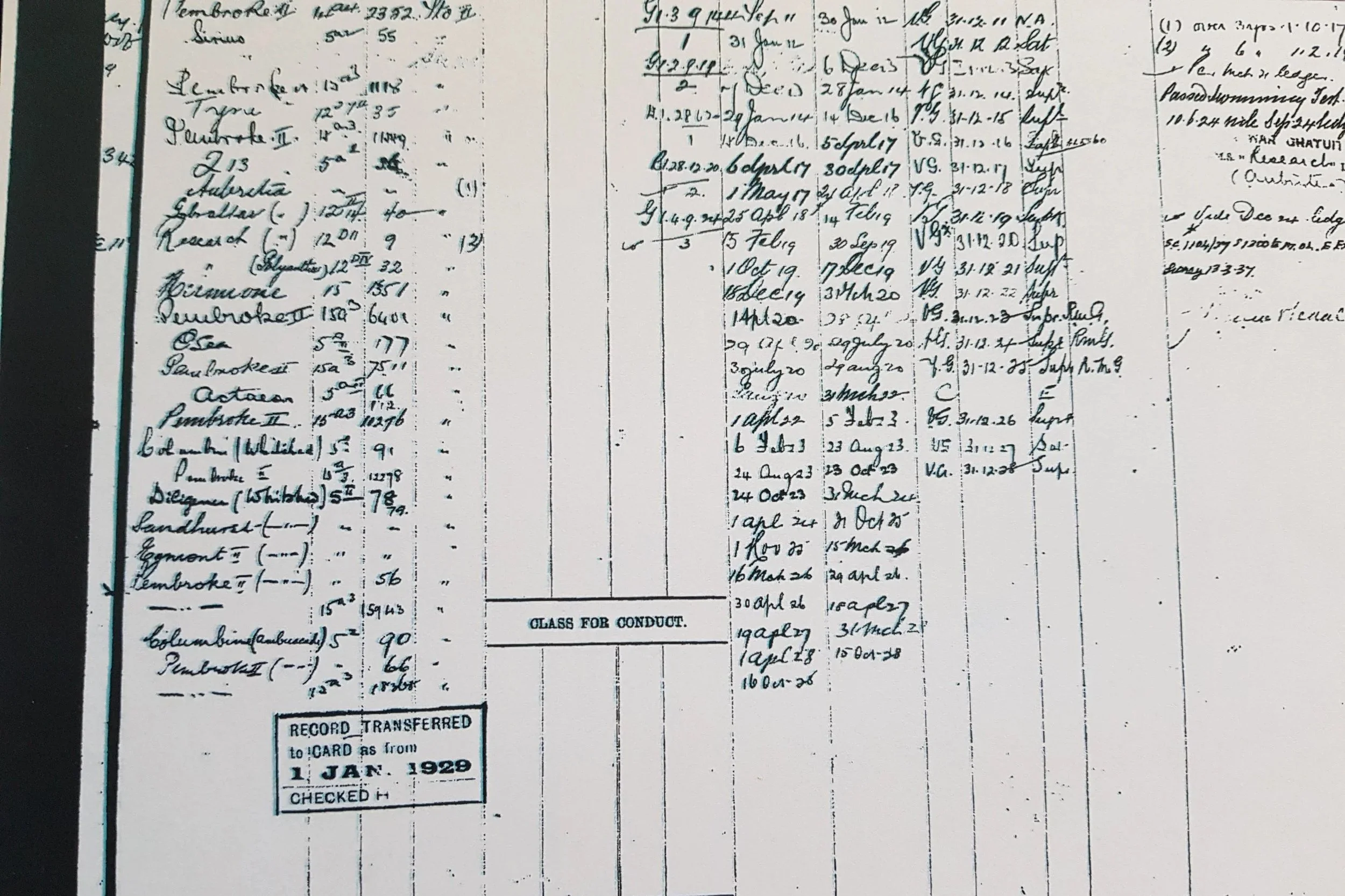
George Harold Gardner was born on the 3rd of March 1893, at Tunbridge Wells, Kent. He joined the ranks of the Royal Navy on the 14th September 1911, serving on a variety of shore bases and ships.
On the 6th April 1917, he served aboard Q.13, also know as H.M.S. Aubrietia, between 6.4.17 and 2.4.18, and then Gibralter and Research through to the end of the war.
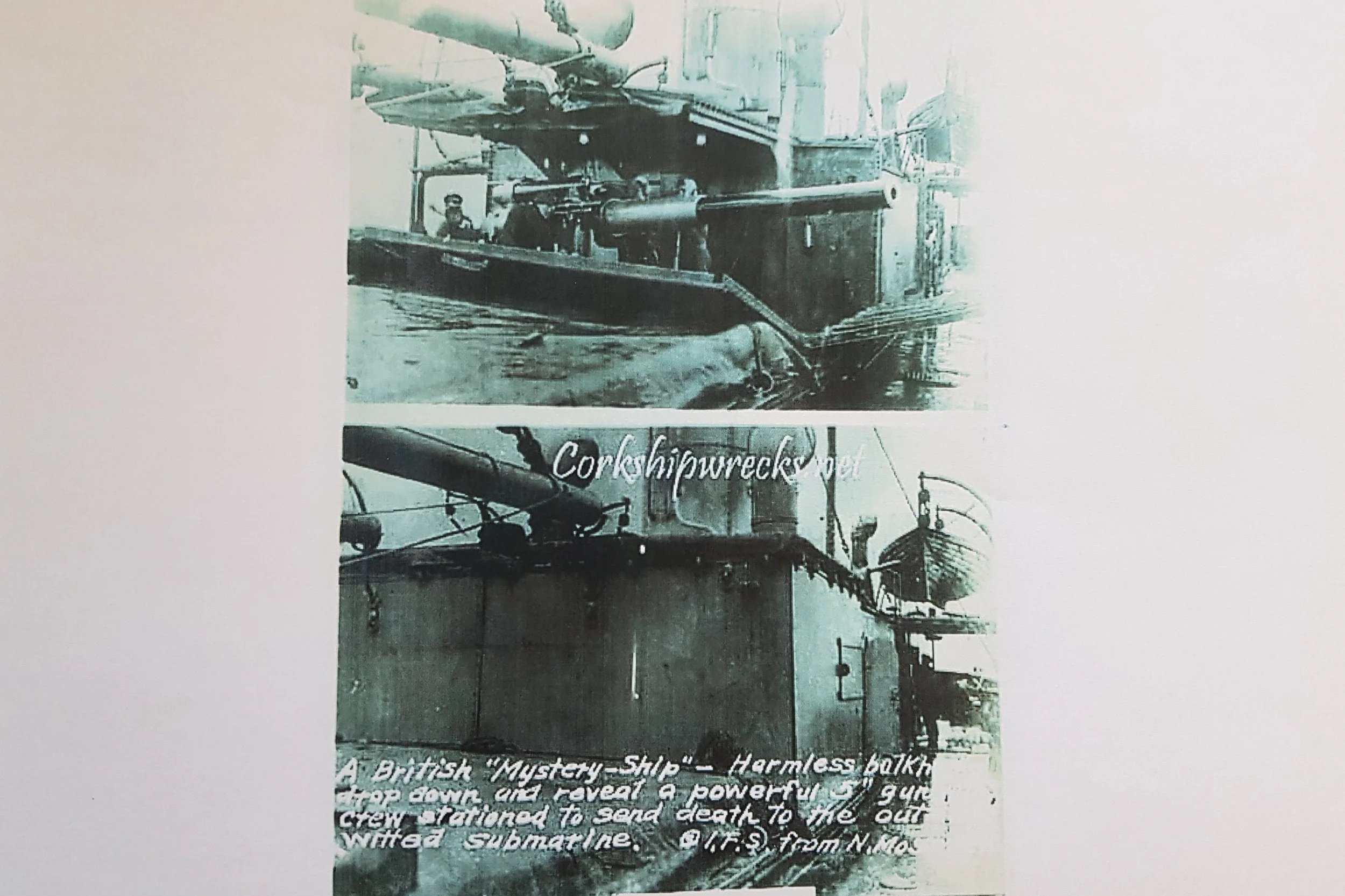
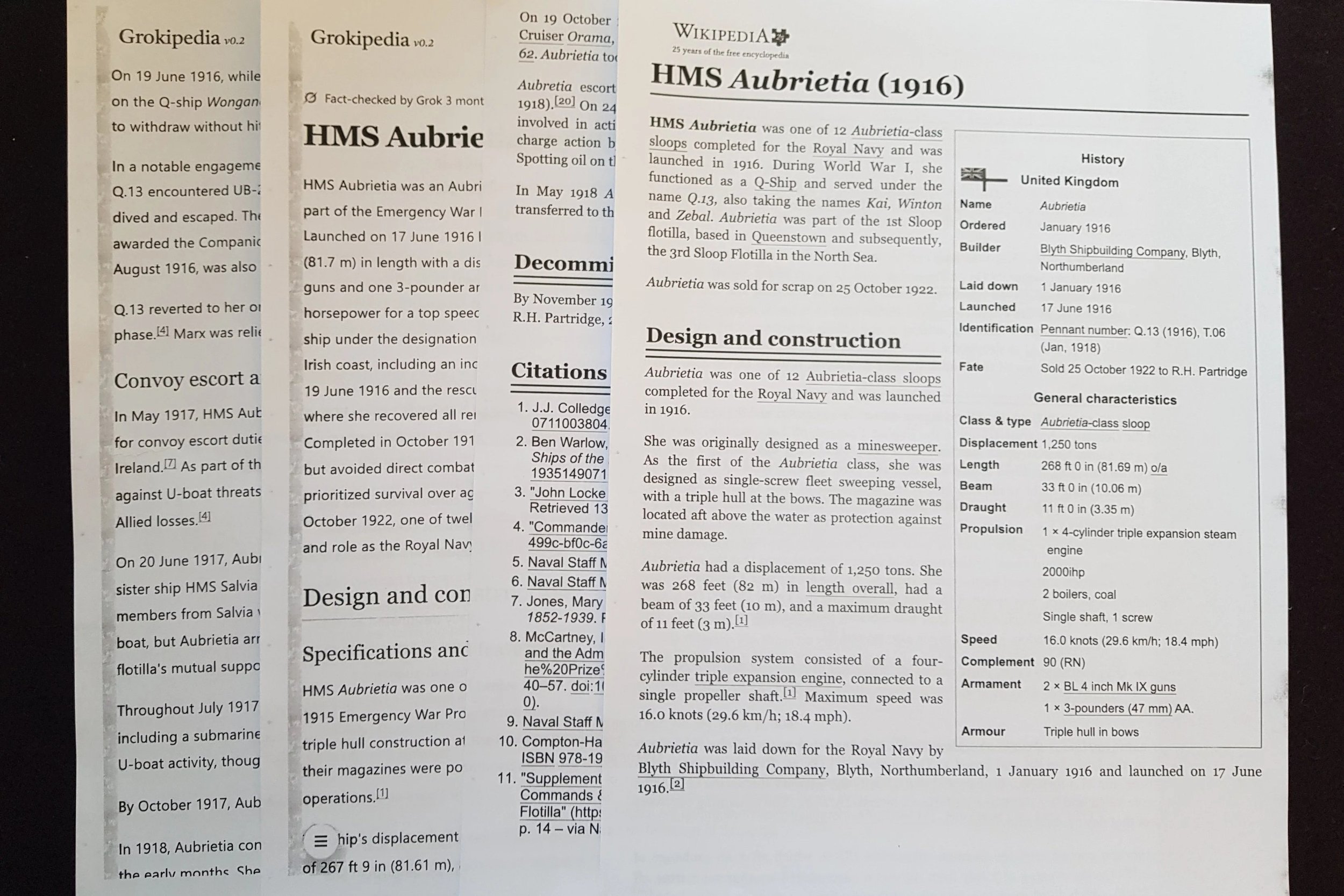
HMS Aubrietia was an Aubrietia-class convoy sloop of the Royal Navy, built during World War I as part of the Emergency War Programme to counter German U-boat threats in the Atlantic. Launched on 17 June 1916 by Blyth Shipbuilding and Drydock Company, she measured 268 feet (81.7 m) in length with a displacement of 1,250 tons standard and was armed with two 4-inch guns and one 3-pounder anti-aircraft gun, powered by a triple-expansion engine producing 2,500 horsepower for a top speed of 17 knots. Disguised as a tramp steamer to function as a Q-ship under the designation HMS Q.13, she participated in anti-submarine operations west of the Irish coast, including an incidental role in frustrating a U-boat attack on the Q-ship Wonganella on 19 June 1916 and the rescue of survivors from the torpedoed Q-ship Salvia on 20 June 1917, where she recovered all remaining crew amid heavy seas without further engagement. Completed in October 1916, Aubrietia served through the war in convoy escort and decoy duties but avoided direct combat sinkings, reflecting the class's design for ambush tactics that often prioritized survival over aggressive pursuits. Post-war, she was sold for breaking up on 25 October 1922, one of twelve sisters in a class noted for its "three-island" merchant-like silhouette and role as the Royal Navy's first purpose-built Q-ships.
Specifications and features
HMS Aubrietia was one of twelve sloops of the Aubrietia class, constructed under the Royal Navy's 1915 Emergency War Programme initially as fleet minesweeping vessels. These ships featured a triple hull construction at the bows to provide enhanced protection against mine detonations, and their magazines were positioned aft above the waterline for improved safety during sweeping operations. The ship's displacement was 1,250 long tons (1,270 t). Her dimensions included a length overall of 267 ft 9 in (81.61 m), a beam of 33 ft 6 in (10.21 m), and a draught of 12 ft 6 in (3.81 m). Propulsion was provided by a four-cylinder triple-expansion steam engine rated at 2,500 indicated horsepower (ihp), powered by two coal-fired boilers and driving a single shaft with screw propeller, achieving a top speed of 17.5 knots (32.4 km/h; 20.1 mph) (designed; typical 16.5 knots at 2,500 ihp). The original armament consisted of two BL 4-inch (102 mm) Mk IX naval guns in single mounts and one QF 3-pounder (47 mm) anti-aircraft gun. She had a complement of 90 officers and ratings. Aubrietia's pennant numbers were Q.13 in 1916 and T.06 from January 1918.
Building and commissioning
HMS Aubrietia was ordered in January 1916 as part of the Royal Navy's wartime expansion to counter submarine threats. She was constructed by Blyth Shipbuilding and Dry Dock Co Ltd at their yard in Blyth, Northumberland, to serve as a convoy sloop disguised as a merchant vessel, featuring concealed armament typical of the Aubrietia class. The vessel was launched on 17 June 1916, marking a key milestone in her construction amid the urgent demands of the First World War. Following launch, final preparations continued, with Lieutenant John Locke Marx, R.N.R., appointed to command her on 20 August 1916 while she was still being readied for active duty. Aubrietia completed fitting out and entered service in October 1916, initially designated as HMS Q.13 for her role as a Q-ship designed to lure and engage enemy submarines. Assigned to the 1st Sloop Flotilla at Queenstown (now Cobh, Ireland), she was prepared for anti-submarine operations in the Western Approaches.
Q-ship operations (1916–1917)
HMS Aubrietia was designated as the Q-ship Q.13 upon entering service in late 1916 and flew neutral flags like the Danish ensign to lure German U-boats into close range for ambush. She operated from Devonport on initial anti-submarine patrols in the English Channel and South Western Approaches between October and December 1916, employing standard Q-ship tactics of feigned vulnerability to draw submarines to effective gun range. On 19 June 1916, while westward of the southwest Irish coast, Q.13 approached a U-boat attack on the Q-ship Wonganella, inadvertently disrupting the engagement and causing the submarine to withdraw without hits. In a notable engagement on 12 January 1917 off Les Casquets, operating out of Milford Haven, Q.13 encountered UB-23. The crew simulated abandonment, then attacked the submarine, which dived and escaped. The Admiralty rejected a sinking claim, but commander John Locke Marx was awarded the Companion of the Bath (C.B.) for the action. Marx, who had commanded since 20 August 1916, was also awarded the Distinguished Service Order (D.S.O.) for his Q-ship service.Q.13 reverted to her original name HMS Aubrietia on 1 May 1917, ending the disguised Q-ship phase. Marx was relieved in command on 24 September 1917.
Convoy escort and patrol duties (1917–1918)
In May 1917, HMS Aubrietia, having relinquished her Q-ship disguise, joined the 1st Sloop Flotilla for convoy escort duties in the Irish Sea, operating from the base at Queenstown (now Cobh) in Ireland. As part of this assignment, she contributed to the protection of merchant shipping against U-boat threats during a period when unrestricted submarine warfare was intensifying Allied losses. On 20 June 1917, Aubrietia played a key role in rescue operations following the sinking of her sister ship HMS Salvia (Q.15) by the German submarine U-94 southwest of Ireland. Five crew members from Salvia were killed in the engagement, and her commander was captured by the U-boat, but Aubrietia arrived to pick up the surviving personnel from the water, highlighting the flotilla's mutual support in hazardous patrols. Throughout July 1917, Aubrietia engaged in several anti-submarine actions off the Irish coast, including a submarine action on 7 July. These encounters underscored Aubrietia's role in deterring U-boat activity, though without confirmed sinkings.By October 1917, Aubrietia was assigned to escort duties for transatlantic convoys.In 1918, Aubrietia continued her escort responsibilities, particularly for Dakar-bound convoys in the early months. She protected Convoy HD22 departing on 5 February, HD24 on 3 March, and HE6 on 24 February. During the escort of Convoy HE7 on 16 March, Aubrietia dropped depth charges on a suspected submarine after sighting oil on the surface, though no confirmation of a hit was obtained. These missions exemplified the sloop's contribution to the convoy system's success in reducing merchant shipping sinkings. Later in the war, Aubrietia shifted to broader patrol duties, joining the Northern Patrol in May 1918 to monitor North Sea approaches. By the armistice in November 1918, she had transferred to the 3rd Sloop Flotilla based at Dundee, conducting operations against lingering U-boat threats in the North Sea. While Aubrietia achieved no confirmed U-boat sinkings during this phase, her efforts in escorts, patrols, and rescues—such as the Salvia incident, which affected crew morale across the flotilla—played a vital part in the deterrence strategy that ultimately curtailed German submarine effectiveness.
George Gardner also served during WW2 when he was based at the MTB/MGB base at H.M.S. Lynx (Wasp) from November 1940 through to his discharge in 1945 – he will also have a WW2 medal entitlement.
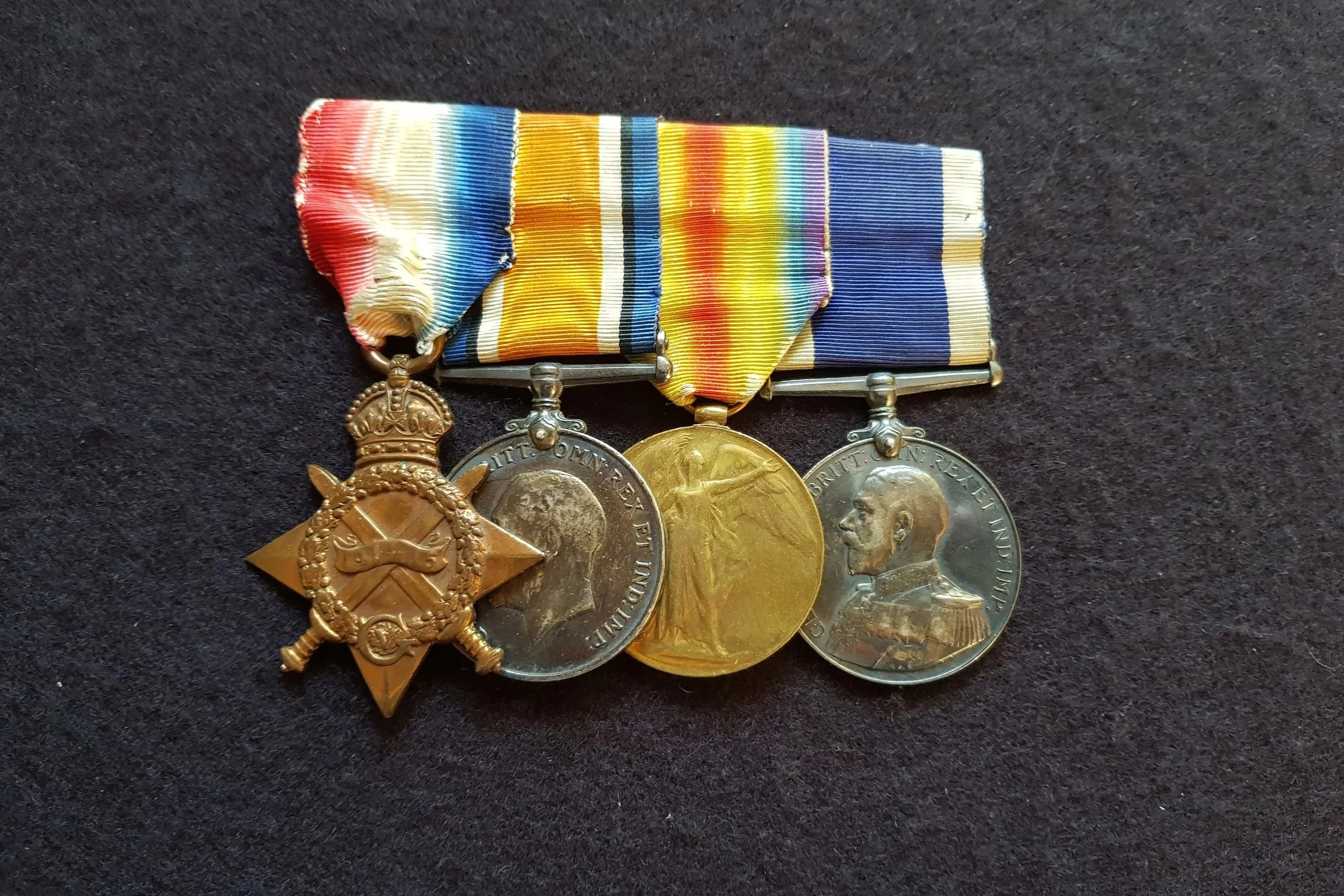
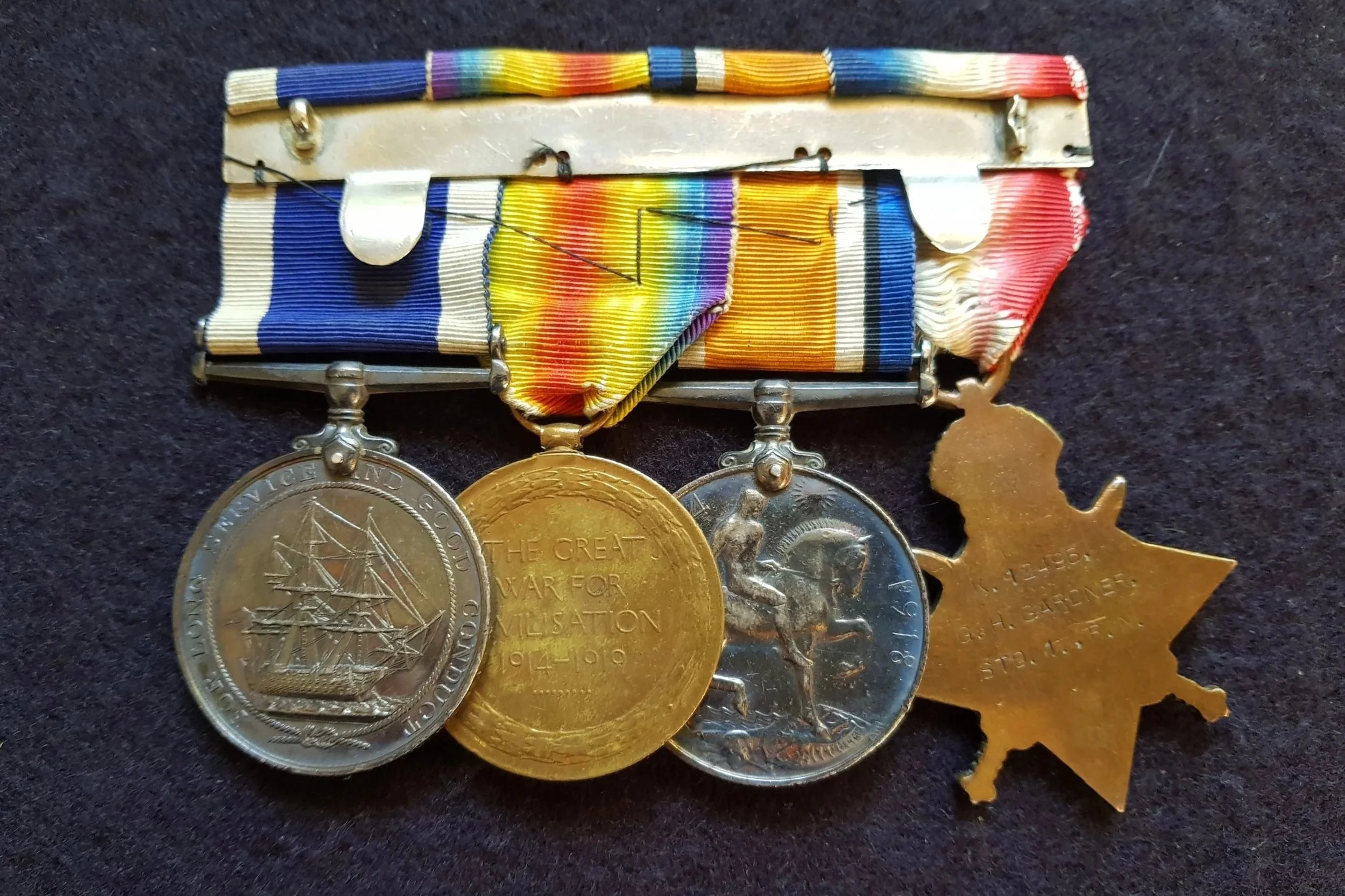
The medals are mounted as originally worn (pin on the reverse is broken), sold with copied research, and are as follows –
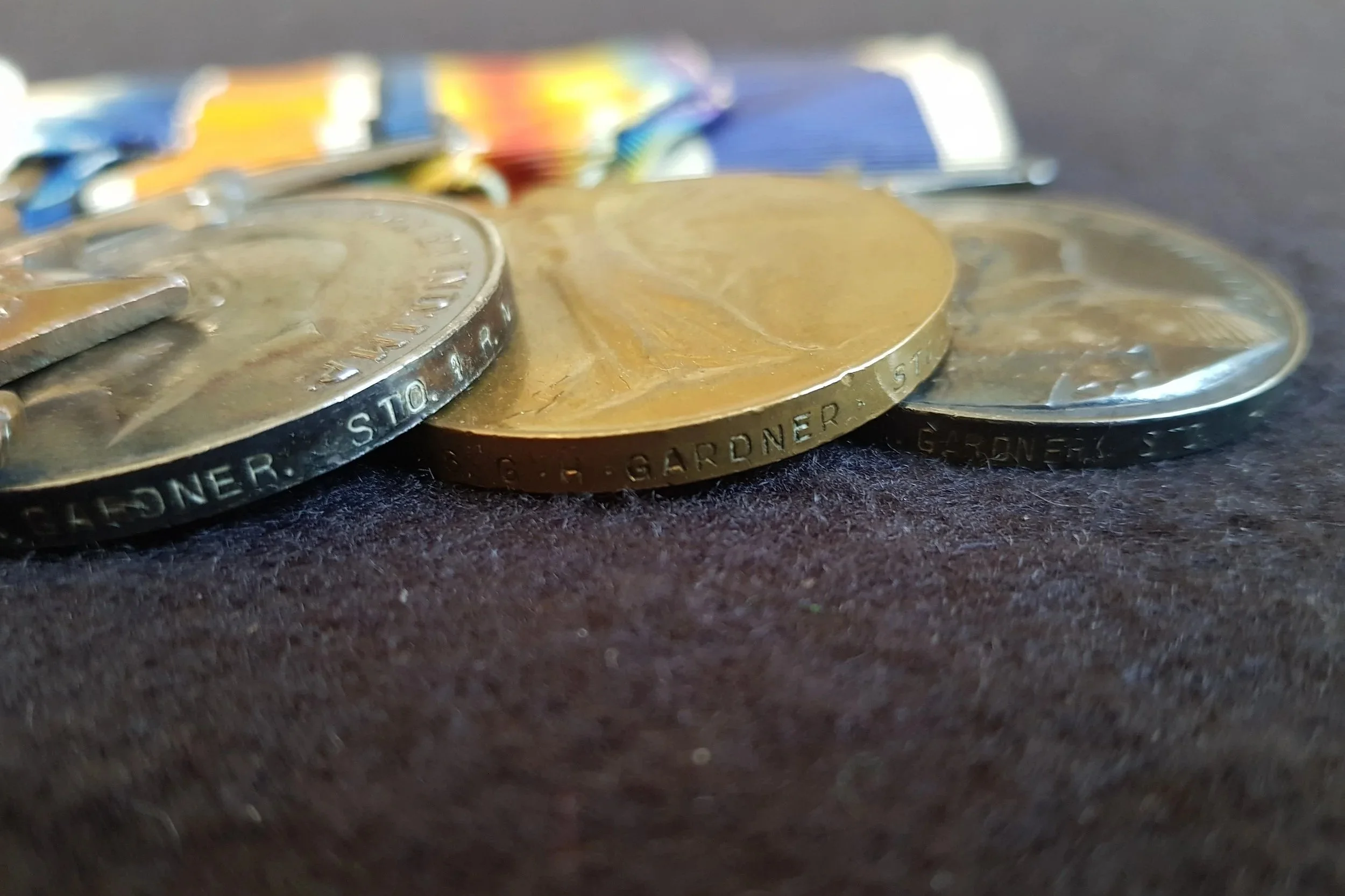
1914/15 Star, K.12496, G.H. GARDNER, STO. 1., R.N.; British War & Victory Medals, K12496 G. H. GARDNER. STO. 1. R.N.; G.V. Royal Navy Long Service & Good Conduct Medal, K.12496. G.H. GARDNER. STO.1. H.M.S. PEMBROKE.
Condition, very fine