A WW1 Royal Marine Light Infantry L.S.&.G.C. 2nd Battle of Heligoland Bight Medal Group to 10673 Pte. A. King (1595)
A WW1 Royal Marine Light Infantry L.S.&.G.C. 2nd Battle of Heligoland Bight Medal Group to 10673 Pte. A. King (1595)
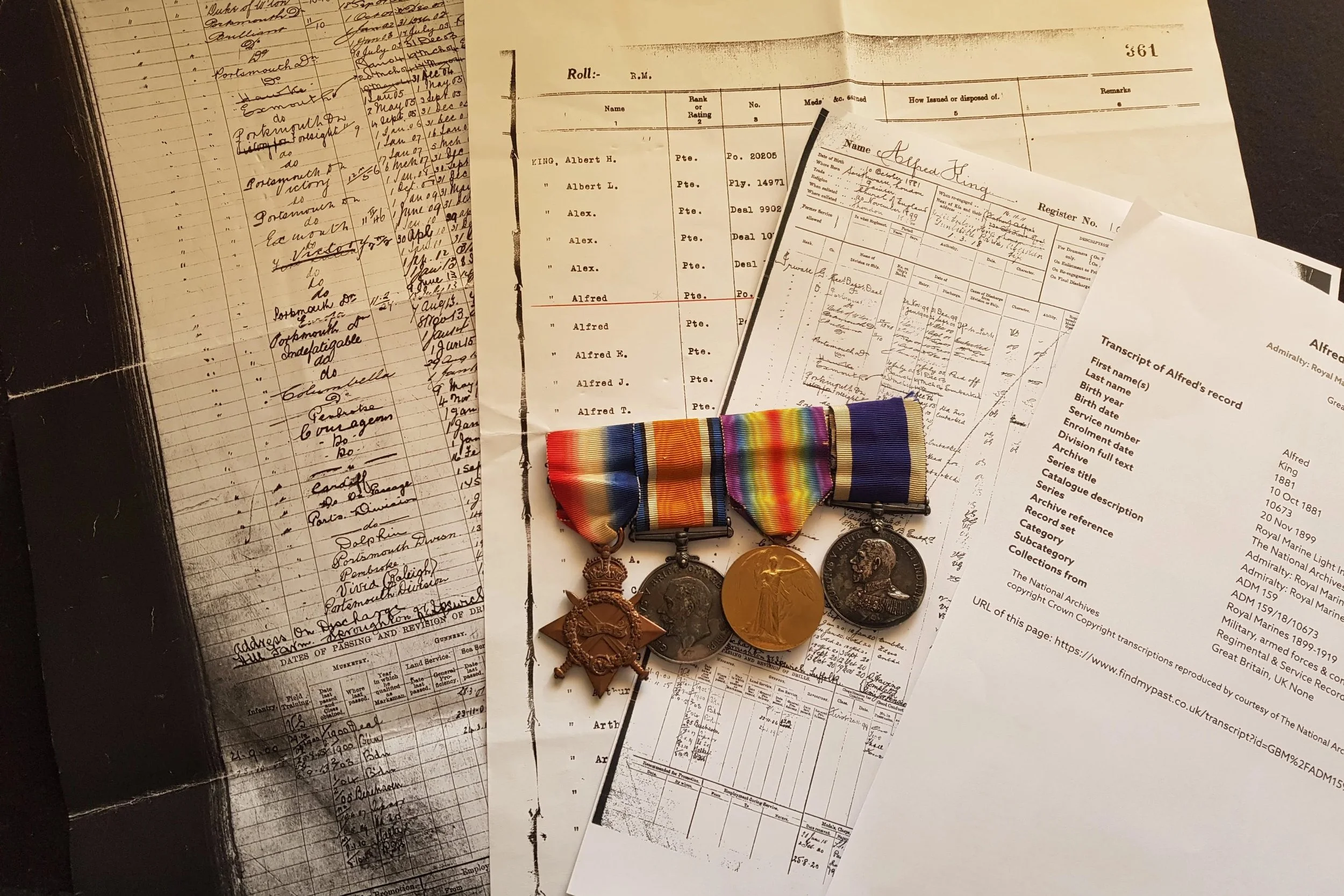
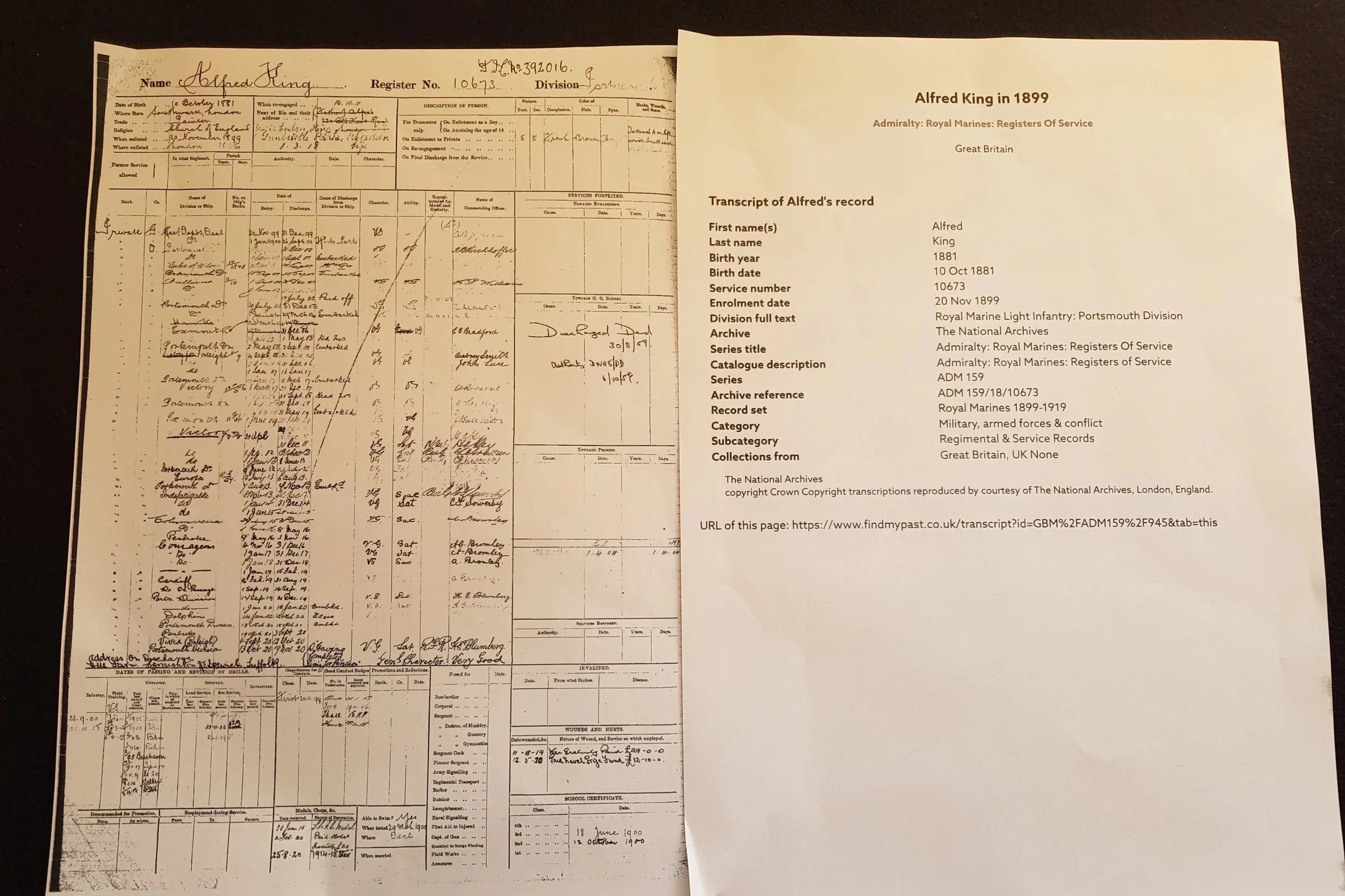
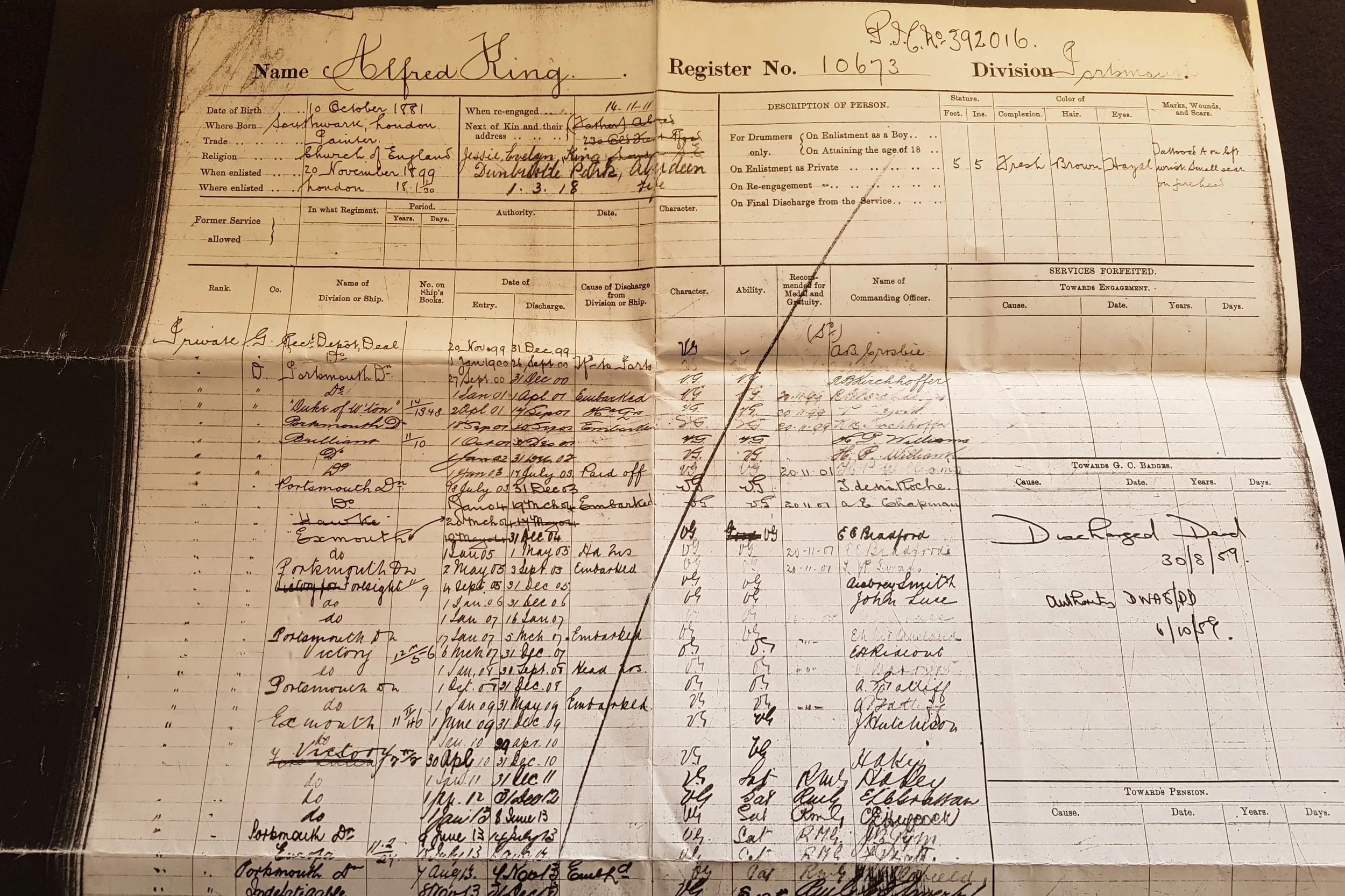
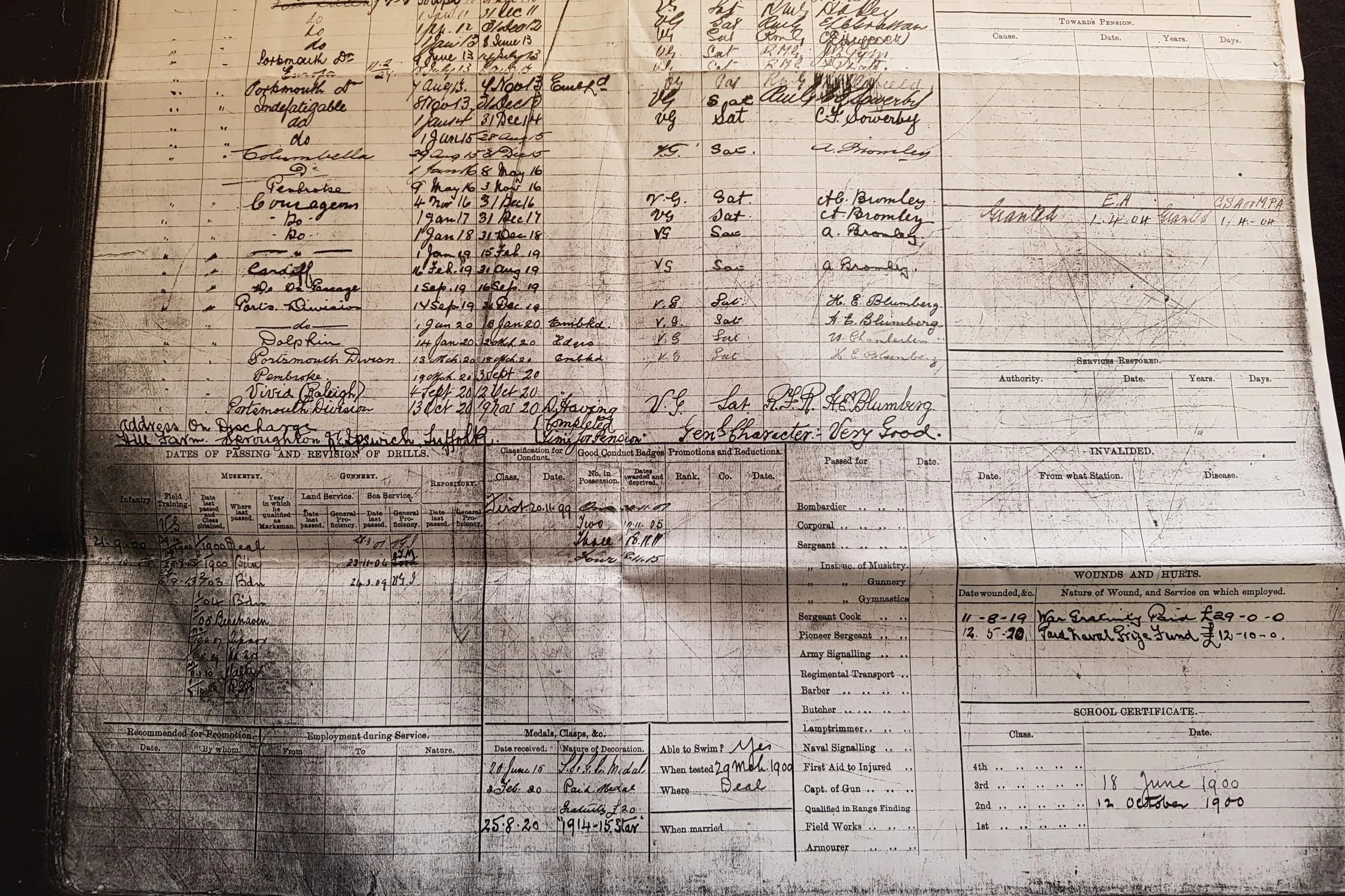
Alfred King was born at Southwark, London on 10 October 1881 and was a painter before he enlisted into the Royal marines Light Infantry on 20 November 1899. At the outbreak of the Great War he was serving on Indefatigable until 28 August 1915.
He then served on Columbella between 29 August 1915 - 8 May 1916. He briefly served on Pembroke between 9 May 1916 - 3 November 1916, before serving on Courageous between 4 November 1916 - 15 February 1919 and took part in the Second Battle of Heligoland Bight. He was finally discharged on 19 November 1920 and died on 30 August 1959.
Second Battle of Heligoland Bight
Throughout 1917 the Admiralty was becoming more concerned about German efforts to sweep paths through the British-laid minefields intended to restrict the actions of the High Seas Fleet and German submarines. A preliminary raid on German minesweeping forces on 31 October by light forces destroyed ten small ships. Based on intelligence reports, the Admiralty allocated the 1st Cruiser Squadron on 17 November 1917, with cover provided by the reinforced 1st Battle Squadron and distant cover by the battleships of the 1st Battle Squadron, to destroy the minesweepers and their light cruiser escorts.
The German ships—four light cruisers of II Scouting Force, eight destroyers, three divisions of minesweepers, eight Sperrbrechers (cork-filled trawlers) and two other trawlers to mark the swept route—were spotted at 7:30 am. Courageous and the light cruiser Cardiff opened fire with their forward guns seven minutes later. The Germans responded by laying an effective smoke screen. The British continued in pursuit, but lost track of most of the smaller ships in the smoke and concentrated fire on the light cruisers. Courageous fired 92 fifteen-inch shells and 180 four-inch shells in the battle, and the only damage she received was from her own muzzle blast One fifteen-inch shell hit a gun shield of the light cruiser SMS Pillau but did not affect her speed. At 9:30 the 1st Cruiser Squadron broke off their pursuit so that they would not enter a minefield marked on their maps; the ships turned south, playing no further role in the battle.
After the battle, the mine fittings on Courageous were removed, and she spent the rest of the war intermittently patrolling the North Sea. In 1918, short take-off platforms were fitted for a Sopwith Camel and a Sopwith 11/2 Strutter on both 15-inch (380 mm) turrets. The ship was present at the surrender of the German High Seas fleet on 21 November 1918. Courageous was placed in reserve at Rosyth on 1 February 1919 and she again became Napier's flagship as he was appointed Vice-Admiral Commanding the Rosyth Reserve until 1 May. The ship was assigned to the Gunnery School at Portsmouth the following year as a turret drill ship. She became flagship of the Rear-Admiral Commanding the Reserve at Portsmouth in March 1920.
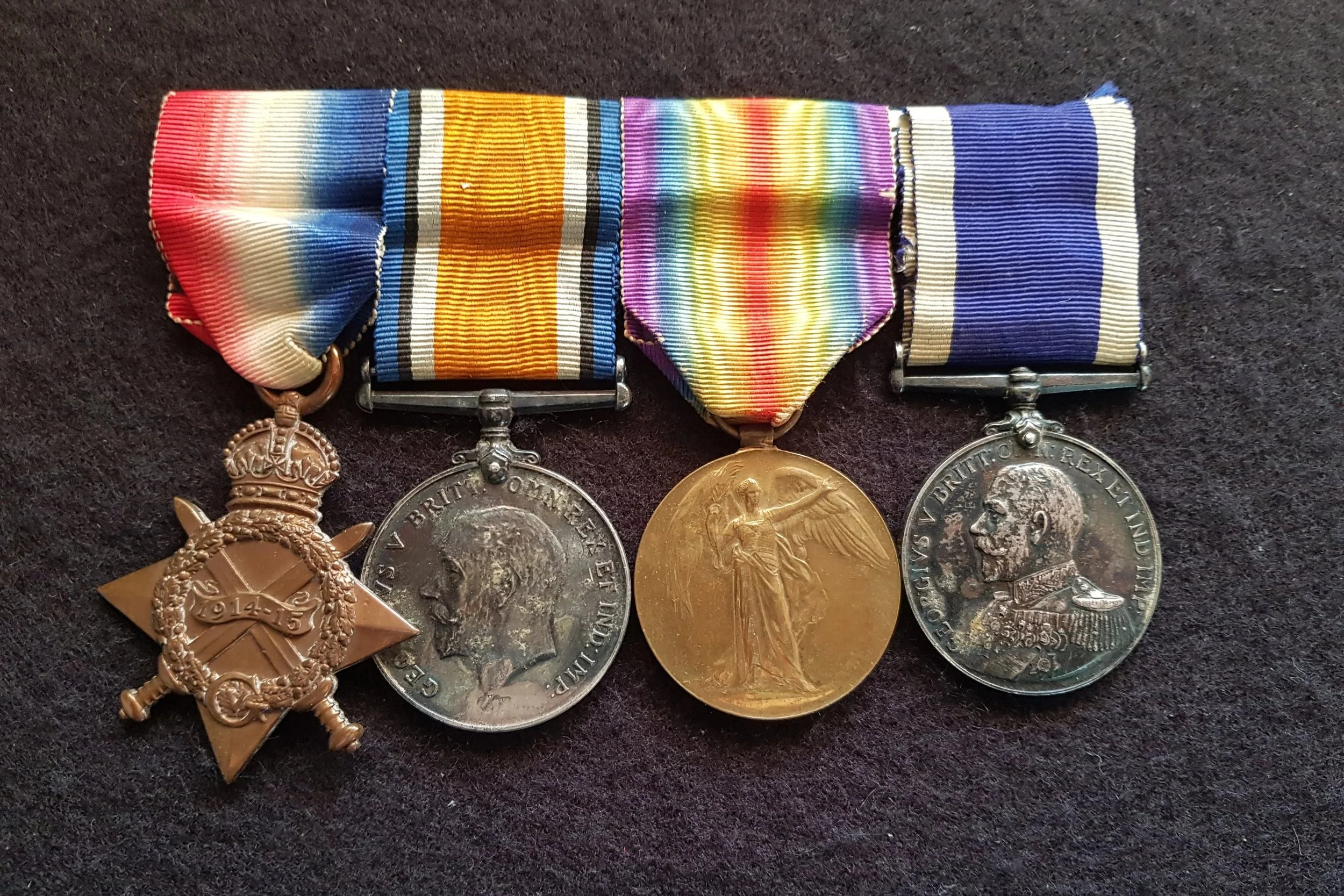
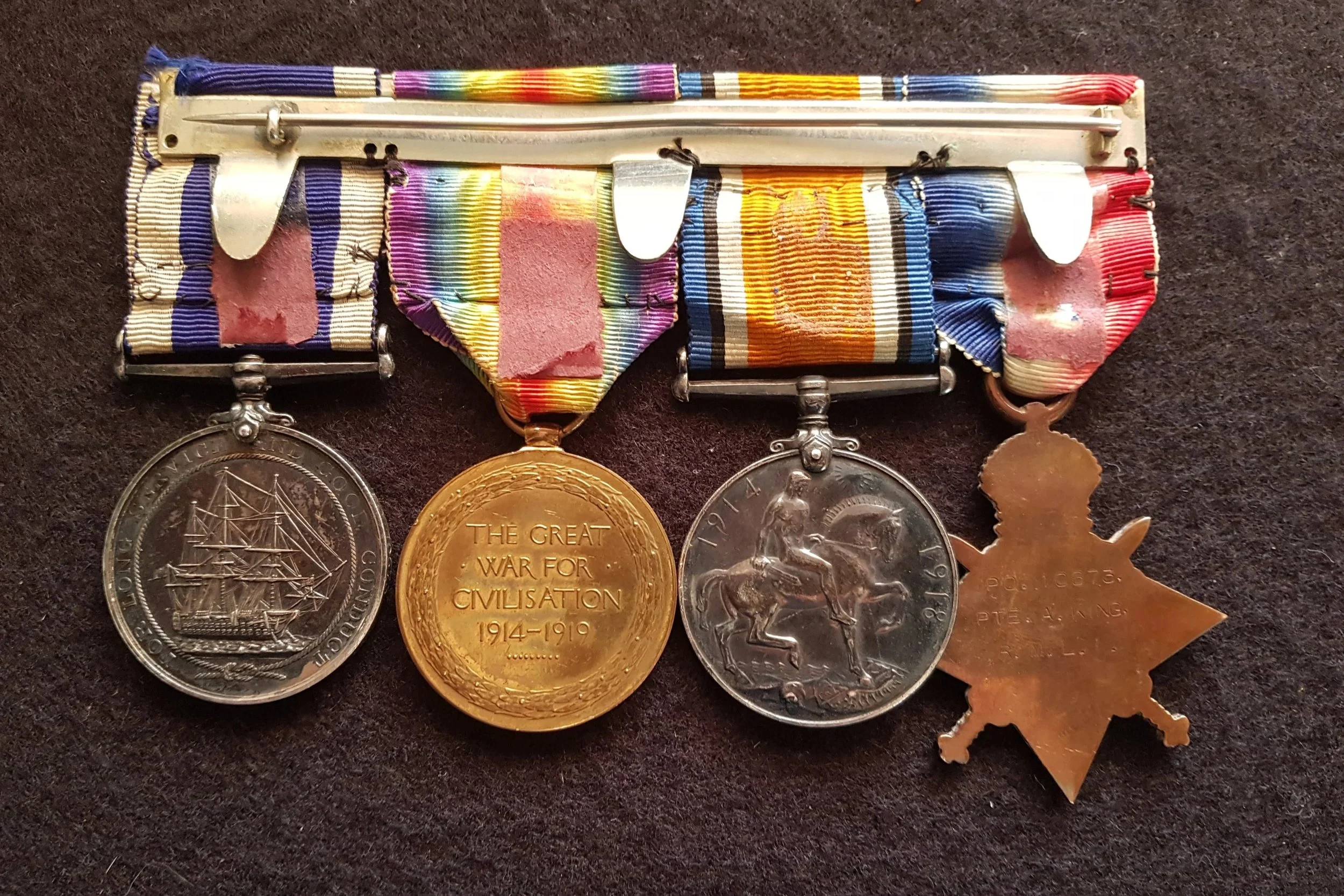
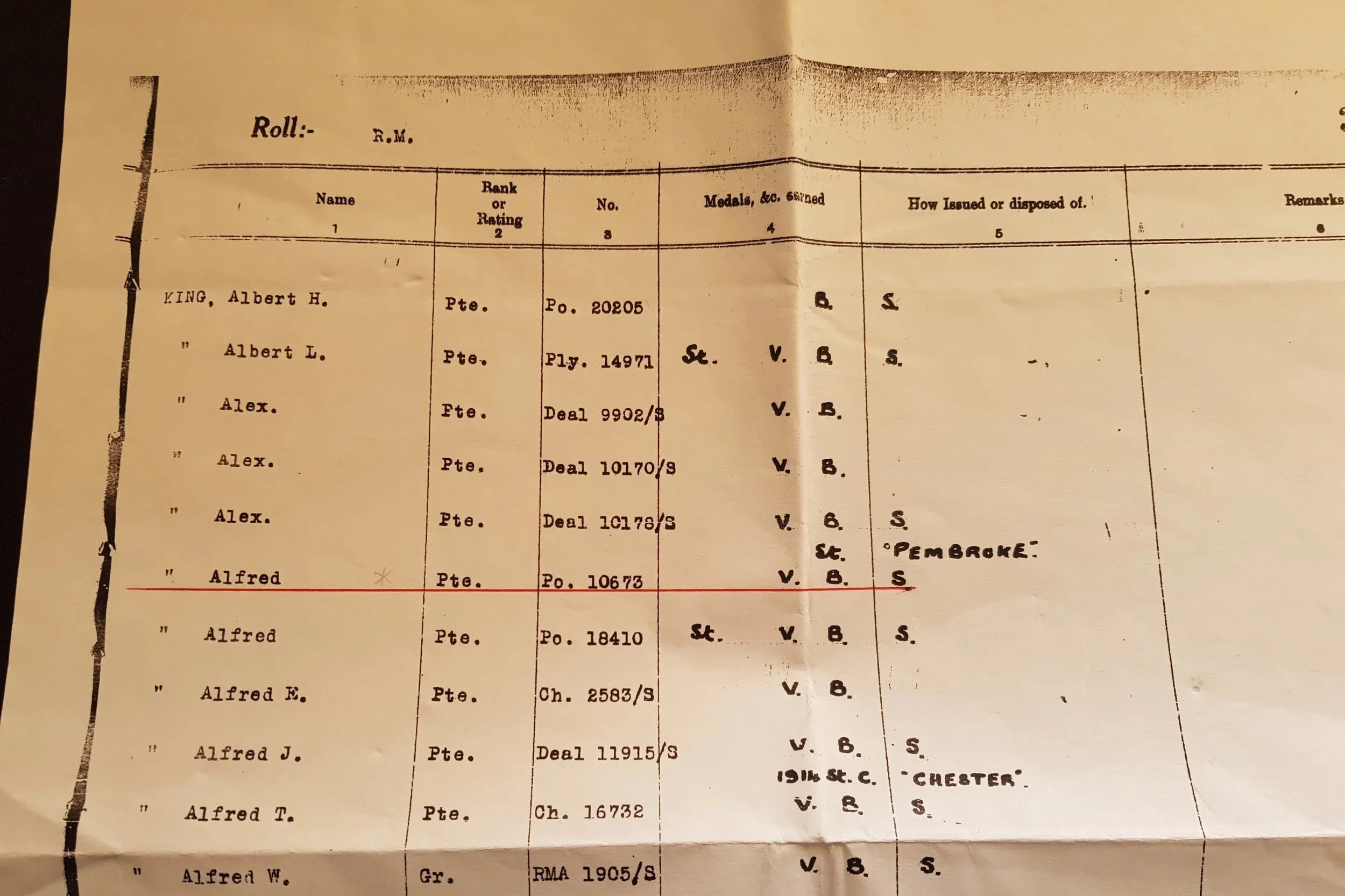
The medals are mounted as worn, sold with some copied research, and are as follows -
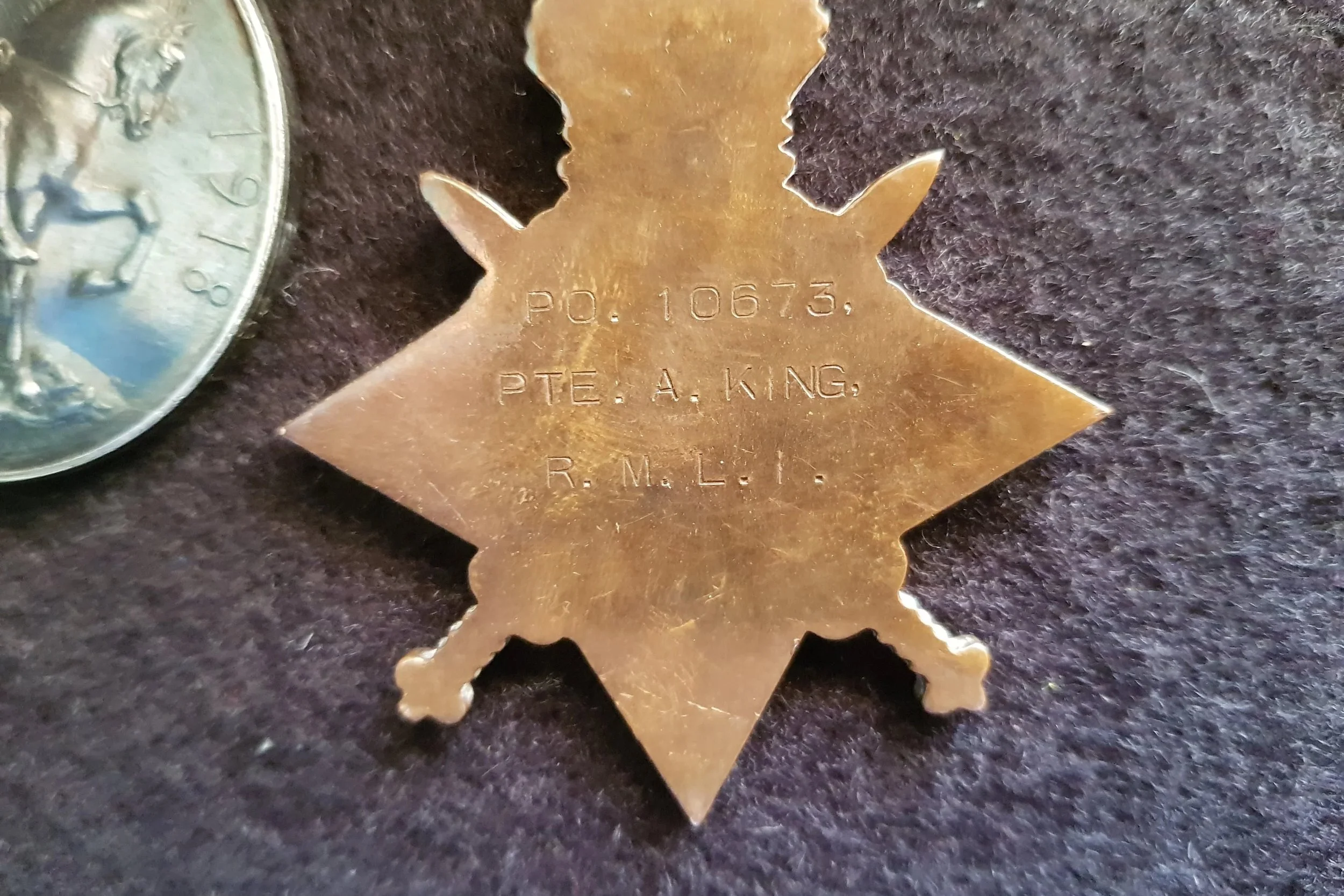
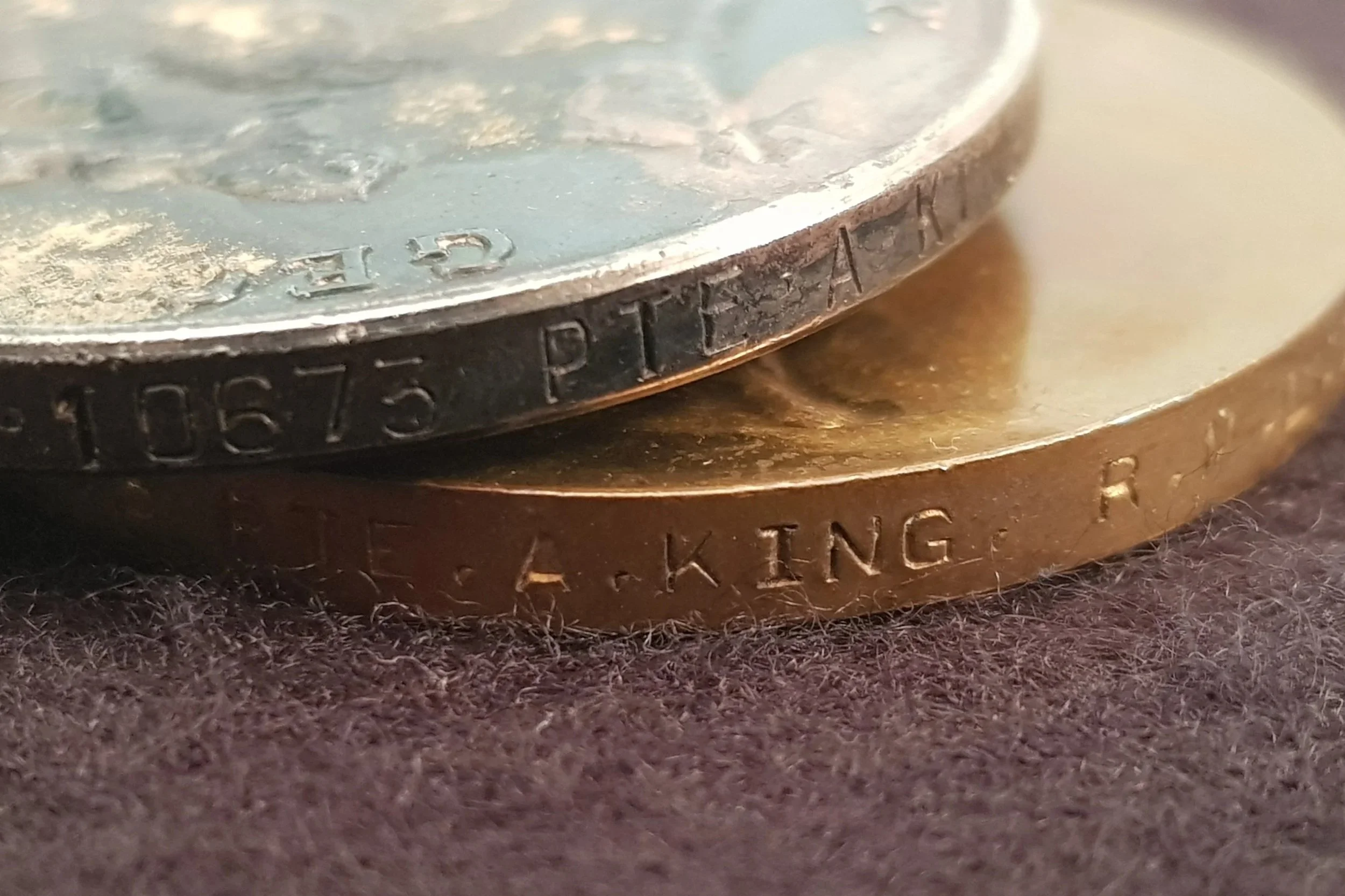
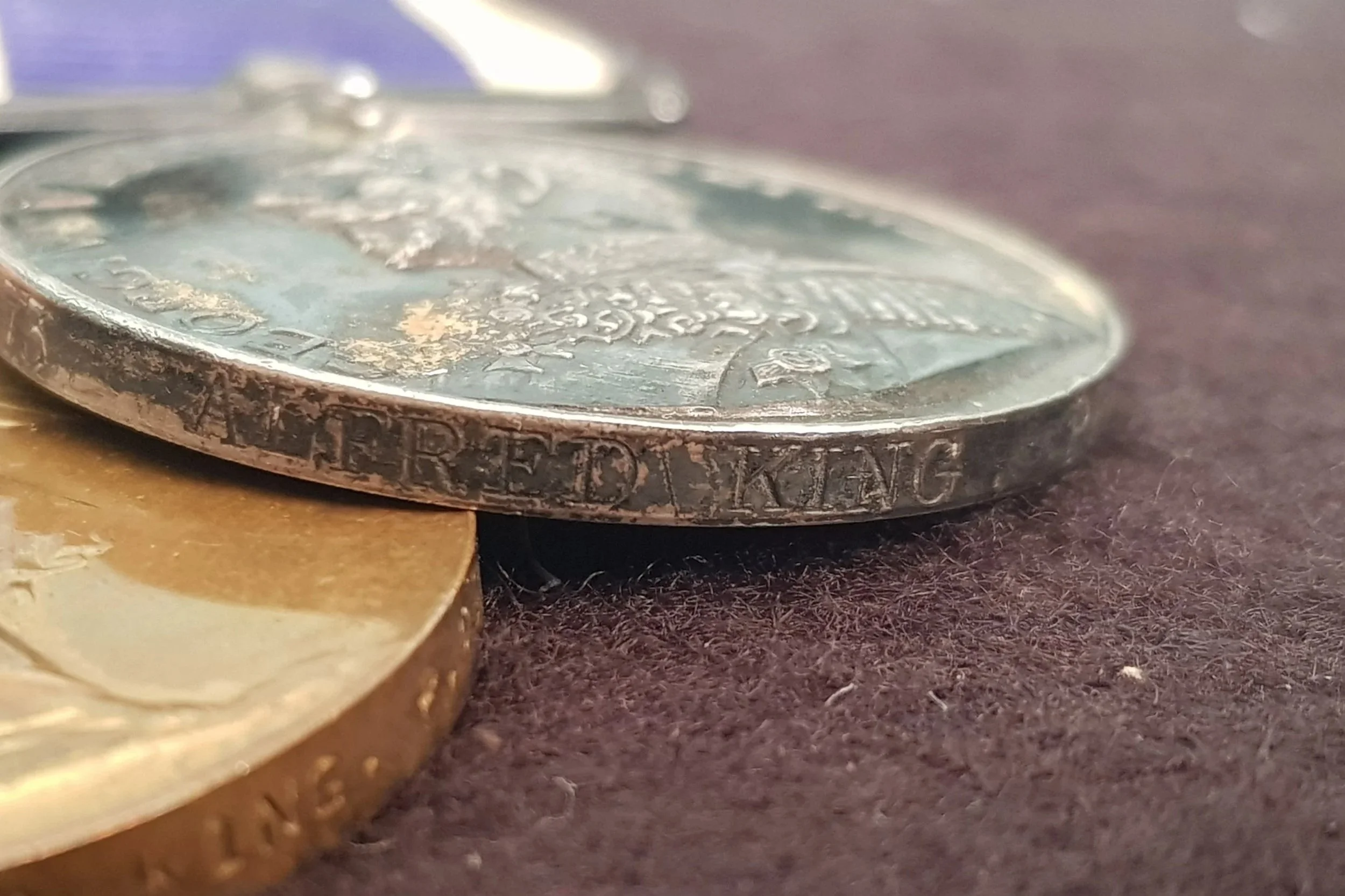
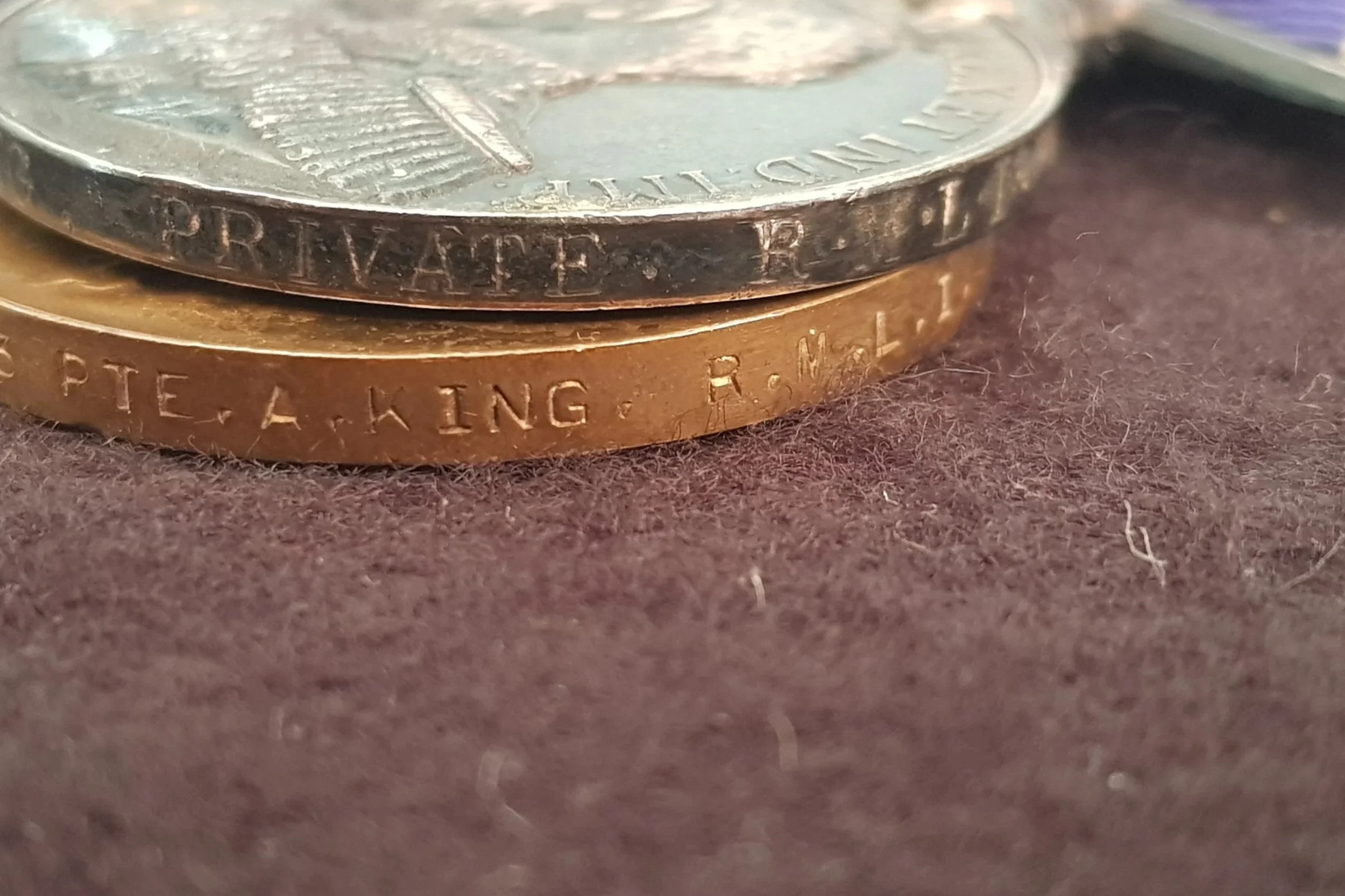
1914-15 Star, PO.10673. PTE. A. KING. R.M.L.I.; British War and Victory Medals, PO.10673 PTE. A. KING. R.M.L.I.; Royal Navy L.S. & G.C., G.V.R., PO.10673 ALFRED KING. PRIVATE. R.M.L.I.,
Condition, good very fine