A Good WW2 Battle of France & Dunkirk, Battle of Britain & the Blitz, North Africa & Italy Campaigns & Post War M.B.E. Medal Group of to B.S.M. J. V. Myers, 485 H.A.A. Regiment, Royal Artillery (1594)
A Good WW2 Battle of France & Dunkirk, Battle of Britain & the Blitz, North Africa & Italy Campaigns & Post War M.B.E. Medal Group of to B.S.M. J. V. Myers, 485 H.A.A. Regiment, Royal Artillery (1594)
A Good WW2 Battle of France & Dunkirk, Battle of Britain & the Blitz, North Africa & Italy Campaigns & Post War M.B.E. Medal Group of to B.S.M. J. V. Myers, 485 H.A.A. Regiment, Royal Artillery.
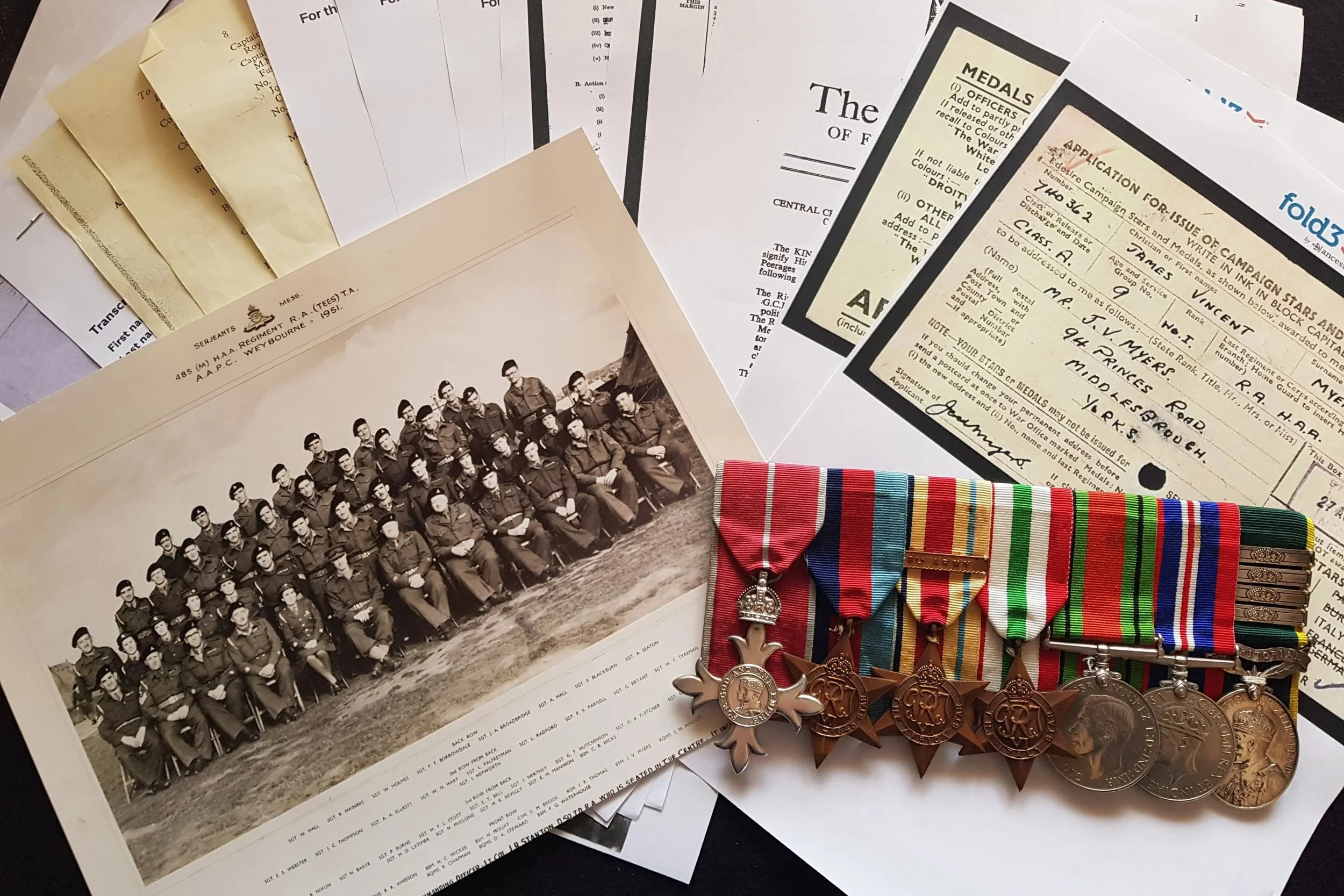
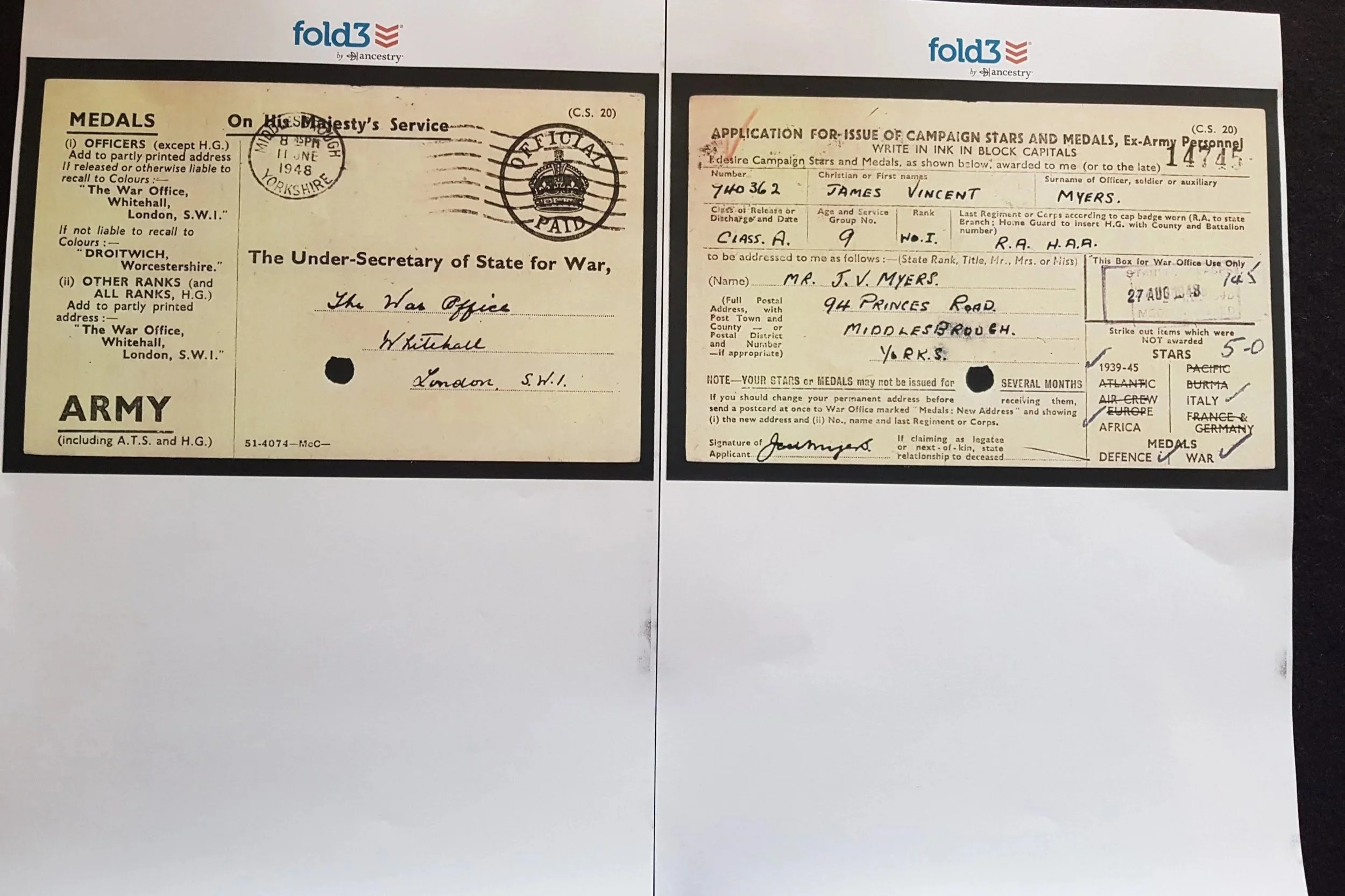
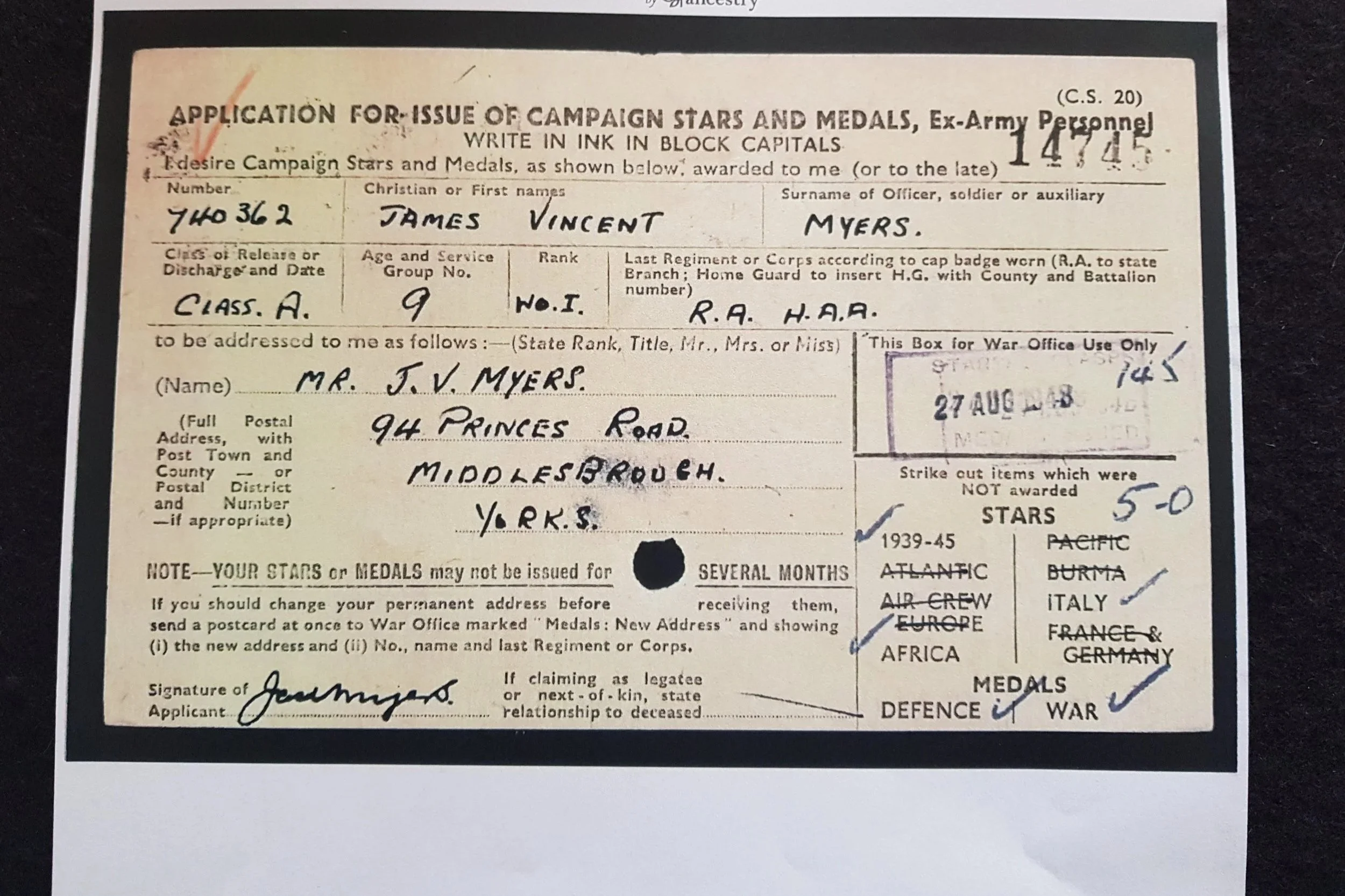
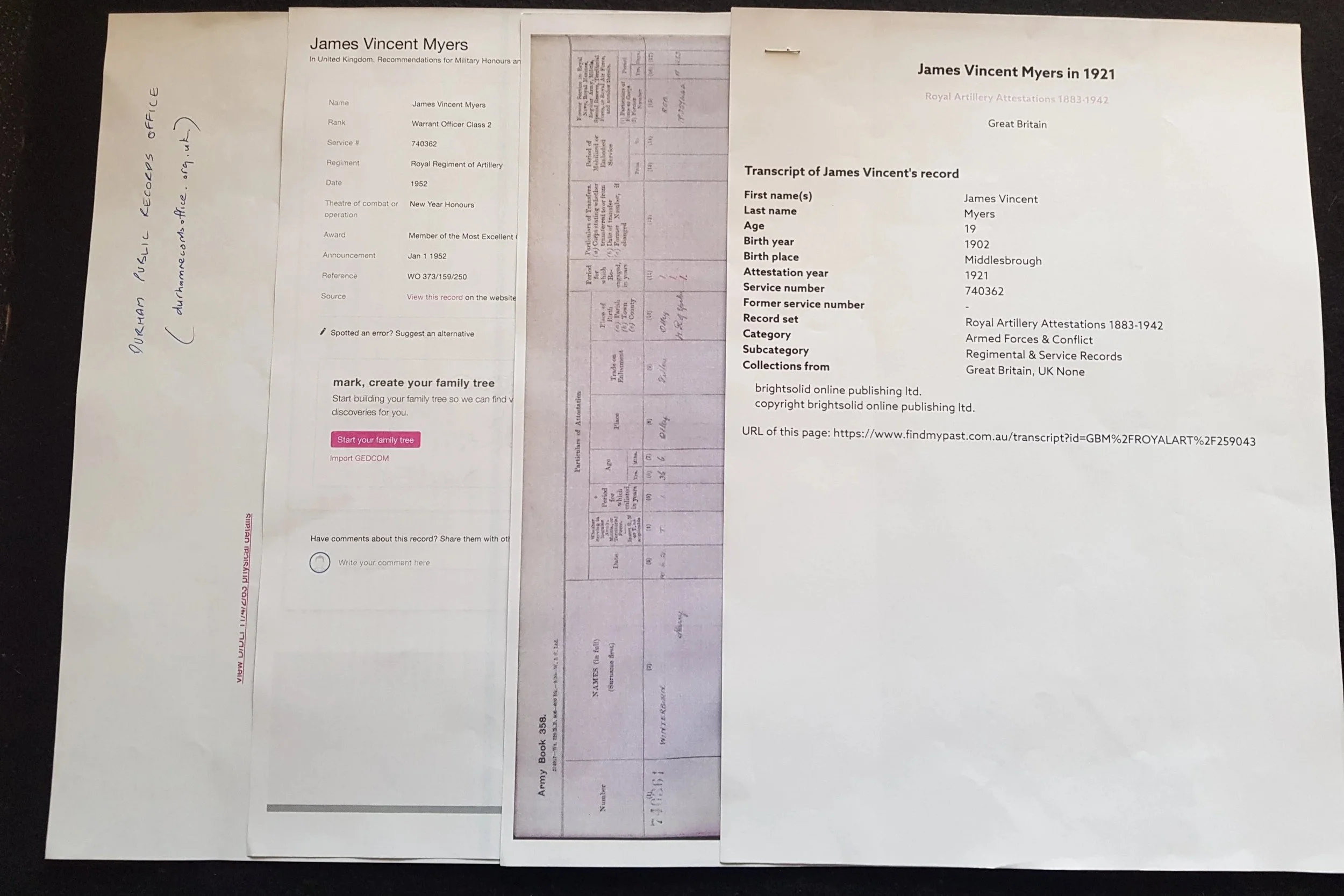
James Vincent Myers was born at Middlesborough, North Yorkshire and attested into the Royal Artillery on 3 October 1921, serving with the 85th Heavy Anti-Aircraft Regiment. He applied for his Second World War Medals in 1948 which confirms the medals but not the 8th Army clasp.
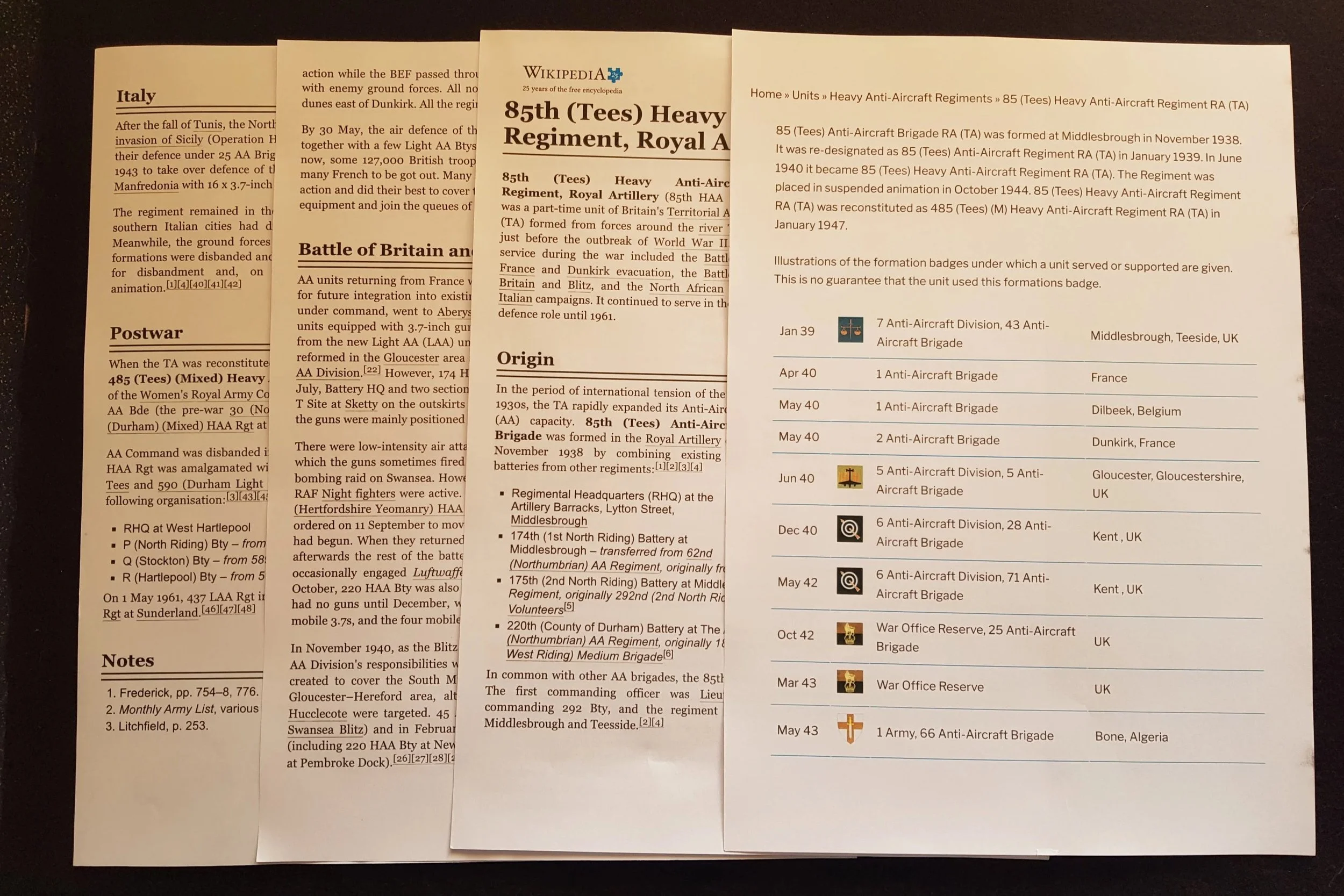
The 85th Heavy Anti-Aircraft Regiment fought with distinction during the Battle of France, the subsequent Dunkirk Evacuation, the Battle of Britain and the Blitz, North Africa (Operation Torch & Operation Vulcan), and Manfredonia, Italy.
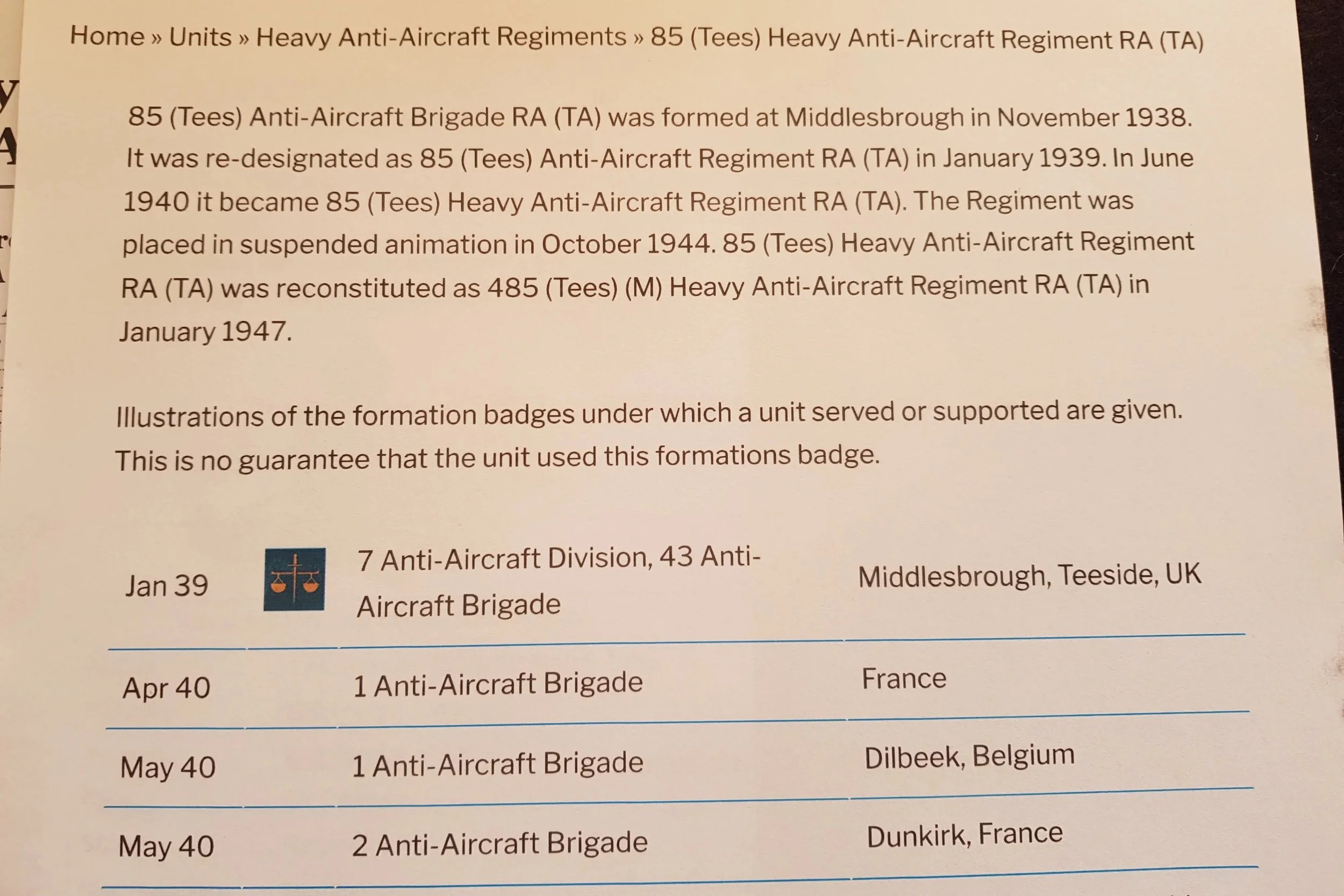
85 (Tees) Anti-Aircraft Brigade RA (TA) was formed at Middlesbrough in November 1938. It was re-designated as 85 (Tees) Anti-Aircraft Regiment RA (TA) in January 1939. In June 1940 it became 85 (Tees) Heavy Anti-Aircraft Regiment RA (TA). The Regiment was placed in suspended animation in October 1944. 85 (Tees) Heavy Anti-Aircraft Regiment RA (TA) was reconstituted as 485 (Tees) (M) Heavy Anti-Aircraft Regiment RA (TA) in January 1947.
The following is taken from an online source regarding the 85th during the Battle of France and Dunkirk –
Although the regiment was recently formed, its batteries were long-established units with many experienced TA soldiers, and it was selected to form part of the air defences for the British Expeditionary Force that had been sent to France in September 1939. The regiment was equipped for semi-mobile warfare, each battery equipped with eight of the latest 3.7 inch guns, and it crossed to France on 5 April 1940 under the command of Lt-Col Tortise. On arrival it joined 1 AA Bde.
When the German offensive in the west opened on 10 May, the regiment was deployed in the area of Waziers and Douai, where B Troop under 2nd Lieutenant G.A. Coaker shot down a Heinkel HE 111 and 10 minutes later A Troop shot down a Junker Ju 88 – the BEF's first AA 'kills' in France. The BEF now advanced into Belgium in accordance with ‘Plan D’. 1 AA Brigade's role was to cover Corps assembly areas and the routes used by the BEF, and 85 HAA Rgt moved right forward to Brussels and established itself at Dilbeek. Here, guns of 220 Bty under 2/Lt A.B. Carter shot down an He 111 at night with searchlight illumination, using only nine rounds, and captured the crew members who had parachuted clear.
The regiment was then ordered to defend 1 Corps HQ near Camphin. However, the German Army had broken through the Ardennes to the east, which forced the BEF to withdraw again. On 17 May, the regiment withdrew to Oudenaarde, on 18 to Gheluvelt, and then to the Escaut defences. On 19 May, at Orchies and Pecq, A Troop of 174 Bty received casualties from enemy field gun fire. By 21 May, the regiment was at Ploegsteert. Then, on 23 May, it received orders to move quickly to defend Dunkirk, which had been selected for the evacuation of the BEF (Operation Dynamo).
Outside Dunkirk, 174 Bty was deployed at Tetgheme and 175 Bty at Leffrinckoucke, while 220 Bty was at Wavrin, south-west of Lille, all under the command of 2 AA Bde. Dunkirk was heavily bombed and machine-gunned from 24 May onwards, but only 28 rounds of 3.7-inch ammunition were available until more arrived by sea on 26 May and again on 31 May. The AA guns were ordered to remain in action while the BEF passed through them, until forced to withdraw themselves after direct contact with enemy ground forces. All non-essentials were sent off, and RHQ was established on the sand dunes east of Dunkirk. All the regiment's transport was destroyed on 27 May.
By 30 May, the air defence of the northern sector of the bridgehead comprised 174 and 175 Btys together with a few Light AA Btys, under the command of Brigadier E.W. Chadwick of 2 AA Bde. By now, some 127,000 British troops had been evacuated, but there were still 60,000 British and as many French to be got out. Many ships were lost under air attack, but the AA units were constantly in action and did their best to cover the shrinking Dunkirk 'pocket' until it was their turn to destroy their equipment and join the queues of men waiting to be taken aboard small boats back to England.
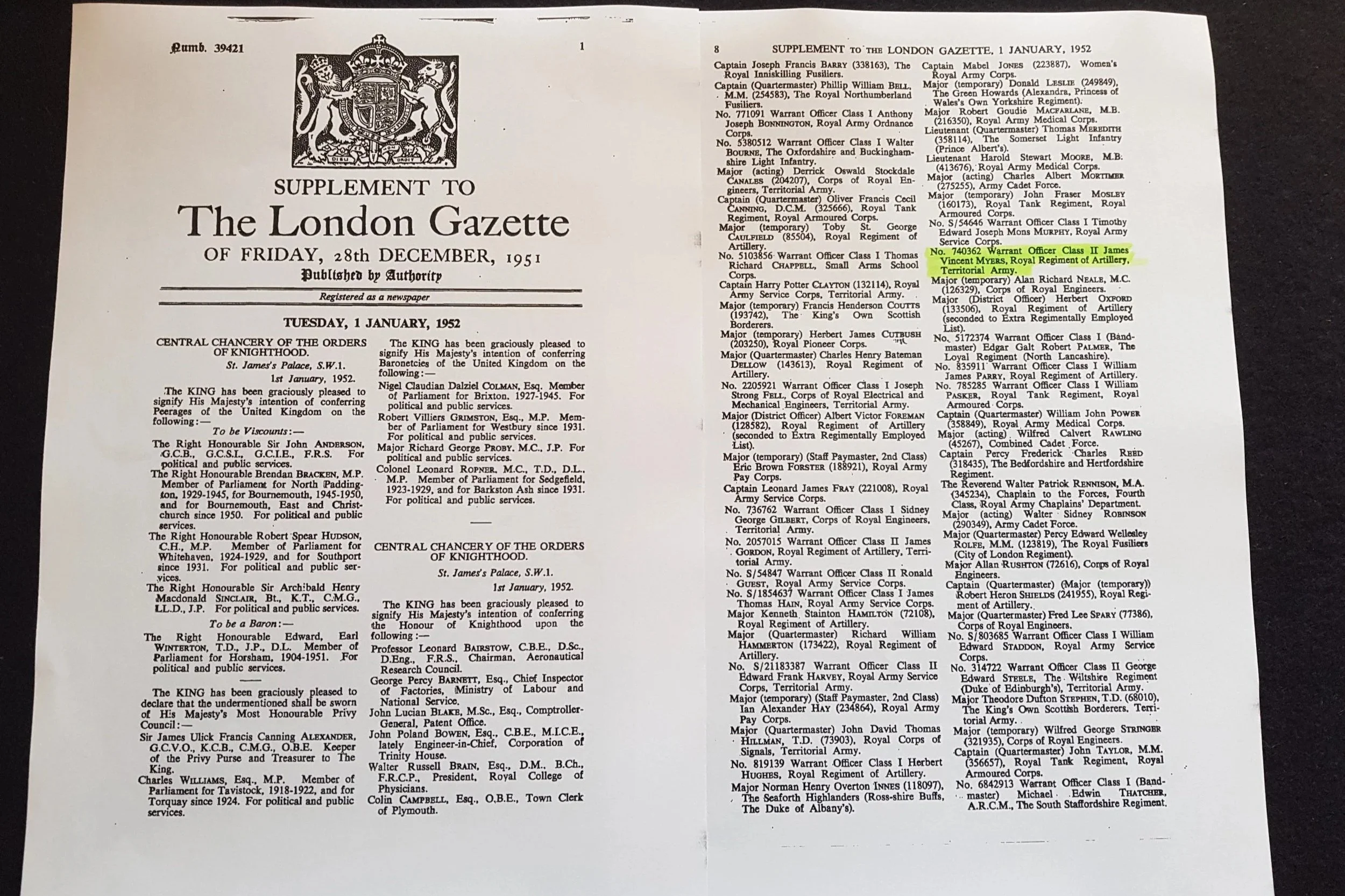
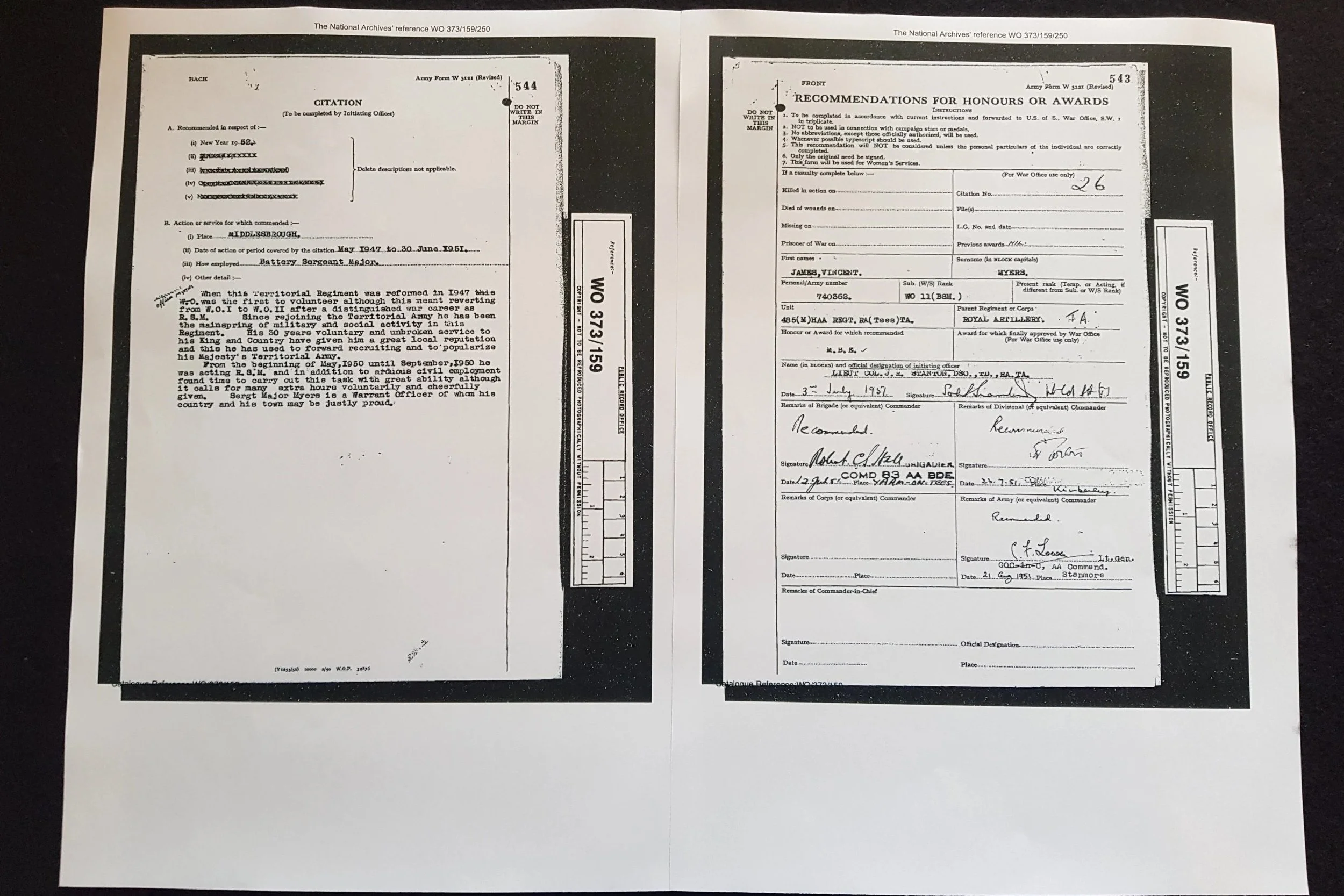
Meyers was awarded the M.B.E. for his 30 years of unbroken service with the Royal Artillery Territorial Army.
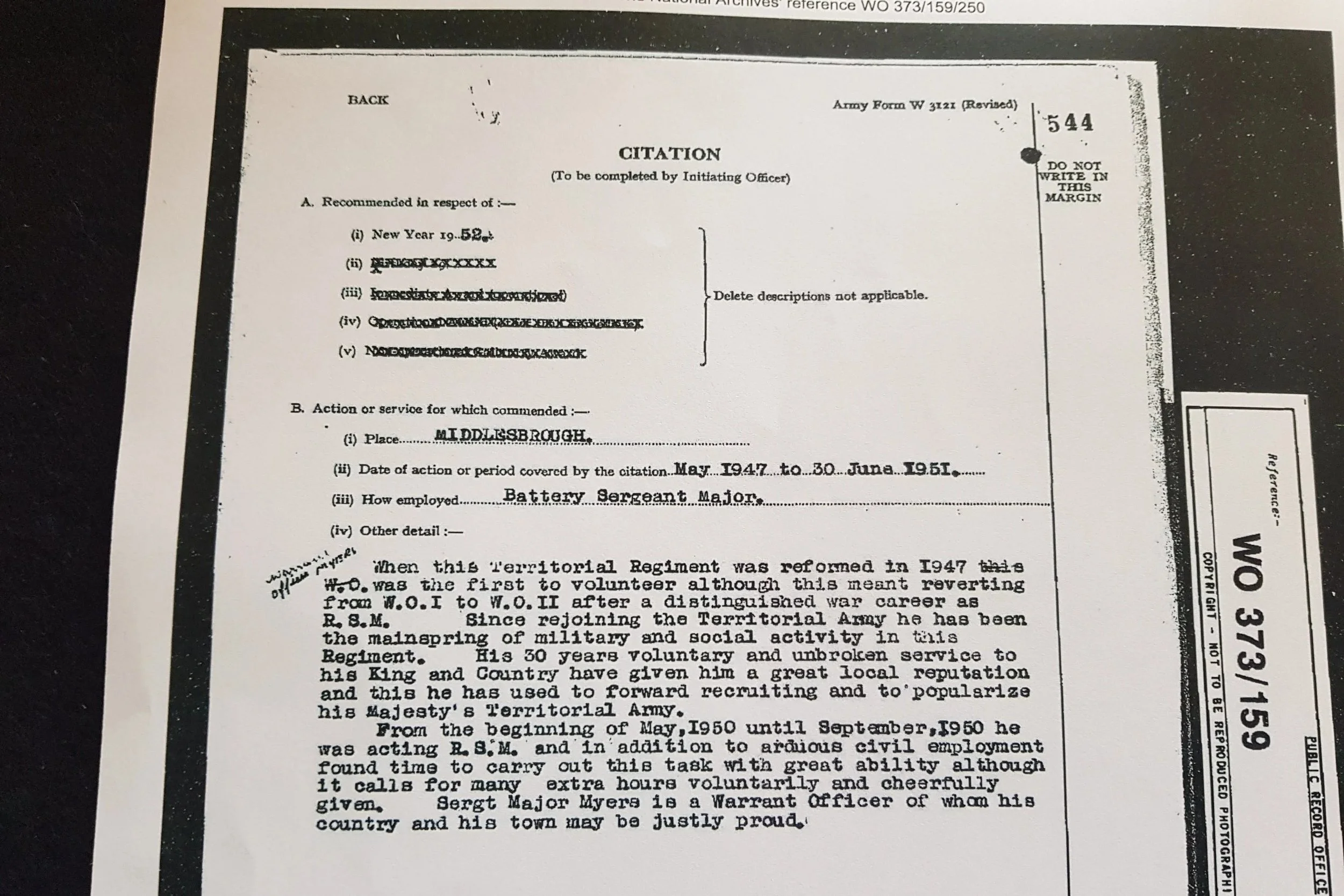
M.B.E. London Gazette 1 January 1952, the original recommendation states:
‘When this Territorial Regiment was reformed in 1947 this W.O. was the first to volunteer although this meant reverting from W.O.I to W.O.II after a distinguished war career as R.S.M.
Since rejoining the Territorial Army he has been the mainspring of military and social activity in this Regiment. His 30 years voluntary and unbroken service to his King and Country have given him a great local reputation and this he has used to forward recruiting and to popularize his Majesty's Territorial Army.
From the beginning of May, 1950 until September, 1950 he was acting R.S.M. and in addition to arduous civil employment found time to carry out this task with great ability although it calls for many extra hours voluntarily and cheerfully given. Sergt Major Myers is a Warrant Officer of whom his country and his town may be justly proud.’
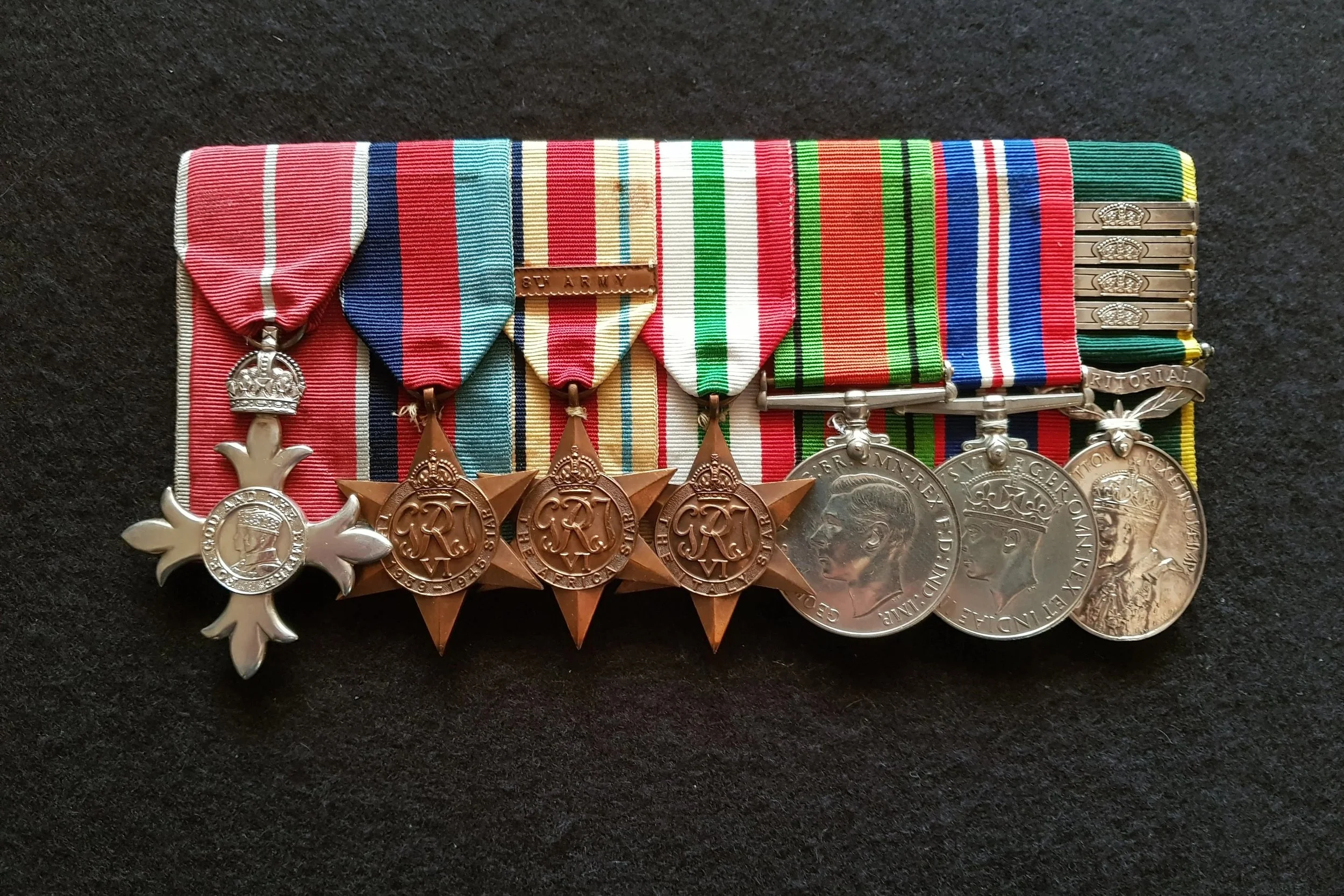
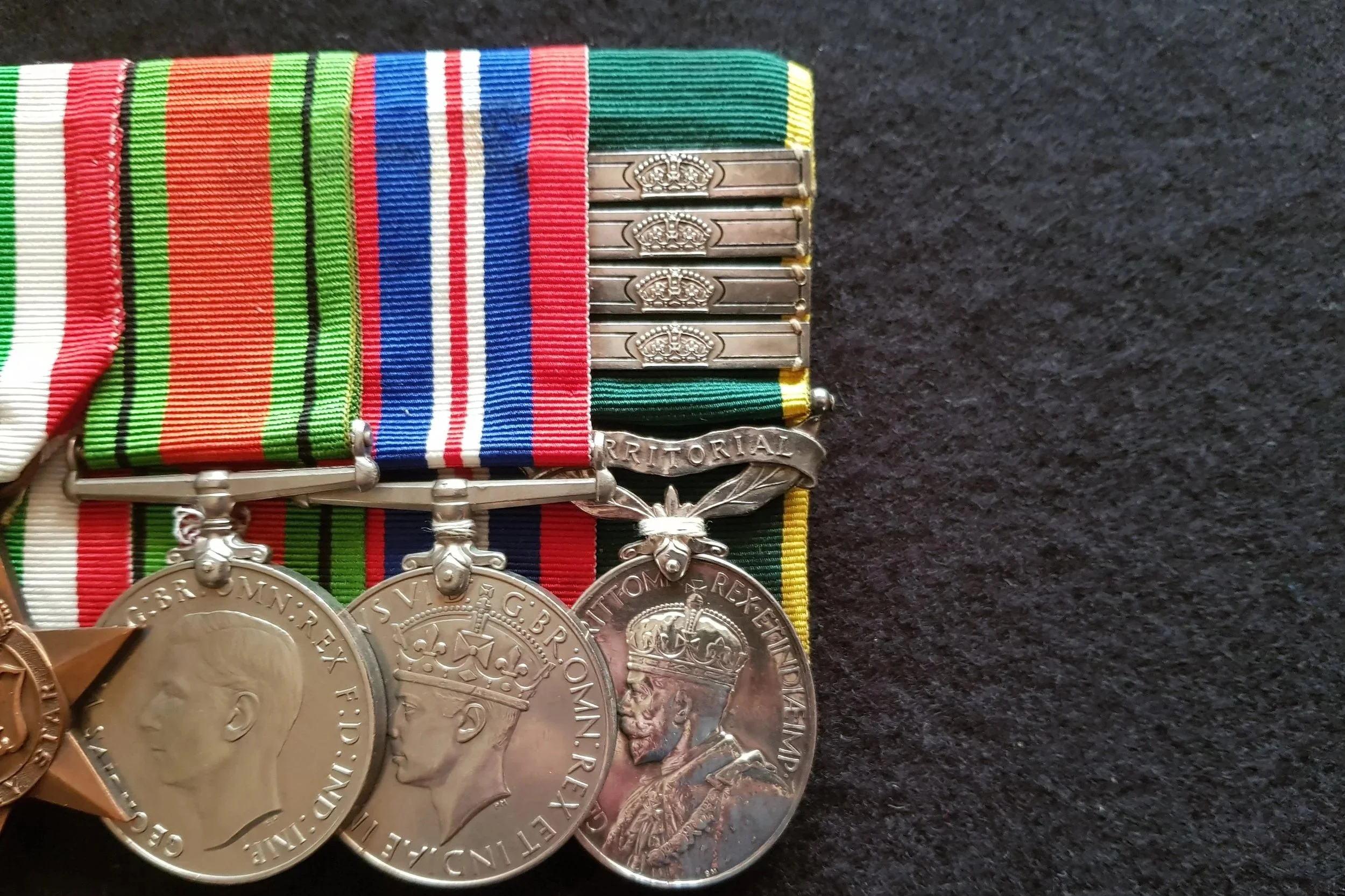
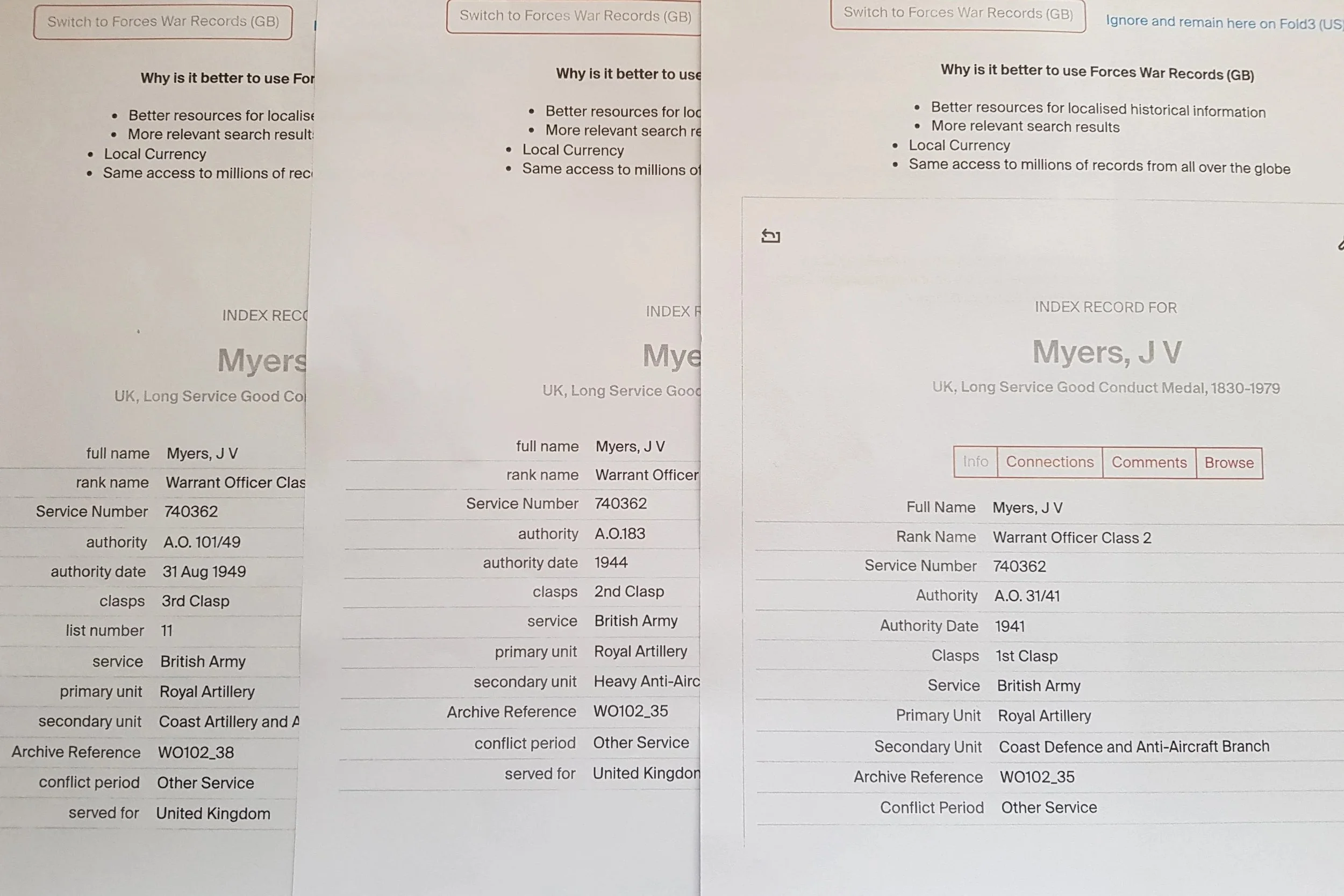
He was awarded the 1st clasp to his Efficiency Medal during 1941, the 2nd clasp during 1944, the 3rd clasp on the 31st of August 1949, and the 4th clasp during 1952.
James Myers died in 1954 and this is written on his Attestation entry.
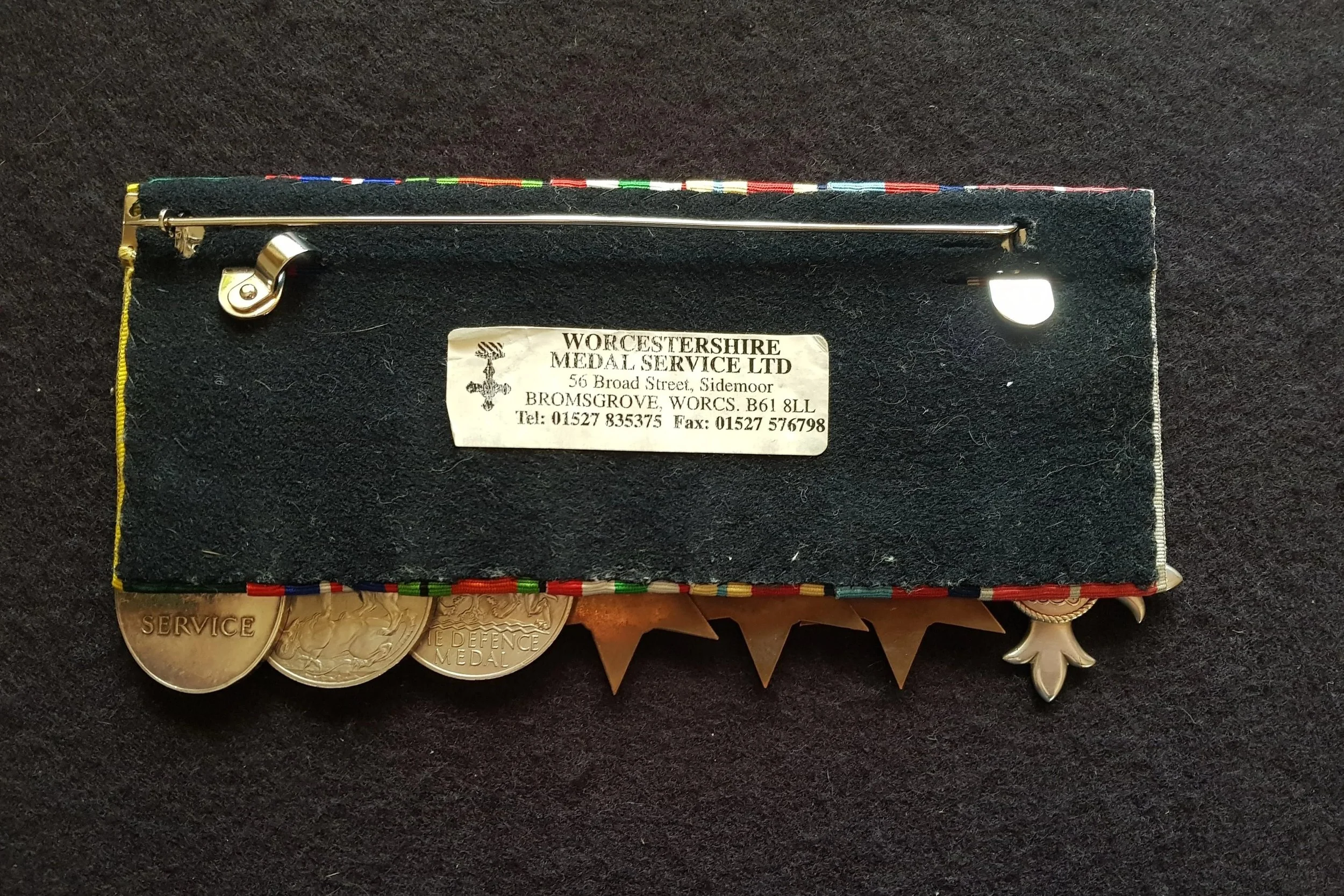
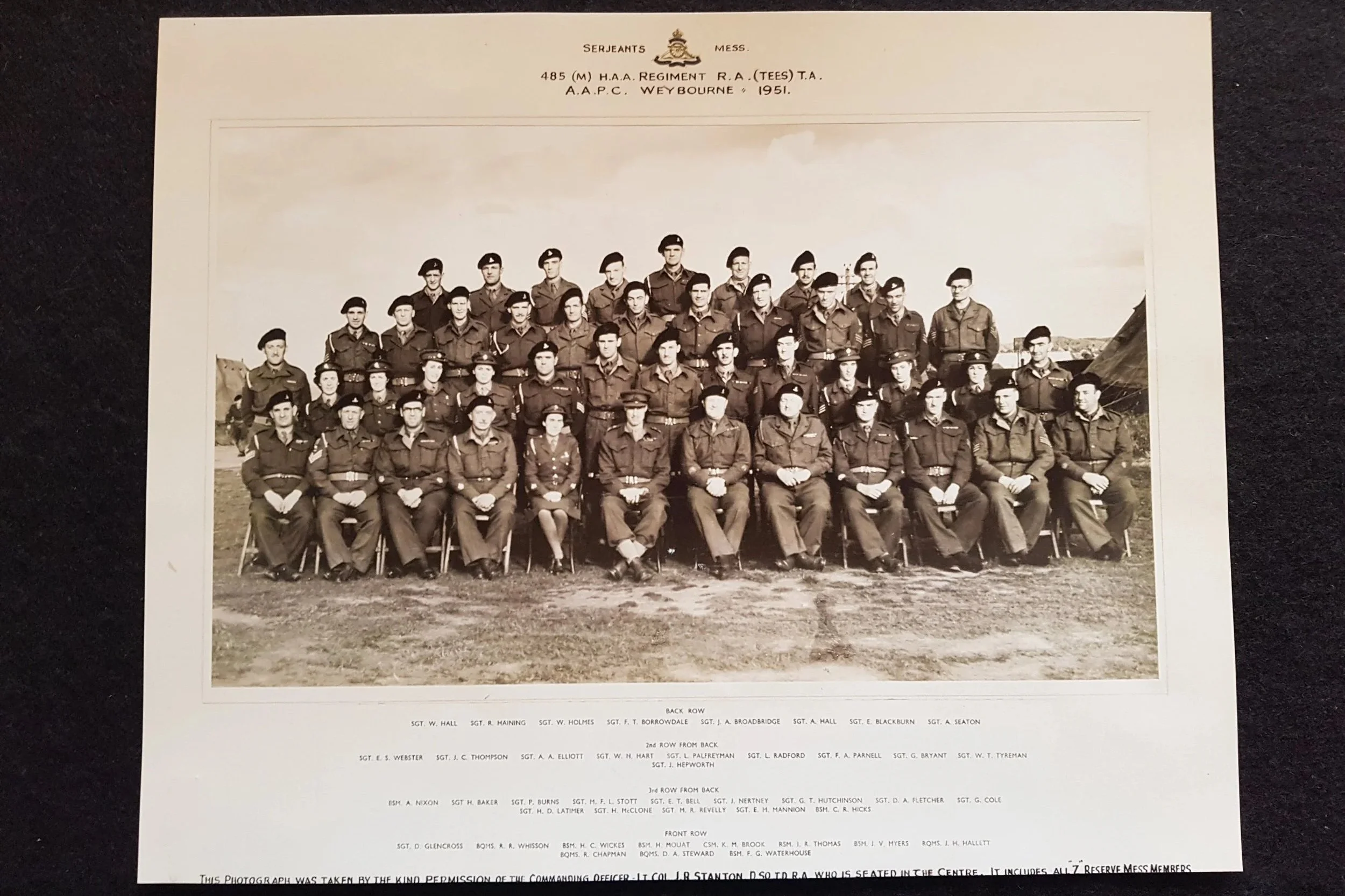
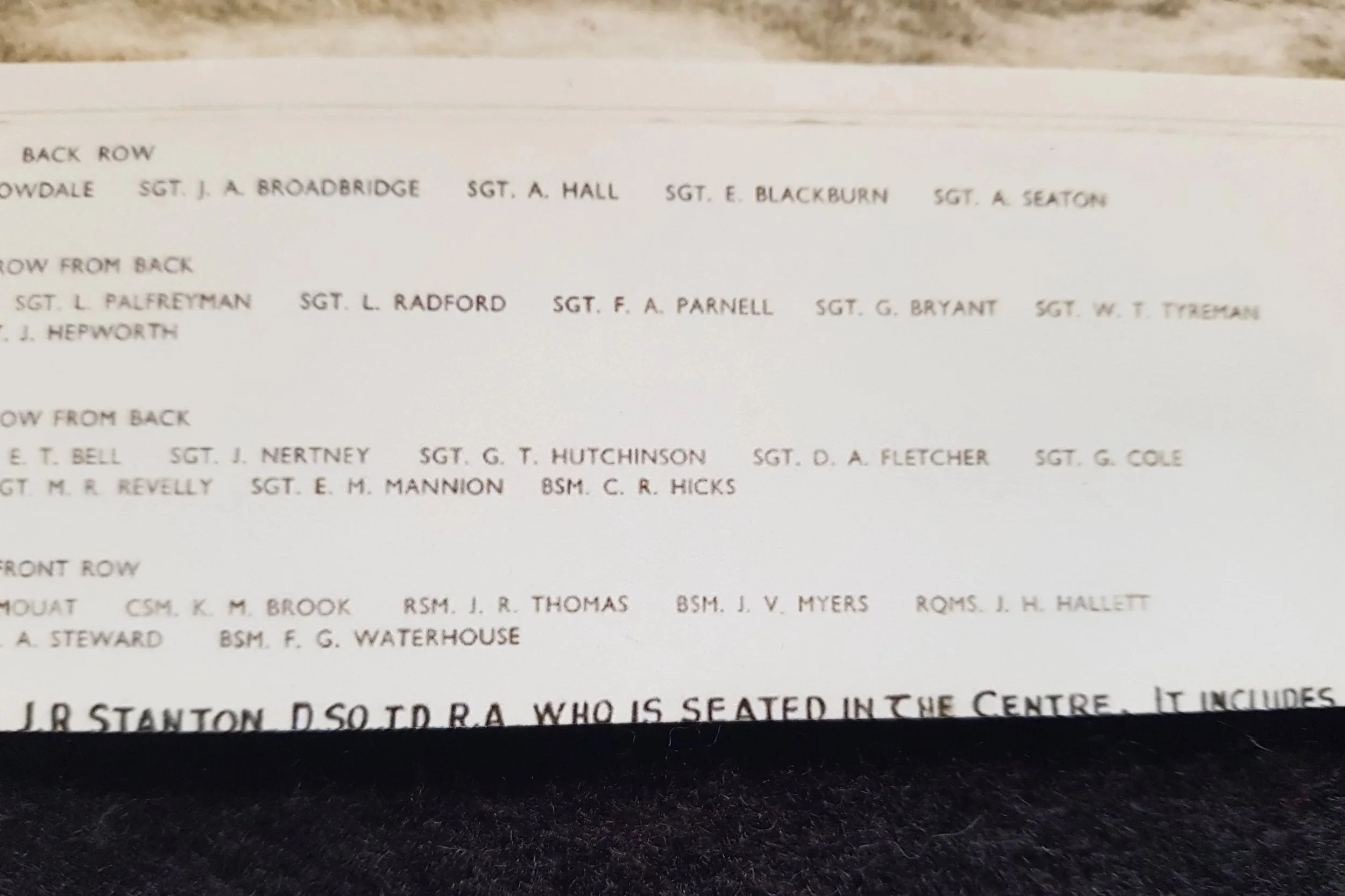
The medals are mounted as worn, sold with copied research, a copied group photograph of the 485 (M) H.A.A. Regiment Royal Artillery (Tees) T.A. Sergeants Mess ( Myers is seated front row, fifth from the right), and are as follows -
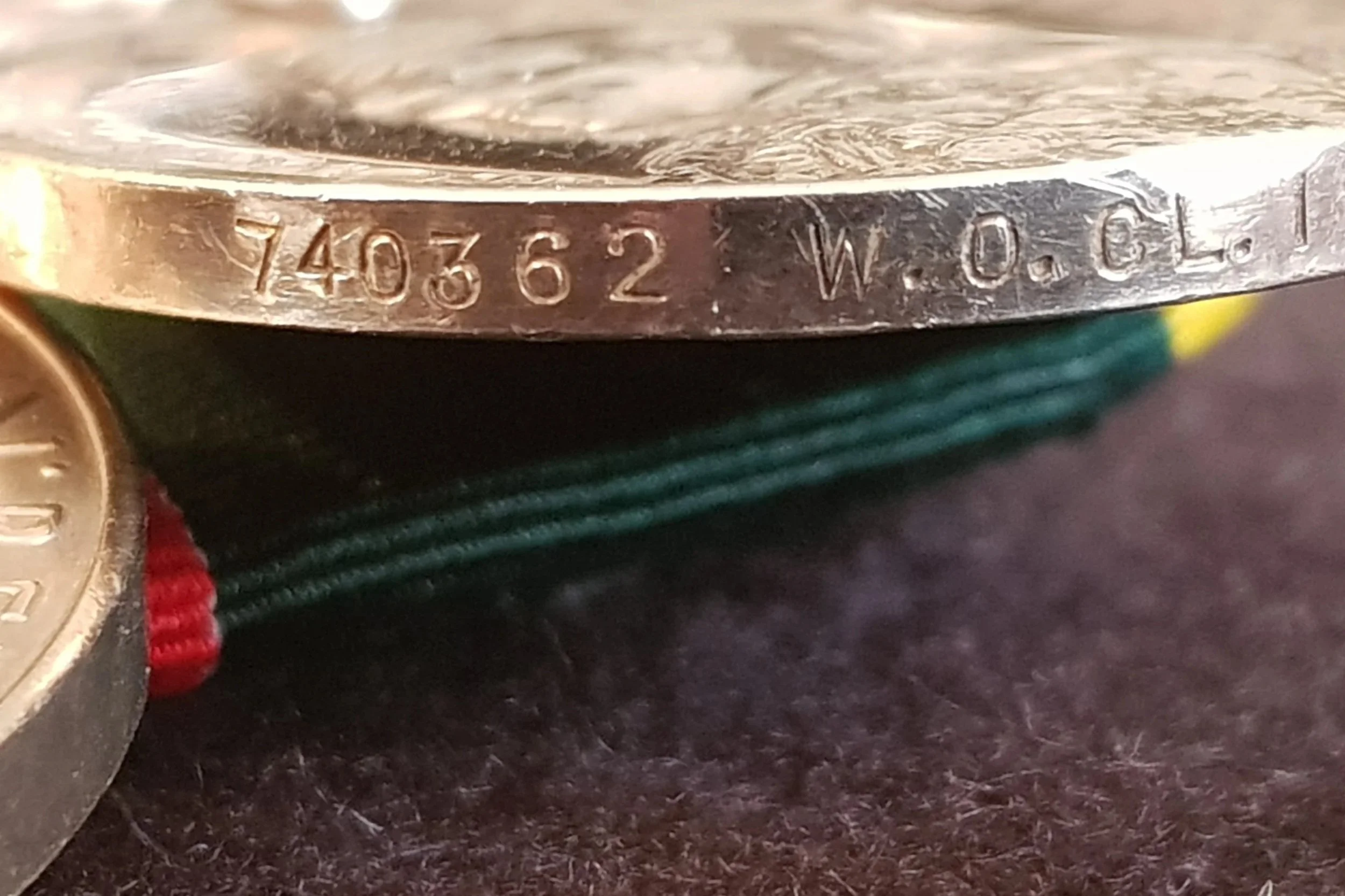
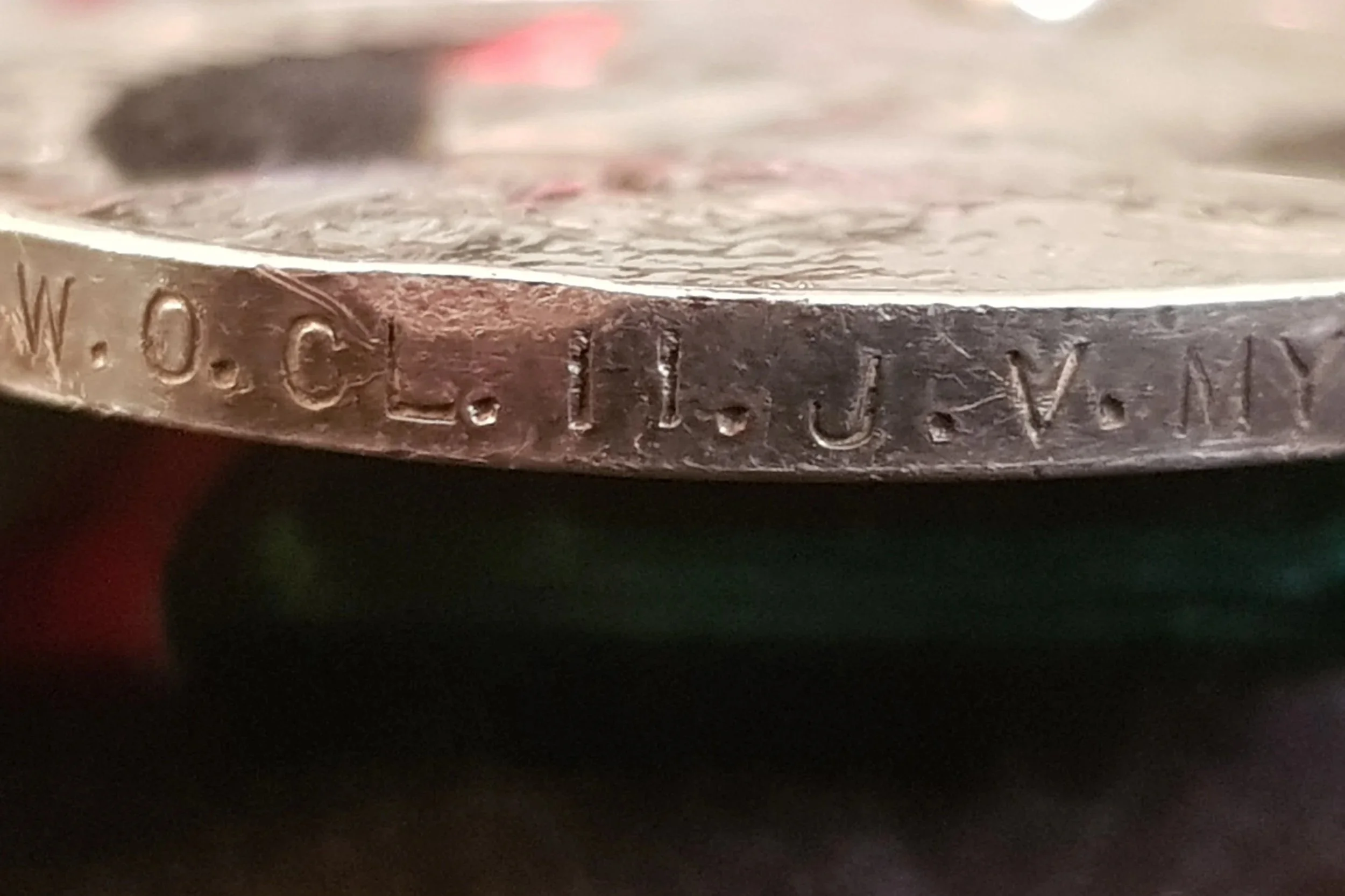
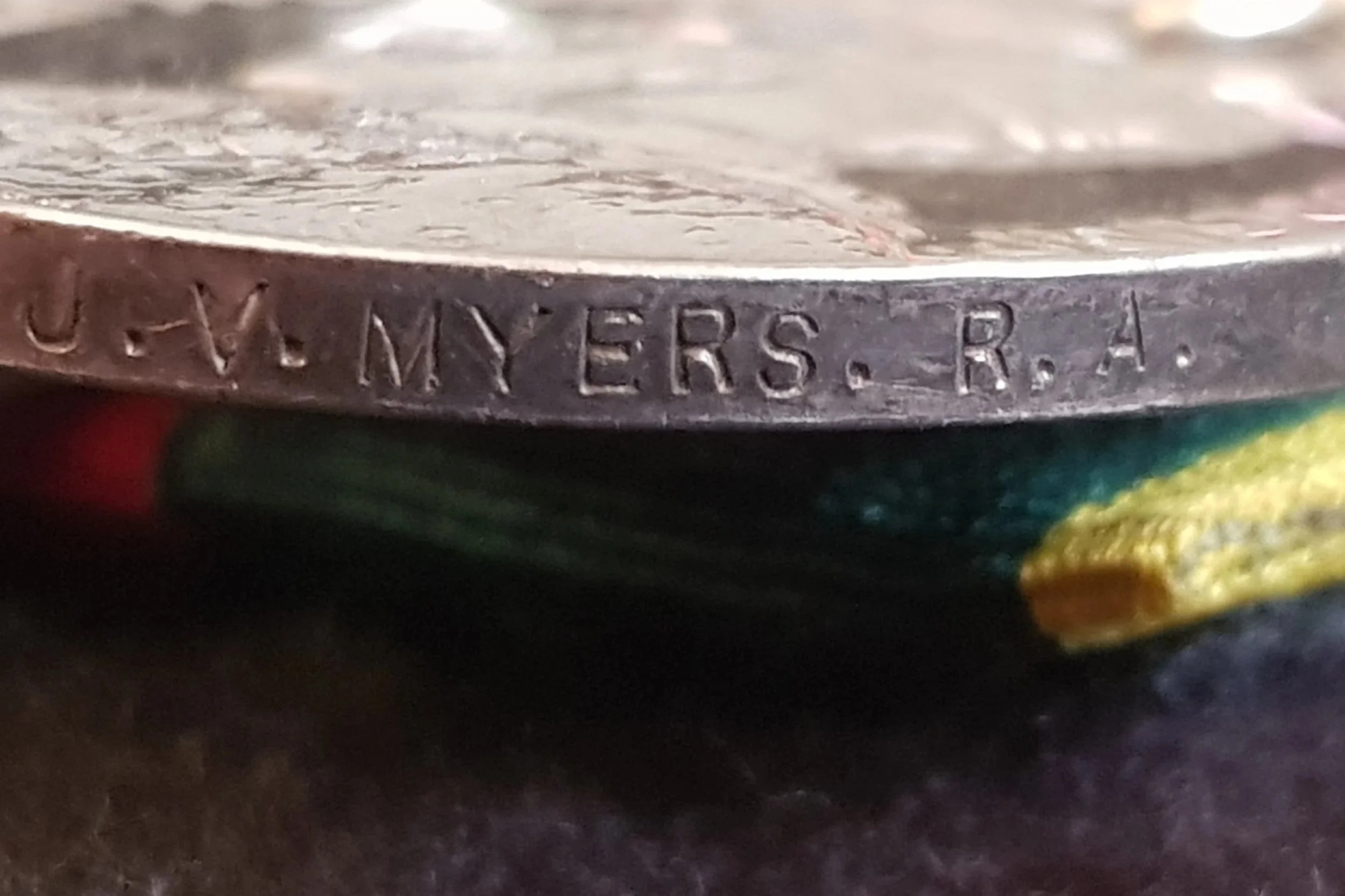
The Most Excellent Order of the British Empire, 2nd Type, Military Division, Member's (M.B.E.) breast Badge; 1939-1945 Star; Africa Star, clasp 8th Army; Italy Star; Defence and War Medals 1939-45; Efficiency Medal, G.V.R., with four extra clasps, 740362 W.O.CL.II. J. V. MYERS. R.A.
Condition, very fine
A rare 4 confirmed clasps Efficiency Medal.