A Very Good WW2 Royal Navy NGS (S.E. Asia 1945-46), LS&GC (H.M.S. Juno) Atlantic & North Africa Convoys, HSK-5 Sinking, Sinking of H.M.S. Cornwall, Japanese Surrender of Singapore Medal Group (1637)
A Very Good WW2 Royal Navy NGS (S.E. Asia 1945-46), LS&GC (H.M.S. Juno) Atlantic & North Africa Convoys, HSK-5 Sinking, Sinking of H.M.S. Cornwall, Japanese Surrender of Singapore Medal Group (1637)
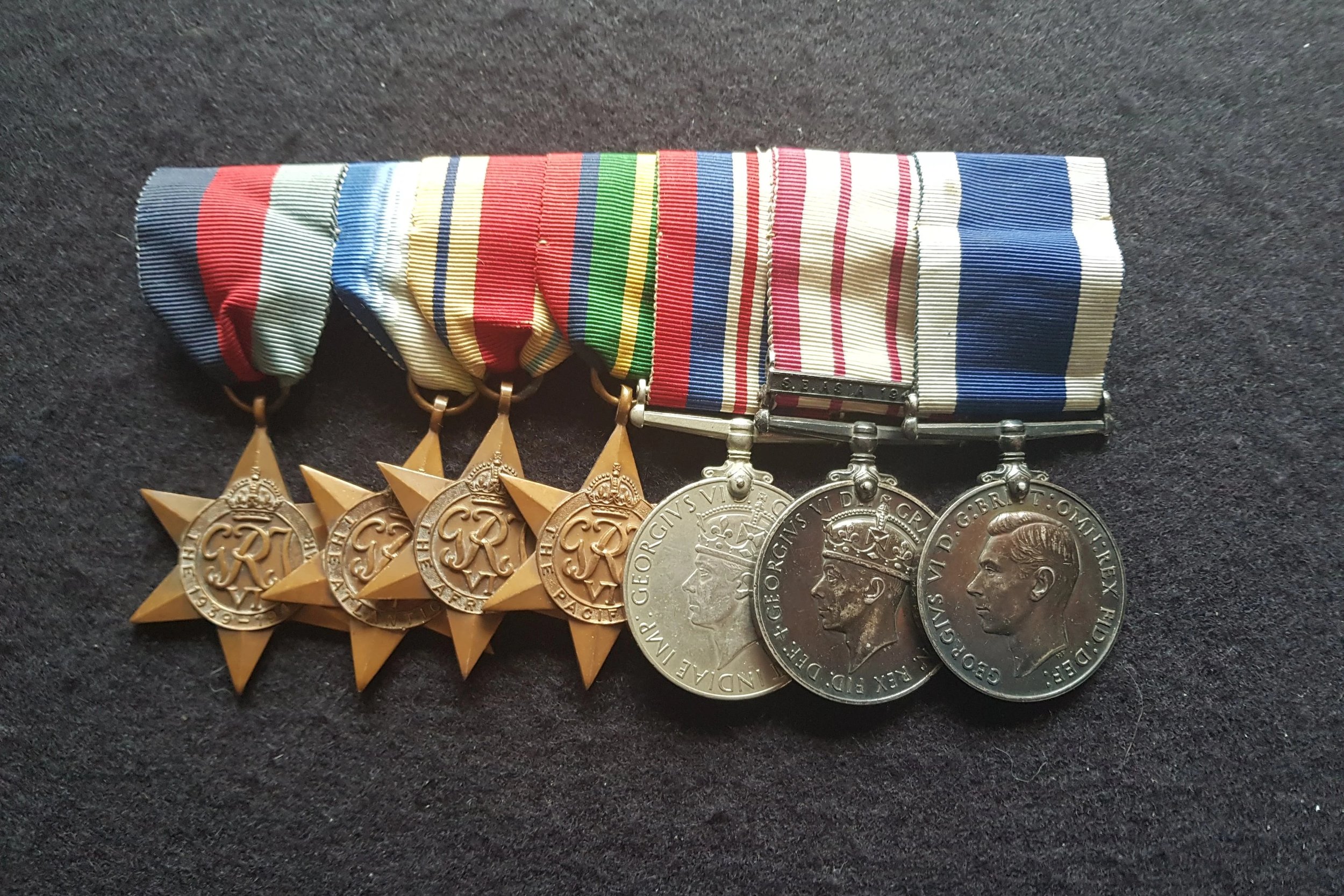
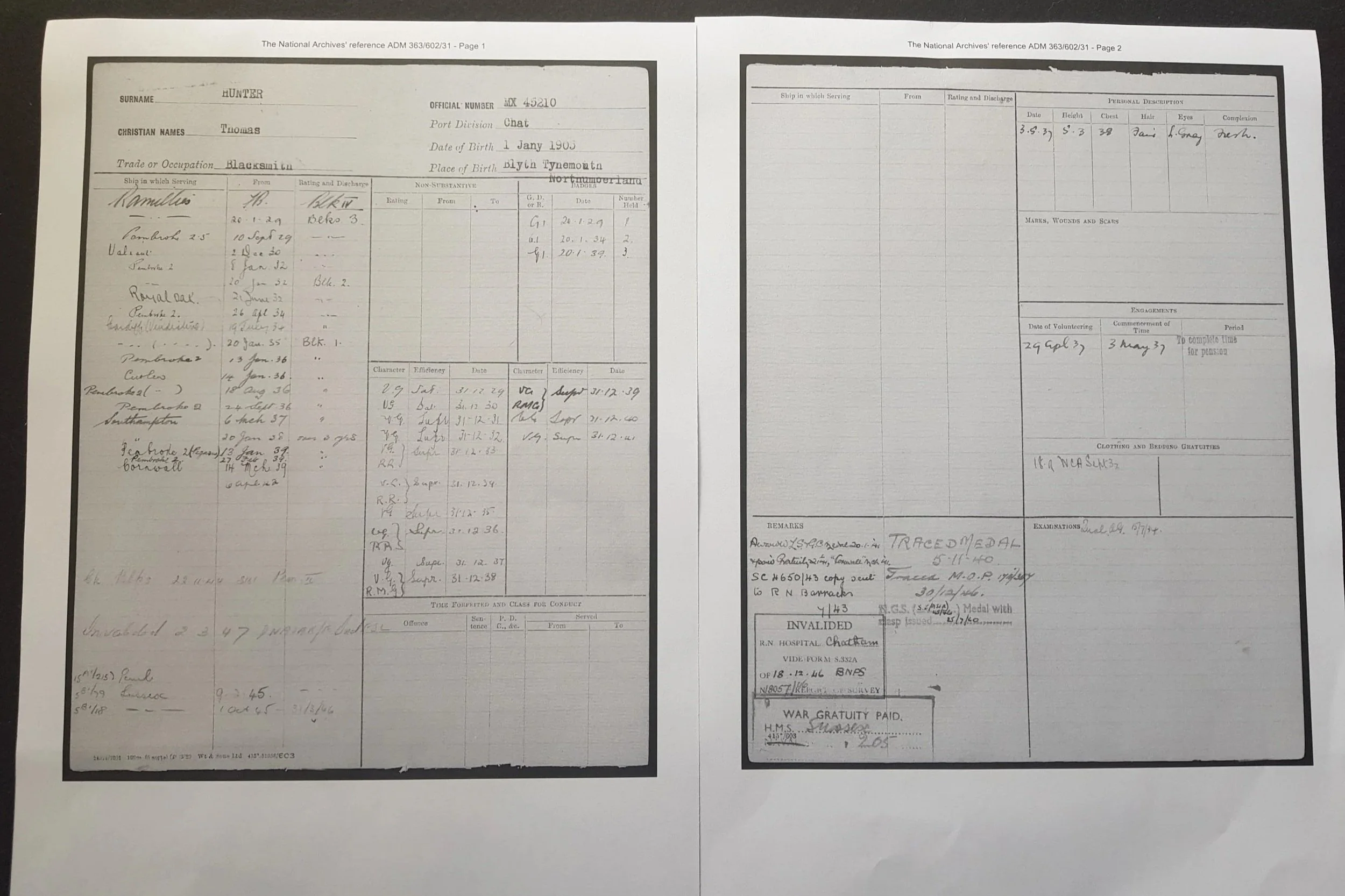
A very good WW2 Royal Navy N.G.S. (S.E. Asia 1945-46), L.S.&.G.C (H.M.S. Juno) Atlantic Convoys, North Africa Convoys, HSK-5 Sinking (Pinguin), ‘Easter Sunday Raids’ Sinking of H.M.S. Cornwall by Japanese Dive Bombers, Japanese Surrender of Singapore, Medal Group awarded to MX/45210 Blacksmith Thomas Hunter.
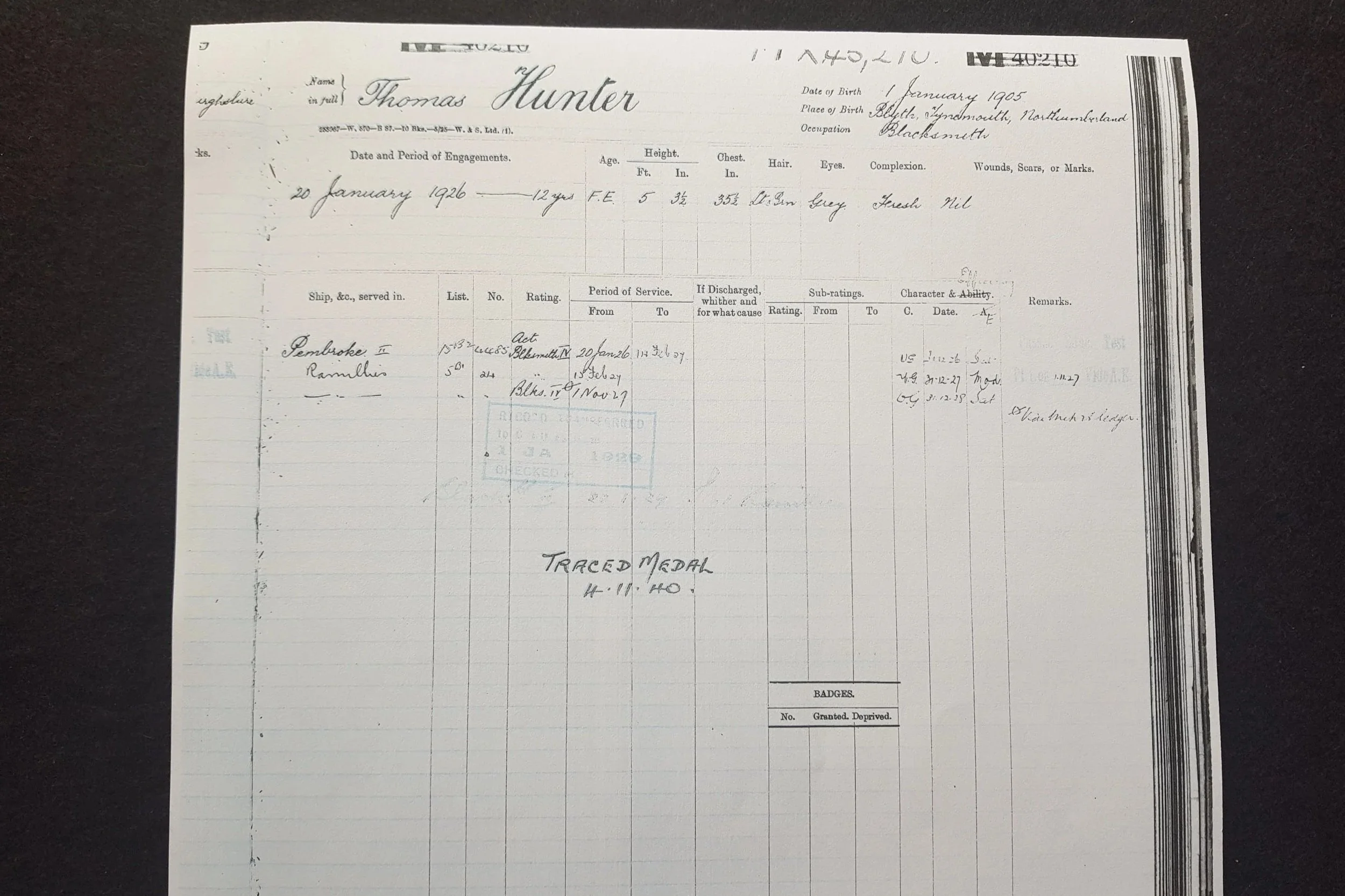
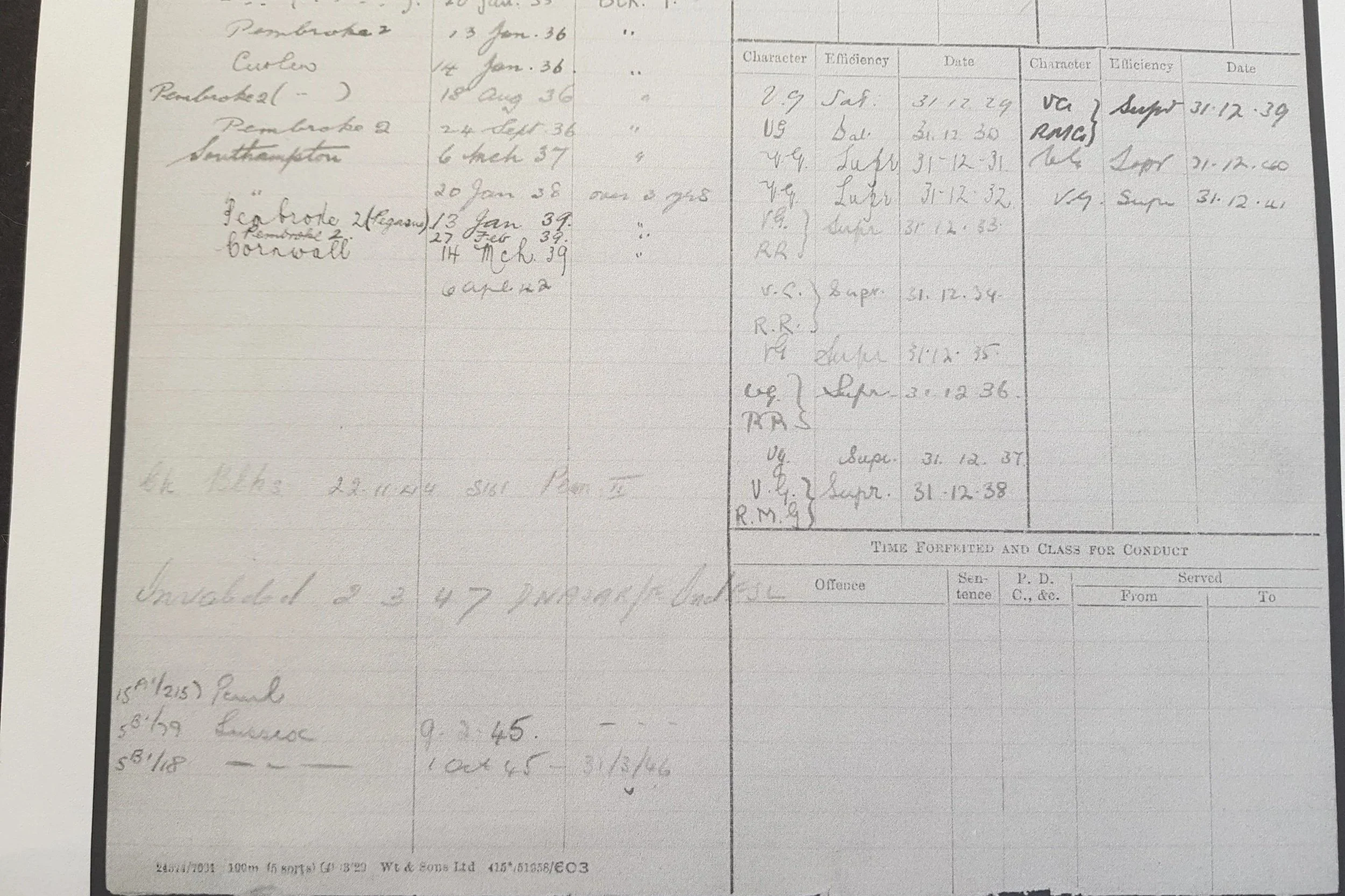
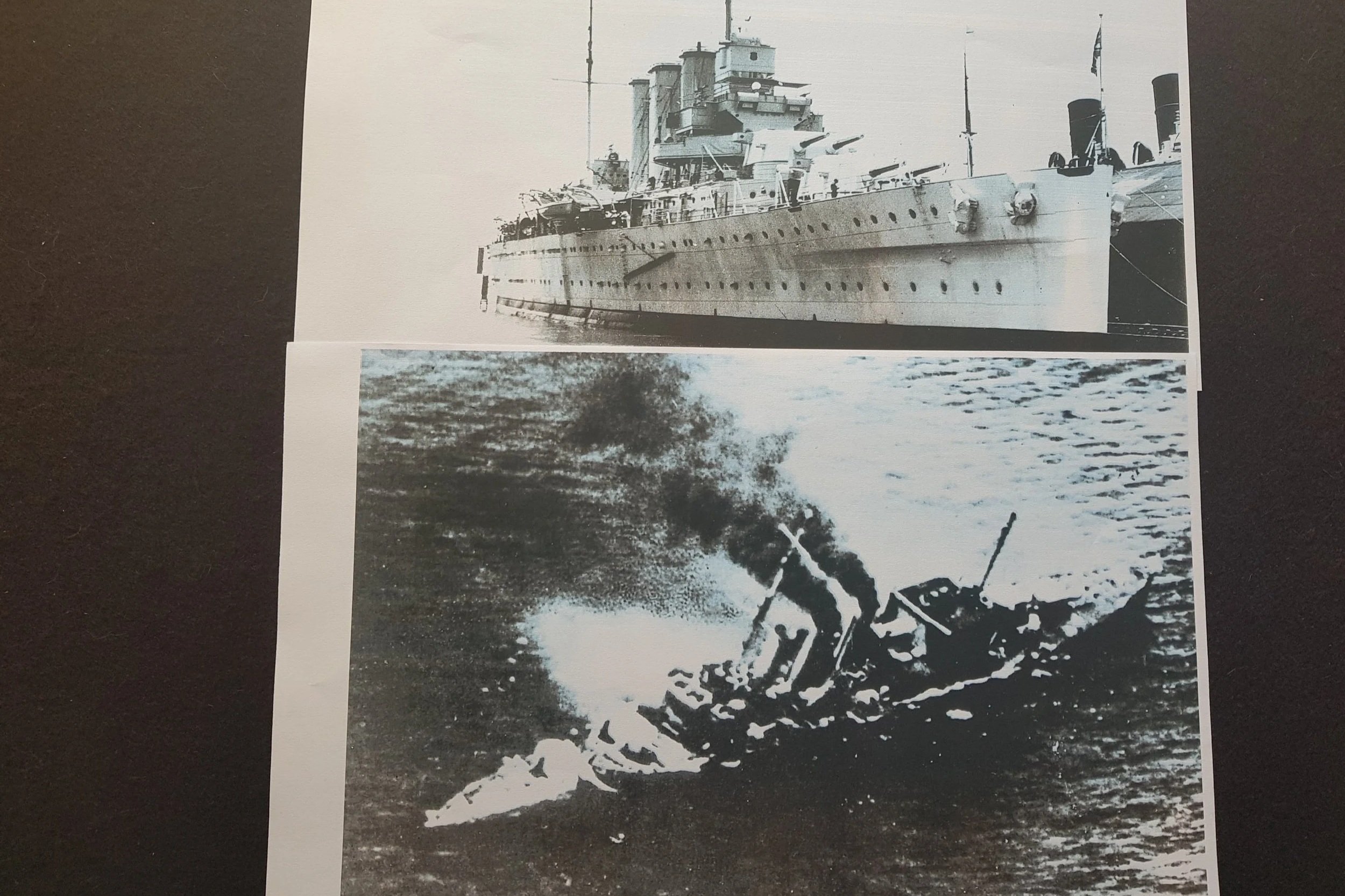
Thomas Hunter was born on the 1st January 1905, at Blyth, Tynemouth. He joined the ranks of the Royal Navy on the 29th January 1926, and after serving with several shore bases and ships, he joined the crew of the heavy cruiser H.M.S. Cornwall on the 14th March, 1939, where he served up to her sinking on the 5th April 1942. The following is an online description of her service -
The HMS Cornwall was assigned to the 5th Cruiser squadron on the China station (Hong Kong) when the Germans invaded Poland. That may have seemed safe, but it was soon apparent that at least on the naval side it was going to be another global conflict.
Cornwall, along with the heavy cruiser Dorsetshire and the small aircraft carrier Eagle, were formed as Force I at Colombo, Ceylon, one of eight hunting groups created to corner the German pocket-battleship Admiral Graf Spee. The Graf Spee turned toward South America, however, and the Cornwall did not participate in its destruction.
Cornwall, however, did have the honour of being the first to sink one of the dangerous German armed merchant raiders, the Pinguin under Kaptain Ernst-Felix Kruder. A sister ship to the famous Atlantis (sunk by HMS Devonshire on November 23, 1941), Pinguin was a converted 7,600-ton cargo liner built in 1936. It mounted six 5.9-inch (150mm) guns, one 75- mm gun, and four 21-inch torpedo tubes in two above-water twin launchers as well as 37mm and 20mm AA guns. She also went to sea carrying several hundred mines. For reconnaissance, she had one Arado Ar 196 seaplane.
Pinguin made its first kill July 31, 1940 off the coast of West Africa, then laid mines off the coast of Australia. With a range of 60,000 miles at 10 knots, Pinguin was designed for long-distance operations and, except for an attack on the Norwegian whaling fleet in Antarctica in January 1941, plied the Indian Ocean from August 1940 into May 1941.
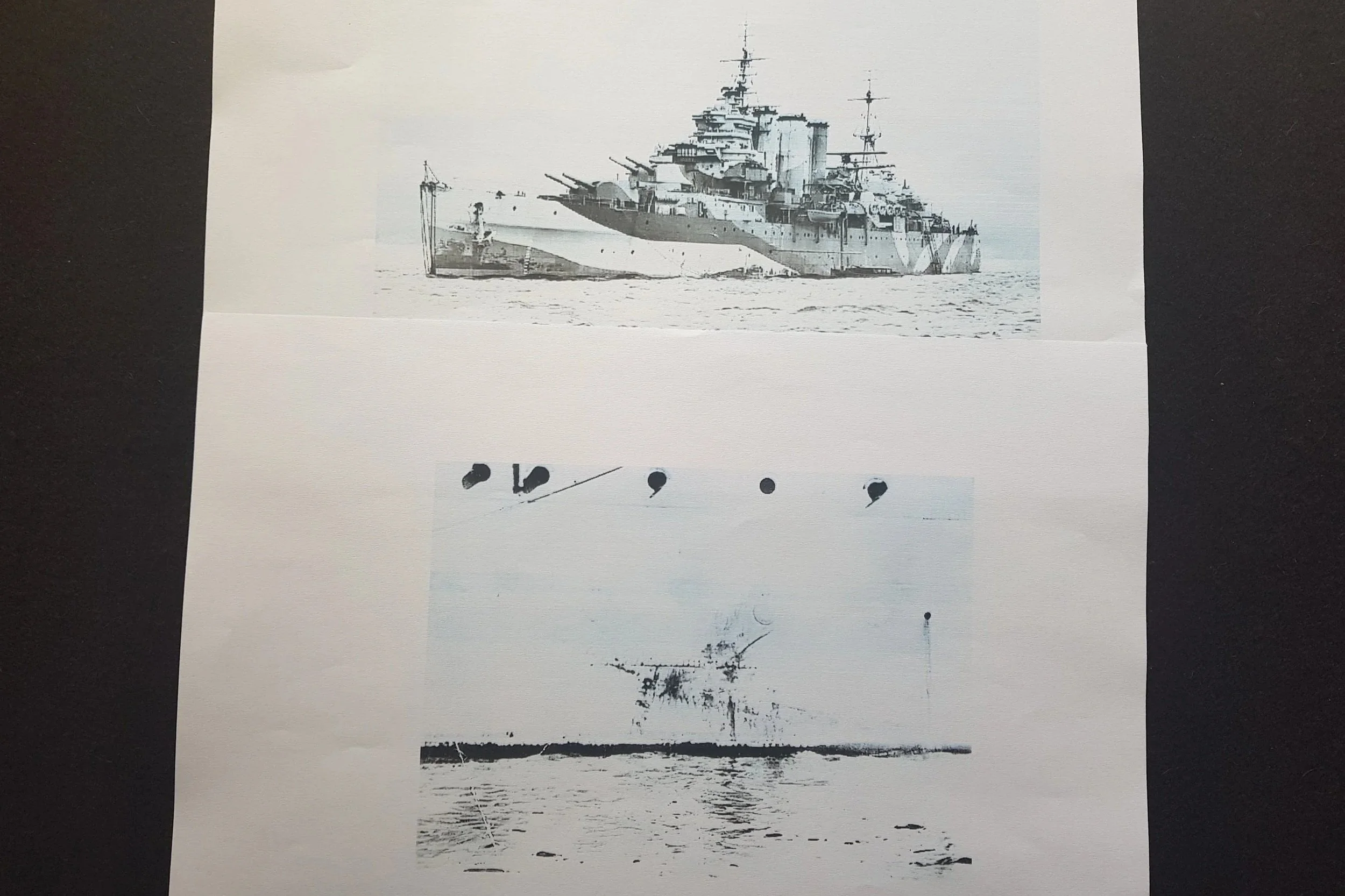
Cornwall, under the command of Captain P.C.W. Manwaring, often operated in the western Indian Ocean despite still being assigned to the South Atlantic Command. On April 29, the 7,266-ton liner Clan Buchanan got a message off before being boarded and scuttled by Kruder’s raider. Force V, consisting of Cornwall, the old cruiser Hawkins, and the carrier Eagle, was ordered to respond, as was the New Zealand-manned 6-inch cruiser Leander. Kruder headed west toward Africa rather than south to open sea where the British were looking. On May 7, however, 300 miles southeast of Socotra, Pinguin tried to capture the small 3,600-ton tanker British Emperor. The victim did not cooperate and raised an alarm heard both by Cornwall sailing from Mombasa and by British authorities in Colombo. Captain Manwaring increased speed to 25 knots (Pinguin’s top speed was 16 knots) to intercept the raider that was then 500 miles north of his position. Kruder obliged by turning southwest so that the two ships spent the day and night closing the distance between them.The Cornwall in England. The women of Cornwall presented the ship with a white silk ensign.
At 7 in the morning on May 8 one of Cornwall’s Walrus seaplanes spotted Pinguin 65 miles off the port side and the chase was on. The cruiser increased speed to 28 knots. Unable to escape, Kruder tried to brazen out his disguise as the Norwegian merchantman Tamerlane, even sending out a false raider report over a captured British radio. Manwaring twice challenged and twice fired warning shots after pulling within visual range at 4 pm. As the cruiser closed to 10,500 yards, the German turned to port, hoisted its true colours, and opened accurate fire with its 5.9-inch guns. A hit disabled Cornwall’s steering for several minutes and the forward A and B turrets had to be shifted to manual control owing to a circuit failure.
Cornwall moved to open the range as near misses showered the ship with splinters. Pinguin also fired two torpedoes that missed. Once the cruiser was able to bring all its 8-inch guns into action, the battle ended quickly. At 5:26 a four-gun salvo hit the raider. One shell hit forward, another under the bridge, a third in the engine room, and a fourth detonated some of the 130 mines still on board, causing a massive explosion that sent the raider under in seconds.
Only 60 out of the Pinguin’s crew of 342 and 22 out of 225 Allied prisoners held on the raider survived. Kaptain Kruder was not among them. Rescue operations were hampered by the failure of electrical power in the Cornwall’s engine room, causing so much heat to build up that the engineering spaces had to be temporarily abandoned and one officer died of heat stroke.
While a battle between a heavy cruiser and a raider may seem an uneven contest, it must be remembered that raiders packed considerable firepower at close range. This is where most engagements were fought owing to the need for British captains to make a positive identification of suspected ships before opening fire.
While the Royal Navy guarded against German raiders in the Indian Ocean, it also had to keep an eye on Japan. Tokyo had proclaimed its Greater East Asia Co-Prosperity Sphere on July 27, 1940. Less than four weeks before the Pinguin was sunk, Japan had signed a nonaggression pact with the Soviet Union. This protected Tokyo’s back as it prepared an attack to the south.
The blow fell on the British as well as the Americans on December 7, 1941 when Japanese troops landed on the Malayan peninsula. Three days later the battleship Prince of Wales and battlecruiser Repulse (Force Z) were sunk by air attack. By the end of January 1942 the Japanese Army was at the gates of Singapore, which surrendered on February 15.
The oil-rich Dutch East Indies were the next Japanese target. On February 27 and 28, a mixed American, British, Dutch, and Australian (ABDA) force of five cruisers and nine destroyers attempted to intercept a Japanese invasion force. In the resulting Battle of the Java Sea, all the ABDA cruisers were lost including the British heavy cruiser Exeter which had won fame for its duel with the Graf Spee in the River Plate.
By April the Japanese had digested their Pacific conquests and were prepared to mount a major raid into the Indian Ocean. Vice Admiral Nagumo had five of the six large aircraft carriers he had used at Pearl Harbor with a covering force of four battleships, one light carrier, three cruisers, and 11 destroyers. The Cornwall slips beneath the surface of the Indian Ocean, a victim of naval aviation.
The British fleet was under Admiral Sir James Somerville who had only recently become C-in-C of the Eastern Fleet. He had distinguished himself in the pursuit and destruction of the German battleship Bismarck and as commander of Force H in the Mediterranean. Somerville divided his fleet into two groups: Force A (two fleet carriers, one battleship, four cruisers, and six destroyers) and Force B (four battleships, one light carrier, three light cruisers, and eight destroyers). The battleships and cruisers of Force B were too old and slow to face the cream of the Japanese fleet. Somerville hoped to surprise the enemy with the more modern ships of Force A, to which Cornwall was assigned.
When Nagumo was sighted headed for Ceylon on April 4, Force A was divided. Cornwall and Somerville’s only other heavy cruiser, Dorsetshire, were at Colombo while the rest of the fleet was refuelling 600 miles to the southeast at the secret British base of Abbu Atoll in the Maldives. The cruisers were ordered to rendezvous with Somerville and were thus away from Colombo when the Japanese air strike hit the base on April 5, Easter Sunday. Their luck changed for the worse when a reconnaissance floatplane from the Japanese cruiser Tone spotted the two British warships just as the Colombo attack was ending. Both cruisers were in need of a refit and could only make 27.5 knots in their attempt to put distance between themselves and the enemy.
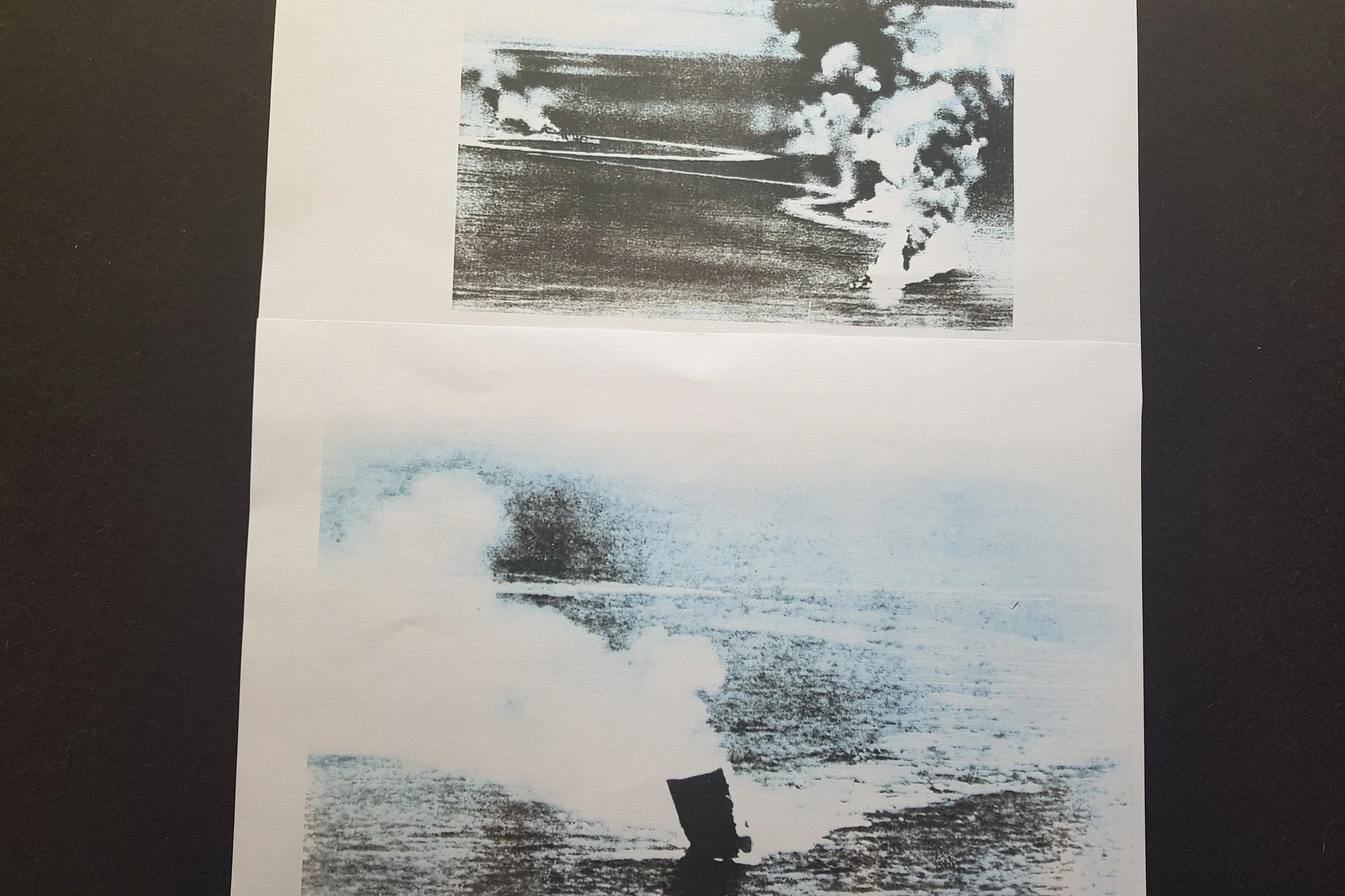
At 11:30 Nagumo ordered his remaining dive-bombers to attack the cruisers. Nearly 80 “Vals” dove out of the sun at 1:40 pm. Cornwall took a hit and two near misses on the first pass, then Dorsetshire took a hit that jammed her steering gear, sending the ship in an uncontrollable circle. Four minutes later, another bomb found one of her magazines. Shattered by the explosion, the ship lost speed and took on a list. Then four more bombs hit. Captain Augustus Agar, a holder of the Victoria Cross, ordered the ship abandoned. Eight minutes after the attack started, Dorsetshire sank by the stern.
Cornwall did not last much longer. The cruiser took at least seven hits and numerous near misses that also did considerable damage. The aft engine room and both boiler rooms were flooded and electrical power was disrupted. The forward engine room took a direct hit as did the sick bay. With a list to port and fires raging out of control, Captain Manwaring ordered “abandon ship” at 1:58 pm. Cornwall capsized four minutes later. Only one “Val” had been shot down.
With the Cornwall were lost 10 officers and 181 men, and with the Dorsetshire 19 officers and 214 men. Among the dead were many of the South African volunteers who had done so much to make up for manpower shortages in the Royal Navy. There had been 104 such volunteers on Cornwall and 84 on Dorsetshire. Yet, 22 officers, including both captains, and 1,100 men were rescued the following evening by the light cruiser Enterprise and two destroyers after enduring 30 hours in shark-infested waters.
Admiral Somerville had detected the Japanese dive-bombers on the radar of his flagship, the battleship Warspite, and immediately turned away from the threat. Admiral Nagumo, having revealed his position by his attacks on Colombo and on the cruisers, also turned away. Vice-Admiral Ozawa’s cruisers and destroyer spent the next two days raiding Allied shipping. Three days after sinking Cornwall and Dorsetshire, Nagumo’s planes found and sank the light British carrier Hermes and its two escorting destroyers outside Trincomalee. The next day, Somerville abandoned the seas east of India; Force B heading for safety at Kenya and Force A heading for Bombay.
Four of the five heavy cruisers lost by the Commonwealth during the war were sunk by the Japanese. British 8-inch cruisers on distant stations, though few in number, performed well against the surface raiders sent out by Germany, a country that was not a great naval power. But the interwar emphasis on arms control and economical defence budgets had left the Royal Navy without the means to confront a first-rate sea power like Japan in a clash of battle fleets. The problem was not, of course, just an inadequate cruiser force. The same interwar policy had left the Royal Navy with a primitive Fleet Air Arm, a destroyer shortage, and an over-reliance on obsolete capital ships.
It was the Royal Navy’s ability to project power into distant seas on a regular basis that had transformed England from a minor island nation into a global empire and arbiter of world events. For 16 years the heavy cruiser HMS Cornwall was a symbol of that British power; yet at the same time it was a symbol of Britain’s decline. The first cruiser designed under the terms of the 1922 Washington Naval Treaty, when the world seemed at peace, the Cornwall became the victim of Japan’s rising power 20 years later. The Cornwall’s eventful service on distant stations traced the loss of that pre-eminence at sea that the Royal Navy had held for two centuries.
Hunter then served at the shore base Pembroke, and then joined the crew of H.M.S. Sussex on the 9th February 1945, serving aboard her through to the 31st March 1946.
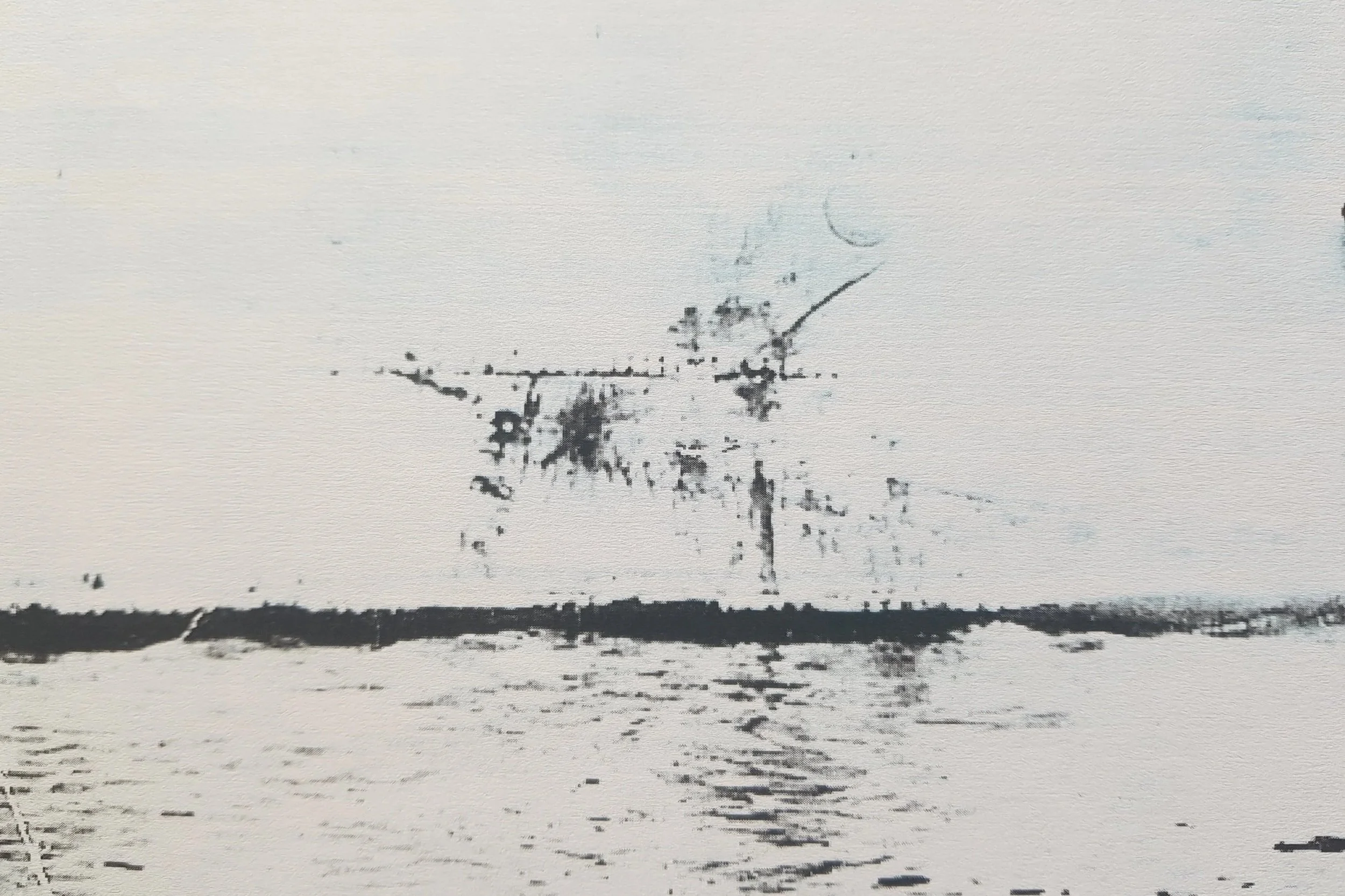
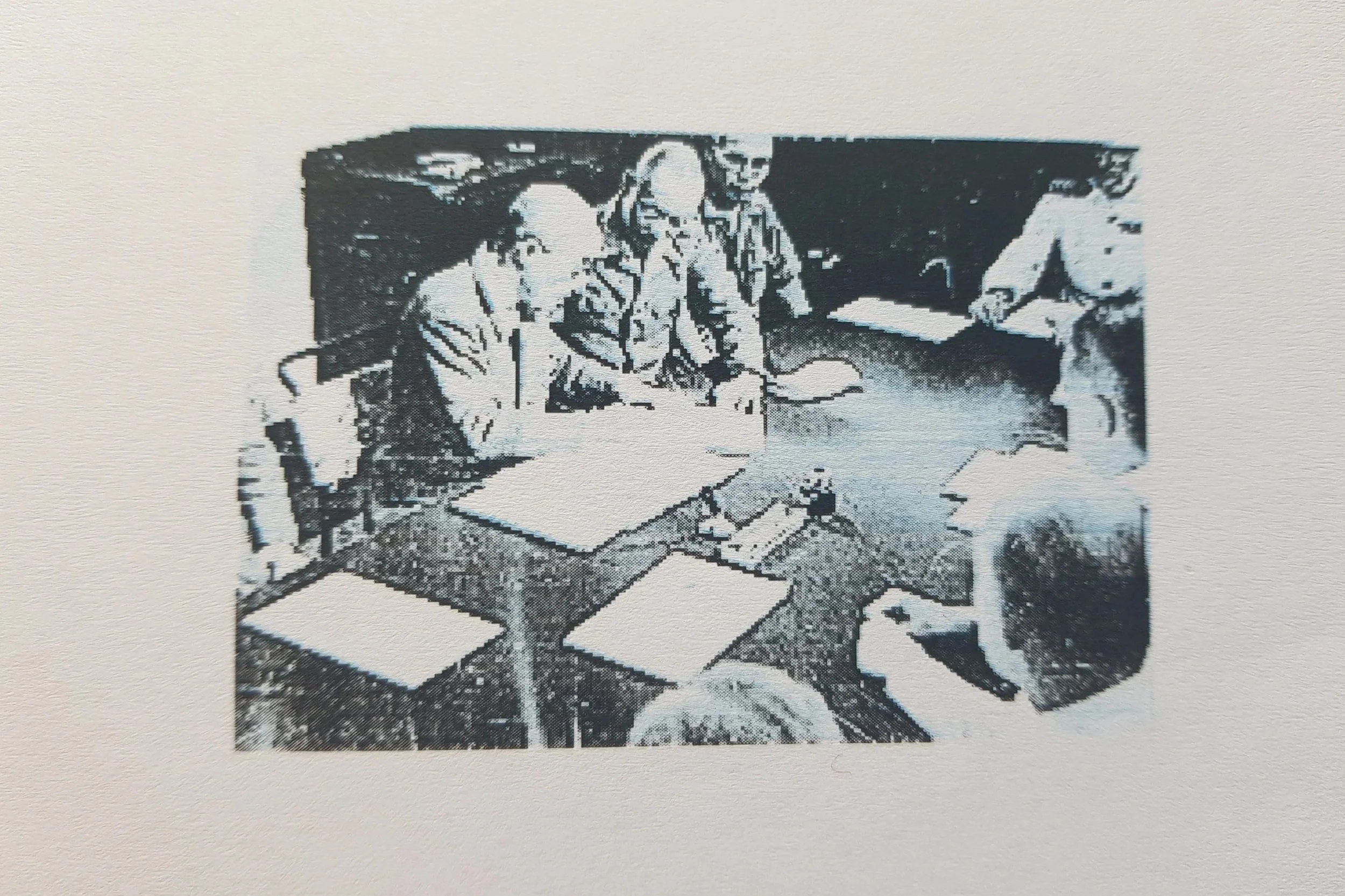
Sussex spent 1944 in the Pacific, and covered operations in the Netherlands East Indies Following the cessation of hostilities. On 26 July 1945 her Task Force was attacked by two attack bombers acting as kamikaze suicide weapons. One made an imprint on the side of Sussex, from which it could be identified as a Mitsubishu Ki-51 “Sonia”. On Wednesday, 5th September 1945 at 11:30 am, HMS Sussex entered Singapore Harbour carrying the Flag of the Rear-Admiral Cedric Holland. General Seishiro Itagaki, the commander of the garrison at Singapore was brought on board, where he signed the formal surrender of the army, thus completing Operation Tiderace, the Allied plan to recapture Singapore.
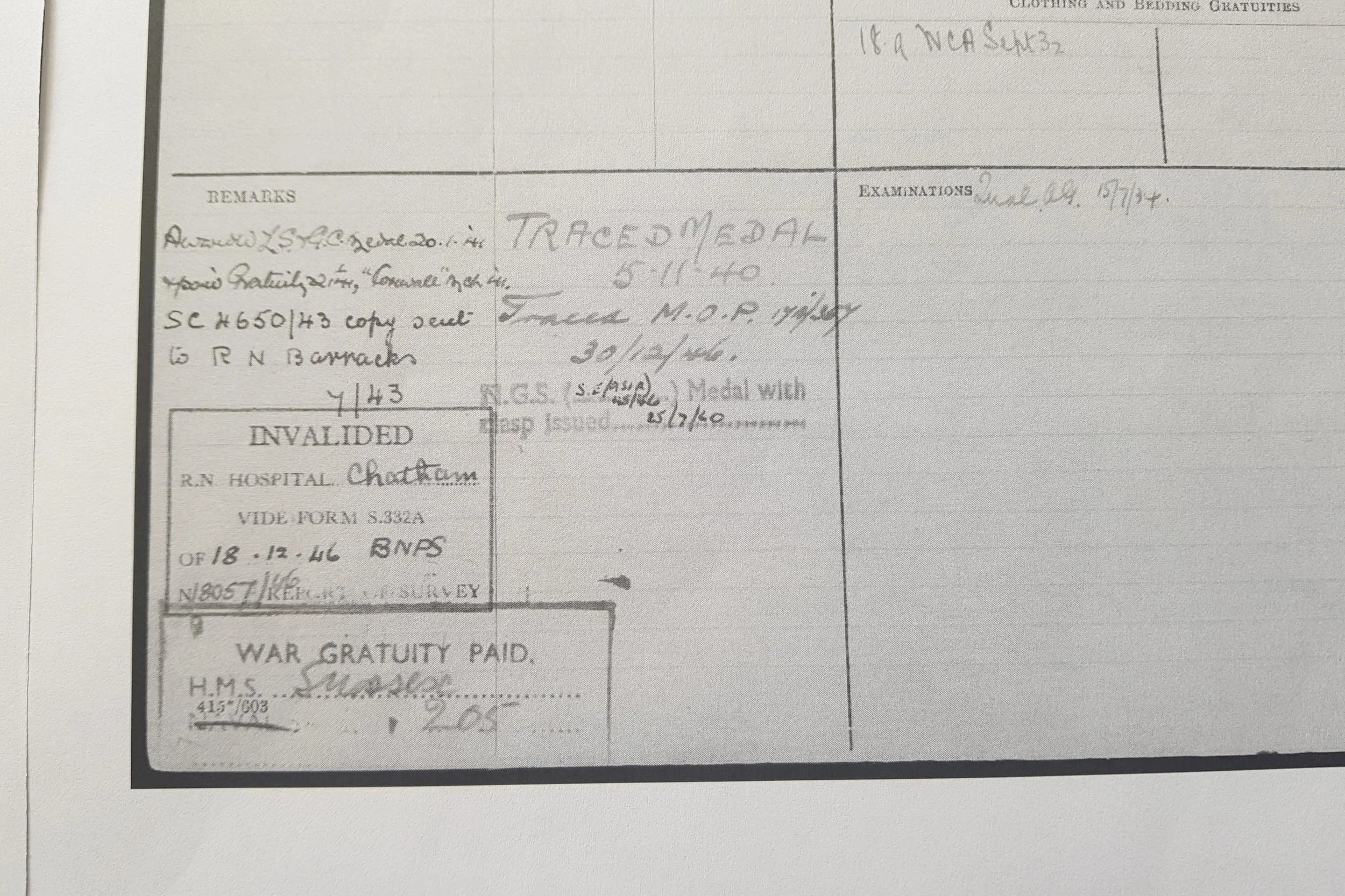
Thomas Hunter survived the war and was invalided to the R.N. Hospital Chatham on 18th December 1946.
His L.S.&G.C. Medal was awarded on the 20th January 1941, the same year that H.M.S. Juno was sunk by Italian dive bombers. Thomas was not present during that action.
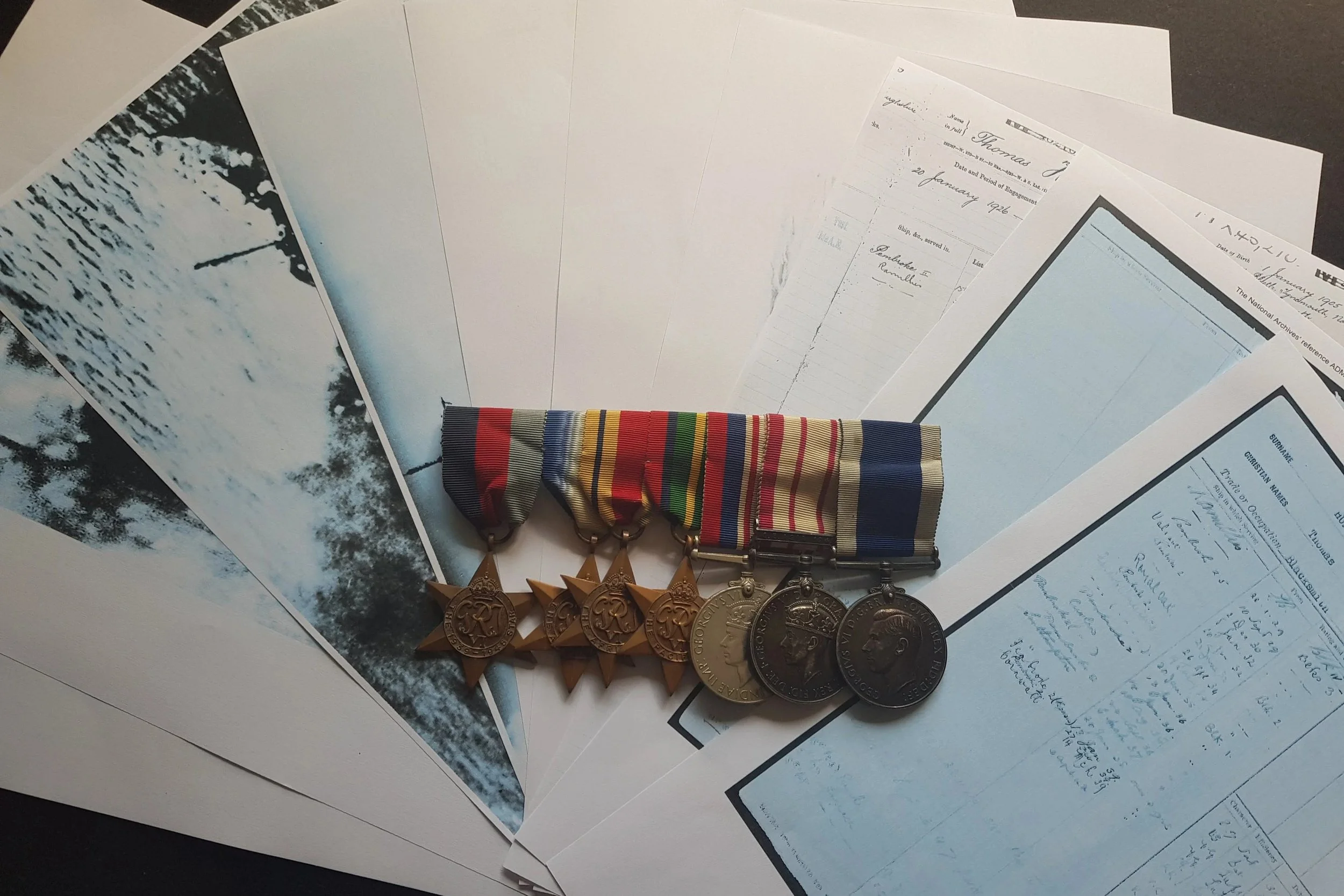
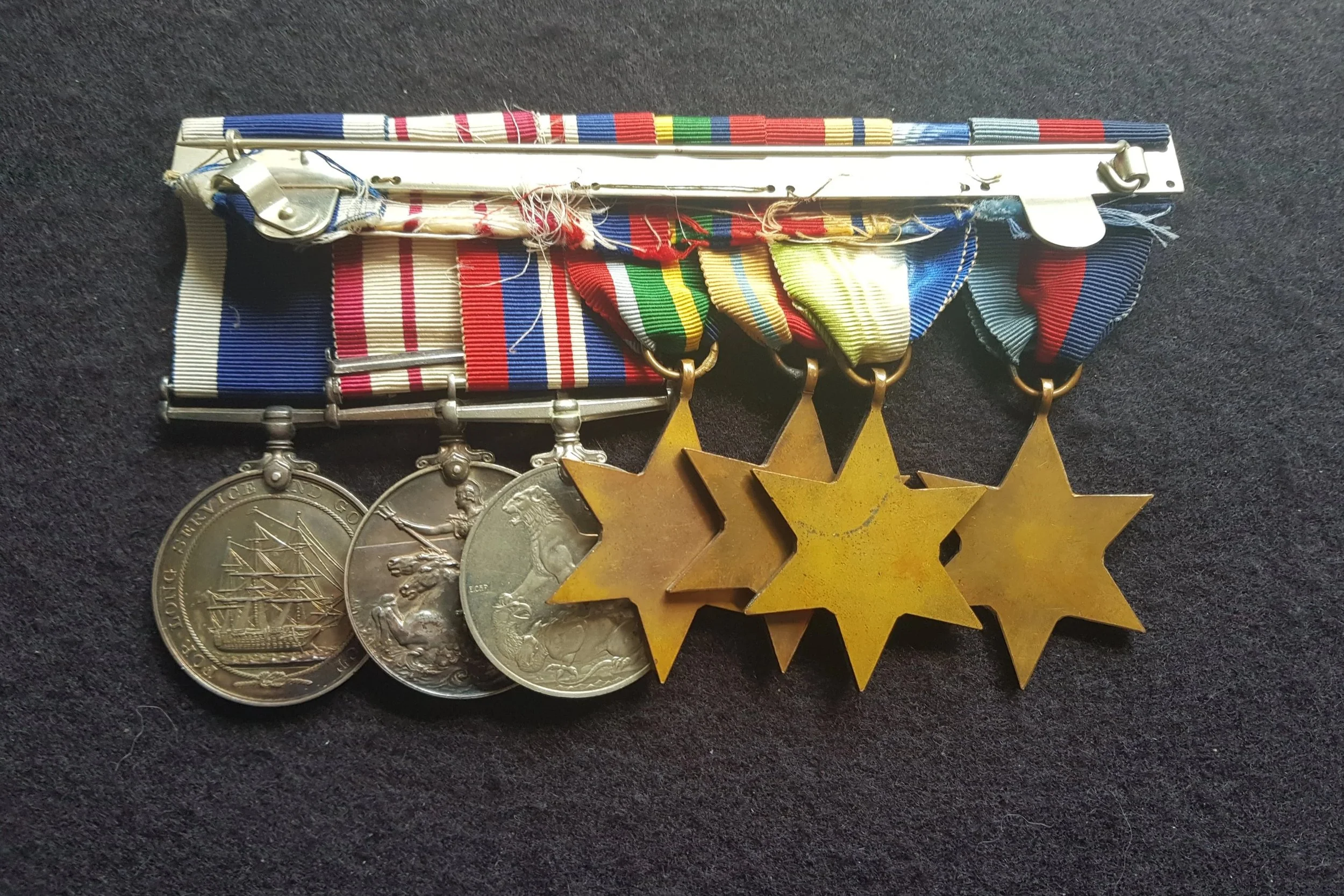
The medals are mounted as worn, sold with copied research, and are as follows –
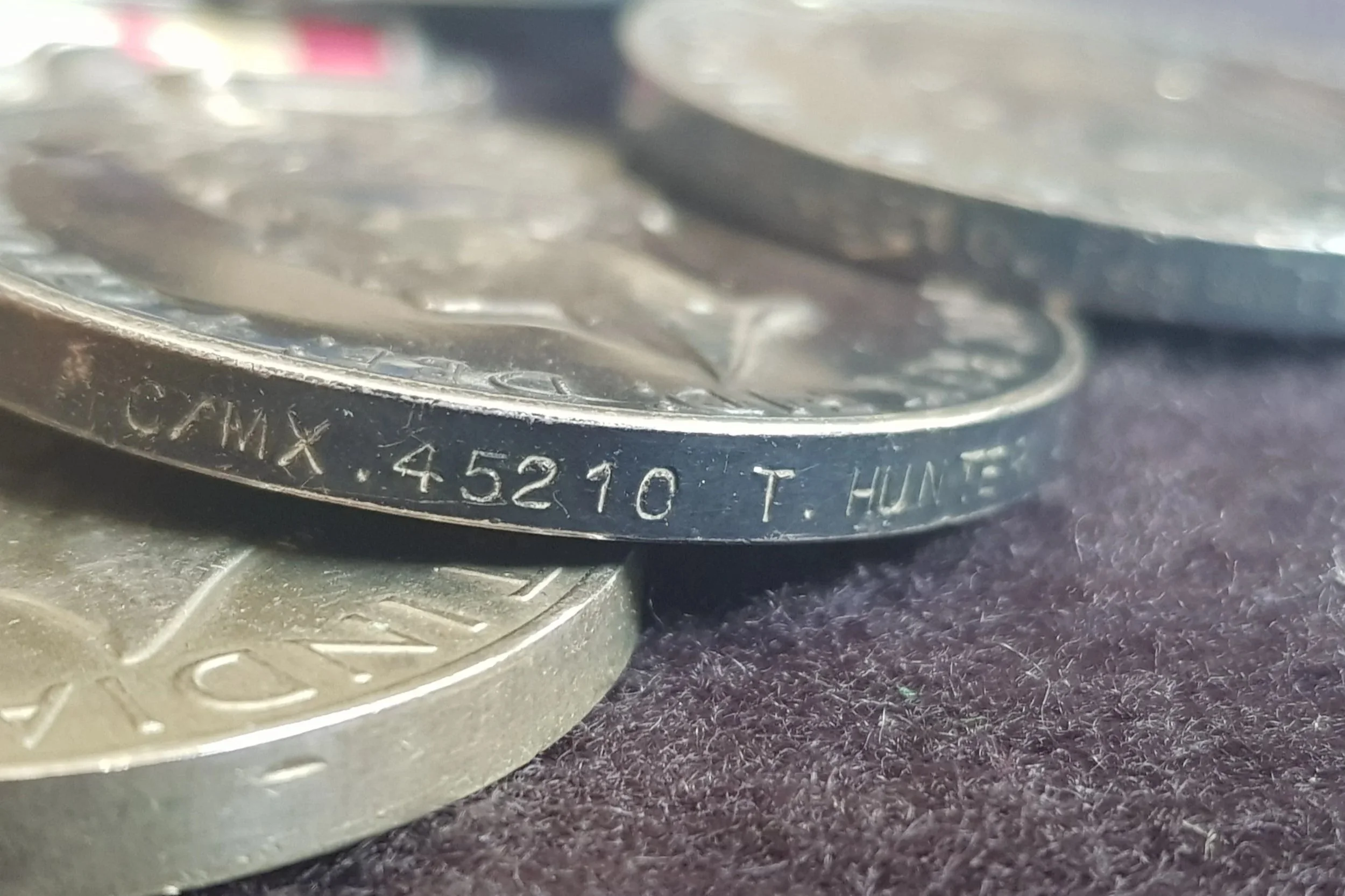
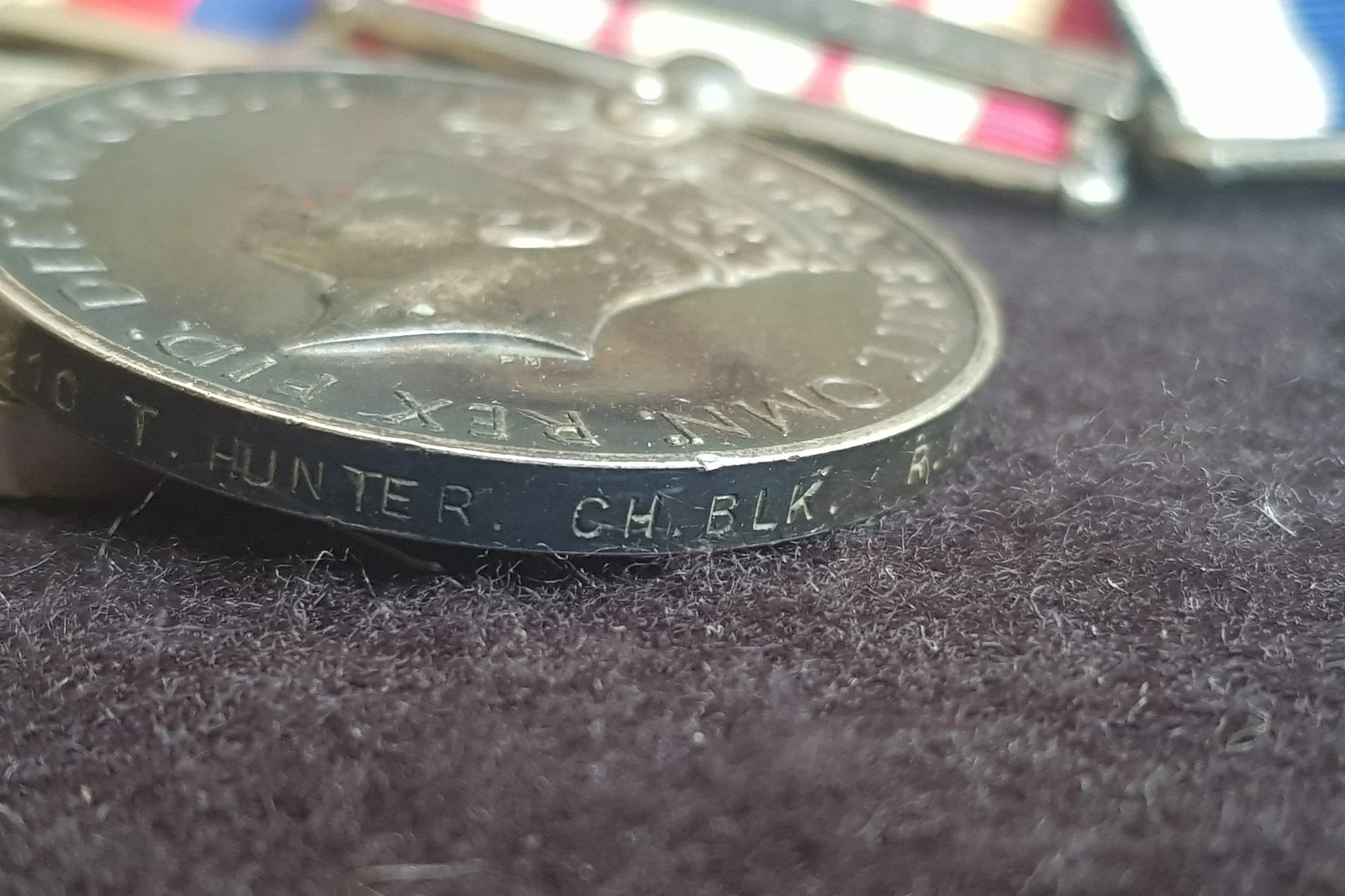
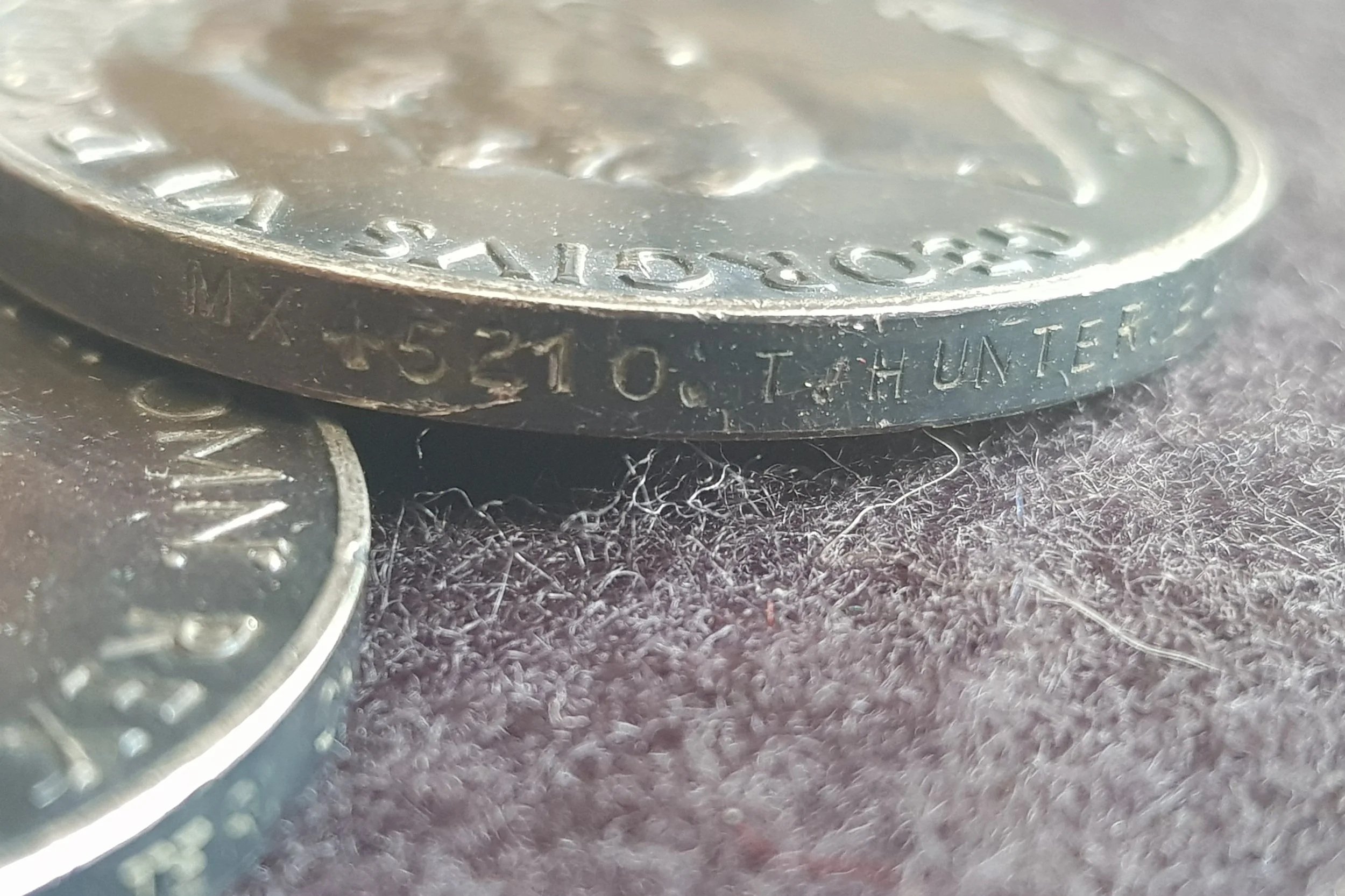
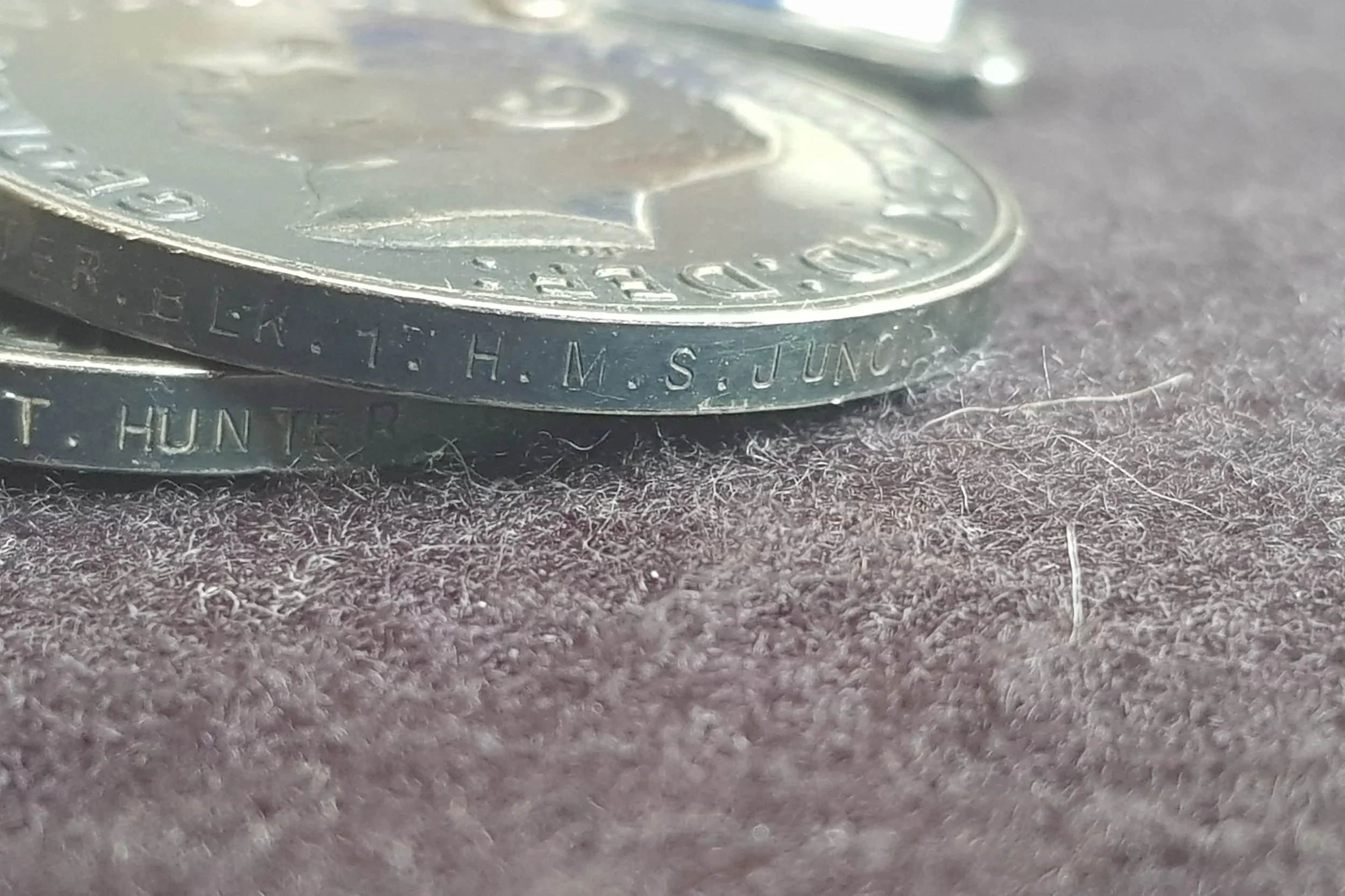
1939/45 Star; Atlantic Star; Africa Star; Pacific Star; 1939/45 War Medal, all unnamed as issued; G.VI. Naval General Service Medal, clasp, SE. Asia 1945-46 (1 of 2000 clasps awarded), C/MX. 45210 T. HUNTER. CH. BLK. R.N.; G.VI. Royal Navy Long Service & Good Conduct Medal, MX 45210. T. HUNTER. BLK. 1. H.M.S. JUNO.
Condition, good very fine