An Interesting WW1 M.C.& Double M.I.D., WW2 'Blitz' O.B.E., Coronation, Jubilee Medal Group to Lieutenant-Colonel C.E. Boast, 1st/1st Northumbrian Field Company, Royal Engineers (1671)
An Interesting WW1 M.C.& Double M.I.D., WW2 'Blitz' O.B.E., Coronation, Jubilee Medal Group to Lieutenant-Colonel C.E. Boast, 1st/1st Northumbrian Field Company, Royal Engineers (1671)
An Interesting WW1 M.C.& Double M.I.D., WW2 'Blitz' O.B.E., Coronation, Jubilee Medal group awarded to Lieutenant-Colonel C.E. Boast, 1st/1st Northumbrian Field Company, Royal Engineers.
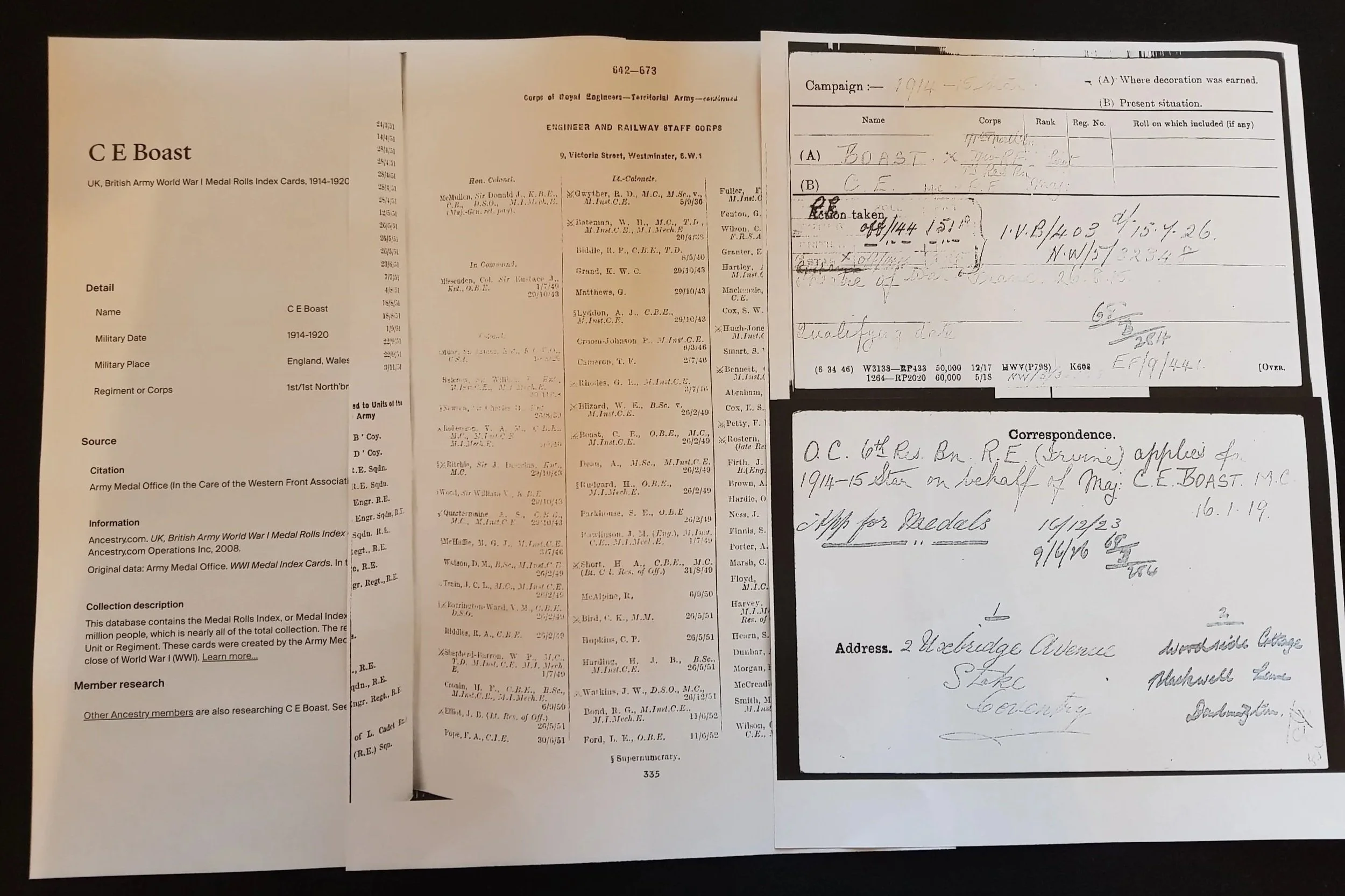
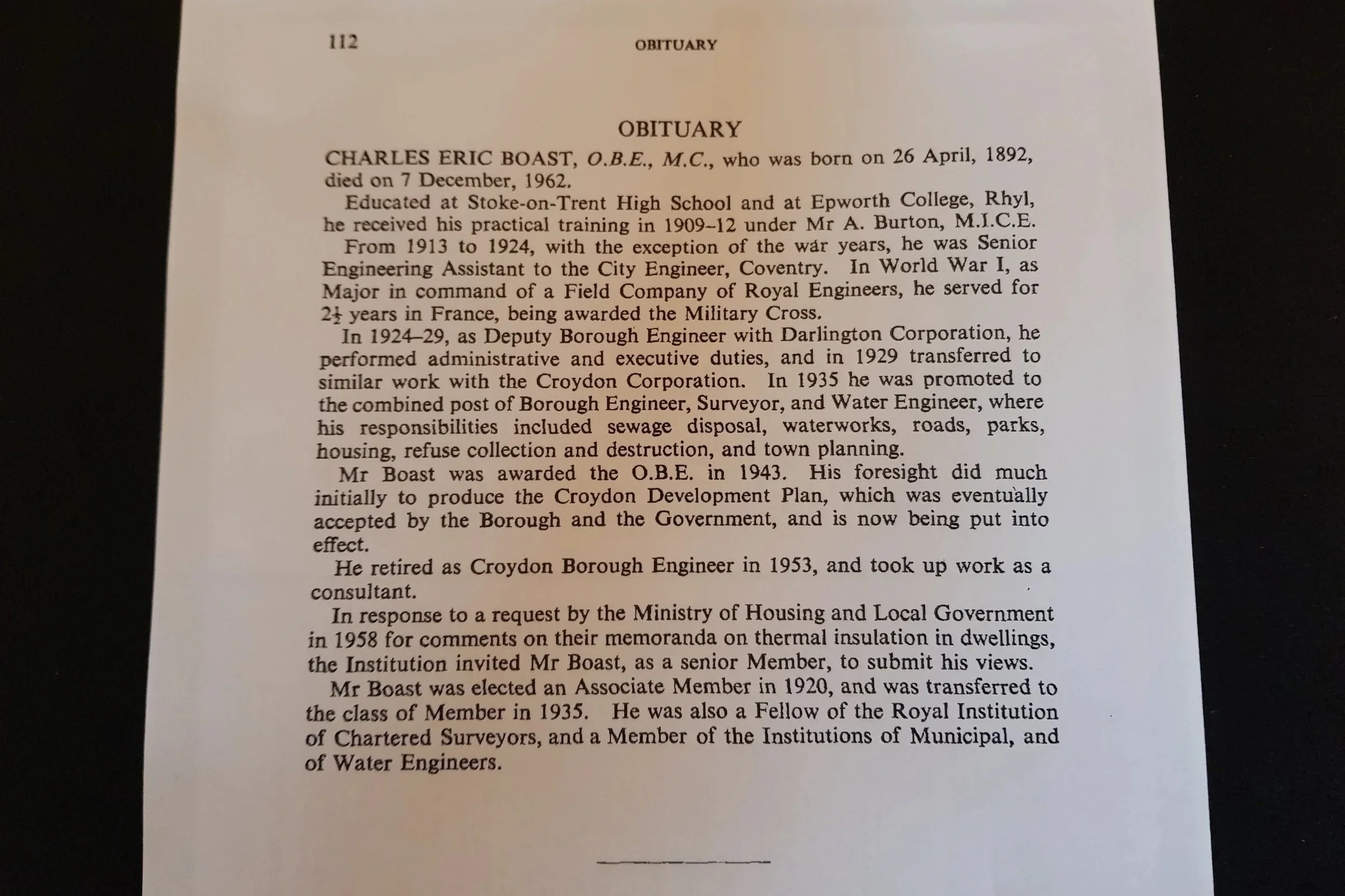
Charles Eric Boast was born on the 26th of April 1892 in Longton, Stoke-on-Trent, Staffordshire, son of Charles Wilson Boast and Alice Brookfield, and he was educated at Stoke-on-Trent High School and Epworth College, Rhyl from 1906-1909, and then the University of London, where he is mentioned in the War List of the University, which listed members, teachers, graduates and students who served during the War. Before the outbreak of WW1 Charles was listed as working at the Chlorination Plant of Whitley Water Works, Coventry, handling road and drainage improvements under the supervision of A. Burton M.I.C.E.
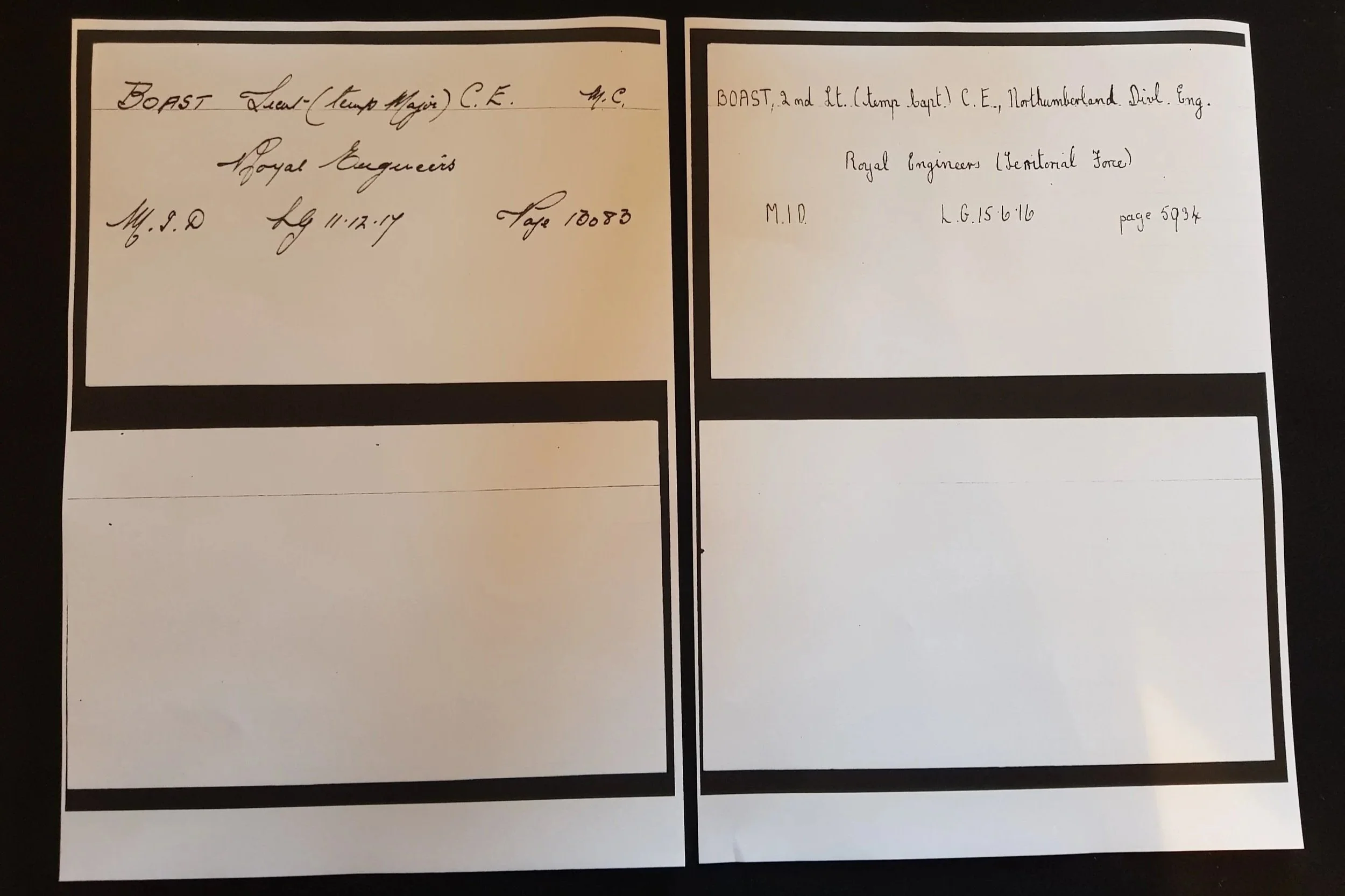
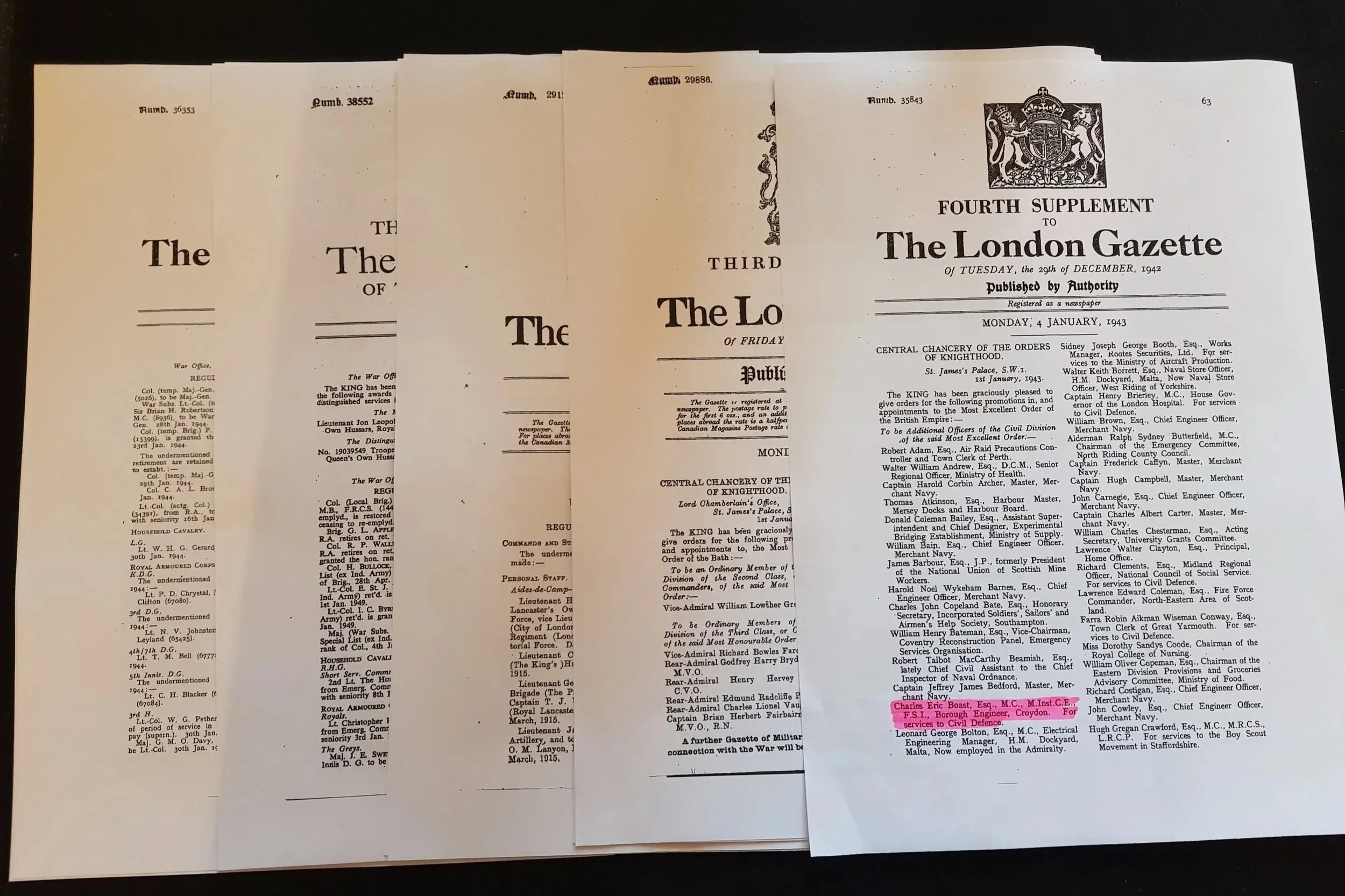
At the outbreak of WW1, Charles was commissioned into the Royal Engineers and landed in France on the 28th of August 1915 with the 1st (1st Newcastle) Northumbrian Divisional Royal Engineers (T.F.) and later commanded the 6th Reserve Battalion of the Royal Engineers (T.F.). Captain Charles Eric Boast was twice mentioned in Despatches (M.I.D.): London Gazette issue 29623 13th June 1916 'General Haig has the honour to forward herewith the names of those under his command whom he wished to bring to notice for gallant and distinguished conduct in the field.'
In the 1917 New Year's Honours List Charles was awarded the Military Cross (M.C.): London Gazette issue 29886 1st January 1917
Later that year Temporary Major Charles Eric Boast was Mentioned in Despatches (M.I.D.) for the second time: London Gazette issue 30427 11th December 1917
In March 1918 Charles was promoted to the rank of Acting Major, a rank he would hold until the war had ended. In May 1919 he would relinquish the rank and return to civilian life.
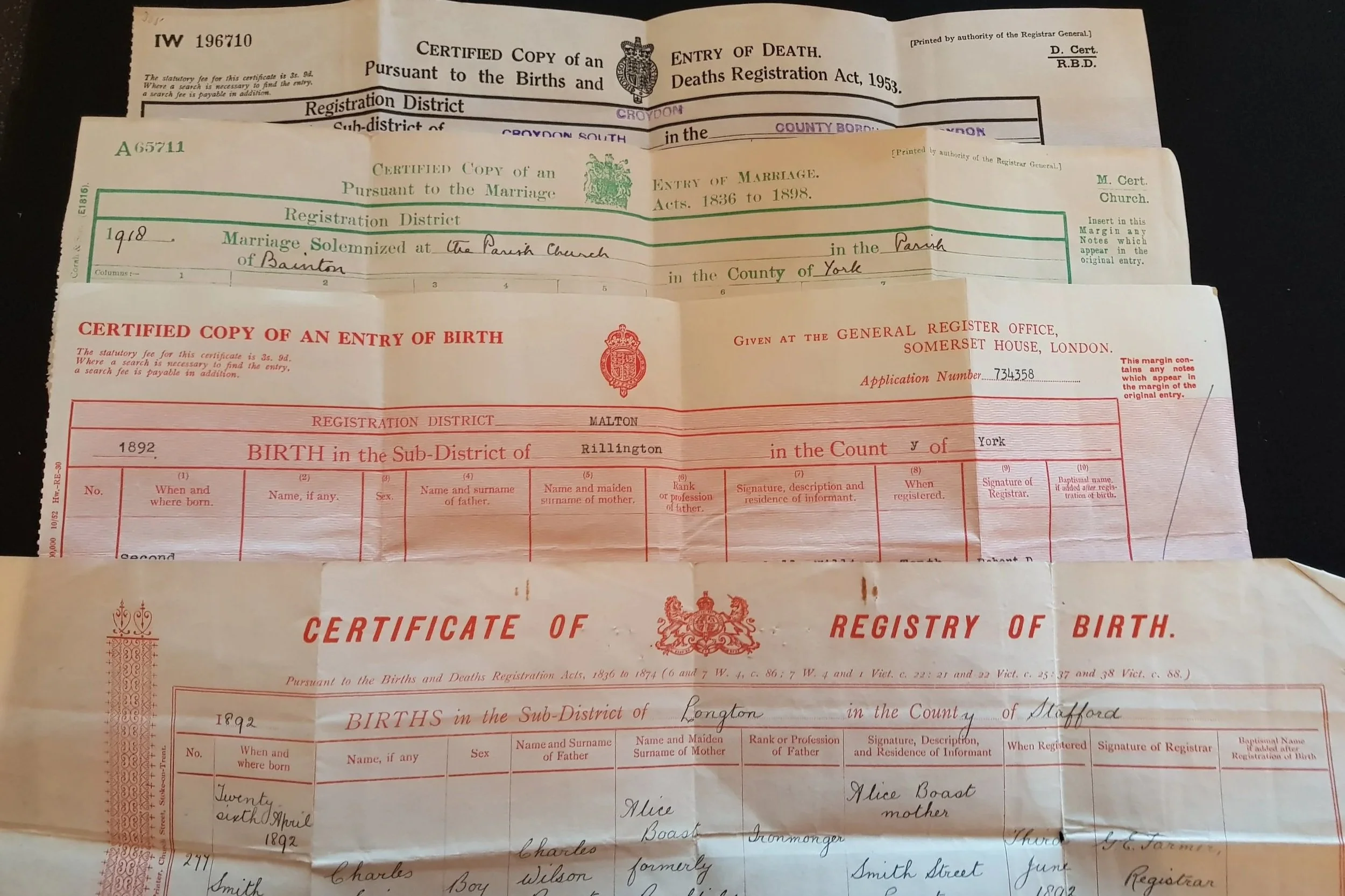
Charles was married on the 11th July 1918 to Eva Katherine Williams, the only daughter of Rev. Theodore Williams and Isabella Williams, and younger sister of Theodore Cecil Ormond Williams M.C., at Bainton Parish Church, Yorkshire. Charles returned to Coventry and continued his work as the Senior Engineering Assistant to the City and Resident Engineer at Coventry Sewage Works, and in 1920 was elected to The Institute of Civil Engineers (M.I.C.E.). From 1924-29 he was Deputy Borough Engineer, Darlington and by 1929 was transferred to Croydon, London and in 1935 was promoted to the combined post of Borough Engineer, Surveyor and Water Engineer overseeing major planning, maintenance and improvements for the area.
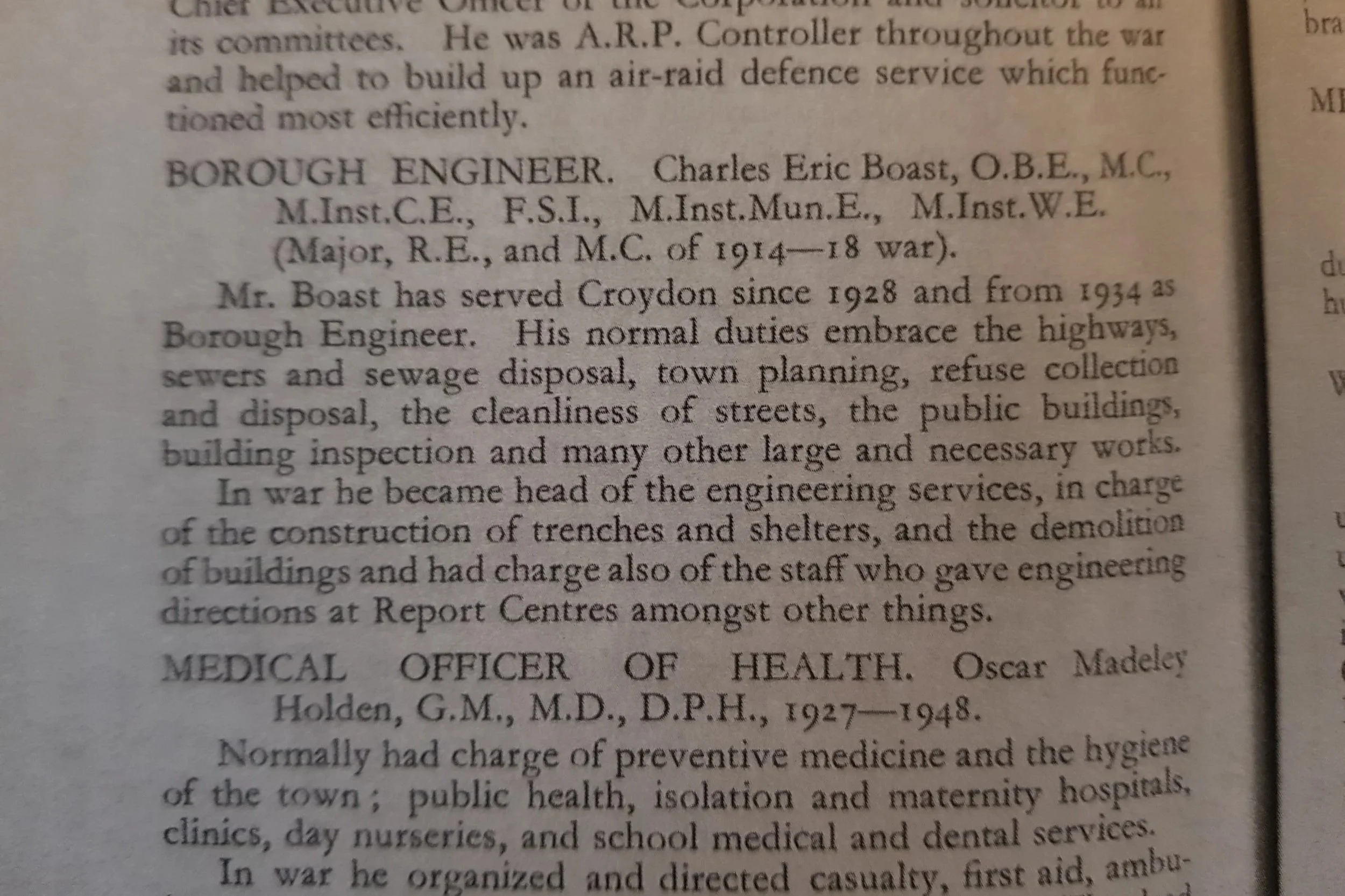
At the outbreak of WW2 on the 3rd of September 1939, Charles's responsibilities grew, and at the beginning of 1940 at the request of the War Office to provide the Royal Engineers with skilled workers for construction tasks at home and overseas, according to Croydon Memorial Books Charles 'modestly hides that fact that he is a Major and Military Cross holder' and is personally interviewed. A company is formed of around 6 officers and 253 other ranks, trained at Chatham and Launceston and at the end of September the Company reformed to become the 725 Bomb Disposal Company of 11 officers and 305 men. During the Blitz the Company was in charge of bomb removal, and over the course of the London Blitz it removed around 168 bombs, the largest a 1.800kg 'Satan'. This was extremely dangerous work and some men like Lieutenant B. Hope and 6 other ranks were killed when the bomb they were removing exploded at Bushey Park, Teddington. The Company also were in charge of repair, crater filling, demolishing damaged buildings and more. After the height of the Blitz the Company were moved to places such as Kent, where they constructed fortifications and most importantly carried out airfield repairs. Charles himself became the head of the engineering services, in charge of the construction of trenches, shelters and more. In late December 1942 Charles Eric Boast was made an Officer of the Order of the British Empire (O.B.E.) 'For Service to Civil Defence', London Gazette 35843 29th December 1942 'The KING has been graciously pleased to give orders for the following promotions in, and appointments to the Most Excellent Order of the British Empire'
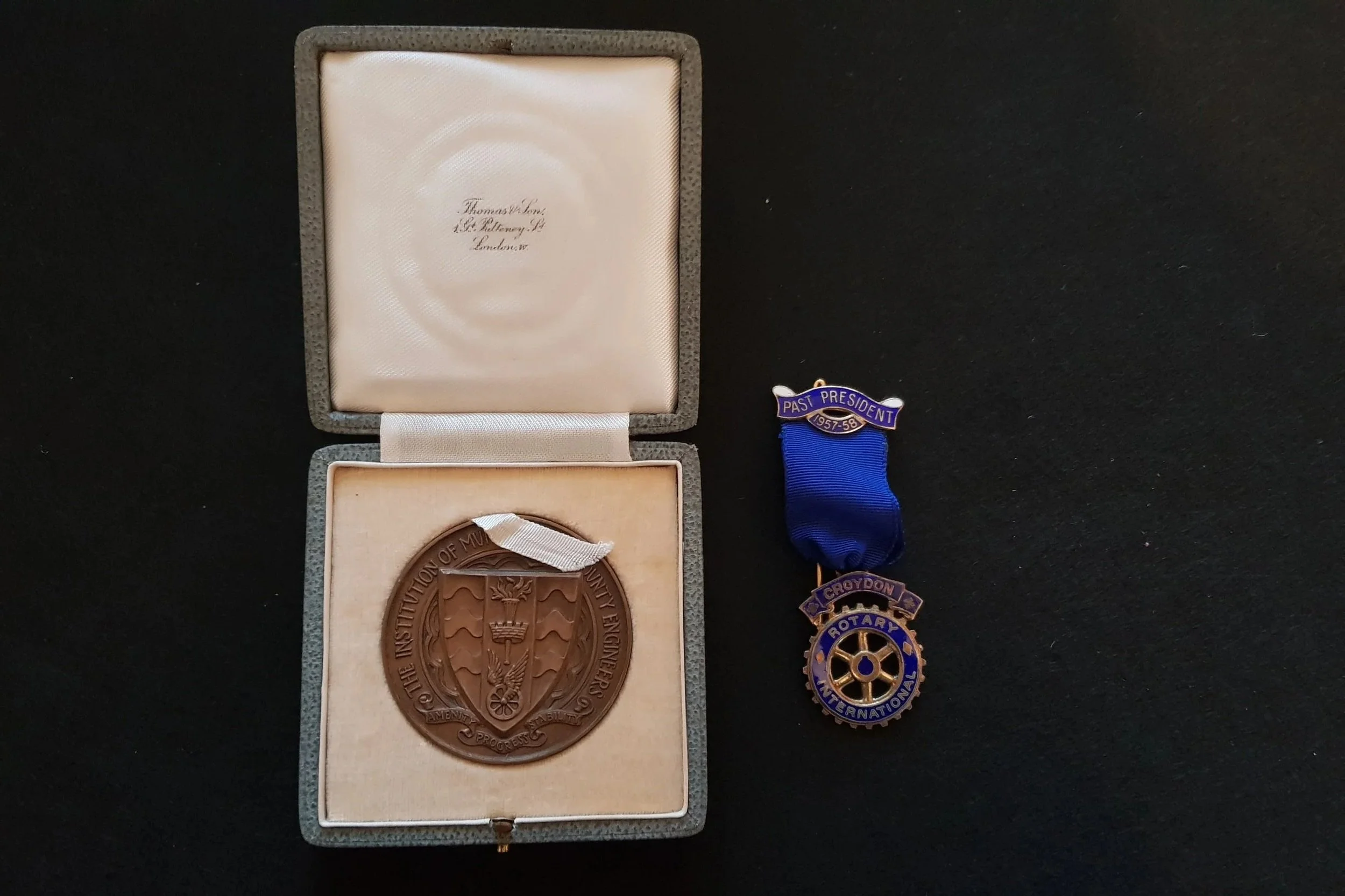
In October 1943 he was promoted to the rank of Major, where he was in command of a Royal Engineers Field Company of the Territorial Army, and after the end of WW2 in March 1949 Charles was promoted again to the rank of Lt Colonel. Charles continued his work as a Borough Engineer of Croydon until his retirement in 1953, taking up work as a consultant and was president of the Croydon Rotary International Club.
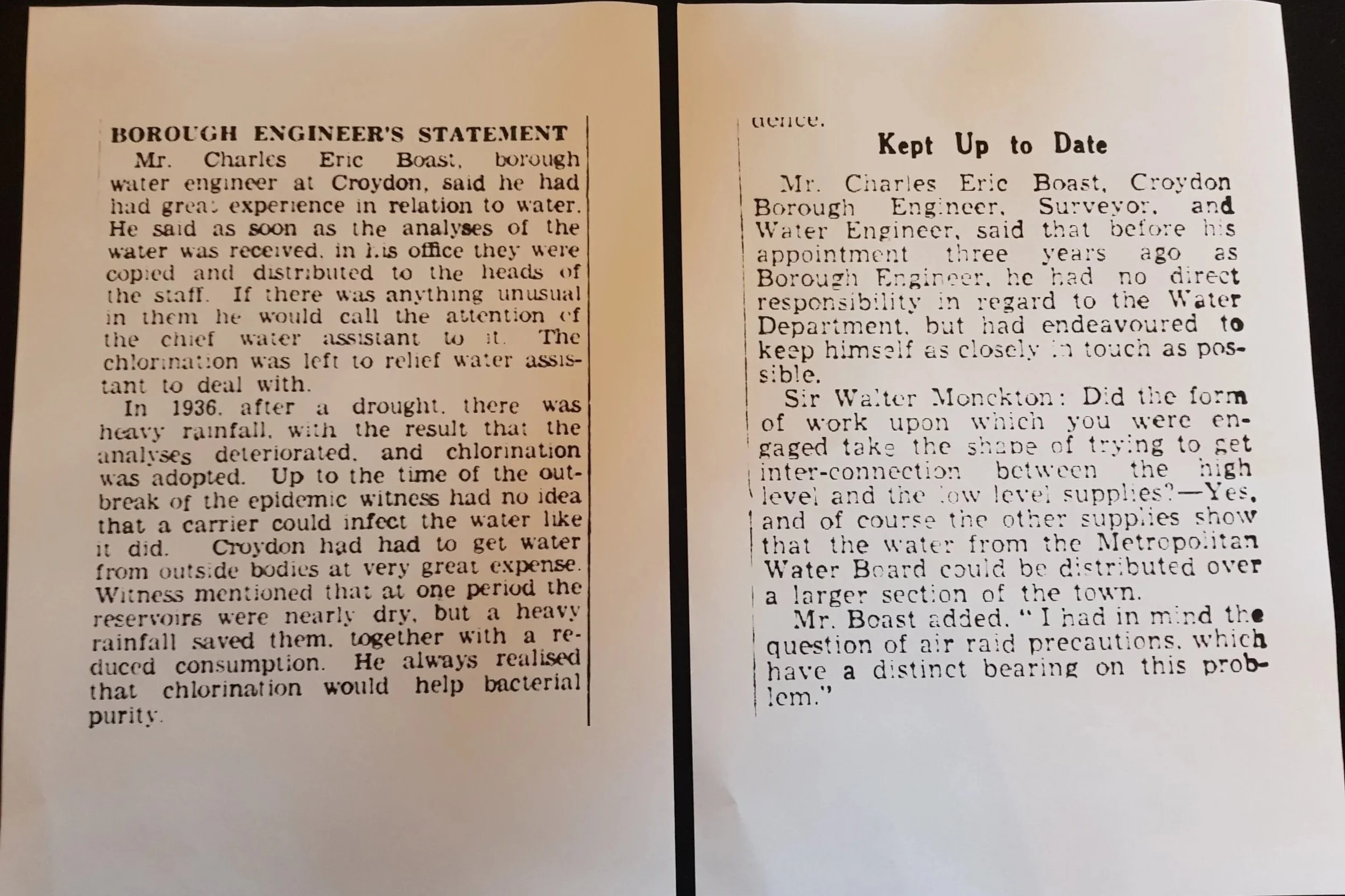
Charles Eric Boast's legacy in Croydon includes taking on, designing and overseeing major projects and laying the framework for projects such as the Croydon Development Plan, Purley Lido, opened in July 1935 and at the time one of the most up to date swimming pools in the world, now Grade II listed, the 1937 Croydon Typhoid Inquiry and his forward thinking Methane Gas Fleet Scheme in which due to war time shortages of fuel in the 1940s. Charles used his knowledge and professional experience at the head of the Croydon Corporation Sewage Management and modernised the Croydon Sewage Works in 1938, as well as seeking to channel the use of the bi-product methane into a fuel. Before the war methane was thought of a expensive and unnecessary, but with rationing and shortages, Charles began tests to satisfactory results. In a short time, the Croydon Corporation’s fleet of 53 vehicles including Guy Vixen, Austin, Morris, Commer and Albion lorries were running on compressed methane and waste, a fuel they continued to run on, racking up a total of around 1.3 million miles.
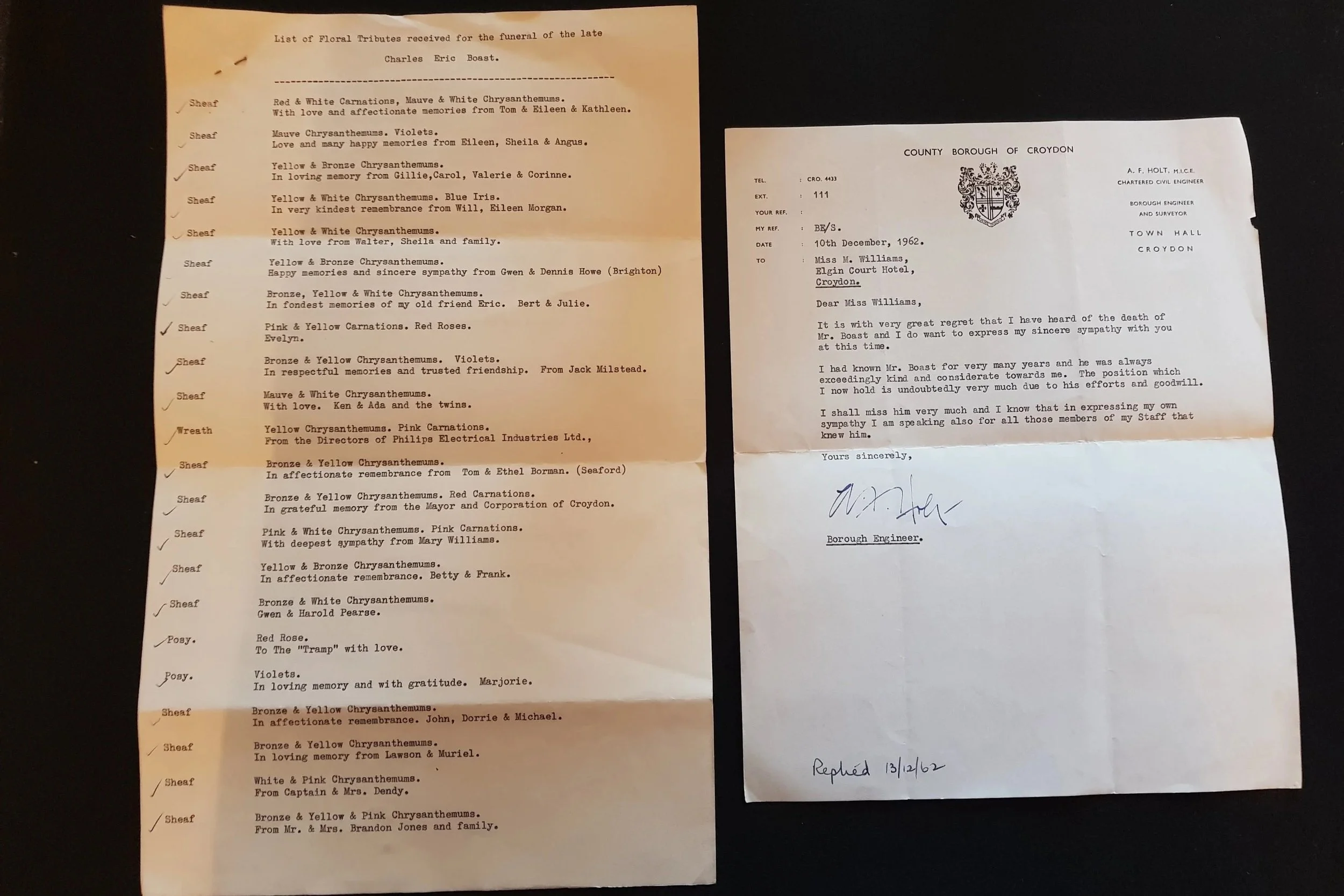
Charles Eric Boast died on the 7th December 1962 at the age of 70, 4 years after the death of his wife Eva in 1958.
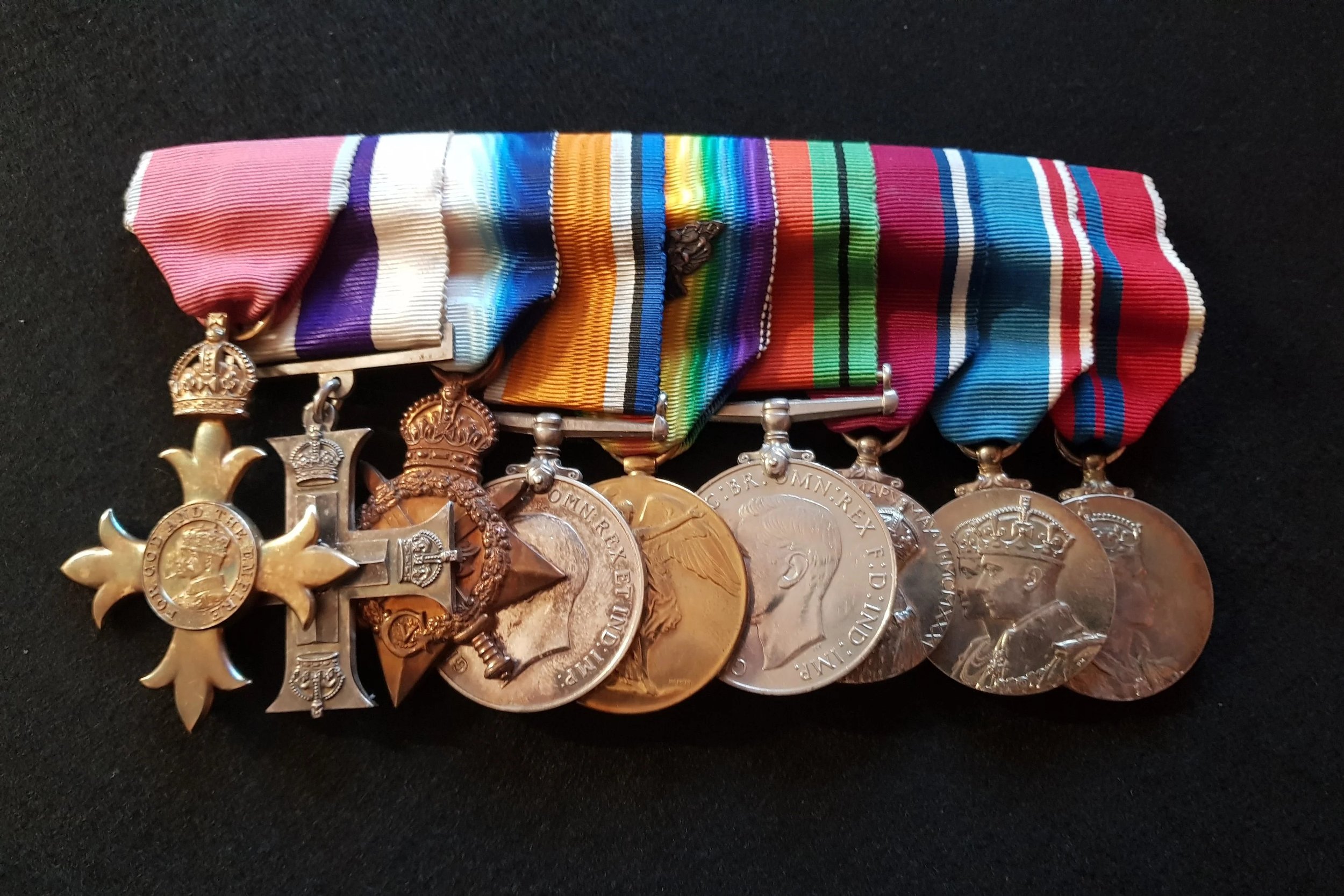
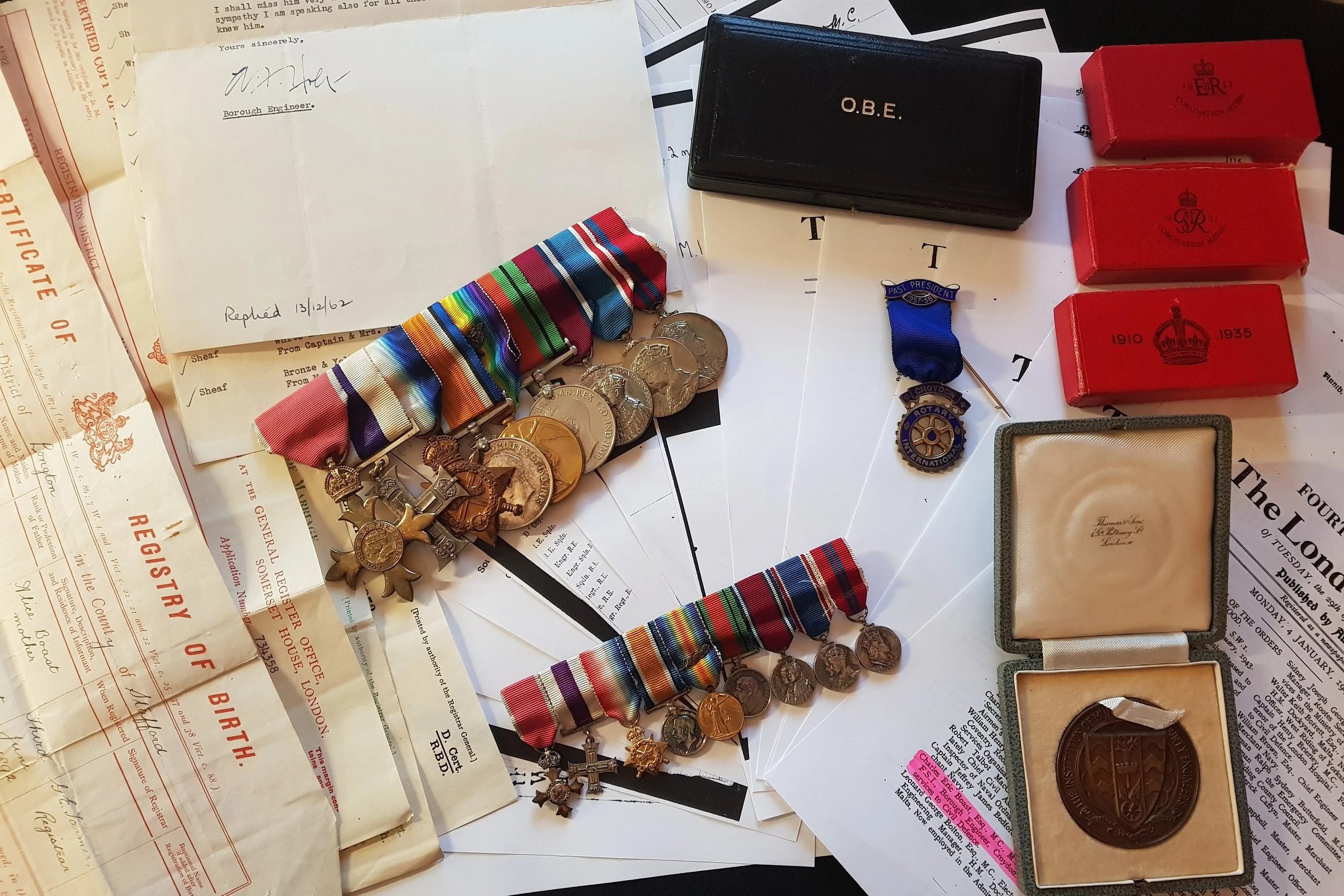
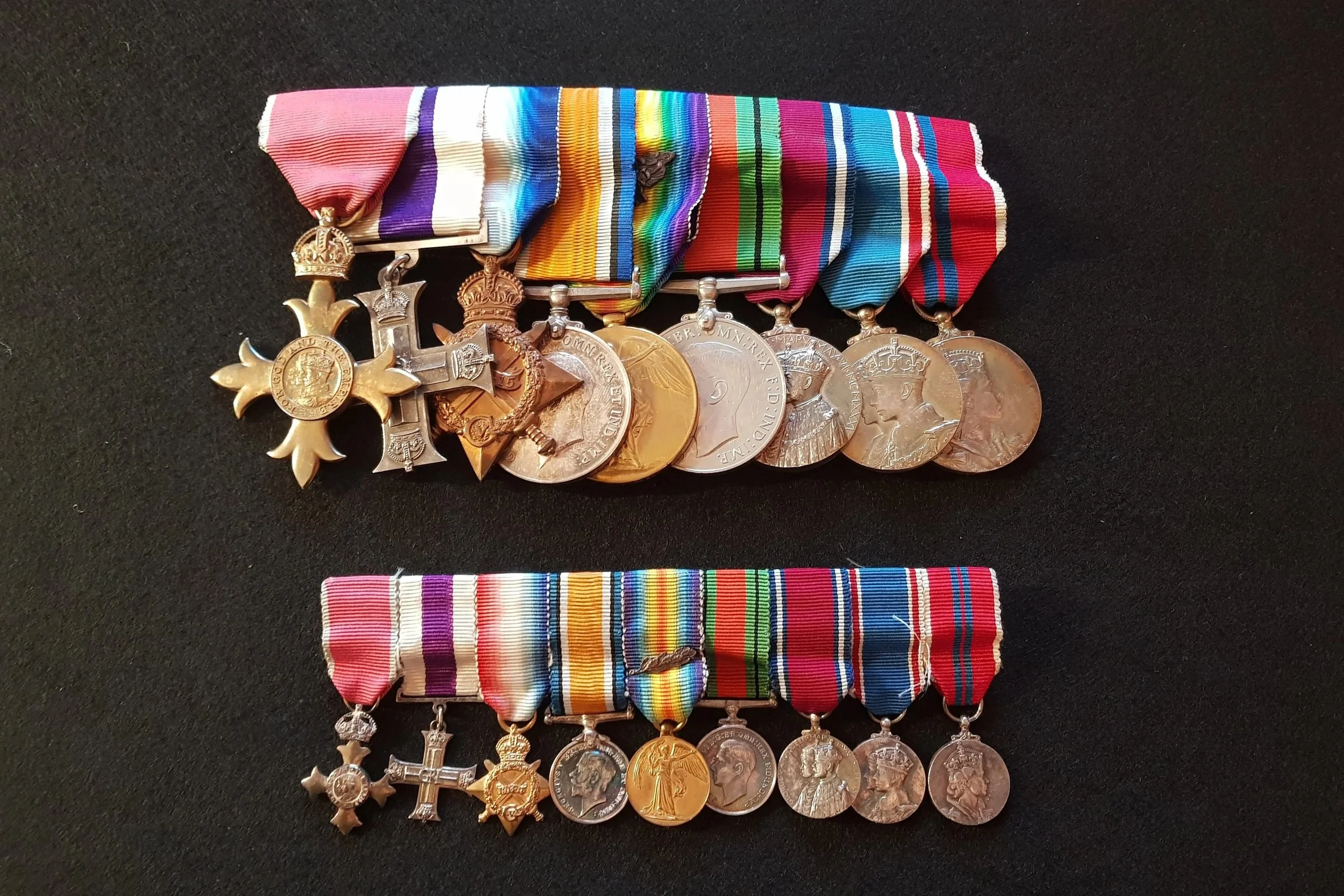
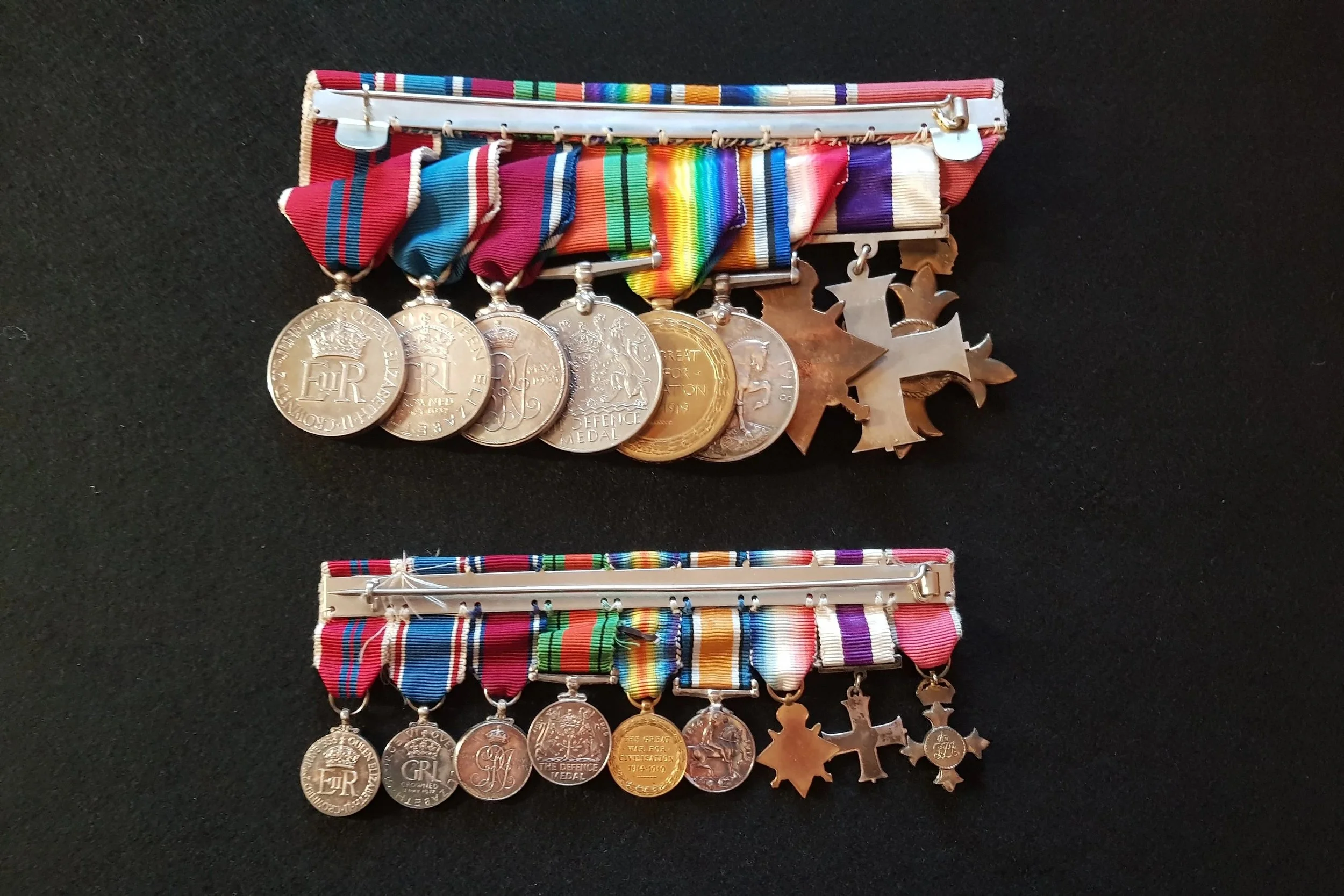
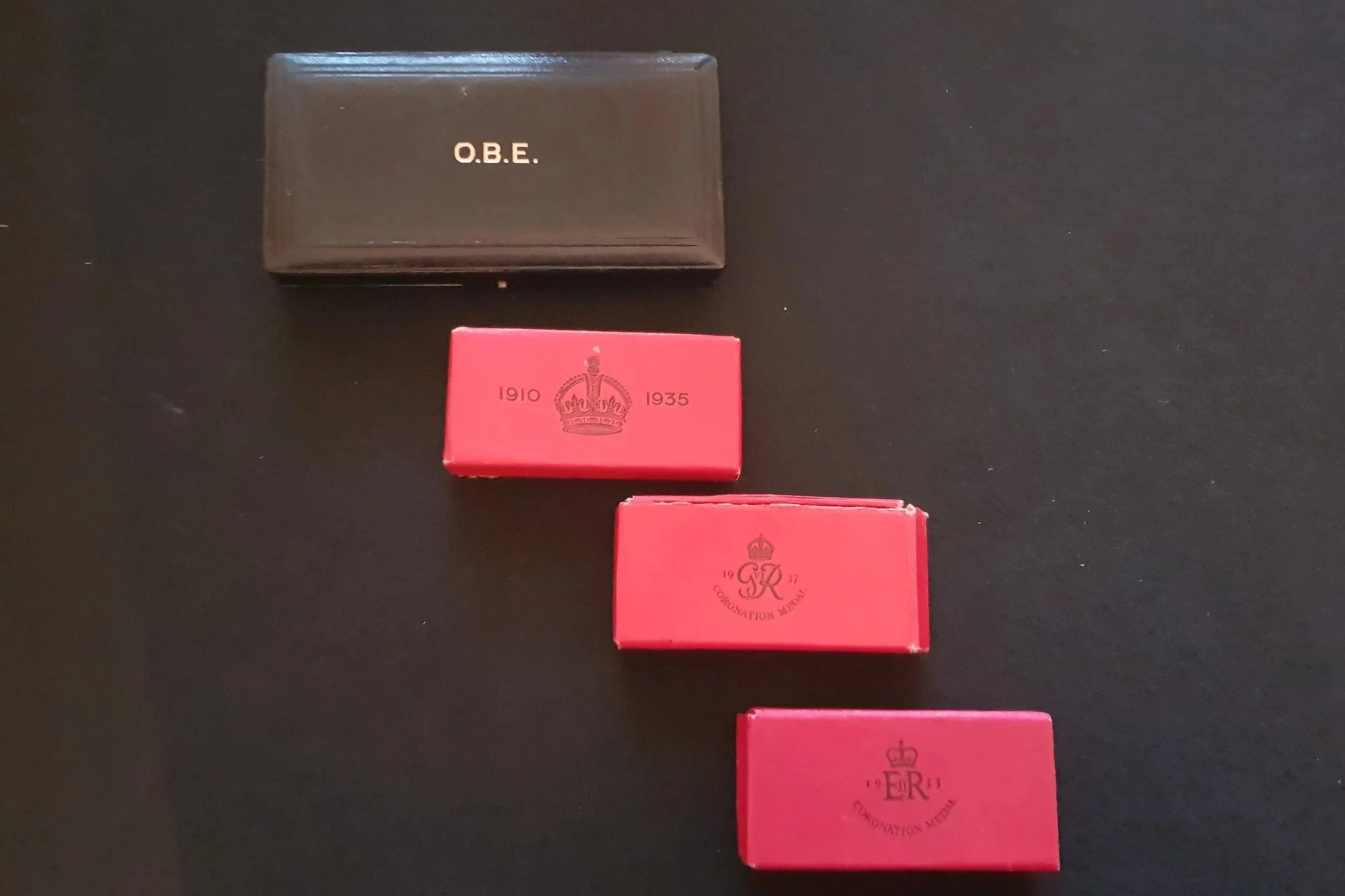
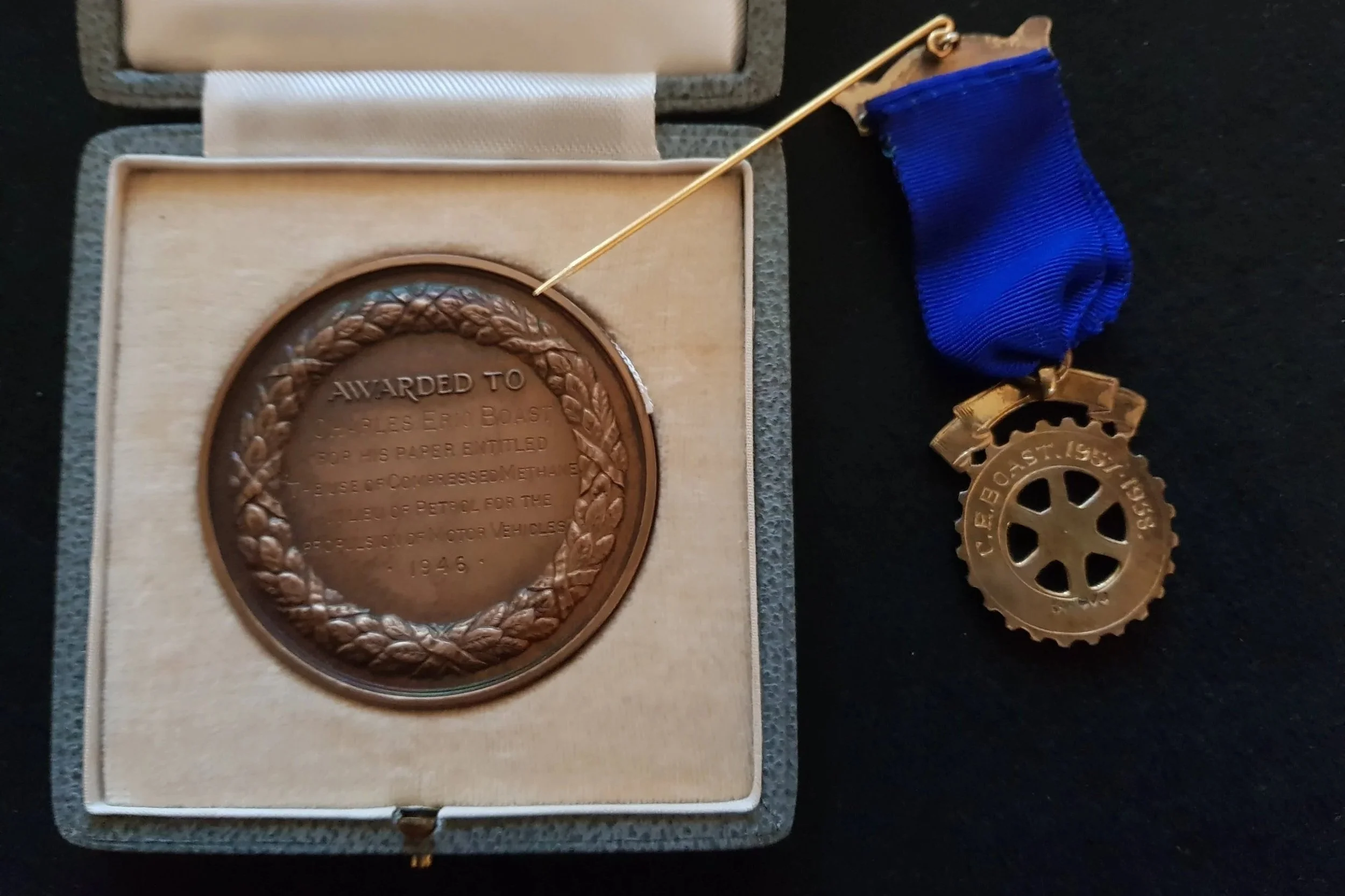
The medals are mounted as worn, sold with copied research confirming all of the above and that this is his full and correct medal entitlement, the following original items; OBE, Coronation & Jubilee medal boxes of issue; Birth, Death & Marriage Certificates; two named pieces of correspondence relating to his death; named Rotary and Engineering medals; matching miniature medal set (mounted as worn), and are as follows –
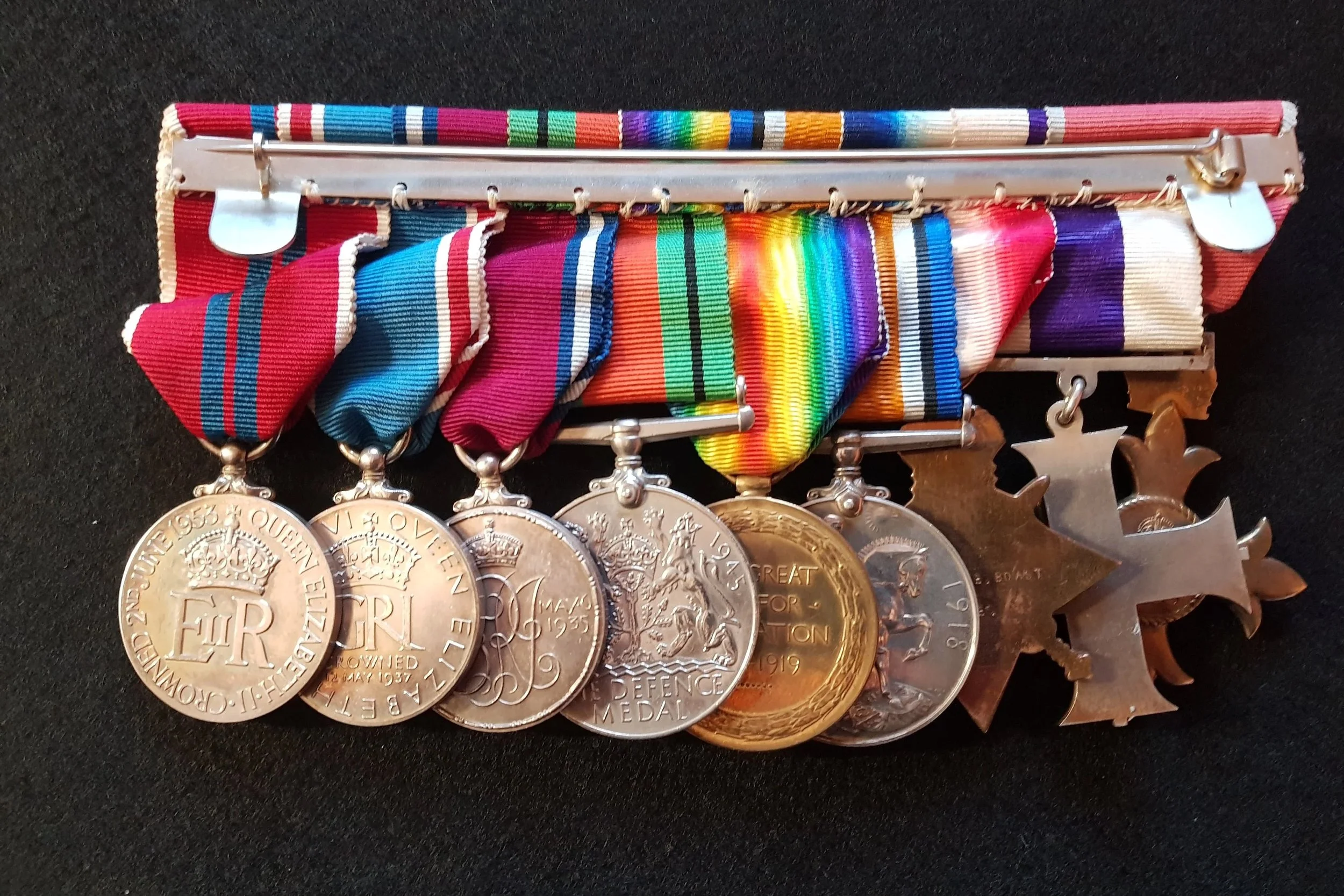
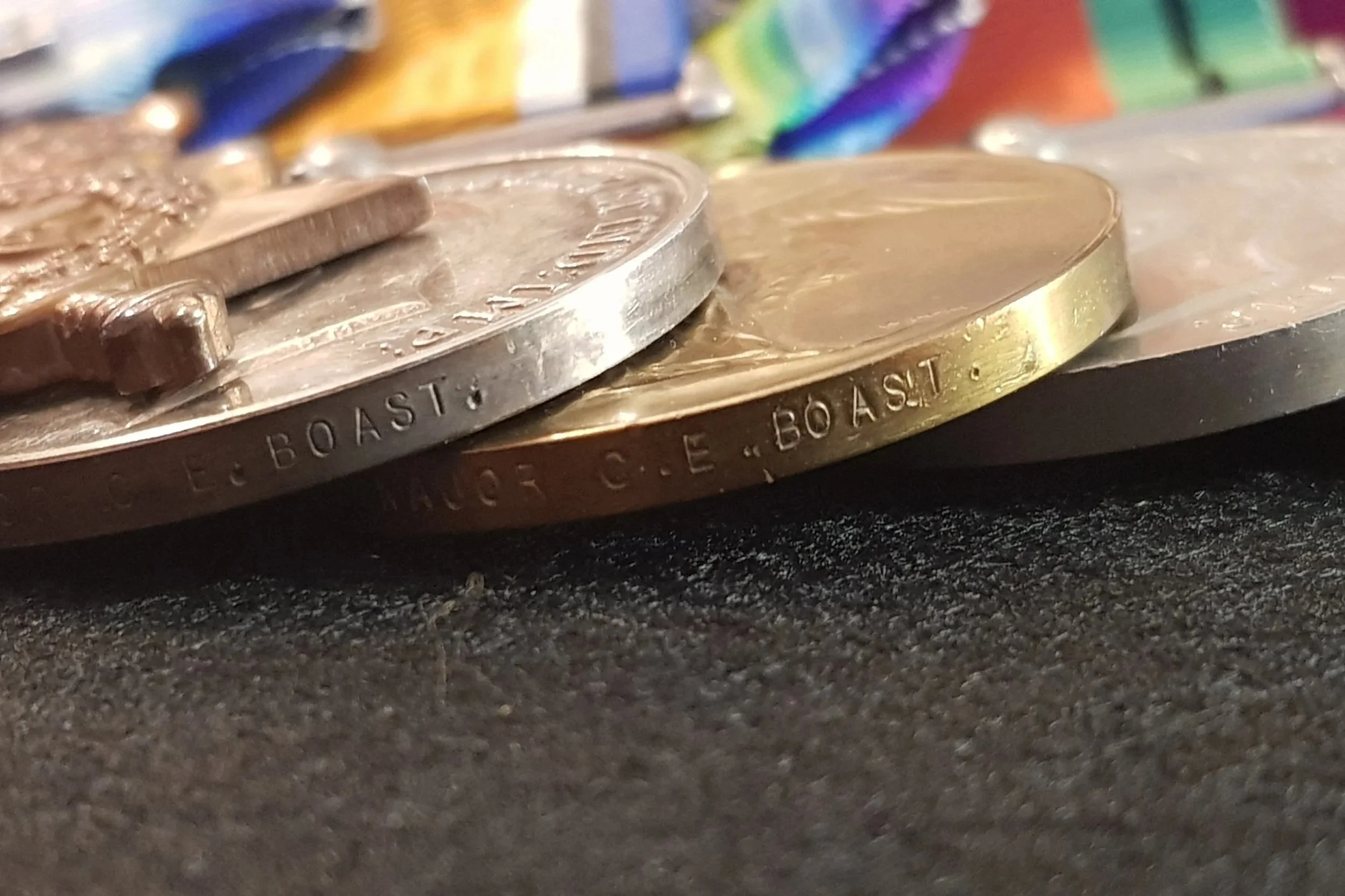
The Most Excellent Order of the British Empire, Officer’s Breast Badge, O.B.E., 2nd type (Civil), unnamed as issued; G.V. Military Cross, unnamed as issued; 1914/15 Star, LIEUT. C.E. BOAST. R.E.; British War Medal & Victory Medal, with M.I.D. oak leaf, MAJ C.E. BOAST.; 1939/45 Defence Medal; 1935 Jubilee Medal; 1937 Coronation Medal; 1953 Coronation Medal, all unnamed as issued.
Condition, good very fine