A WW1 Royal Navy 'Battle of Jutland' & '2nd Battle of Heligoland Bight' 1914/15 Star Medal Trio to 208239 Petty Officer W.J. Hancock (1669)
A WW1 Royal Navy 'Battle of Jutland' & '2nd Battle of Heligoland Bight' 1914/15 Star Medal Trio to 208239 Petty Officer W.J. Hancock (1669)
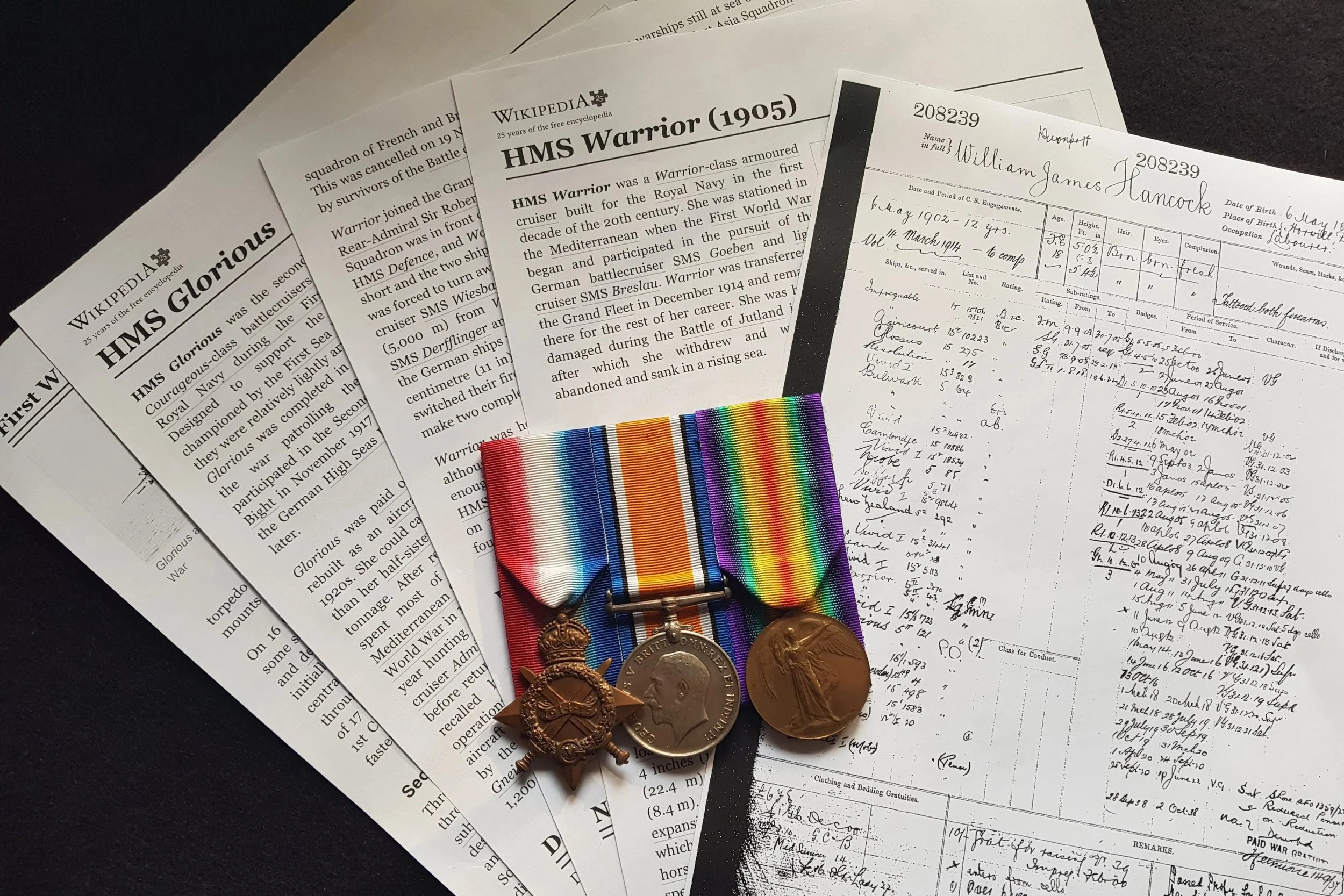
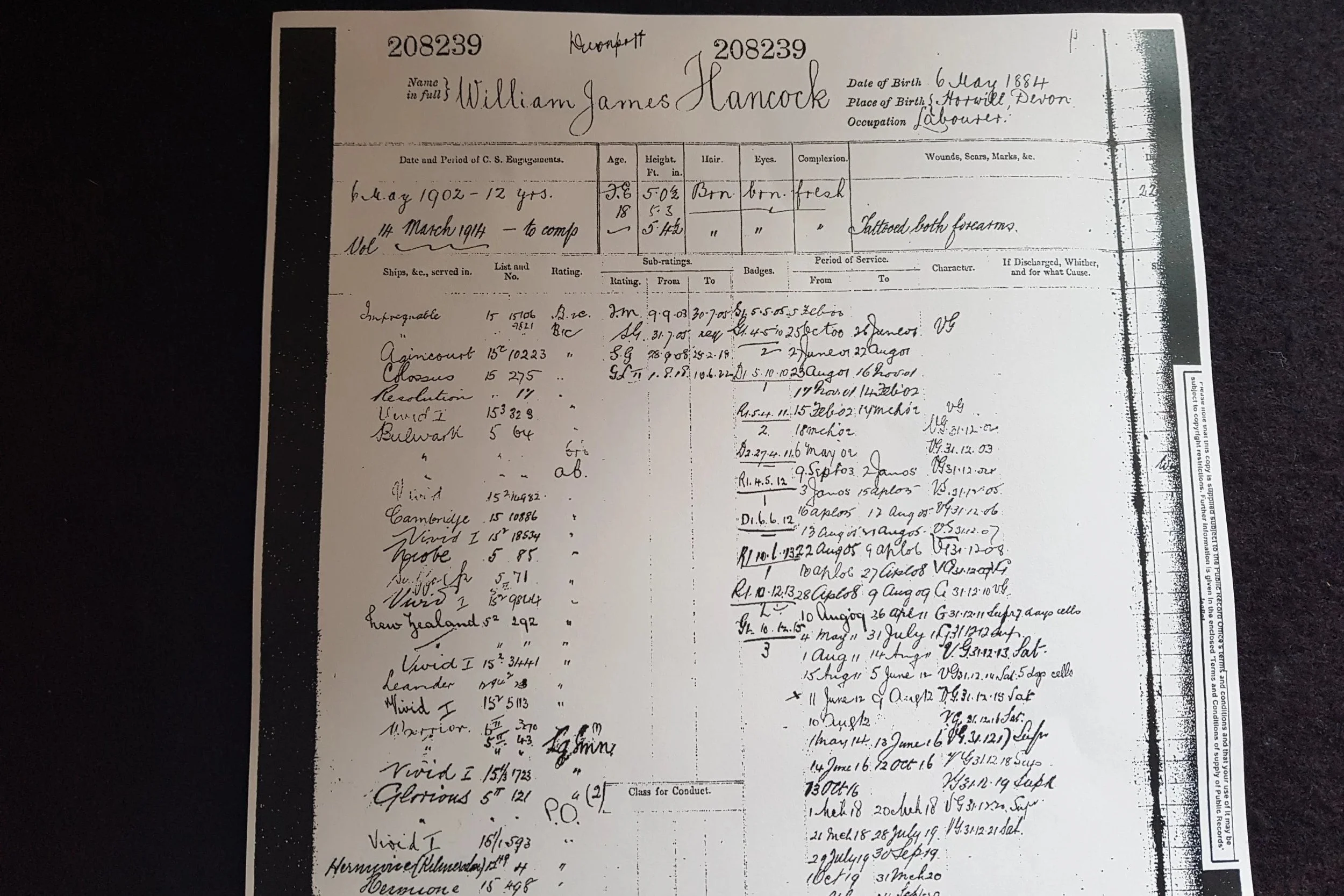
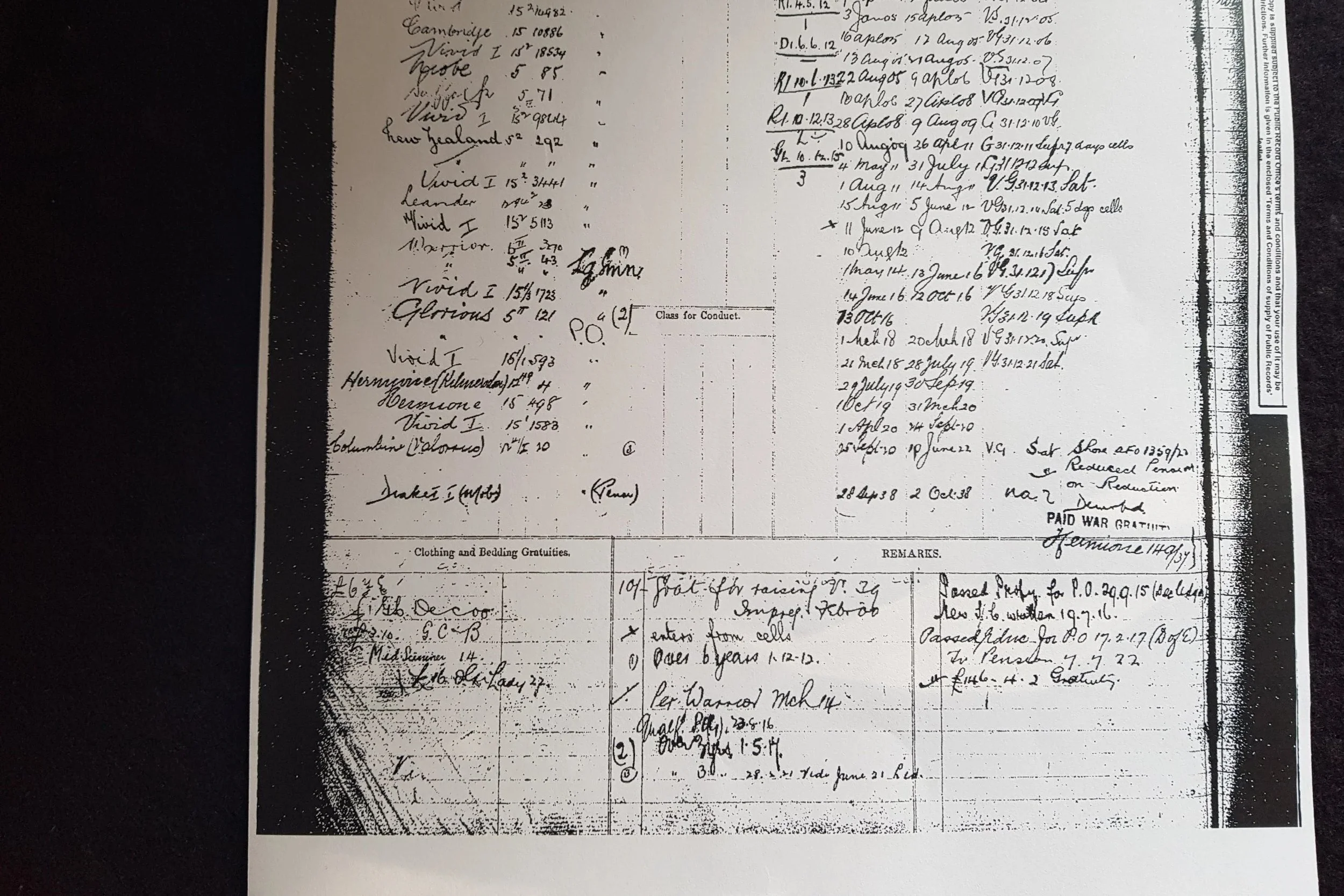
William James Hancock was born in Horwill, Devon, on 6 May 1884 and joined the Royal Navy as a Boy 2nd Class on 5 February 1900. Advanced Leading Seaman on 1 May 1914, he served the early part of the Great War in H.M.S.Warrior, from the outbreak of War, through to the 13th of June 1916.
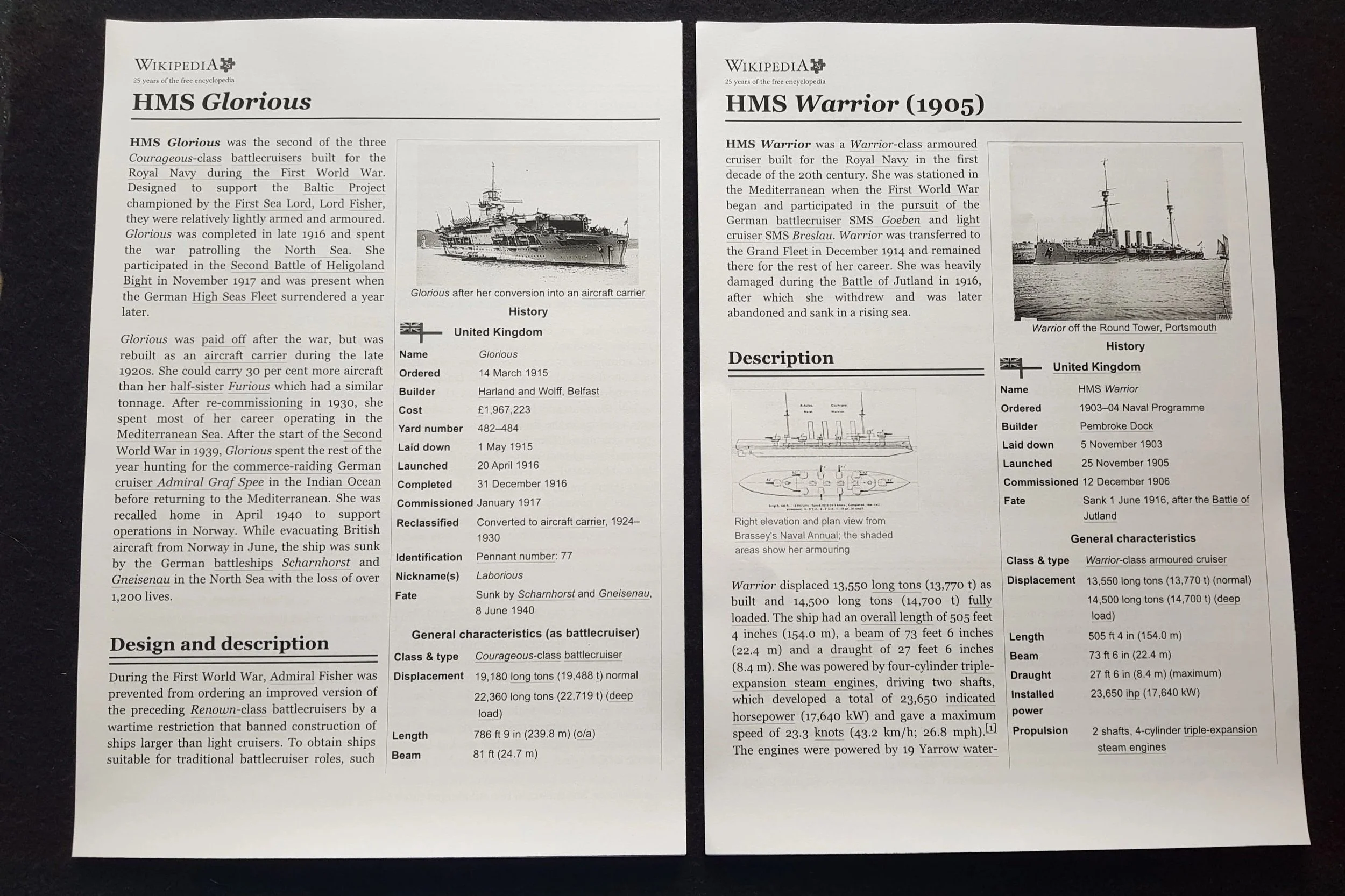
Warrior joined the Grand Fleet in December 1914 and was assigned to the 1st Cruiser Squadron under Rear-Admiral Arbuthott. At the Battle of Jutland on 31 May 1916, the 1st Cruiser Squadron was in front of the Grand Fleet, on the right side. At 5:47 p.m., the squadron flagship, HMS Defence, and Warrior spotted the German II Scouting Group and opened fire. Their shells felt short and the two ships turned to port in pursuit, cutting in front of the battlecruiser HMS Lion, which was forced to turn away to avoid a collision. Shortly afterwards they spotted the disabled German light cruiser SMS Wiesbaden and closed to engage. When the two ships reached a range of 5,500 yards (5,000 m) from Wiesbaden they were spotted in turn at 6:05 by the German battlecruiser SMS Derflinger and four battleships who were less than 8,000 yards (7,300 m) away. The fire from the German ships was heavy and Defence blew up at 6:20. Warrior was hit by at least fifteen 28-centimetre (11 in) and six 15-centimetre (5.9 in) shells but was saved when the German ships switched their fire to the battleship HMS Warspite when its steering jammed and caused Warspite to make two complete circles within sight of much of the High Seas Fleet.
Warrior was heavily damaged by the German shells, which caused large fires and heavy flooding, although the engine room crew - of whom only three survived - kept the engines running for long enough to allow her to withdraw to the west. She was taken in tow by the seaplane tender HMS Engerdine who took off her surviving crew of 743. She was abandoned in a rising sea at 8:25 a.m. on 1 June when her upper deck was only 4 feet (1.2 m) above the water and subsequently foundered with the loss of 70 lives.
Petty Officer Hancock then served aboard HMS Glorious from the 13th of October 1916 through to the 20th of March 1918 -
Throughout 1917 the Admiralty was becoming more concerned about German efforts to sweep paths through the British-laid minefields intended to restrict the actions of the High Seas Fleet and German submarines. A preliminary raid on German minesweeping forces on 31 October by light forces destroyed 10 small ships and the Admiralty decided on a larger operation to destroy the minesweepers and their light cruiser escorts. Based on intelligence reports, the Admiralty allocated the 1st Cruiser Squadron on 17 November 1917, with cover provided by the reinforced 1st Battle Cruiser Squadron and distant cover by the battleships of the 1st Battle Squadron.
The German ships, four light cruisers of II Scouting Force, eight destroyers, three divisions of minesweepers, eight sperrbrecher (cork-filled trawlers) and two trawlers to mark the swept route, were spotted at 7:30 am, silhouetted by the rising sun. Courageous and the light cruiser Cardiff opened fire with their forward guns seven minutes later. The Germans responded by laying a smoke screen and this made spotting targets very difficult. The British continued in pursuit, but lost track of most of the smaller ships in the smoke and concentrated fire on the light cruisers as opportunity permitted. One 15-inch shell hit a gun shield of SMS Pilau, but it did not affect her speed. At 8:33 the left-hand gun in Glorious's forward turret was wrecked when a shell detonated inside the gun barrel. At 9:30 the 1st Cruiser Squadron broke off their pursuit to avoid a minefield marked on their maps. The ships turned south, playing no further role in the battle. Glorious required five days of repairs to fix damage caused by premature detonation and her own muzzle blasts. She fired 57 15-inch and 213 four-inch shells during the engagement.
Glorious received flying-off platforms on top of her turrets in 1918. A Sopwith Camel was carried on the rear turret and a Sopwith 11/2 Strutter on the forward turret. On 5 November 1918, Glorious was anchored off Burntisland in the Firth of Forth together with the seaplane tender Campania and the battleship Royal Oak when a sudden Force 10 squall caused Campania to drag her anchor and collide first with Royal Oak and then with Glorious. Both Royal Oak and Glorious suffered only minor damage, but Campania was holed by her collision with Royal Oak. Campania′s engine rooms flooded, and she settled by the stern and sank five hours later without loss of life.
Hancock was advanced Petty Officer on 1 March 1918, and was shore pensioned on reduction of the Fleet on 10 June 1922.
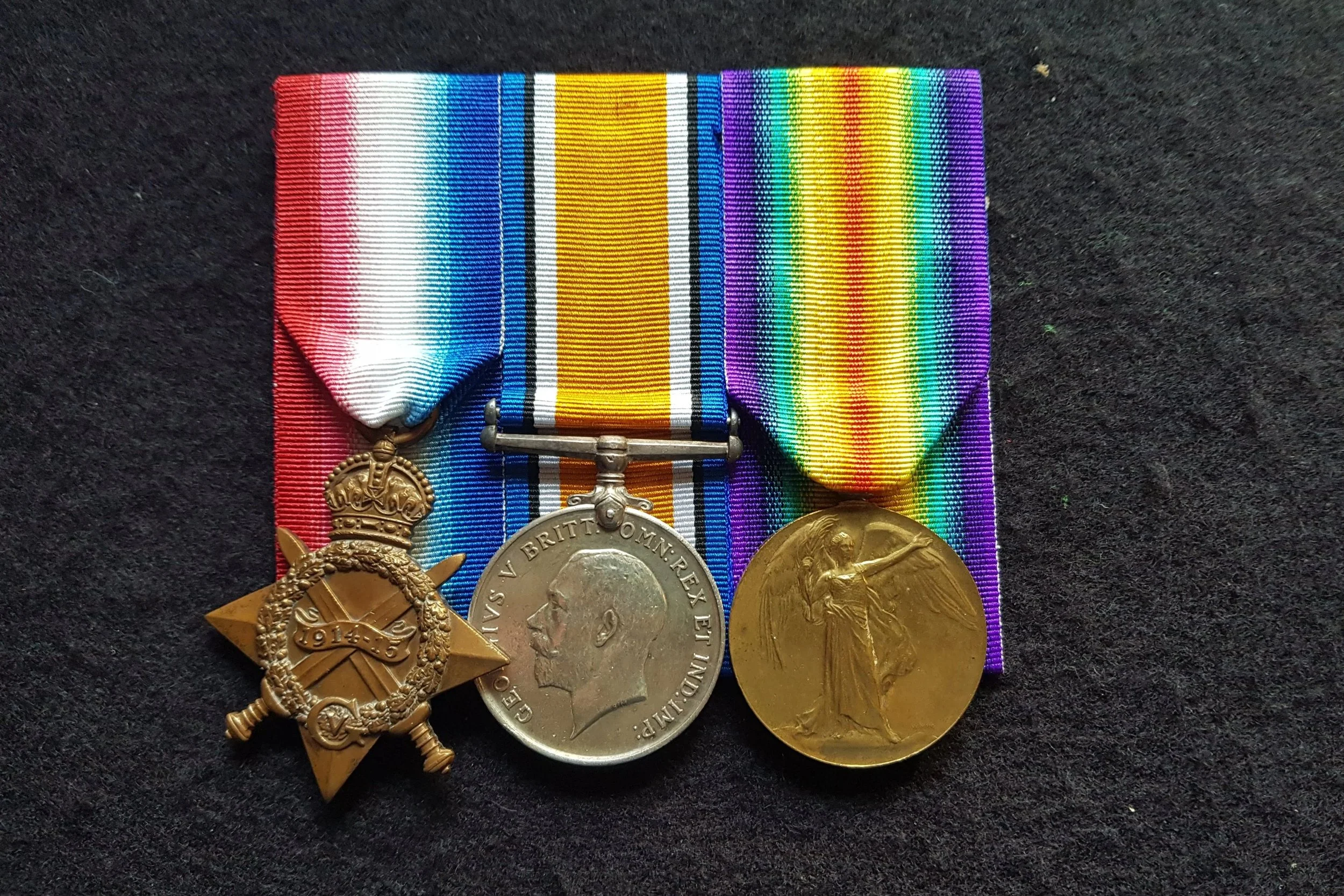
The medals are mounted for display, sold with some copied research, and are as follows –
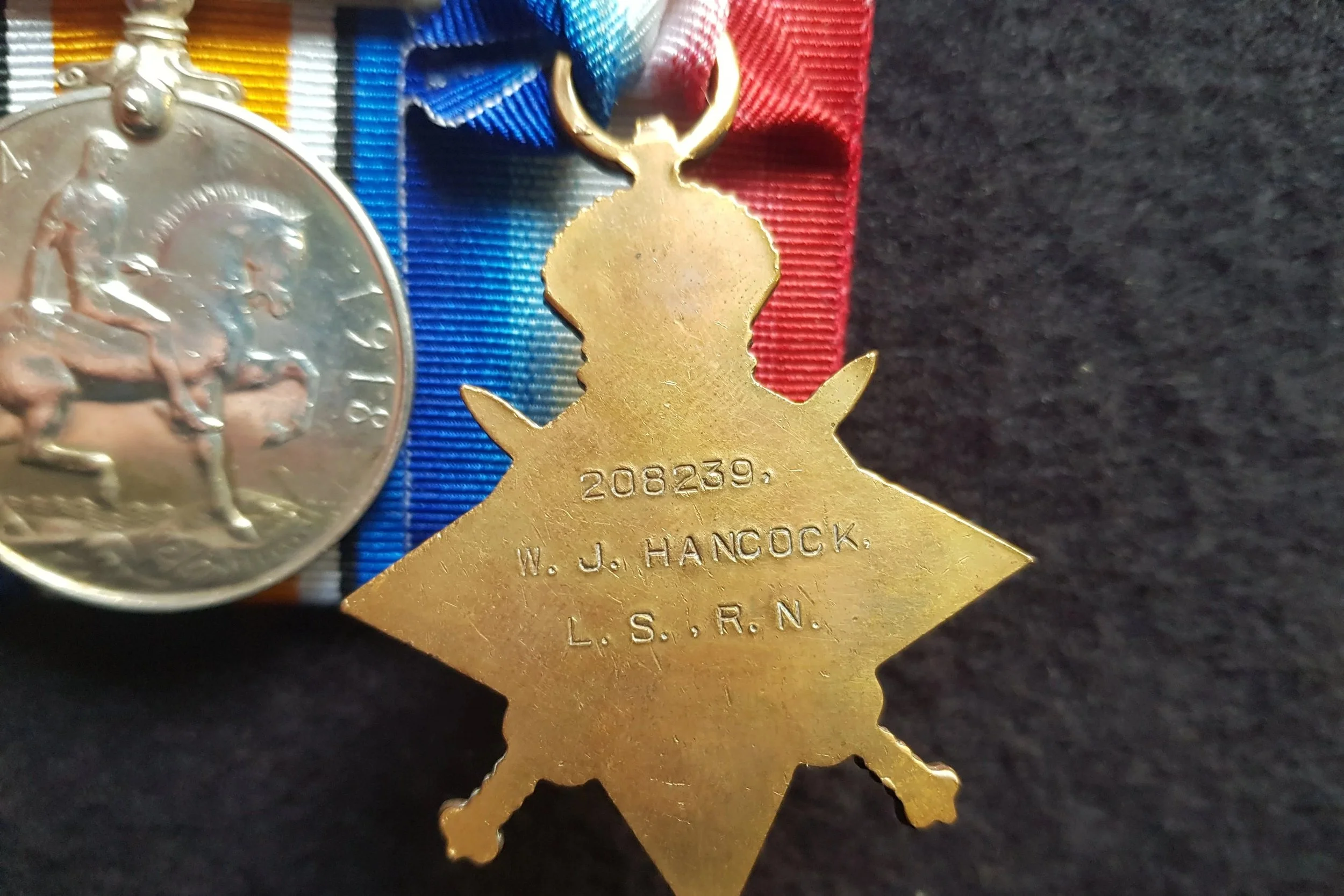
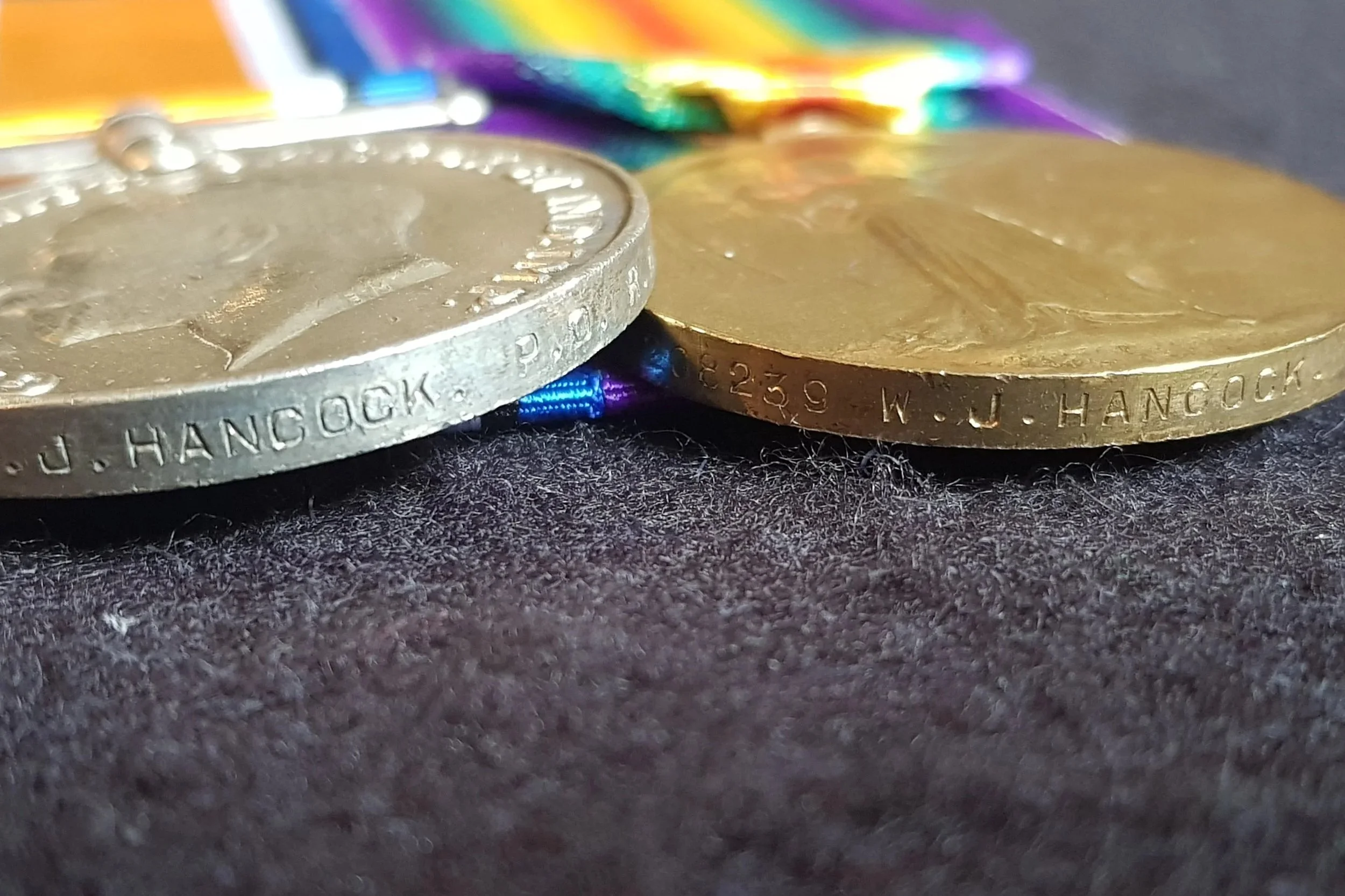
1914-15 Star, 208239. W. J. HANCOCK. L.S., R.N.; British War and Victory Medals, 208239 W. J. HANCOCK. P.O. R.N.
Condition, very fine