A Very Good Royal Navy WW1 & WW2 'Commando Troop Ship', Dieppe Raids, Operations Torch & Husky L.S.&.G.C. Medal Group to J.78591 John McInnes (1667)
A Very Good Royal Navy WW1 & WW2 'Commando Troop Ship', Dieppe Raids, Operations Torch & Husky L.S.&.G.C. Medal Group to J.78591 John McInnes (1667)
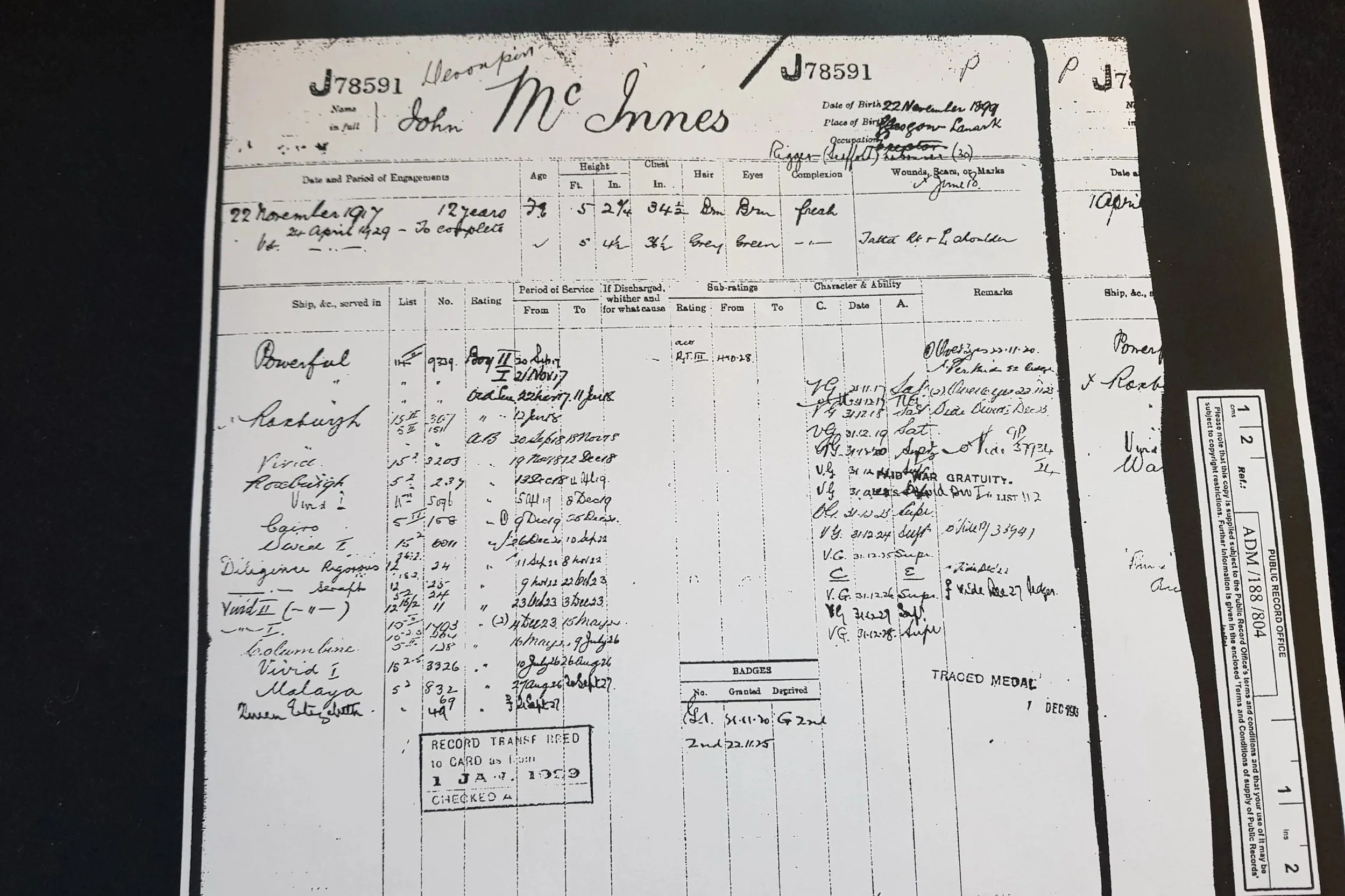
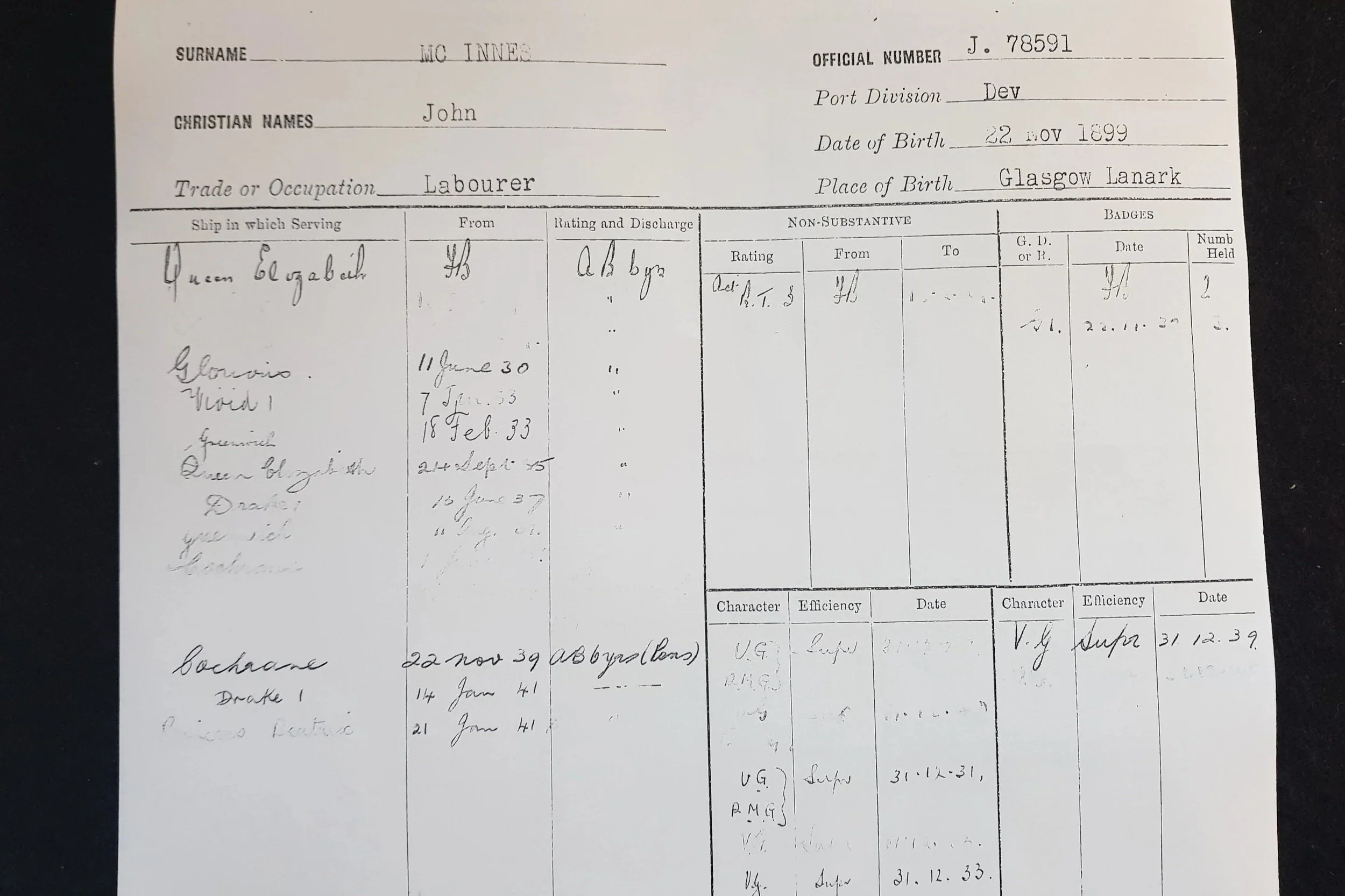
John McInnes was born on the 22nd of November 1899, at Glasgow, Lanarkshire. He joined the ranks of the Royal Navy on the 22nd of November 1917 (no 1914/15Star entitlement) serving aboard HMS Powerful for the remainder of WW1.
During the early part of WW2, he served with HMS Cochrane and HMS Drake I, and he then joined the crew of the Commando transport ship HMS Princess Beatrix on the 21st of January 1941, where he was to serve for the remainder of WW2.
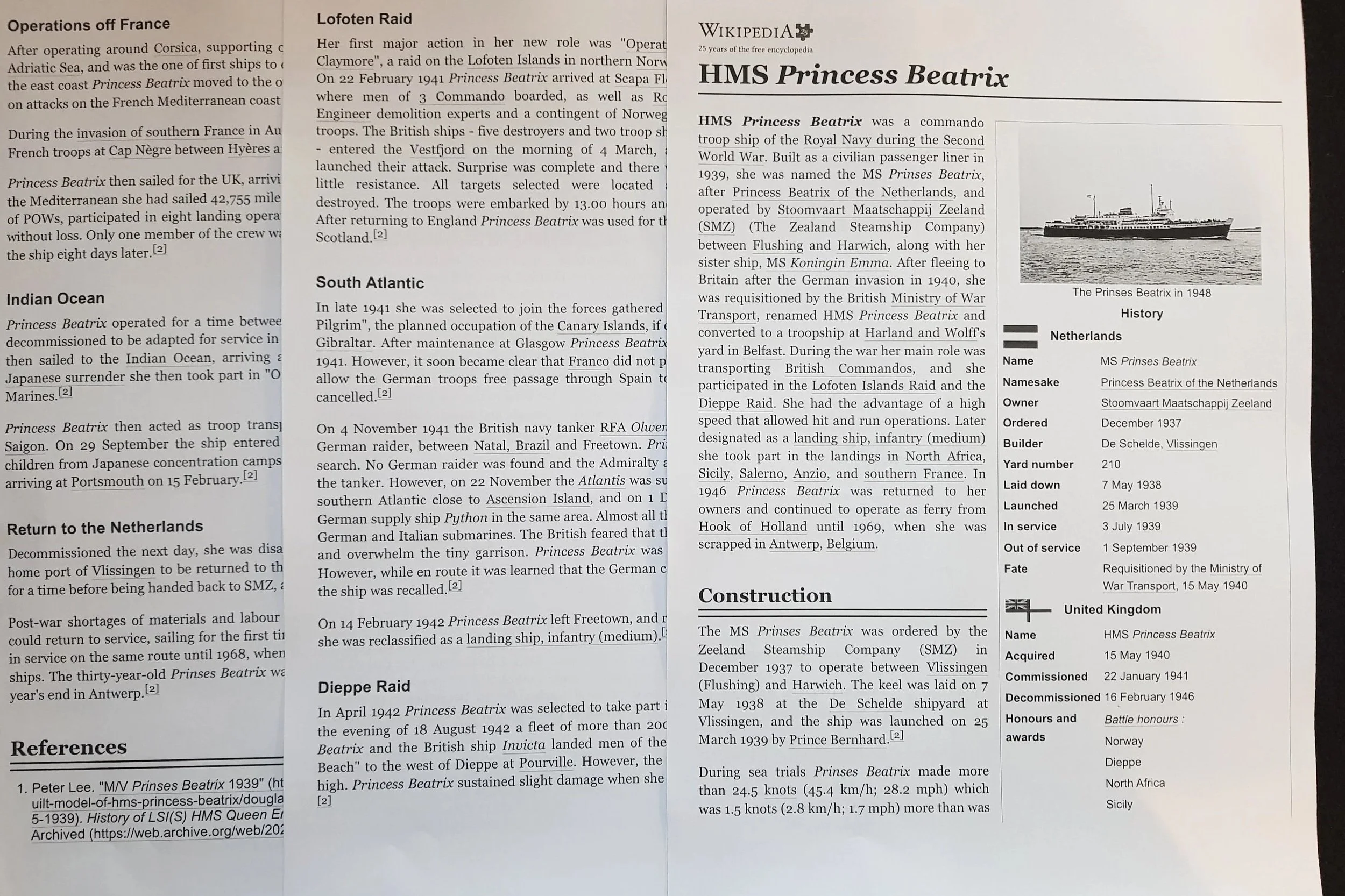
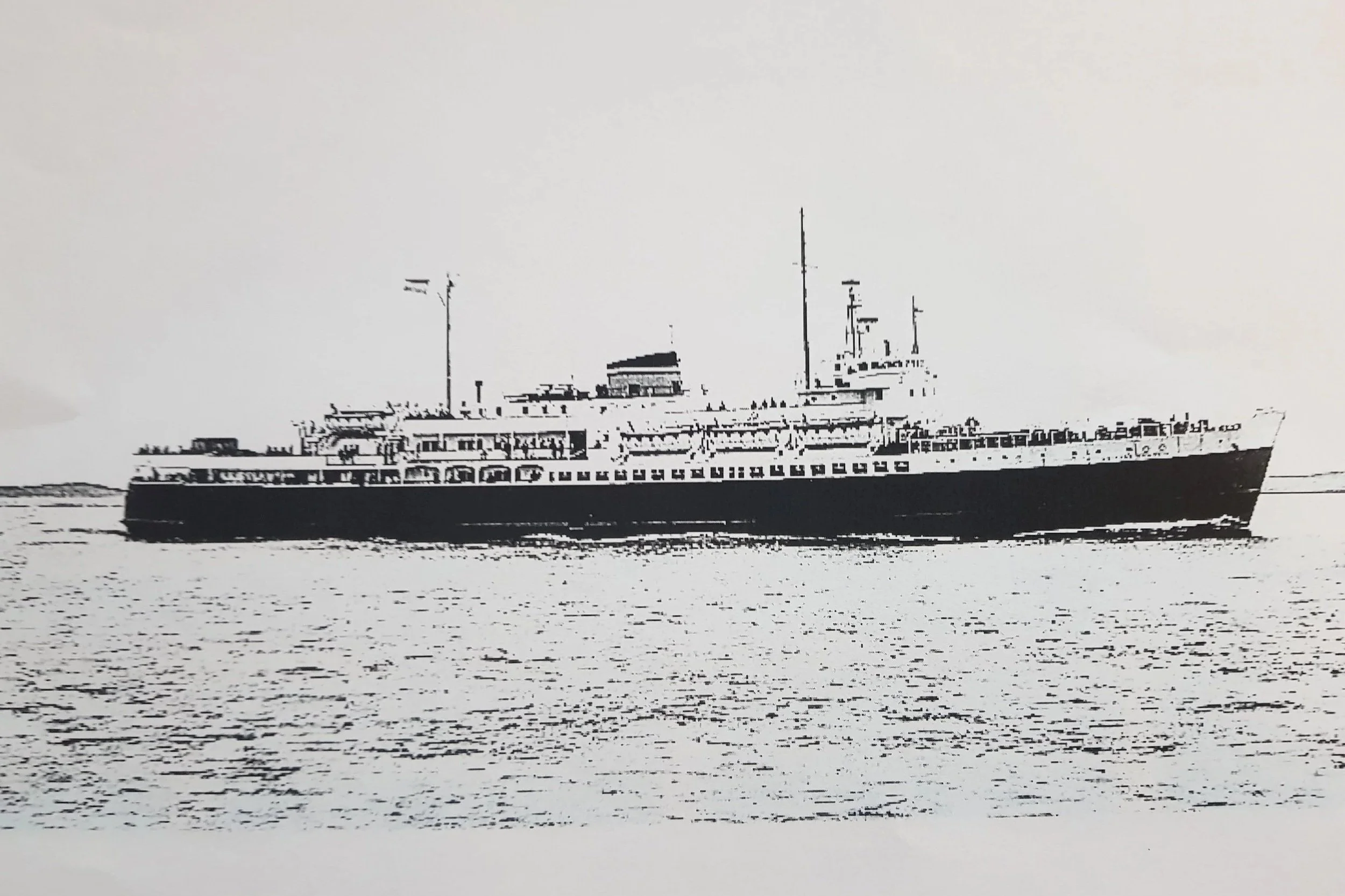
HMS Princess Beatrix was a commando troop ship of the Royal Navy during the second World War. Built as a civilian passenger liner in 1939, she was named the MS Prinses Beatrix, after Princess Beatris of the Netherlands, and operated by Stoomvaart Maatschappij Zeeland SMZ (The Zealand Steamship Company) between Flushing and Harwich, along with her sister ship, MS Koningin Emma. After fleeing to Britain after the German invasion in 1940, she was requisitioned by the British Ministry of War & Transport, renamed HMS Princess Beatrix and converted to a troopship at Harland and Wolff’s yard in Belfast. During the war her main role was transporting British Commandos, and she participated in the Lofoten Islands Raid and the Dieppe Raid. She had the advantage of a high speed that allowed hit and run operations. Later designated as a landing ship Infantry (medium) she took part in the landings in North Africa, Sicily, Salerno, Anzio, and southern France. In 1946 Princess Beatrix was returned to her owners and continued to operate as ferry from Hook of Holland until 1969, when she was scrapped in Antwerp, Belgium.
In September 1940 Prinses Beatrix was formally taken over by the Admiralty to be converted into an "assault ship" at the Harland and Wolff shipyard in Belfast. The upper deck was largely cleared and gravity davits installed enabling six LCA’s and two LMC (1)s to be carried, along with 450 troops. Prinses Beatrix was armed with two 12-pounder guns, two 2-pounders, four Hotchkiss 20 mm machine guns, and four .303 cal. machine guns. The ship was commissioned as HMS Princess Beatrix on 22 January 1941 as a special service ship.
Lofoten Raid
Her first major action in her new role was "Operation Claymore", a raid on the Lofoten Islands in northern Norway. On 22 February 1941 Princess Beatrix arrived at Scapa Flow, where men of 3 Commando boarded, as well as Royal Engineer demolition experts and a contingent of Norwegian troops. The British ships - five destroyers and two troop ships - entered the Vestfyord on the morning of 4 March and launched their attack. Surprise was complete and there was little resistance. All targets selected were located and destroyed. The troops were embarked by 13.00 hours and within half an hour the British had left. After returning to England Princess Beatrix was used for the training and exercise of Special Forces in Scotland.
South Atlantic
In late 1941 she was selected to join the forces gathered at Freetown, Sierra Leone, for "Operation Pilgrim", the planned occupation of the Canary Islands, if either the Spanish or the Germans captured Gibraltar. After maintenance at Glasgow Princess Beatrix sailed to Freetown, arriving on 5 October 1941. However, it soon became clear that Franco did not plan to join the Axis, nor was he prepared to allow the German troops free passage through Spain to attack Gibraltar, and the operation was cancelled.
On 4 November 1941 the British navy tanker RFA Olwen reported that she had been attacked by a German raider, between Natal, Brazil and Freetown. Princess Beatrix was one of the ships sent to search. No German raider was found and the Admiralty assumed that a German U-boat had shot at the tanker. However, on 22 November the Atlantis was sunk by the British cruiser Devonshire in the southern Atlantic close to Ascension Island, and on 1 December the cruiser Dorsetshire sank the German supply ship Python in the same area. Almost all the crews from both ships were taken aboard German and Italian submarines. The British feared that the Germans would try to land on Ascension and overwhelm the tiny garrison. Princess Beatrix was hurriedly loaded with troops and set sail. However, while en route it was learned that the German crewmen were on their way to Bordeaux and the ship was recalled.
On 14 February 1942 Princess Beatrix left Freetown, and returned to England for refitting, after which she was reclassified as a landing ship infantry (medium).
Dieppe Raid
In April 1942 Princess Beatrix was selected to take part in a raid on the French coast at Dieppe. On the evening of 18 August 1942, a fleet of more than 200 ships sailed across the Channel. Princess Beatrix and the British ship Invicta landed men of the South Saskatchewan Regiment on "Green Beach" to the west of Dieppe at Pourville. However, the raid was not a success, and the losses were high. Princess Beatrix sustained slight damage when she collided with the Invicta during operations.
Invasion of North Africa
After repairs Princess Beatrix was assigned to Training Squadron D based on the Clyde, carrying out exercises with Special Forces and practising the landing of ground troops on enemy beaches. All these exercises were in preparation for the landings in North Africa, "Operation Torch". On 26 October 1942 Princess Beatrix received troops from the 1st Battalion of the U.S 6th Armoured Infantry Division, then joined Convoy KMF-1 for North Africa, landing her troops west of Oran.
The Moonlight Squadron
Princess Beatrix remained in the western Mediterranean, supplying and transporting reinforcements for the 1st Army. On the evening of Friday, 13 November 1942, Princess Beatrix left Algiers with units of the British 78th Infantry Division for Bone, close to the front line. On the return trip to Algiers she was repeatedly attacked by German aircraft but made port without damage.
Princess Beatrix, her sister ship HMS Queen Emma and the former Burn & Laird Lines ships Royal Scotsman and Royal Ulsterman became known as the "Moonlight Squadron" for their preference for operating at night. After the fall of Tunis in May 1943 the ships received a special commendation from the Allied Army Commanders and a letter from the British Admiral Andrew Cunningham, the Commander in Chief of the western Mediterranean. During her time in the Mediterranean Princess Beatrix transported 15,700 men, including a large number of German and Italian POWs while sailing 12,000 miles.
Invasion of Sicily
Princess Beatrix was then attached to the ships of "Operation Husky", the invasion of Sicily. The ship was attached to Force B and sailed with convoy SBF-1. On board were men of the 51st Highland Infantry Division and a Special Forces group, which were to raid a beach codenamed Bark South. On 16 August 1943 Princess Beatrix participated in a joint Anglo-American landing at Cape Scarletta, code-named "Operation Blackcock" aimed at Messina.
Operations off Italy
After the Armistice with Italy was announced on 8 September 1943, Allied troops were rushed from north Africa to the Italian mainland and Princess Beatrix made a number of voyages between Brindisi and Taranto. In the following months she was based at Naples. On 29 December 1943 Princess Beatrix was involved in "Operation Partridge" - a raid at the mouth of the Garigliano River with troops of 9 Commando.
During the Anzio landings on 22 January 1944 Princess Beatrix transported men of the 1st and 3rd Ranger Battalion. Princess Beatrix then sailed to Ferryville, Tunisia, at the end of the month to overhaul her engines.
Operations off France
After operating around Corsica, supporting occupation operations, Princess Beatrix sailed into the Adriatic Sea, and was the one of first ships to enter Ancona, after it was liberated. After a short stay at the east coast Princess Beatrix moved to the other side of Italy, to transport French Special Forces on attacks on the French Mediterranean coast in "Operation Romeo"
During the invasion of Southern France in August 1944 Princess Beatrix was in convoy CR-1, landing French troops at Cape Negre between Hyeres and Saint-Tropez.
Princess Beatrix then sailed for the UK, arriving at the Clyde on 1 September 1944. In her two years in the Mediterranean, she had sailed 42,755 miles and transported 26,142 men, including a large number of POWs, participated in eight landing operations with American, British and French troops aboard, without loss. Only one member of the crew was captured, but was promptly liberated, and returned to the ship eight days later.
Indian Ocean
Princess Beatrix operated for a time between the Clyde, Avonmouth and Liverpool before she was decommissioned to be adapted for service in tropical waters at D & W Henderson Ltd., Glasgow. She then sailed to the Indian Ocean, arriving at Trincomalee on 15 July 1945. A few days after the Japanese surrender she then took part in "Operation Jurist" - the reoccupation of Penang by British Marines.
Princess Beatrix then acted as troop transport, sailing to Colombo, and taking French troops to Saigon. On 29 September the ship entered the port of Tanjung Priok to take Dutch women and children from Japanese concentration camps. In early January 1946 she was ordered to return home, arriving at Portsmouth on 15 February.
Return to the Netherlands
Decommissioned the next day, she was disarmed at Greenock, and on 13 April 1946 arrived at her home port of Vlissingen to be returned to the Dutch government. She served as a military transport for a time before being handed back to SMZ and resumed her original name MS Prinses Beatrix.
Post-war shortages of materials and labour meant that it was 31 May 1948 before Prinses Beatrix could return to service, sailing for the first time to Harwich from the Hook of Holland. She remained in service on the same route until 1968, when she was replaced by a new generation of roll-on/roll-off ships. The thirty-year-old Prinses Beatrix was taken out of service and sold for scrap just before the year's end in Antwerp.
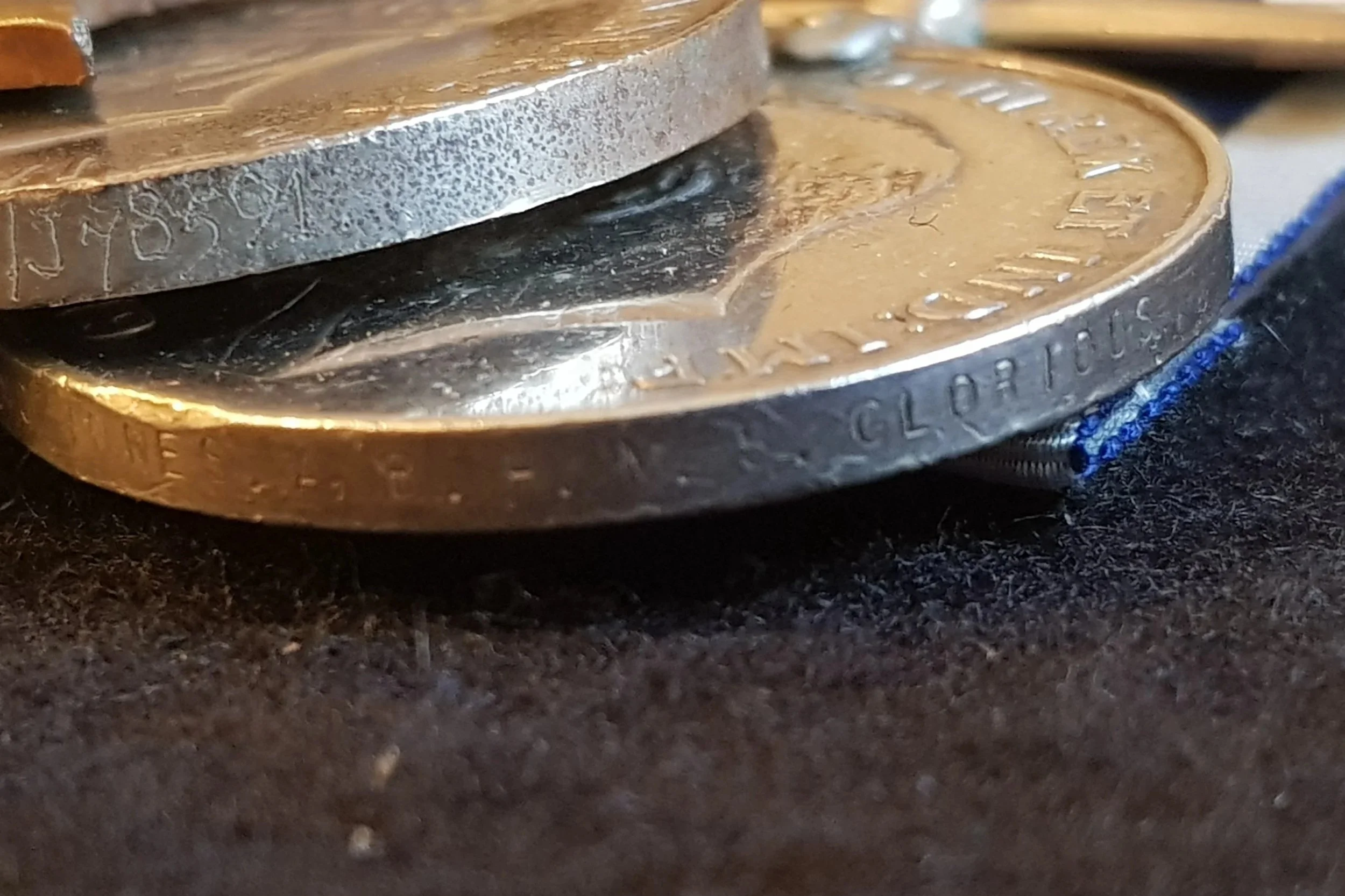
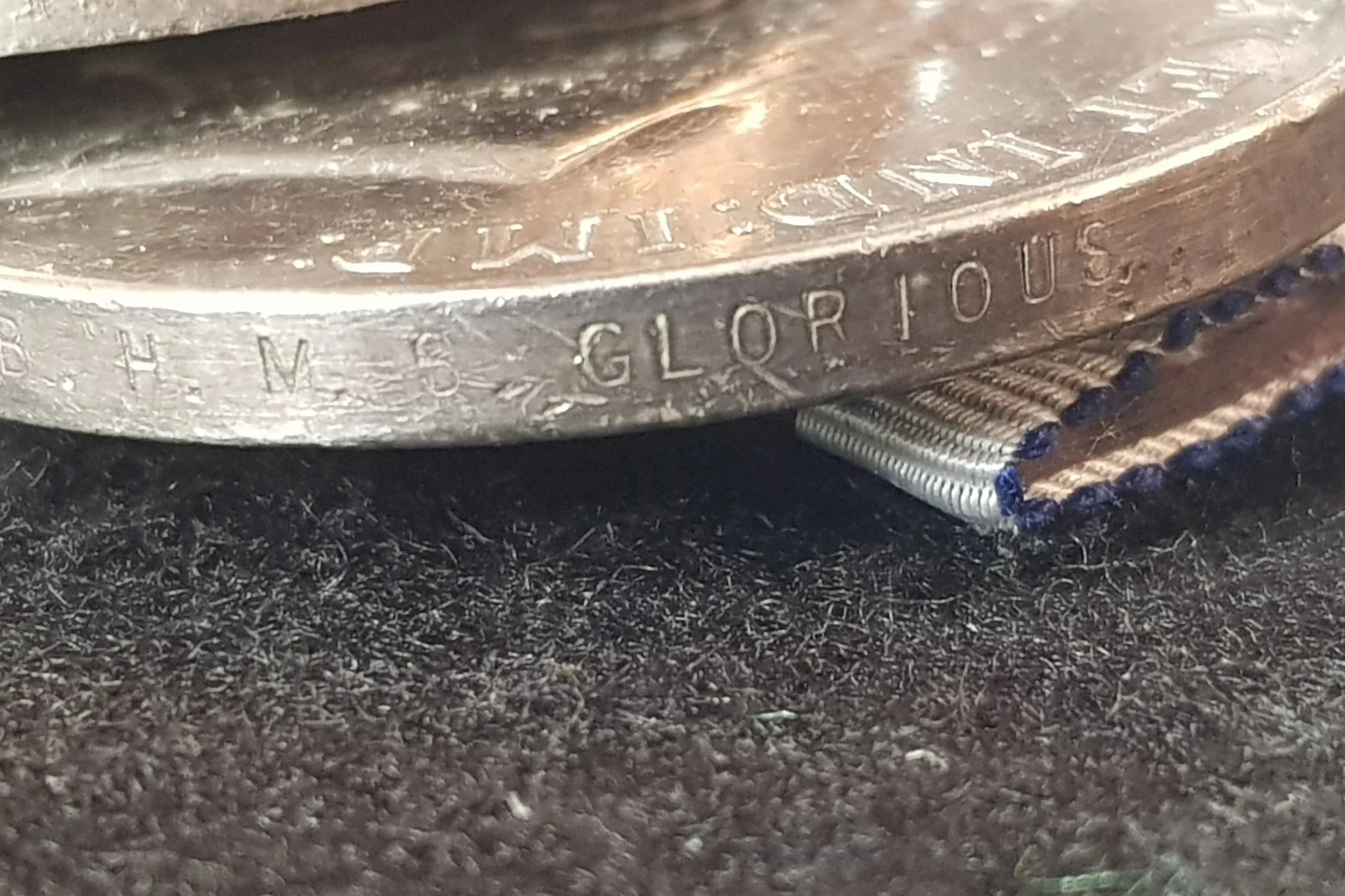
John McInnes was awarded his L.S.&.G.C. Medal (HMS Glorious) on the 1st of November 1939, and he was released to Class A Reserves on the 15th of September 1945.
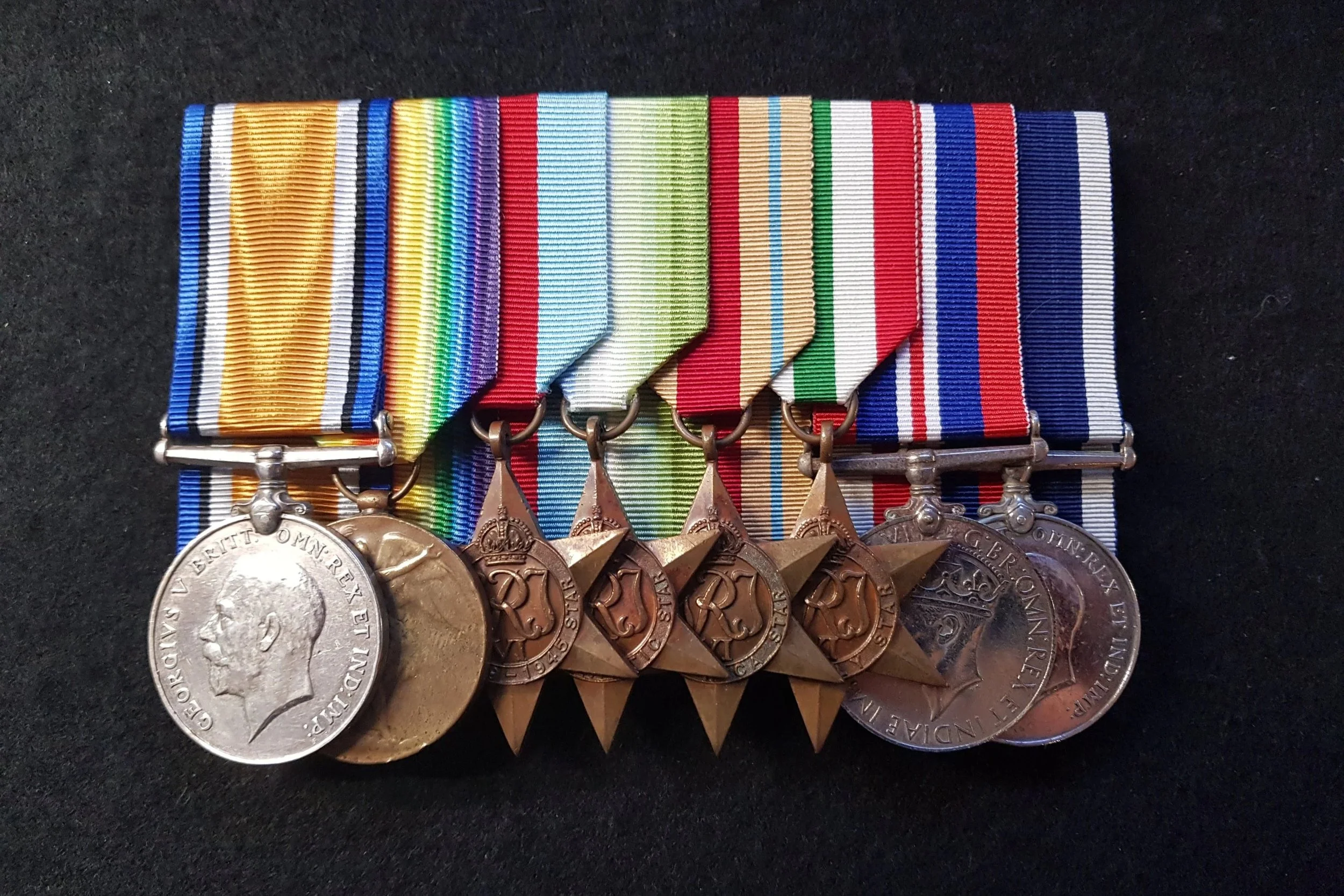
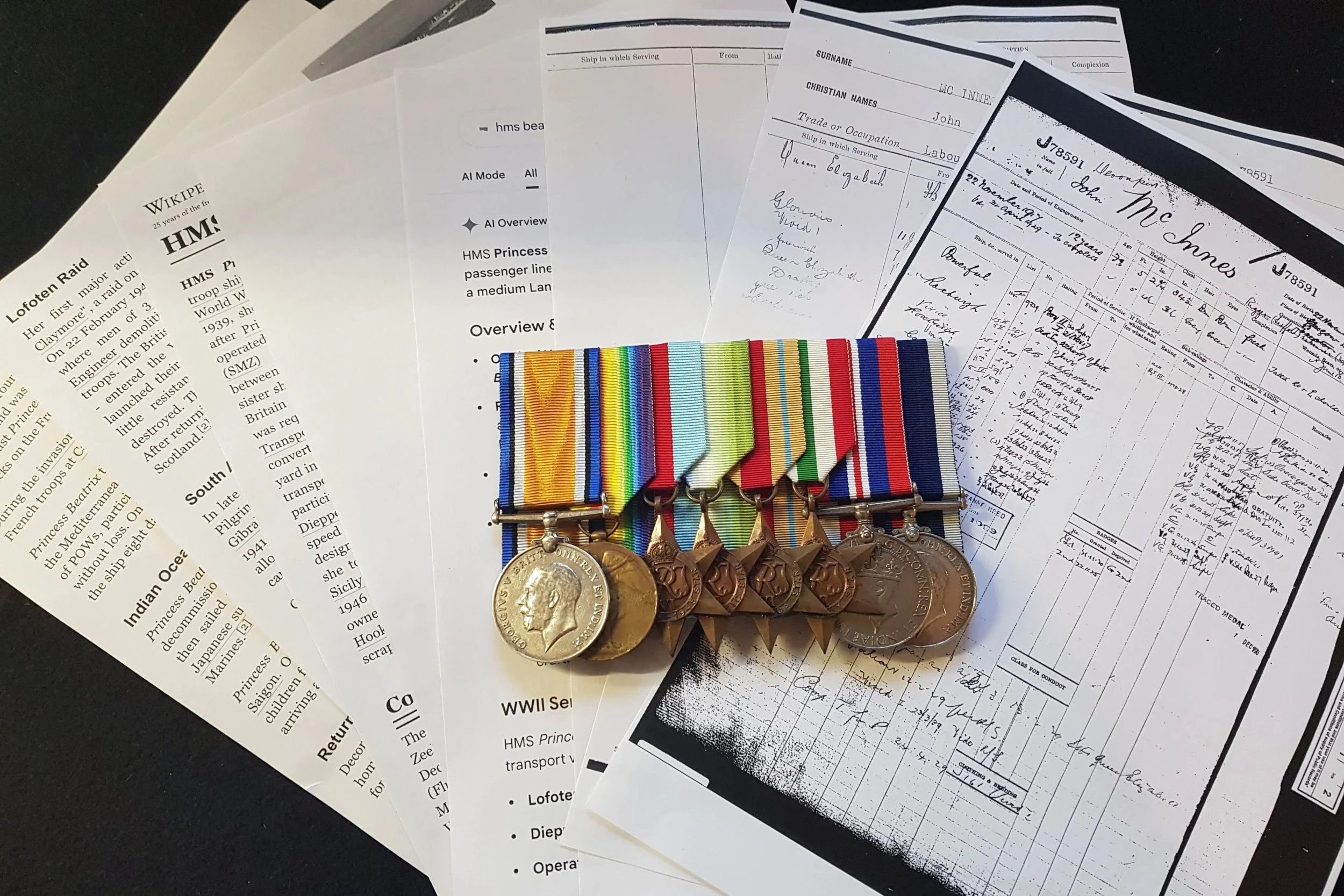
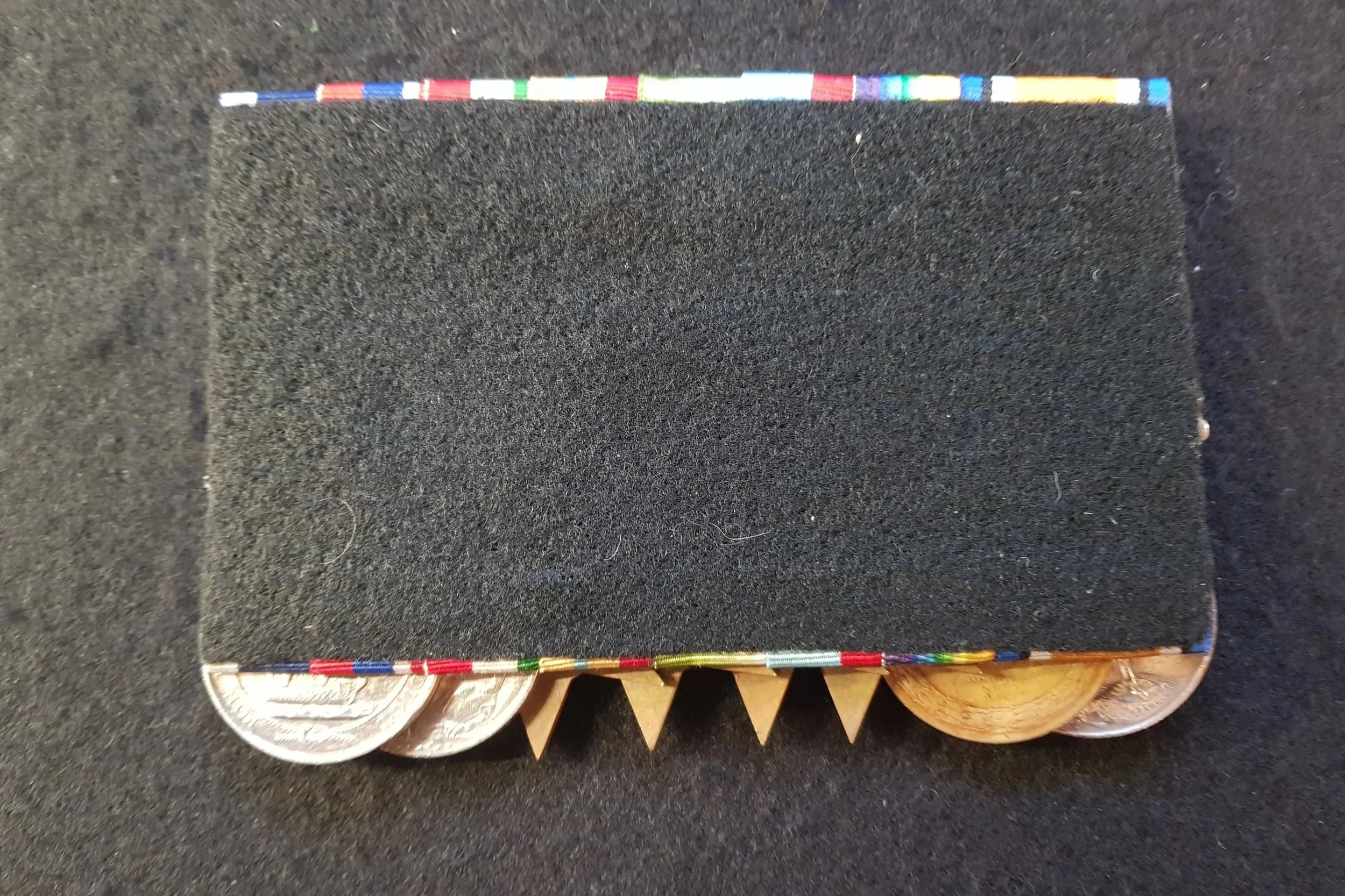
The medals have been professionally court-mounted for display, sold with copied research, and are as follows –
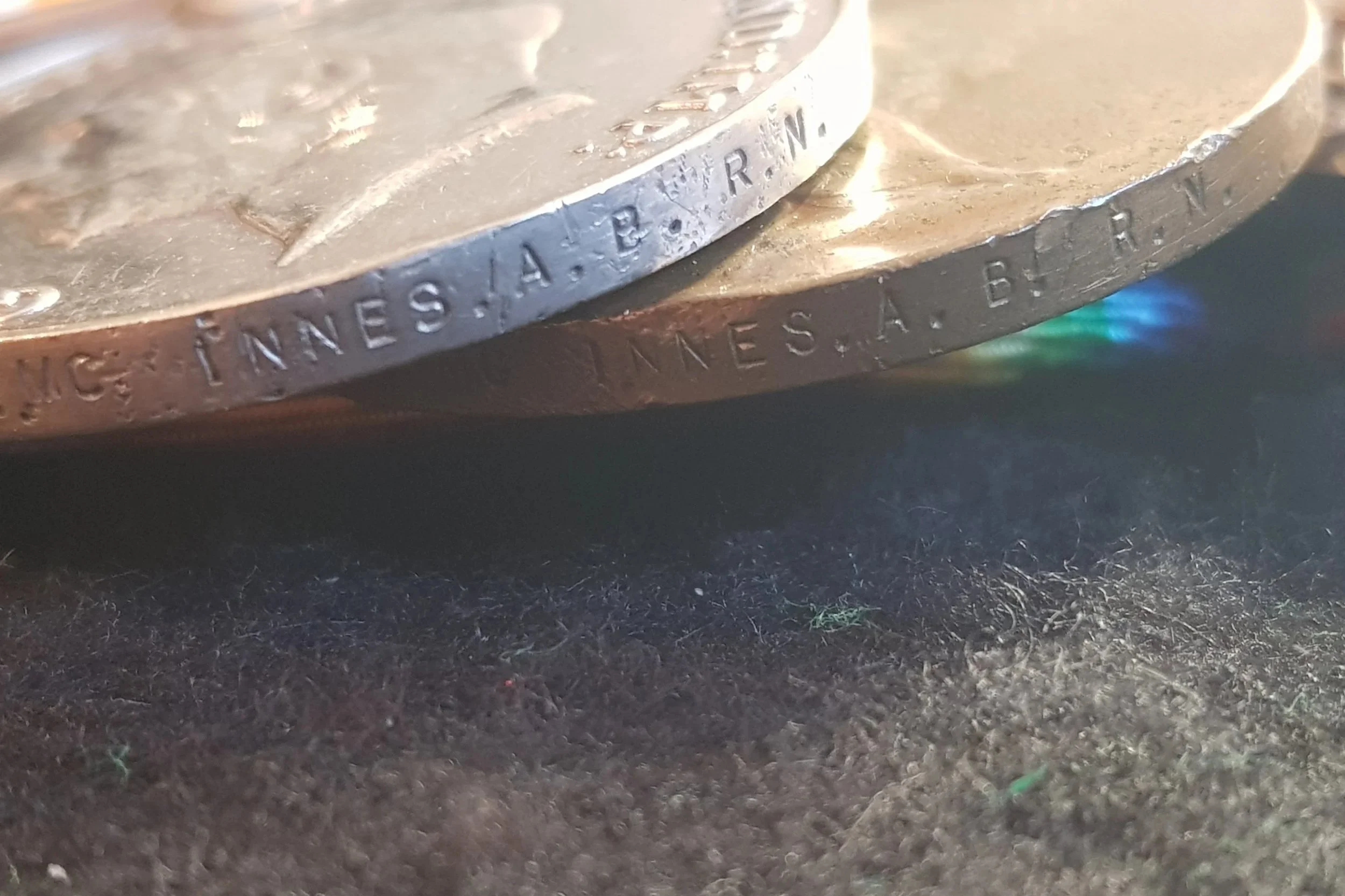
British War and Victory Medals, J.78591 J. MC. INNES. A.B. R.N. BWM partially corrected; 1939-45 Star; Atlantic Star; Africa Star; Italy Star; War Medal 1939-45, the Second War awards all privately engraved ‘J. MCINNESS A.B. D/J78591’; Royal Navy L.S. & G.C., G.V.R., 3rd issue, coinage head J.78591 J. MCINNES. A.B. H.M.S. GLORIOUS.
Condition, slight traces of adhesive tape to reverse of medals, the GVR awards polished and worn, therefore fine; the Second War awards better