A Nice WW1 Royal Navy L.S.&G.C. (H.M.S. Tiger) 'Sinking of U-29' Medal Group to M.5735 BLK (blacksmith) A.E. Reynolds (1628)
A Nice WW1 Royal Navy L.S.&G.C. (H.M.S. Tiger) 'Sinking of U-29' Medal Group to M.5735 BLK (blacksmith) A.E. Reynolds (1628)
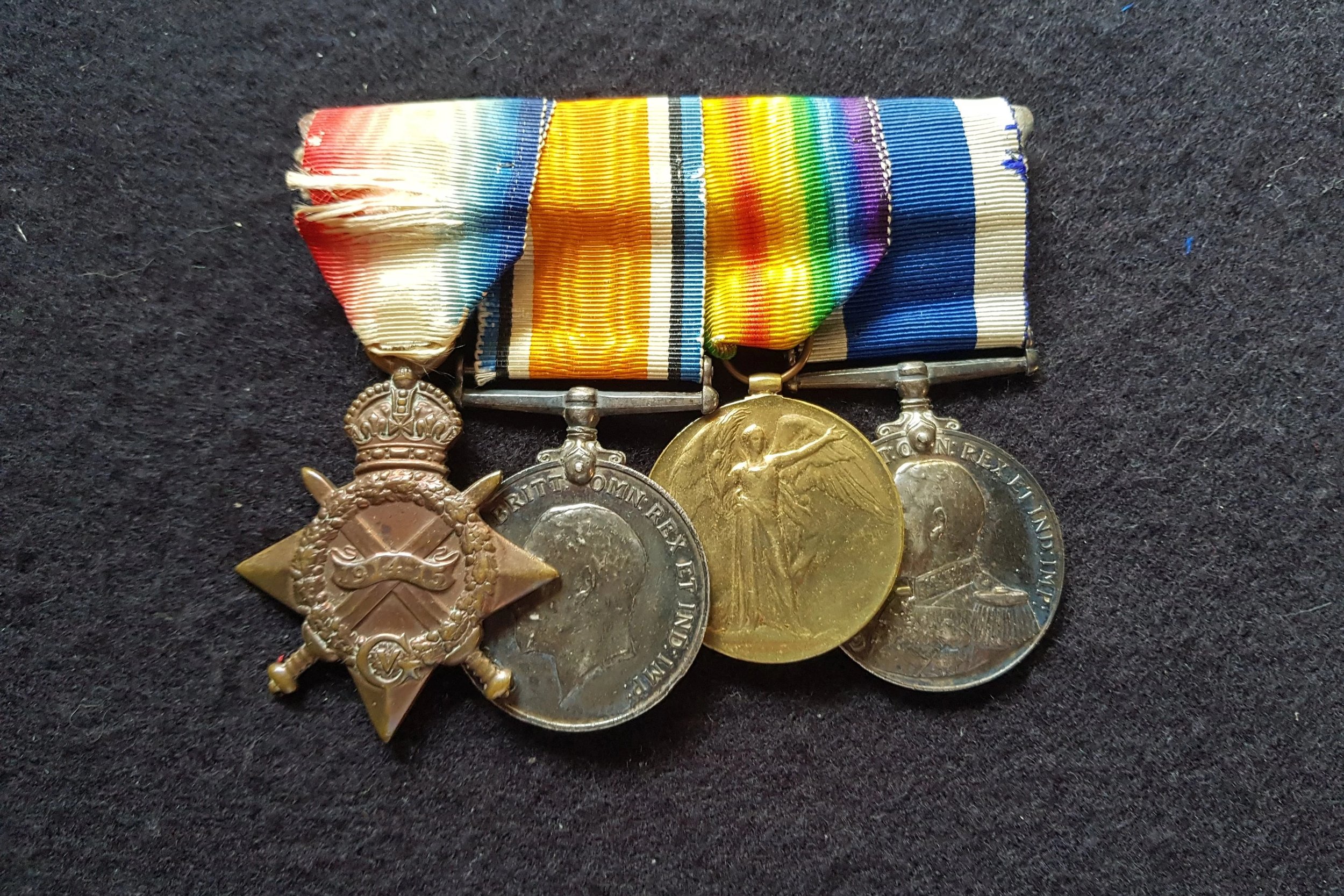
A Nice WW1 Royal Navy L.S.&G.C. (H.M.S. Tiger) 'Sinking of U-29' medal group awarded to M.5735 BLK (blacksmith) A.E. Reynolds.
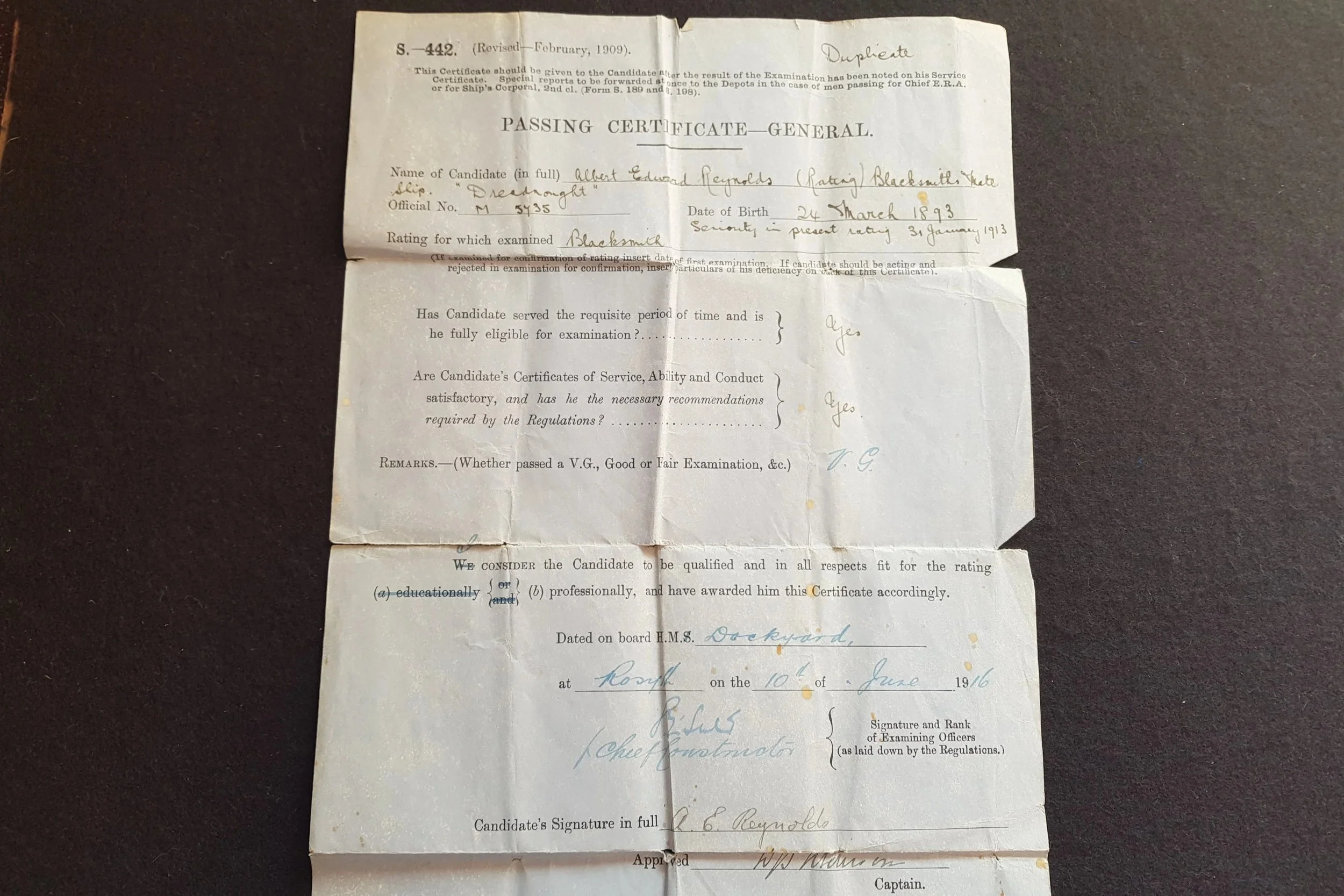
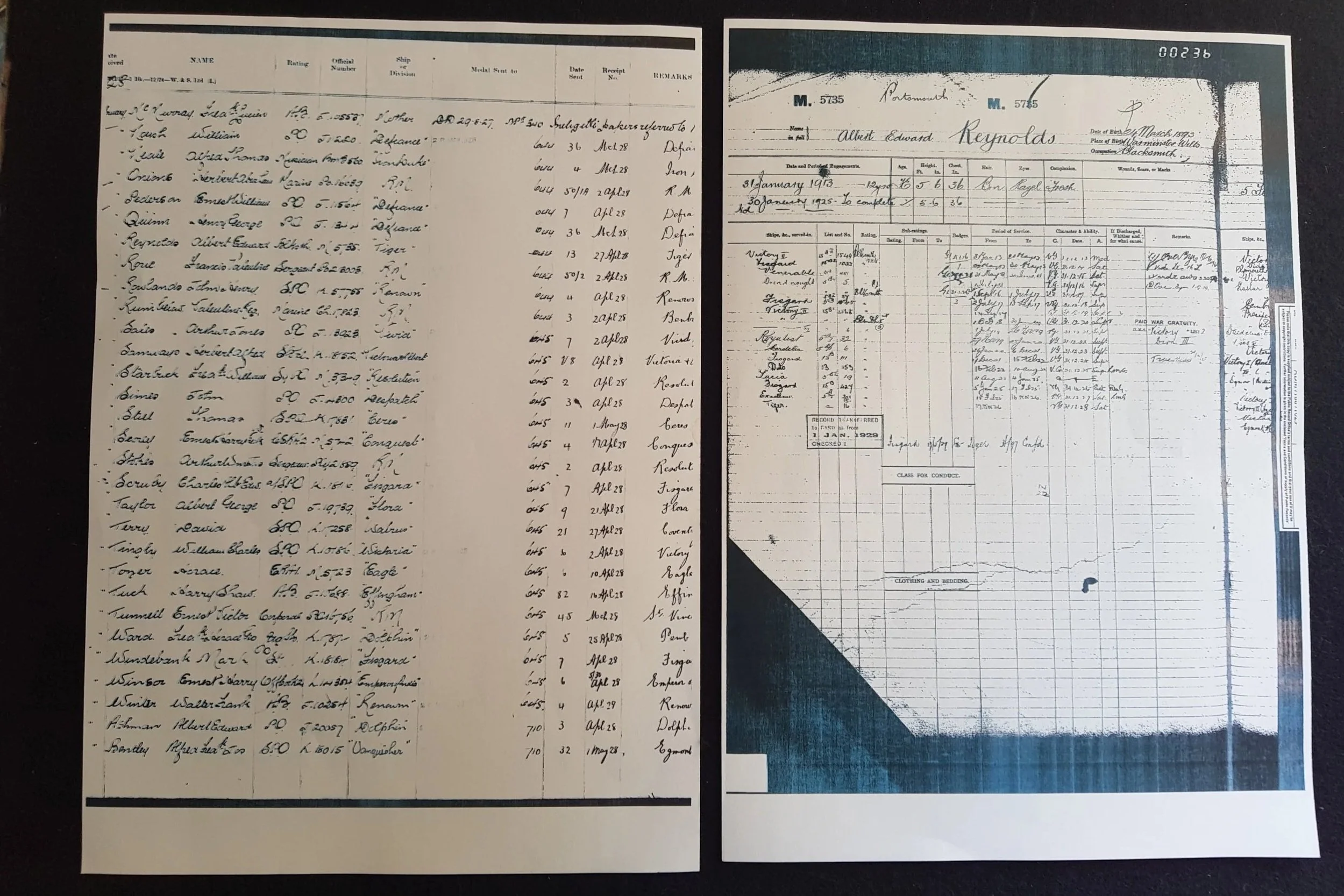
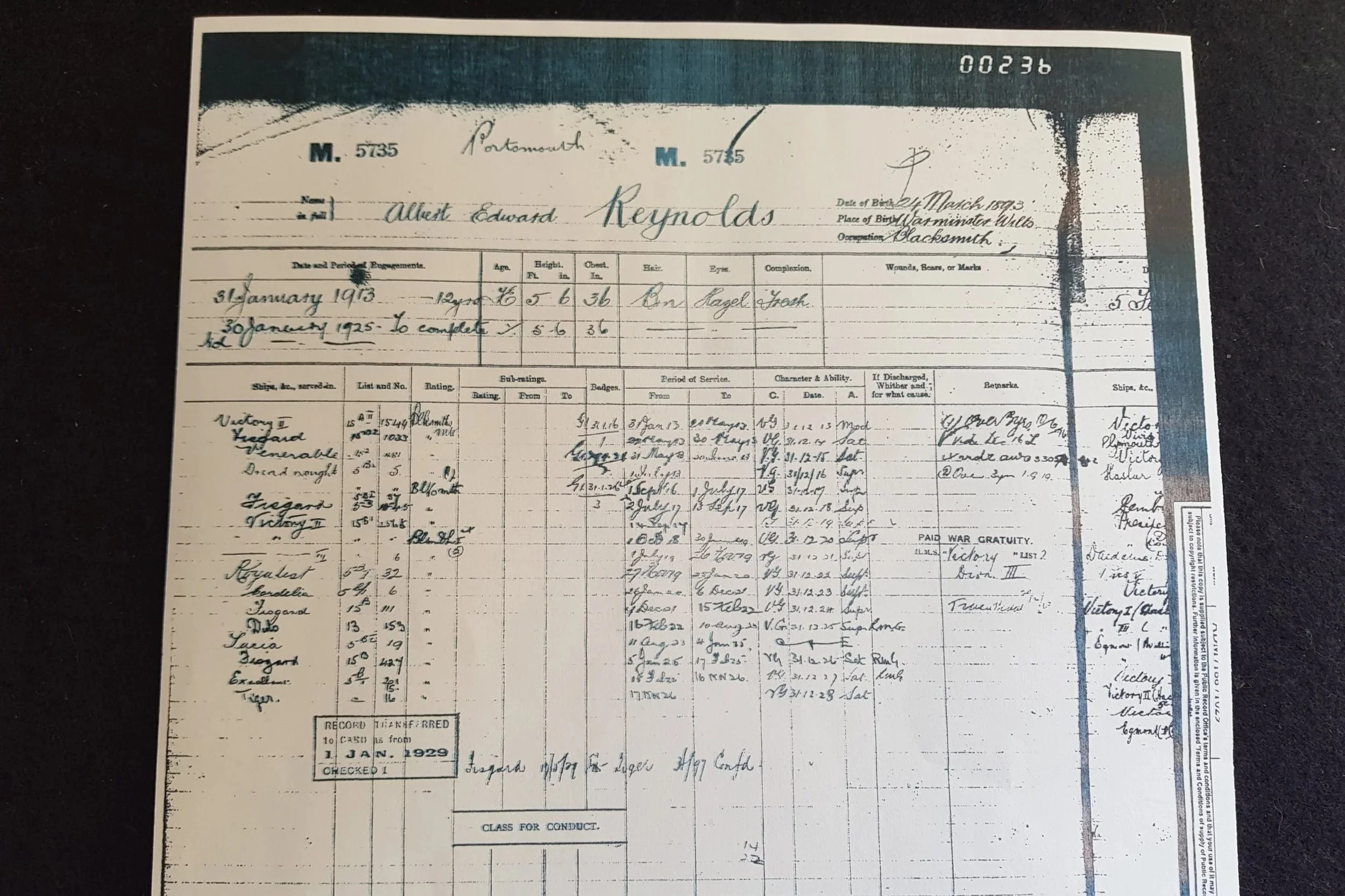
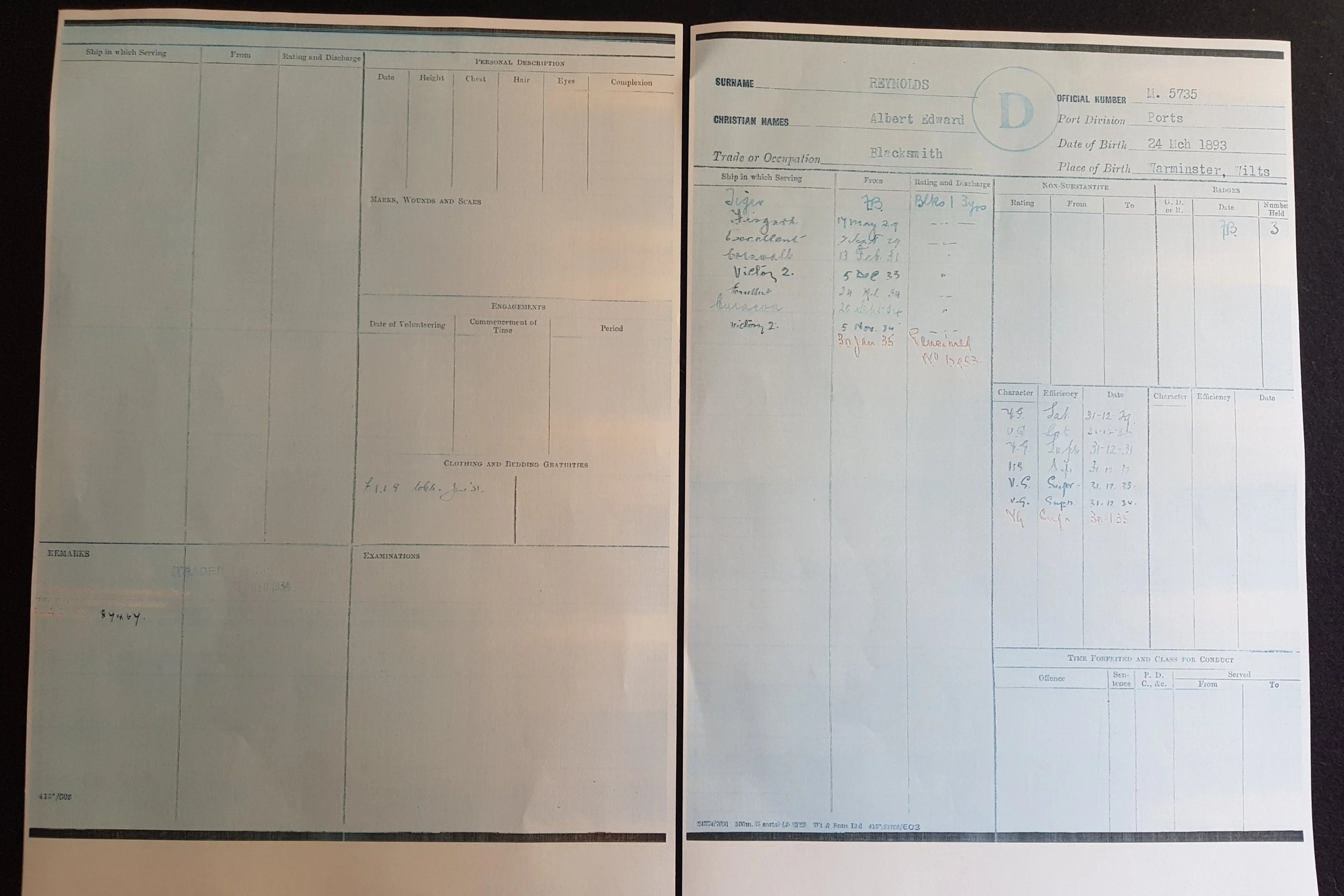
Albert Edward Reynolds was born on the 24th March 1893, at Warminster, Wiltshire,
Prior to joining the ranks of the Royal Navy on the 31st January 1913, he worked as a blacksmith.
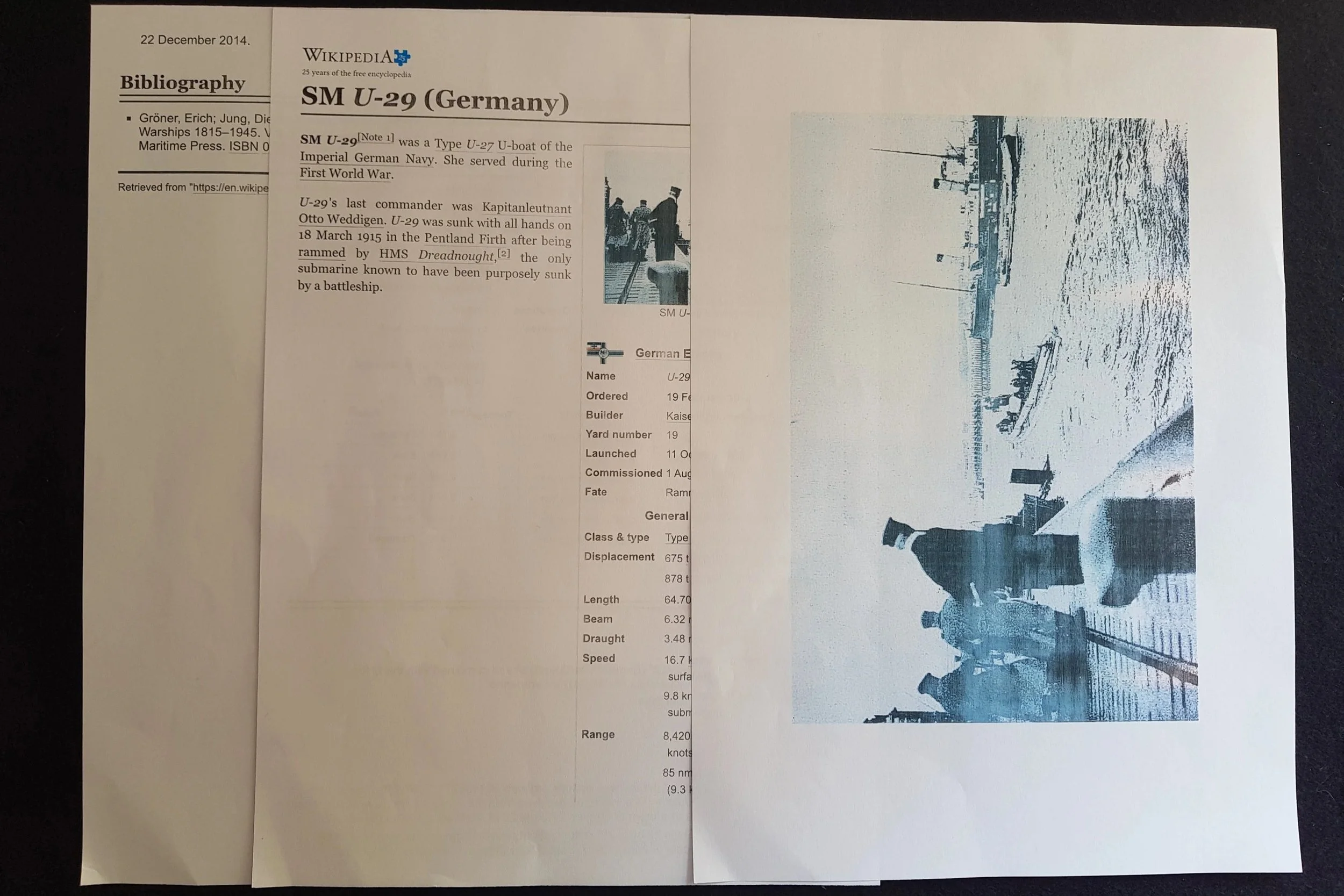
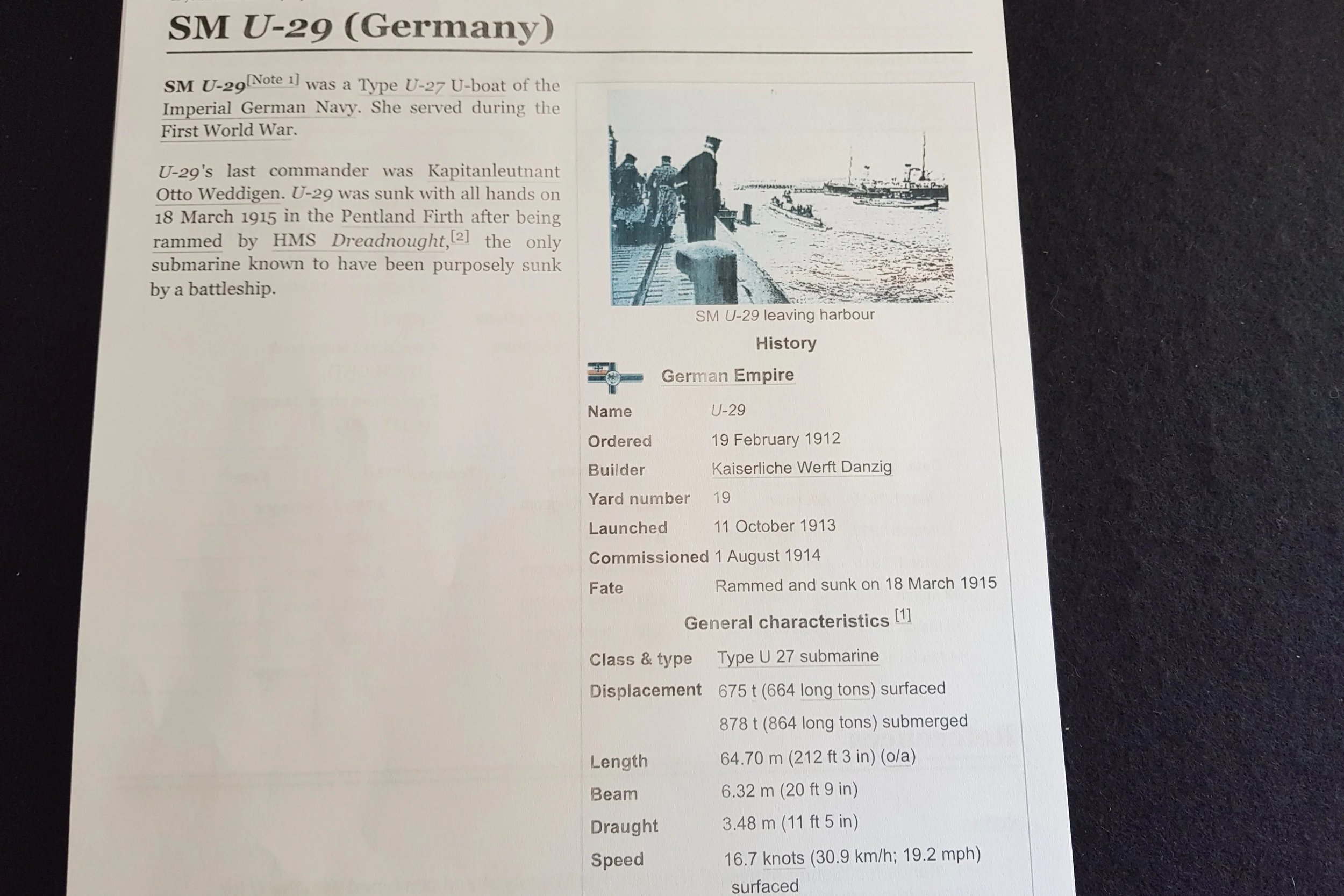
During WW1, he served aboard H.M.S. Dreadnought from 1st March 1913 through to 1st July 1917, as was present when she made history by ramming and sinking the German submarine U-29 on the 18th March 1915. The U-29 went down will all of her crew and making H.M.S. Dreadnought the only ship to have a confirmed sinking of a submarine.
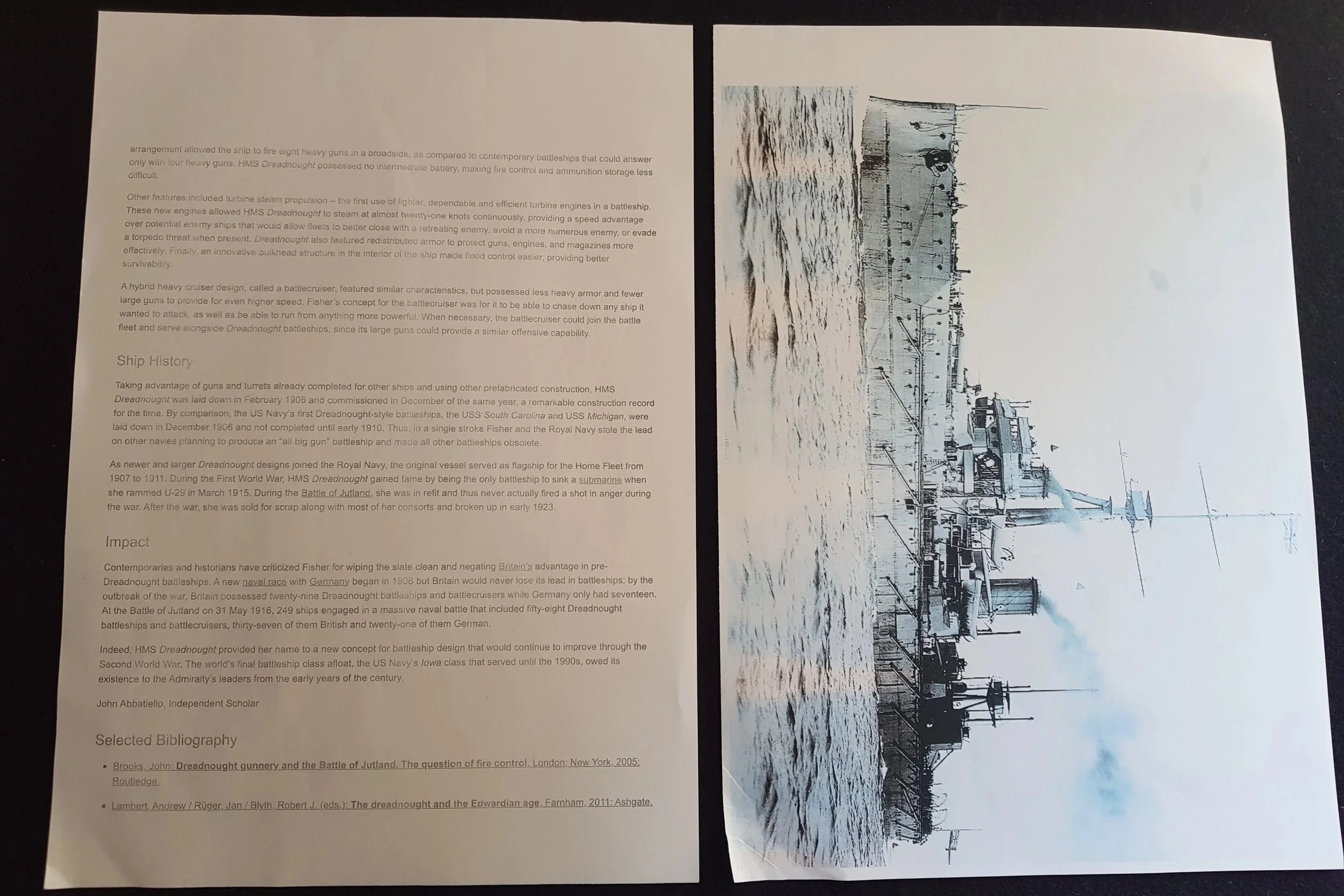
The following is an online extract about H.M.S. Dreadnought -
‘Taking advantage of guns and turrets already completed for other ships and using other prefabricated construction, HMS Dreadnought was laid down in February 1906 and commissioned in December of the same year, a remarkable construction record for the time. By comparison, the US Navy’s first Dreadnought-style battleships, the USS South Carolina and USS Michigan, were laid down in December 1906 and not completed until early 1910. Thus, in a single stroke Fisher and the Royal Navy stole the lead on other navies planning to produce an “all big gun” battleship and made all other battleships obsolete.
As newer and larger Dreadnought designs joined the Royal Navy, the original vessel served as flagship for the Home Fleet from 1907 to 1911. During the First World War, HMS Dreadnought gained fame by being the only battleship to sink a submarine when she rammed U-29 in March 1915. During the Battle of Jutland, she was in refit and thus never actually fired a shot in anger during the war. After the war, she was sold for scrap along with most of her consorts and broken up in early 1923.’
Reynolds served the rest of the war at the shore base H.M.S. Fisgard, and then H.M.S. Tiger, where he was awarded his L.S.&.G.C. medal.
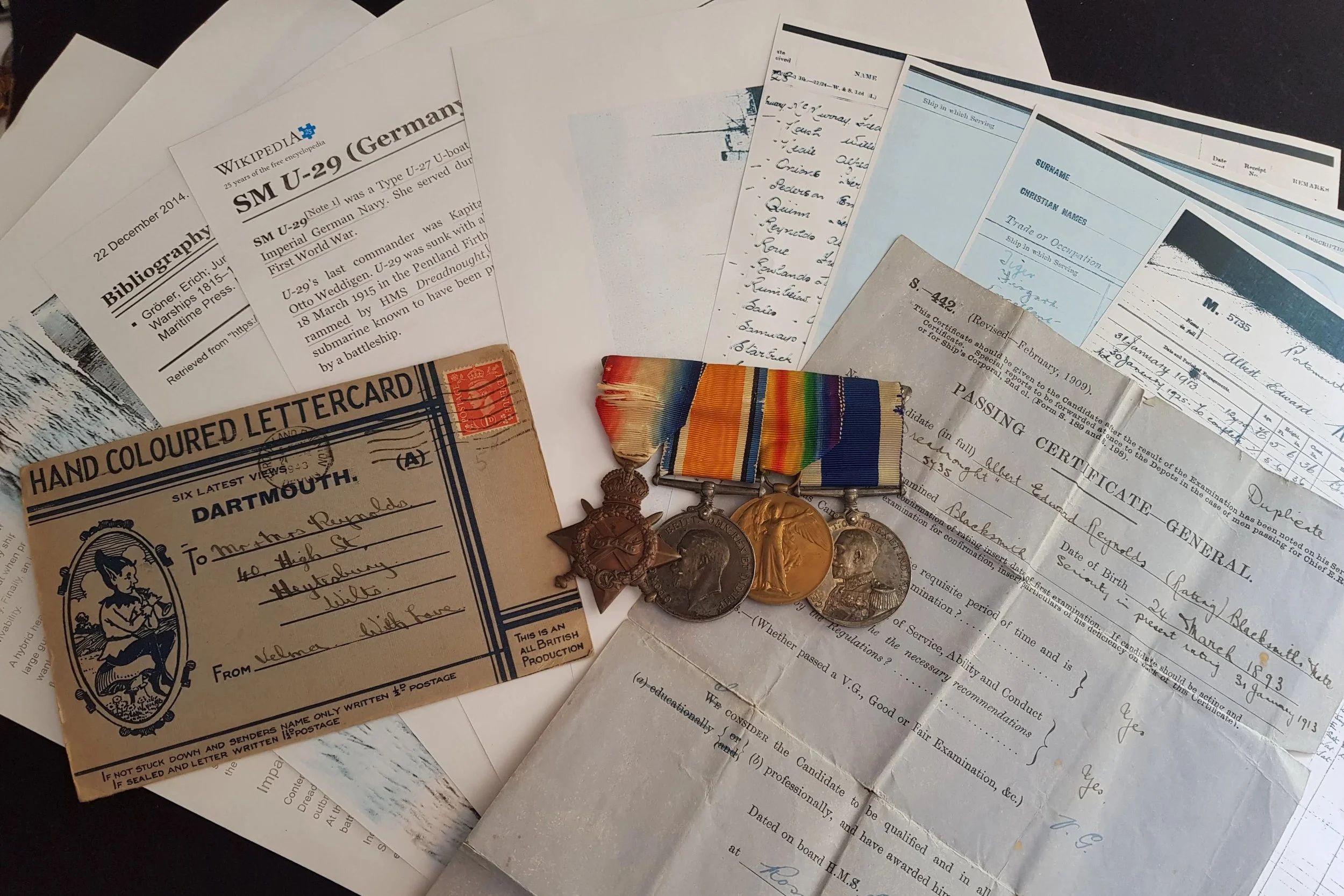
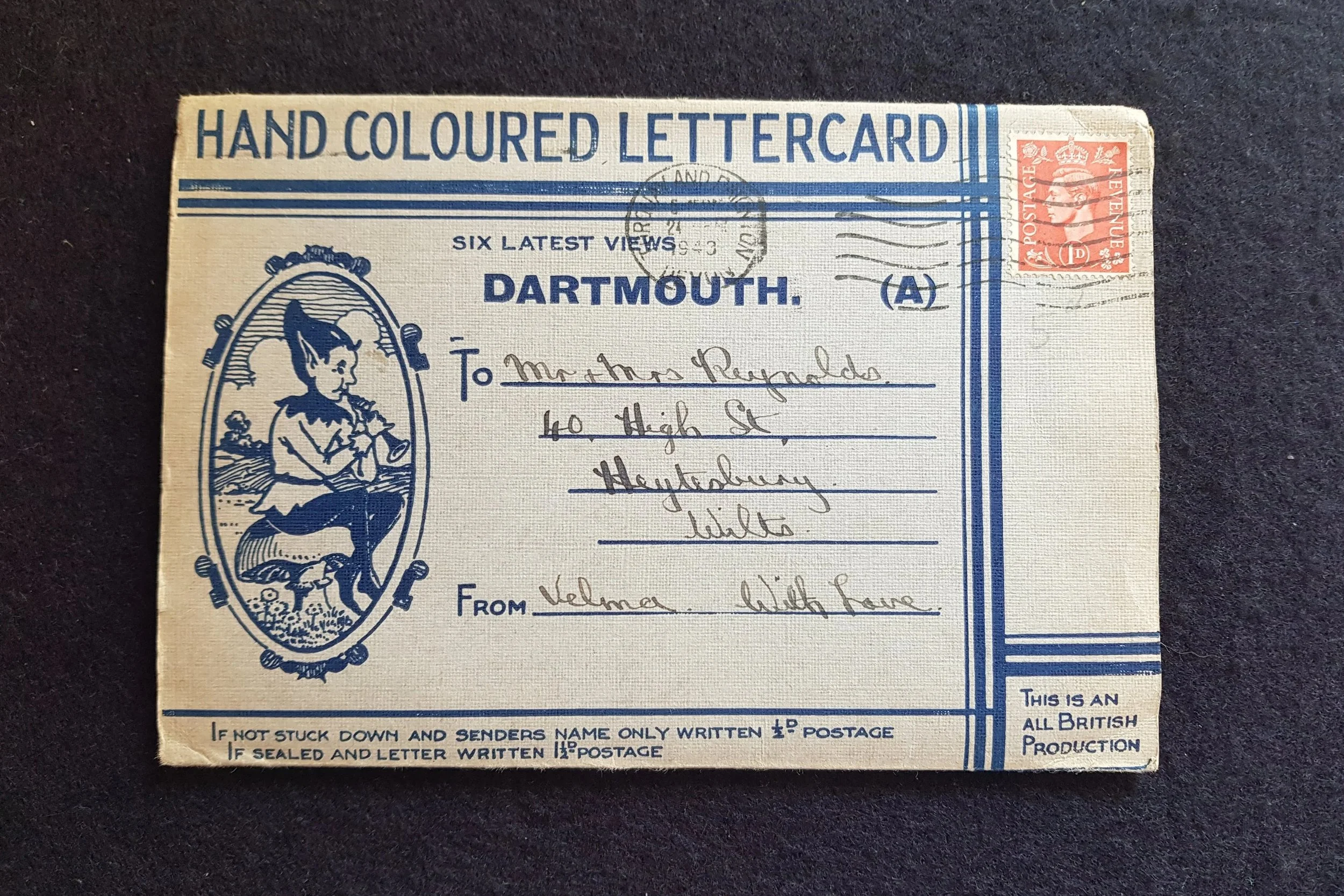
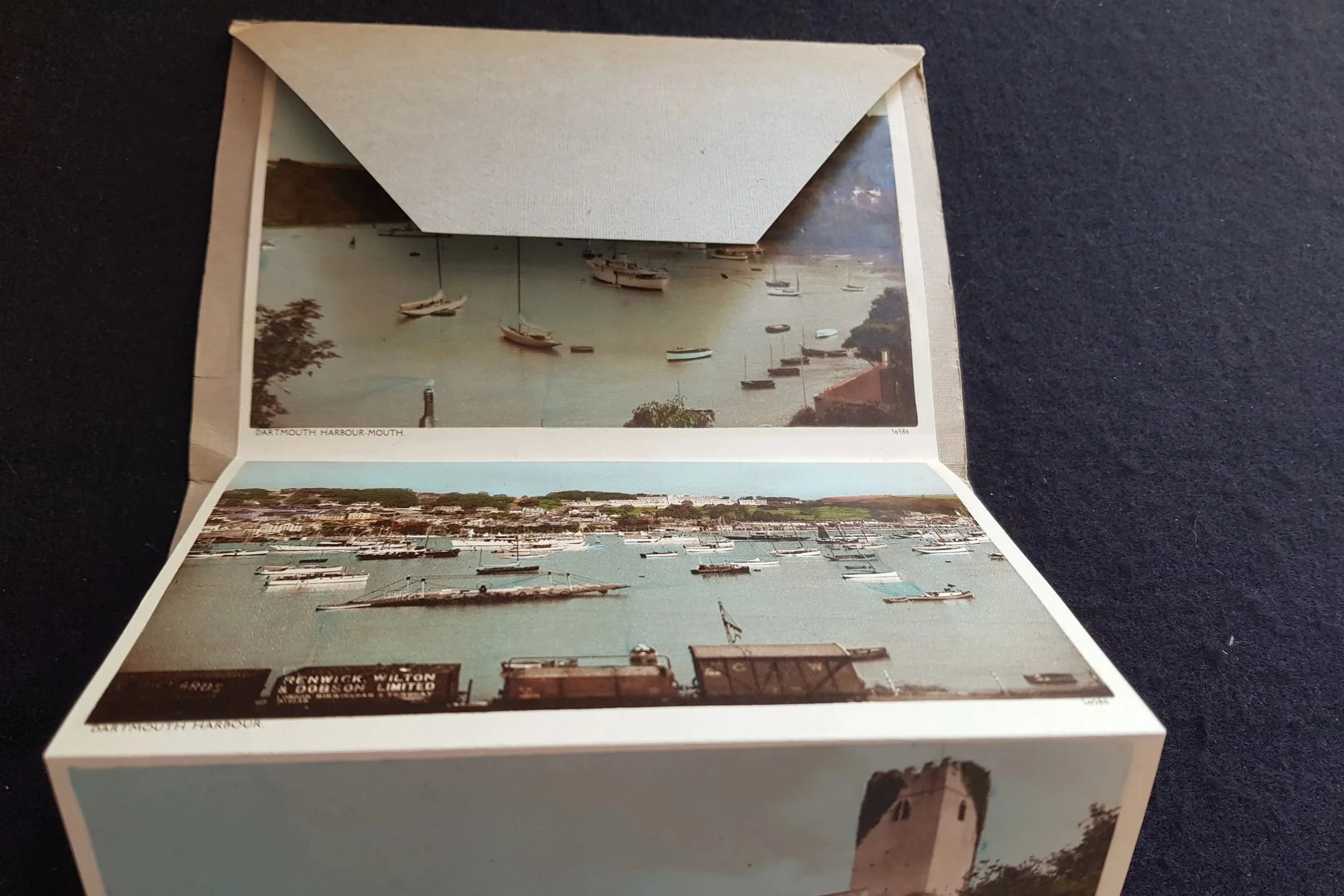
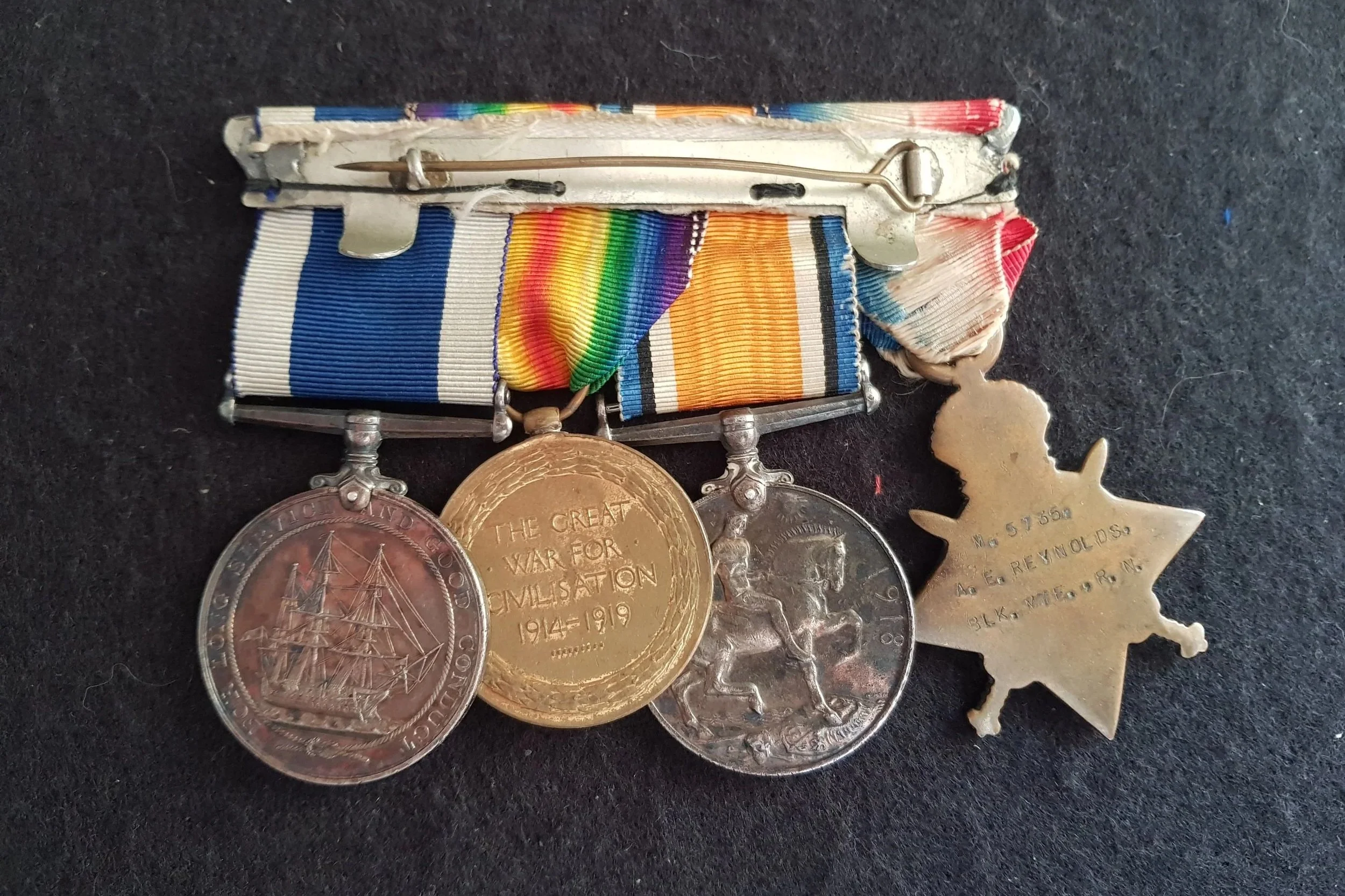
The medals are mounted as worn on the original ribbons, sold with copied research, an original named Royal Navy document and named postcard with 5 images of Dartmouth dated 1943, and are as follows –
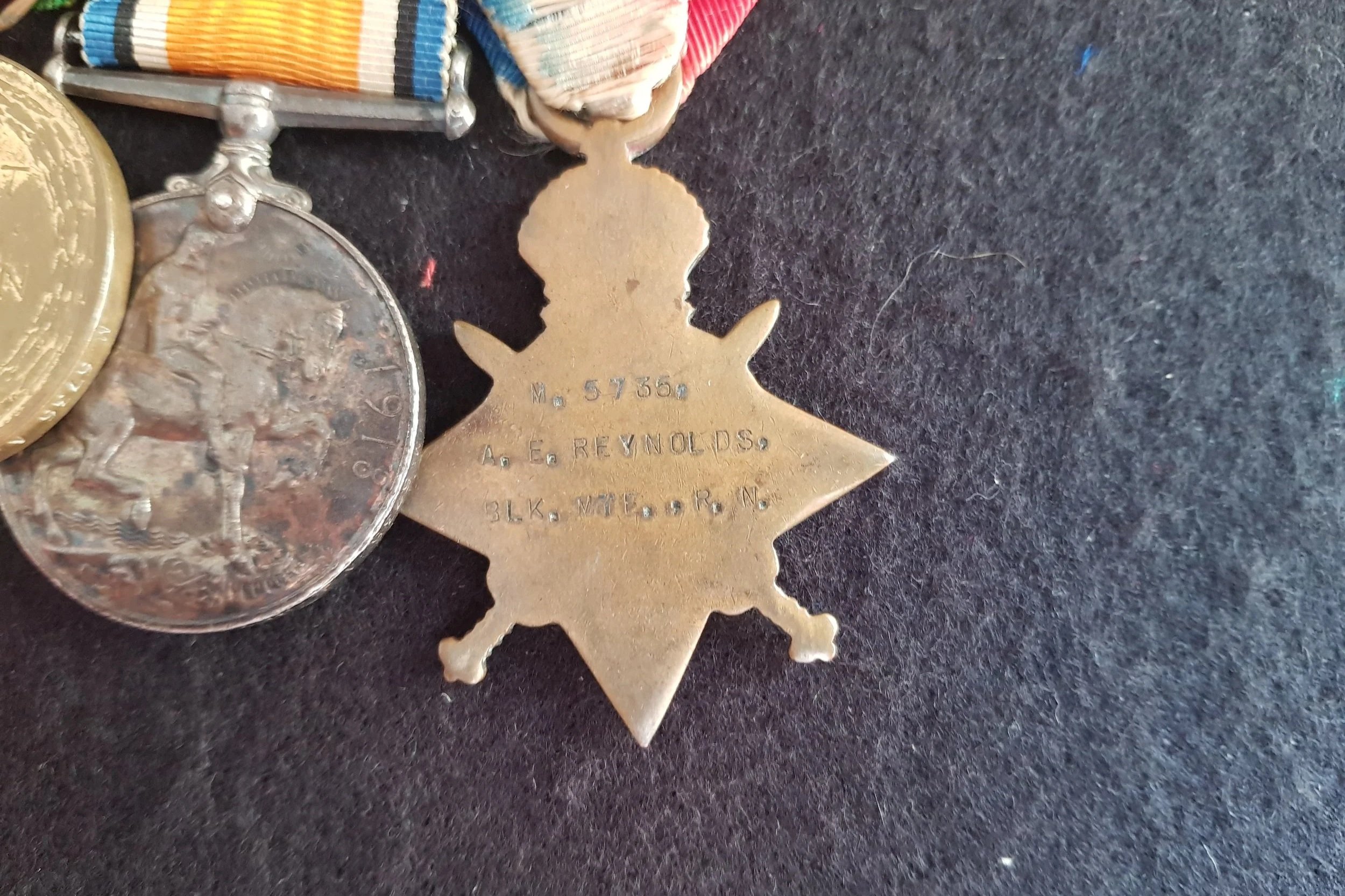
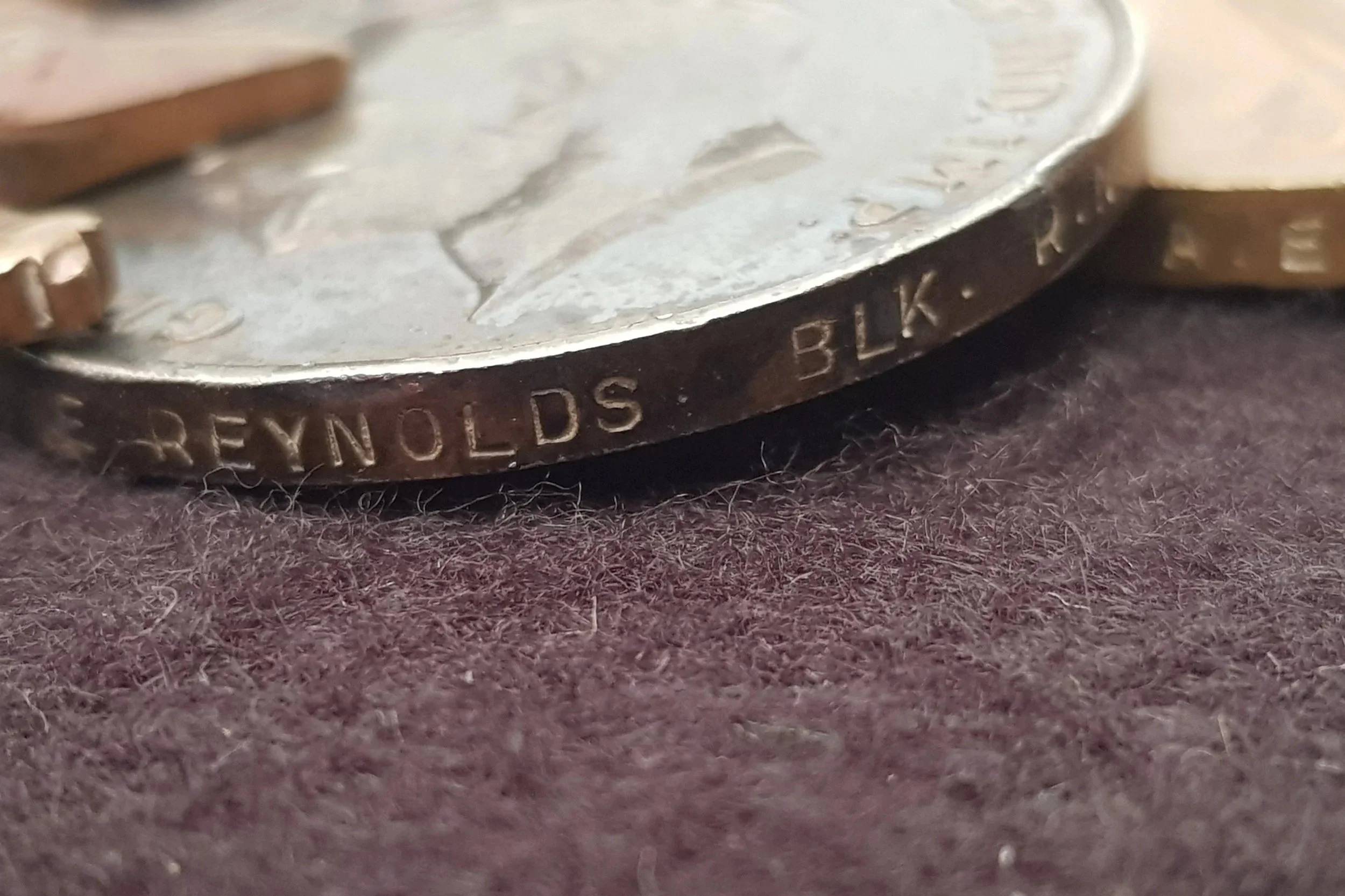
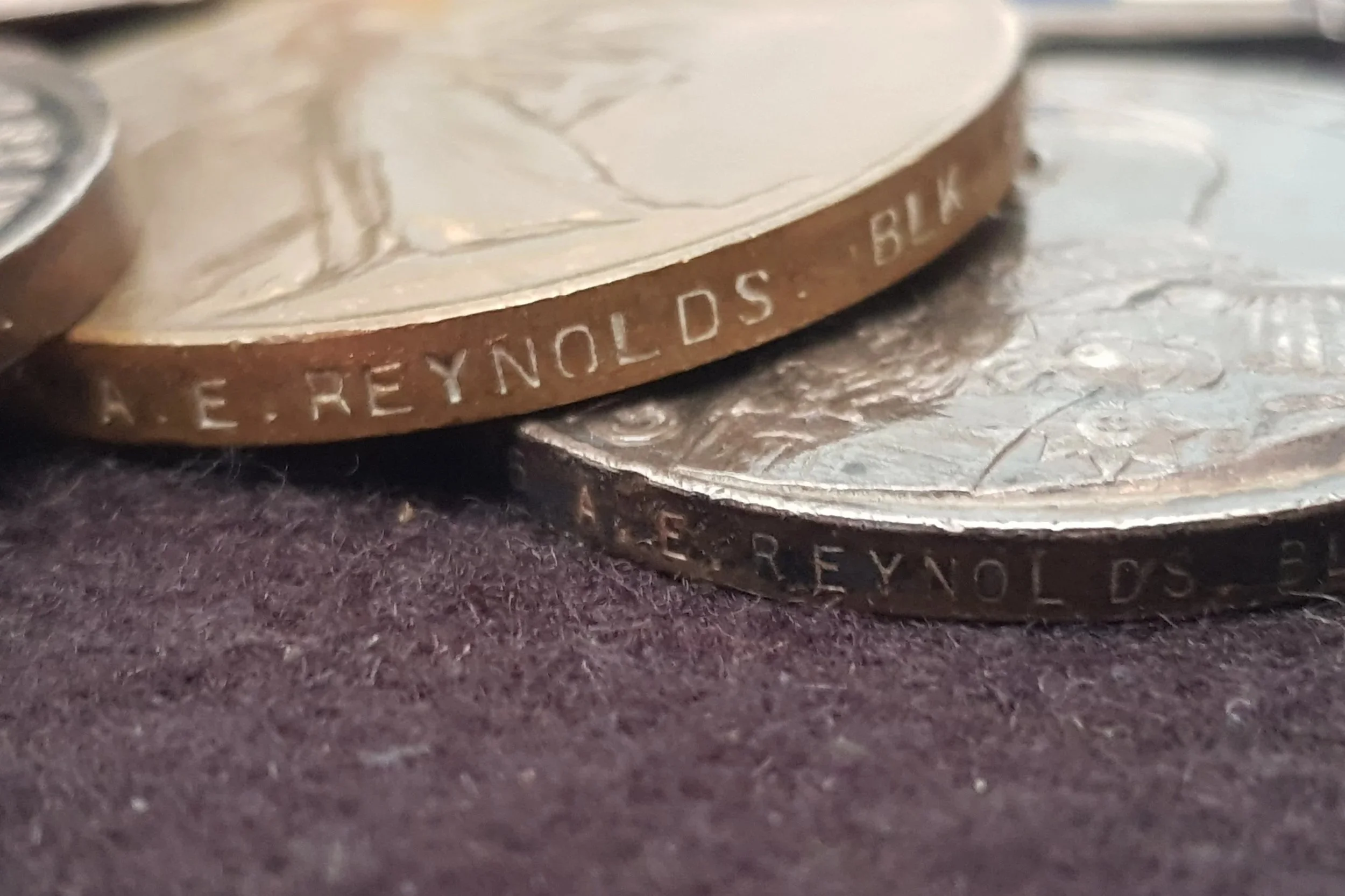
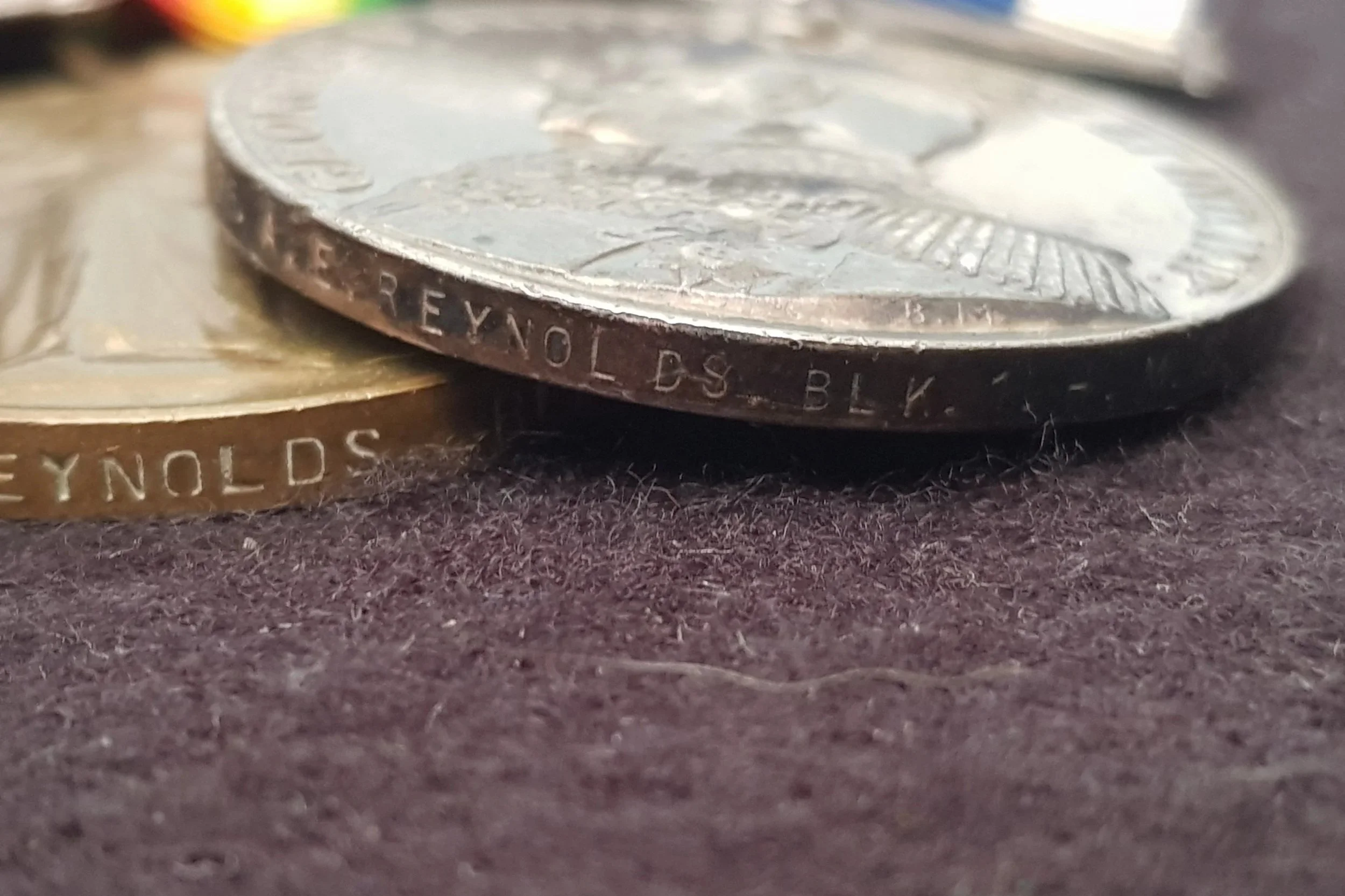
1914/15 Star, M.5735, A.E. REYNOLDSBLK. , R.N.; British War & Victory Medals,M.5735. A.E. REYNOLDS. BLK. R.N.; G.VI Royal Navy Long Service & Good Conduct Medal, M.5735. A.E. REYNOLDS. BLK. 1. H.M.S. TIGER.
It is not very often we see the rank of a Blacksmith on a Royal Navy medal group.
Condition, some minor pitting, otherwise good very fine